

The wild island of Palmarola, the most exotic of the Pontine Archipelago and one of the most beautiful islands in the Mediterranean Sea, is a true uninhabited treasure.
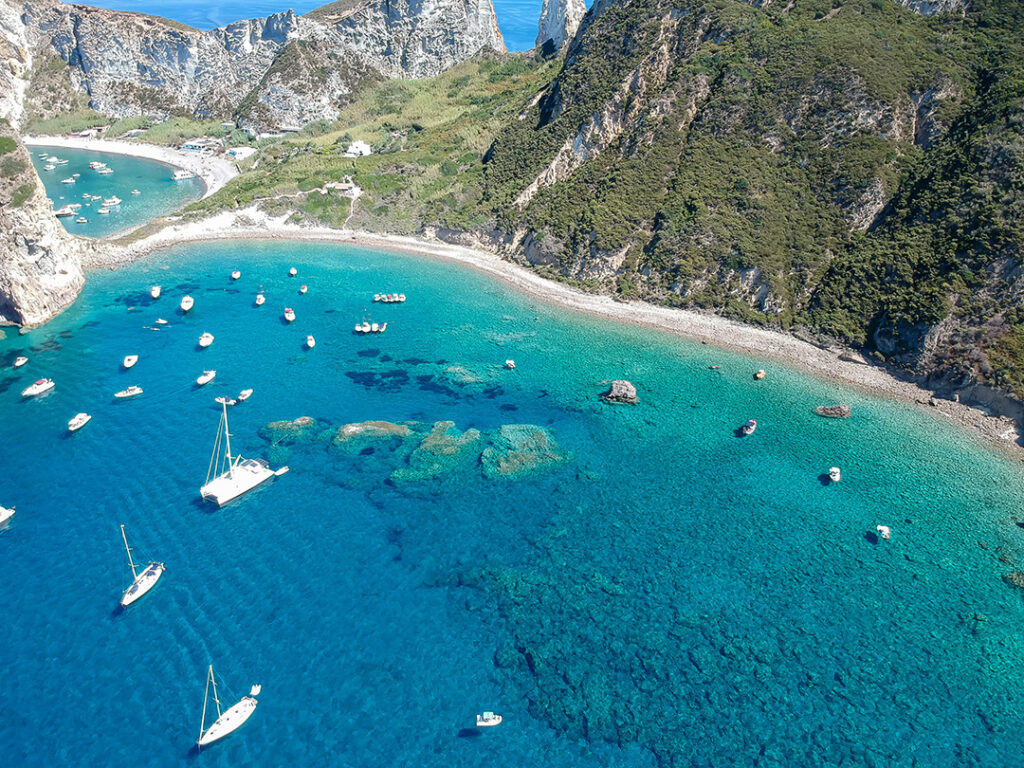
A view of Palmarola from above
Third in size after Ponza and Ventotene, the island takes its name from the dwarf palm, the only one one of European origin, which grows wild on the Island. Circumnavigating the Island, we can admire them atop the rocky cliffs. Palmarola, like the other Pontine islands, is of volcanic origin. It developed between 4.2 and 1 million years ago, and today’s sheer cliffs are the remains of ancient lava flows.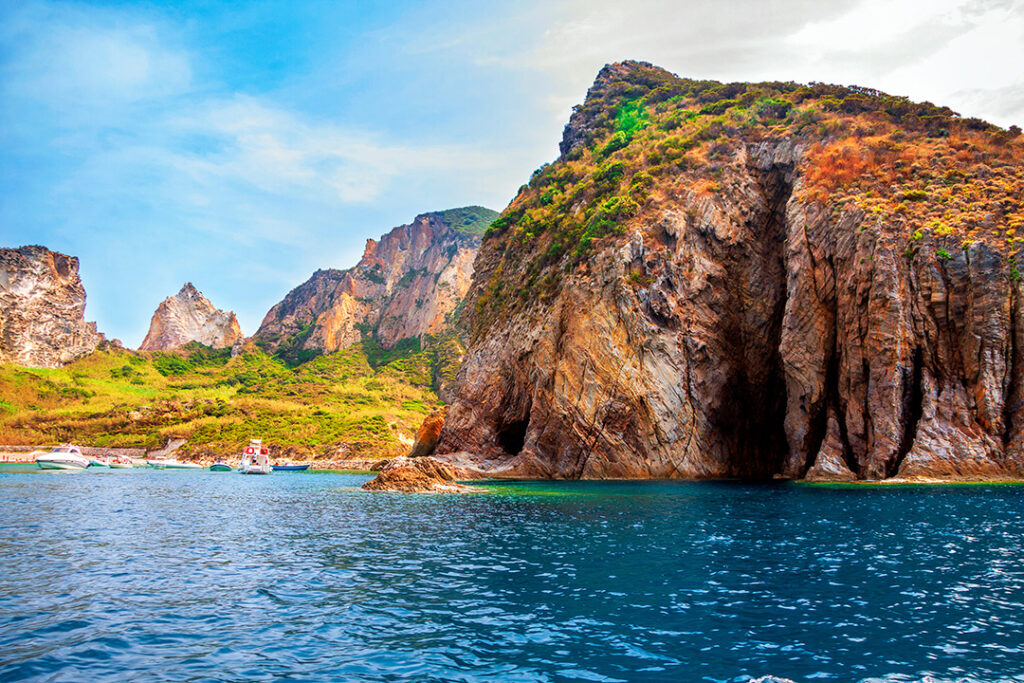
But the main attraction is undoubtedly the so-called Cathedral, a complex of boulders eroded by wind and water rising high above the sea, which recall the pipes of an organ. Here, as in many other ravines and small caves around Palmarola, it is possible to dive into the blue waters and practice snorkelling and scuba diving.
Only during the summer period do tourists and residents of the nearby Ponza flock to the Palmarola and its four beautiful beaches.
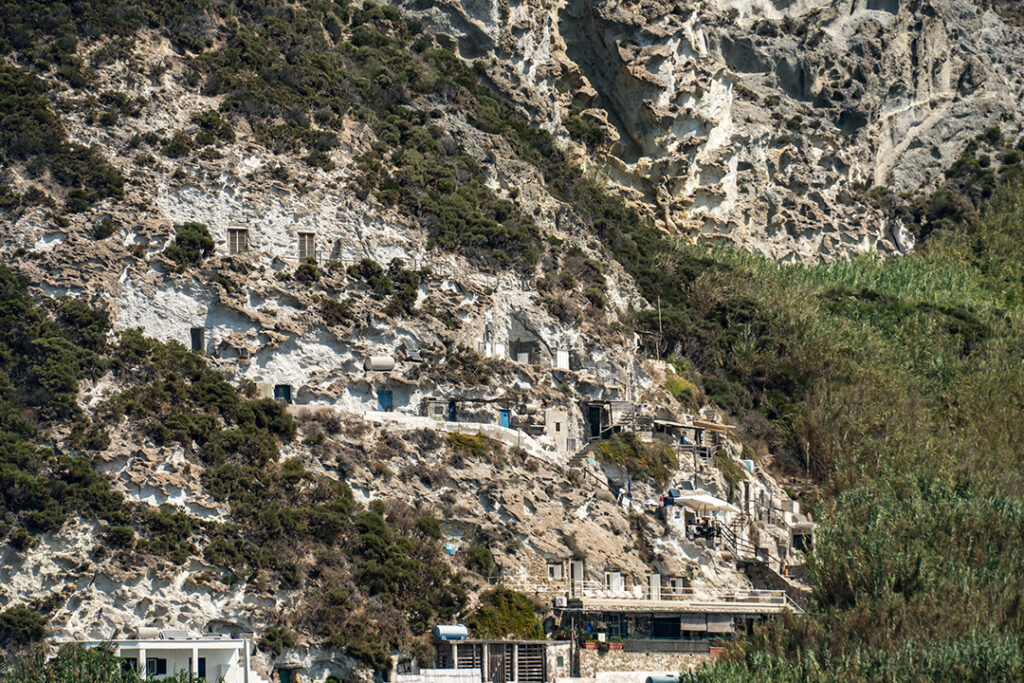
The rock dwellings on Palmarola
In the past, the poorest inhabitants of Ponza found refuge into rock-built caverns in Palmarola. Today, these rare dwellings are jewels of great value.
Atop of one of the highest cliffs on the island, stands a chapel with the relics of Pope Silverius, the patron saint of Ponza. Elected in 536 AD and serving only one year, he was sent into exile on the island of Palmarola.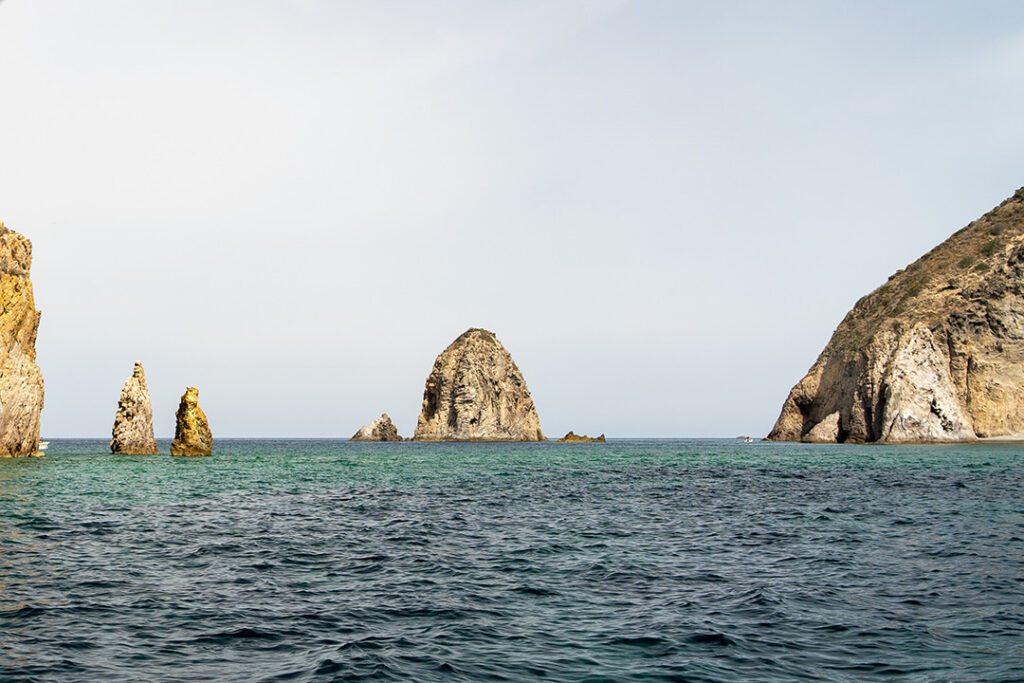
Cala Tramontana, in the north of the island, boasts emerald green waters and the aforementioned cathedral.
Nearby, we can find three caves with large openings recalling typical Gothic arches and, further east, Cala Spermaturo, from where, at dawn, it is possible to admire the nearby island of Ponza. Here, dozens of goats descend the steep rocks in search of food. Near the cove, among a pristine nature, stands the Forcina Rock, from where we can dive into deep waters.
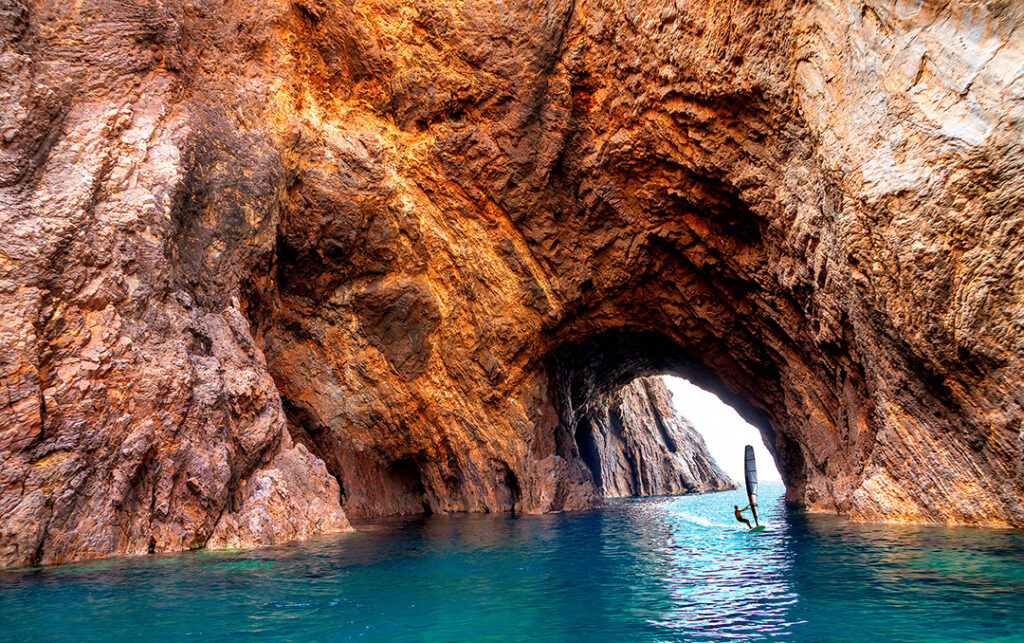
Windsurfing through a rock arch
we reach Cala Brigantina, one of Palmarola’s most beautiful beaches. On the eastern side of the bay, stands the Suvace Rock, named after the suvace fish. Heading west, we reach the famous Faraglioni of Palmarola, the most famous ones in Southern Italy.
The dark thirty-meter-long Grotta del Gatto and the Grottone di Mezzogiorno are also two evocative local attractions.
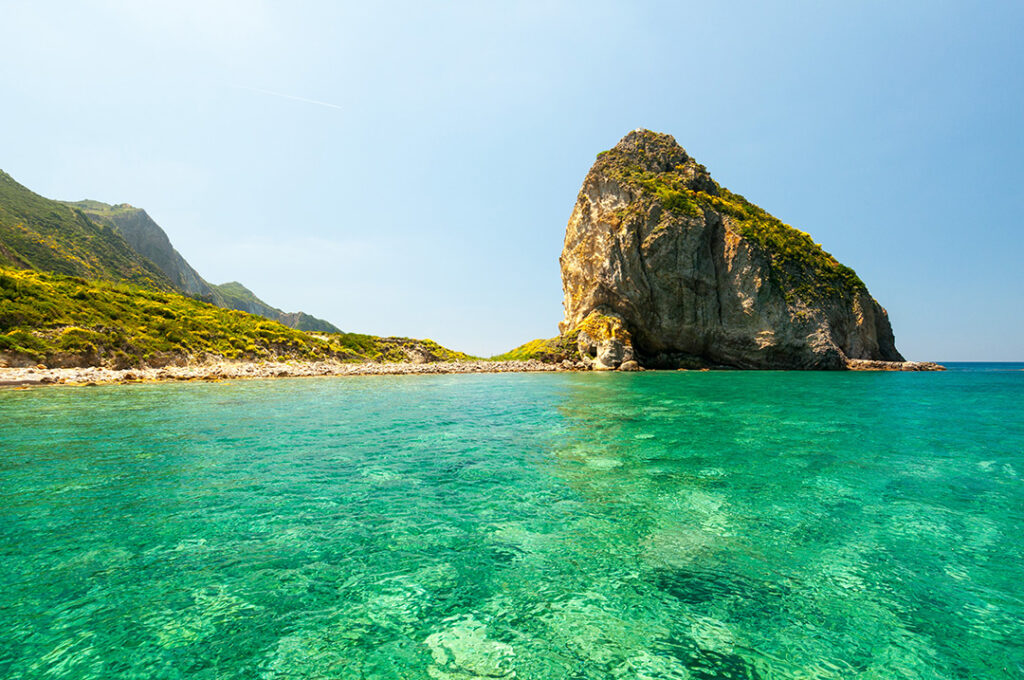
Cala del Porto
The last beach is Cala del Porto, which is also the island’s only sandy beach. The San Silverio sea stack is located here.