

Vallerano overlooking the Tuscia Viterbese region from a hillside in the Cimini Mountains, is called the village of chestnuts, due to this local PGI certified dried fruit, as well as the village of candles, thanks to the famous Night of the Candles, held here at the end of August.
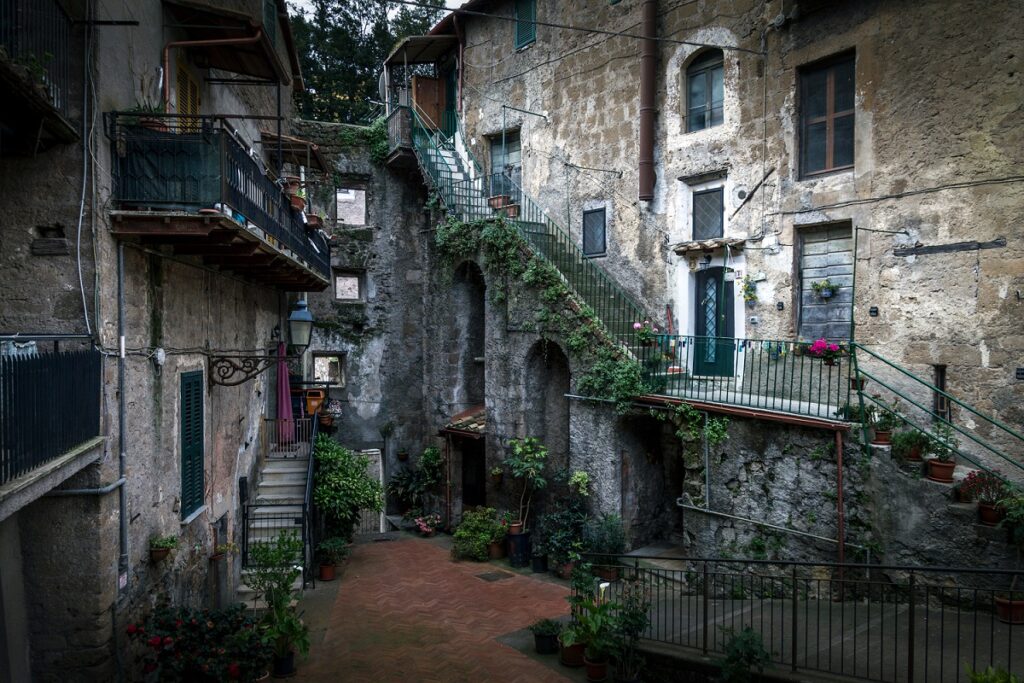
Vallerano’s ancient origins date back to the Bronze, as evidenced by archaeological finds brought to life in Poggio Castello. The influence of the Etruscans, followed by the Romans in 300 BC, and later by the Farnese Family during the late Renaissance period, made the village and the surrounding area exceptionally rich in history.
In the medieval historic centre, stands the Romanesque Church of San Vittore Martire, dedicated to Vallerano’s patron saint, which features an impressive coffered ceiling..
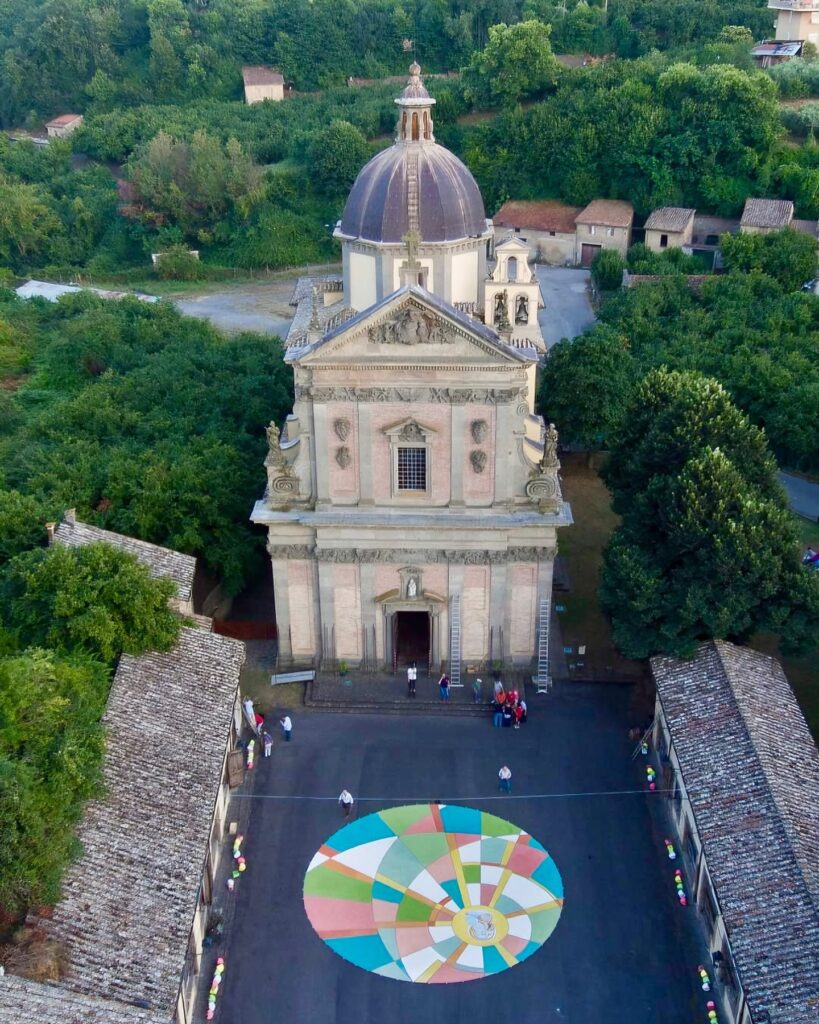
The Sanctuary of the Madonna del Ruscello – Facebook @visitvallerano
Just outside the walls, lies the Sanctuary of Maria Santissima del Ruscello, built in the early 17th century according to a design by the architect Vignola. It houses paintings, frescoes, and stucco works, as well as a monumental, intricately carved organ in Baroque-style. In the surrounding area of the village, also stands the 17th-century Church of the Santissimo Crocifisso, a renowned pilgrimage destination.
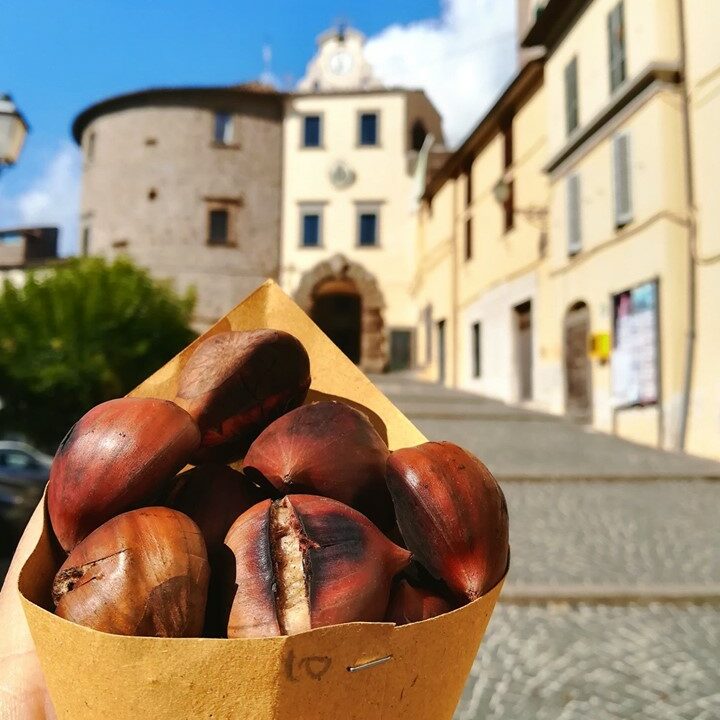
The Vallerano PGI Chestnut – www.festacastagna.it
The lush, green landscape consists of woodlands, vineyards, centuries-old chestnut groves, and hazelnut orchards. Among the local gastronomic specialties is the PGI-certified Vallerano chestnut, celebrated during the Chestnut Festival every weekend from October to early November. The highlight of the festival, held on the main square, is the roasting of chestnuts in a giant pan, while, on Christmas Eve, a delicious chickpea and chestnut soup is prepared.
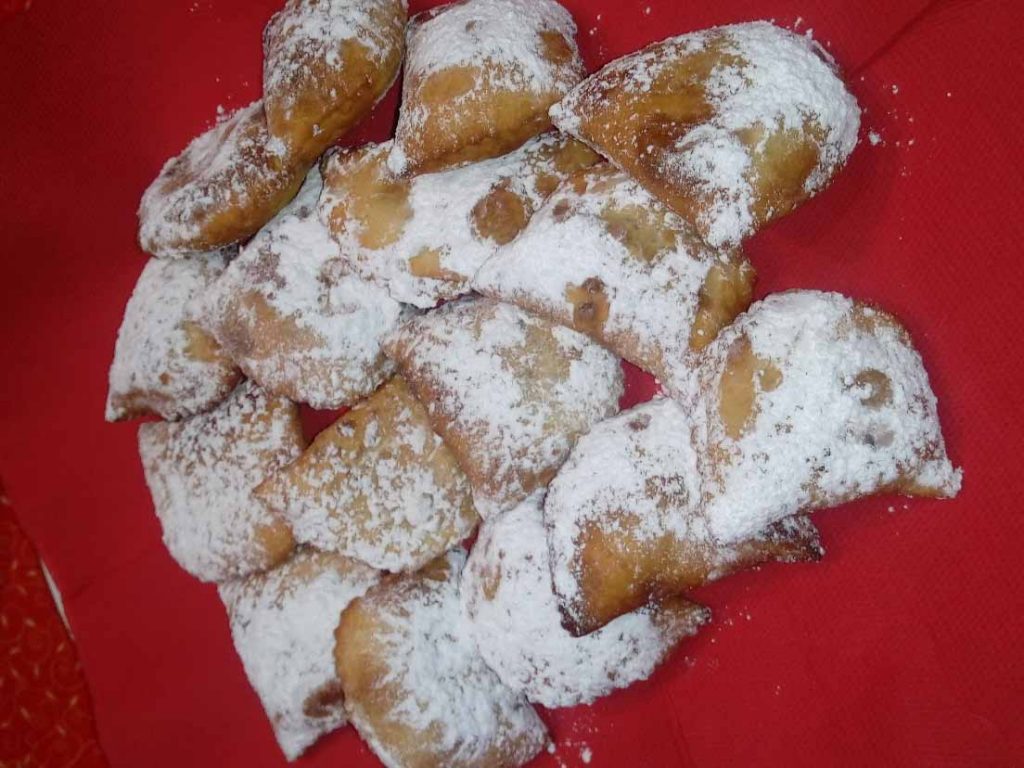
Ceciaroli from the Tuscia Region
Among the typical sweets are the ceciaroli, fried or baked pastries filled with a mixture of chickpeas, honey, sweet liqueur, cinnamon, vanilla, and chocolate.
Other unmissable local dishes are the porchetta, sometimes accompanied by tomato, celebrated with a festival in late June, and the fricciolose, thin crêpes generously dusted with pecorino cheese.