

Built on the ruins of a Roman villa, Frascati probably owes its name to the branches used to build of the houses. After the destruction of Tusculum in 1191, many residents took refuge in the village below and founded a new town, which, between 1200 and 1300, underwent a period of rapid development.
In the sixteenth century, Julius II passed it to Marcantonio I Colonna and his wife, Lucrezia della Rovere and, in 1538, Paul III Farnese granted Frascati the title of Civitas with the name Tusculum Novum.
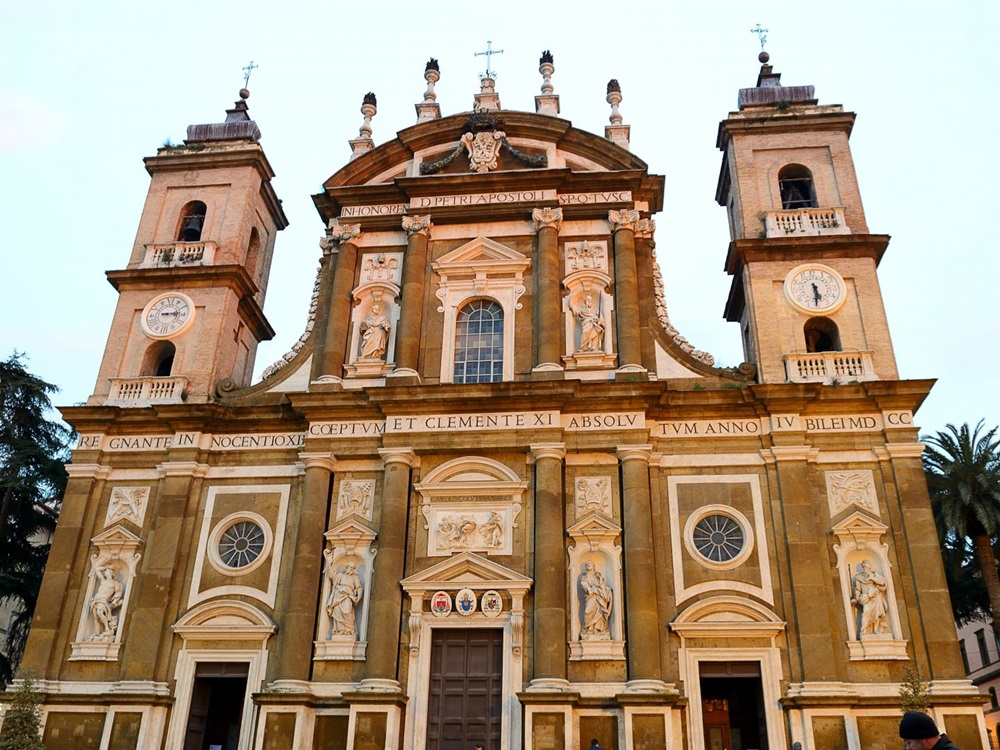
The Cathedral of St. Peter the Apostle in Frascati
Worth a visit is the fifteenth-century Cathedral of St. Peter the Apostle, located in St. Peter’s Square in the city centre.
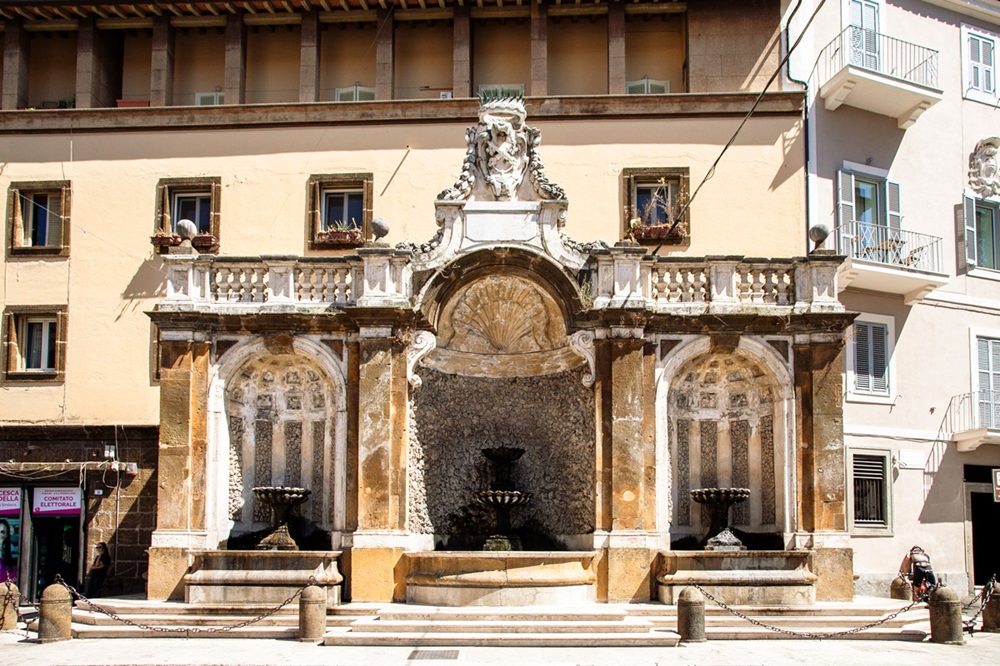
The Fountain in St. Peter’s Square in Frascati
In the same square also stands a fountain, said to have been donated to the town by the builders of the Cathedral.
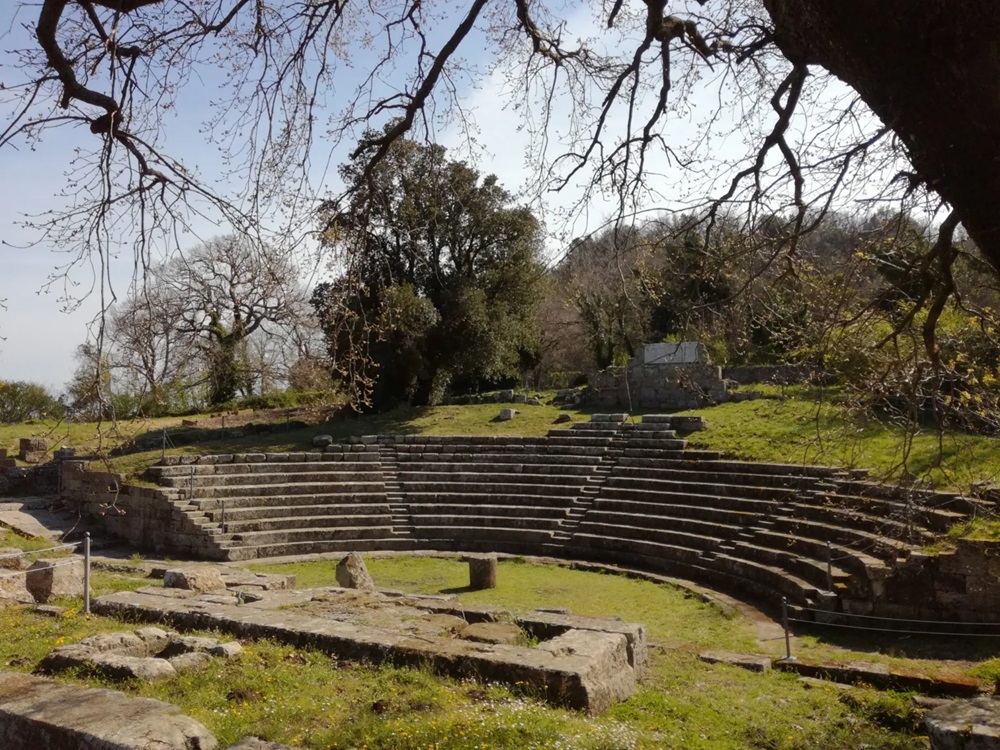
The Roman Theatre in the Tuscolo Cultural Archaeological Park photo @tuscolo.org
Other attractions in Frascati are the nineteenth century Church of Santa Maria del Vivaro, the Episcopal Palace in the ancient fortress, the late seventeenth century Town Hall, and, just outside the town, the ancient Tusculum with the magnificent remains of the Roman Theatre dating back to 75 BC.
Frascati reached its maximum splendour in the second half of the sixteenth century, with the construction of sumptuous villas with parks and gardens designed by the great architects of the time, that became the favourite residences of the most important Roman families.
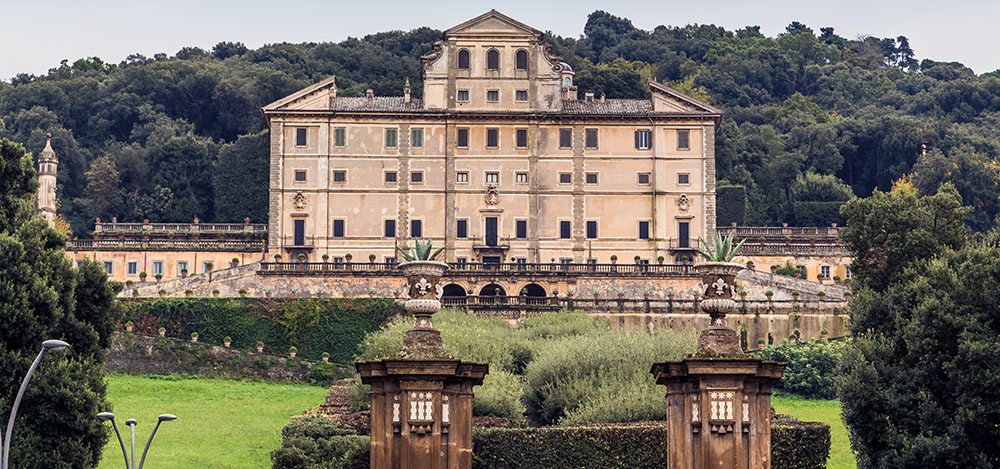
Villa Aldobrandini in Frascati
Among the most important historic residences is Villa Aldobrandini, also known as Villa Belvedere, due to its extraordinary panoramic position overlooking the town and City of Rome. On weekdays, the park and the 2,500-square-meter Nymphaeum, stunning fountains, and multi-level terraces are open to visitors.
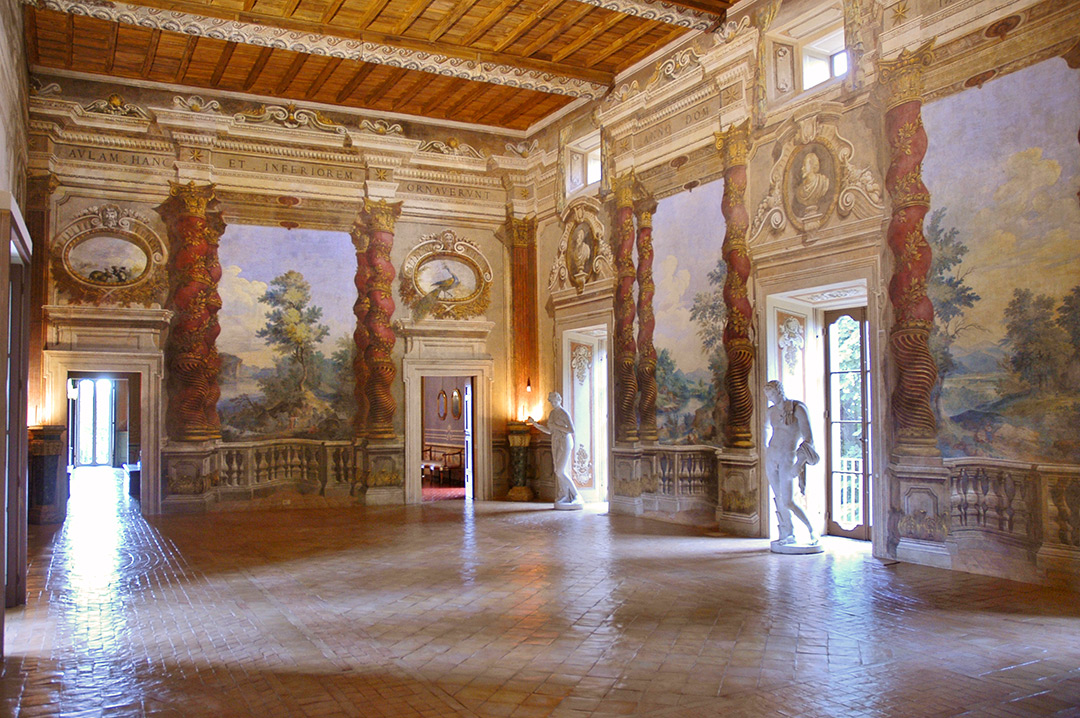
Villa Lancellotti – photo by Ezio Bocci @ www.comune.frascati.rm
Nearby, lies Villa Torlonia, with its Teatro delle acque del Maderno, a reminder of the ancient splendour, and Villa Lancellotti, with its extraordinary interiors.
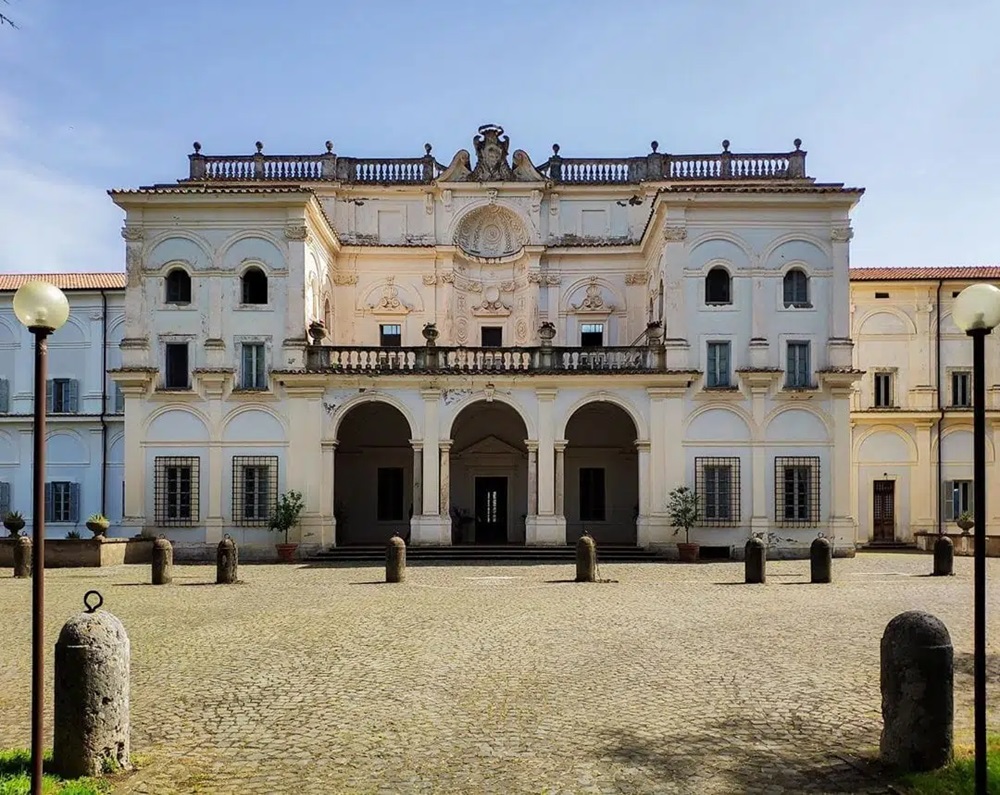
Villa Falconieri in Frascati
Villa Falconieri, also known as “La Rufina”, was the first villa built in Frascati by the Bishop Alessandro Rufini. Included in the Lazio Regional Network of Historic Houses, the Villa is now home to Vivarium Novum, a prestigious international institute for studies of classical languages. It can be visited every Sunday with scheduled guided tours. Also noteworthy is Villa Tuscolana, Rufini’s second Villa, nicknamed “La Rufinella”, which houses today an elegant hotel.
During the Second World War, almost entirely destroyed by bombings, but, immediately after the war, major reconstruction projects were carried on, such as the reconstruction by the architect Fuksas of the seventeenth-century Aldobrandini Stables, turned into a modern cultural centre hosting events, theatre and dance performances, and festivals. On the ground floor, the stables host the Museo Tuscolano, which boasts a vast collection of artifacts from the Republican and Imperial eras to the Middle Ages.
Frascati was the first town in the Castelli Romani to have the first railway station in Lazio and one of the first in Italy. The line was inaugurated in 1856 under the pontificate of Pius IX and covered the nineteen kilometres between Rome and Frascati in just over half an hour, thus favouring the growth of trade and tourism from Rome to the town. In modern times, it was also known as the “hangover train”, because it brought passengers from the typical local taverns, fraschette, back to Rome on Sunday evenings.
In the fraschette, it is still possible to enjoy traditional Roman dishes, such as the Italian charcuterie, coppiette di cavallo, corallina romana, porchetta, and mortadella spianata, served as a starter.
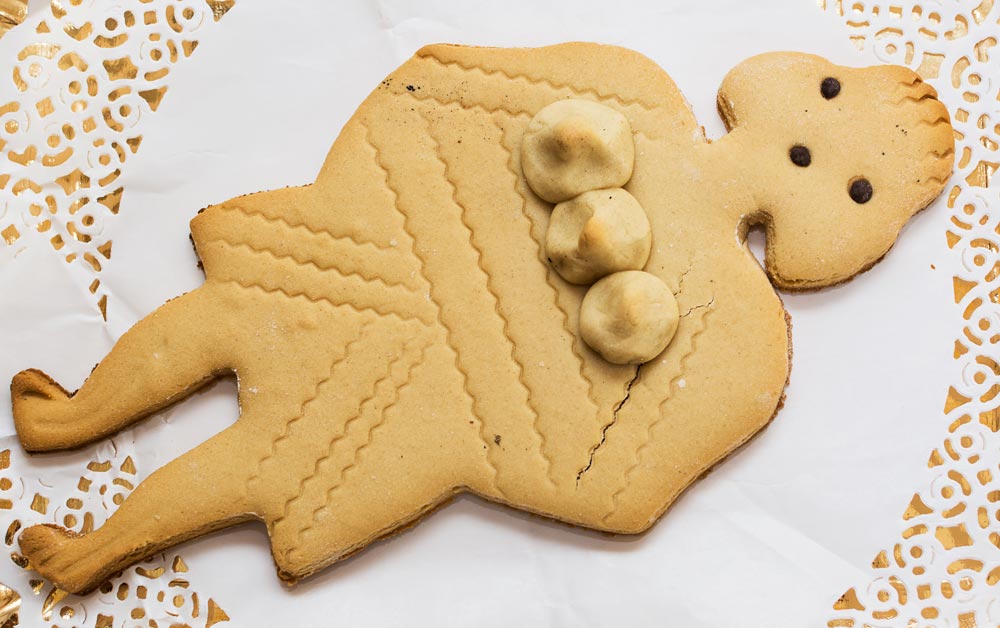
The characteristic Pupazza Frascatana
Among the most famous bakery products are the pangiallo, the panpepato, and the Pupazza Frascatana, originally created to celebrate Christmas. These culinary delights are accompanied by renowned local wines, like Frascati DOC or Cannellino Frascati DOCG.
Frascati also hosts one of the largest scientific research centres in Europe, home to sevelal laboratories: Istituto Nazionale di Fisica Nucleare (INFN–LNF); Ente per le Nuove tecnologie, l’Energia e l’Ambiente (ENEA); ESRIN, ESA Italy; Istituto Nazionale di Astrofisica (OAR, IASF e IFSI); and several sites of the Consiglio Nazionale delle Ricerche (CNR), as well as many computing centres of the Banca d’Italia.
The Feast of the Patron Saints Filippo e Giacomo is celebrated on May 3 and repeated on September 8, in memory of the 6,000 victims of the American bombing occurred in 1943 during the Second World War.