

Lying on the ruins of Trebula Mutuesca, one of the most important Roman settlements in Sabina, Monteleone Sabino was owned by various families throughout the history, until it passed to the Apostolic Chamber in the early seventeenth century.
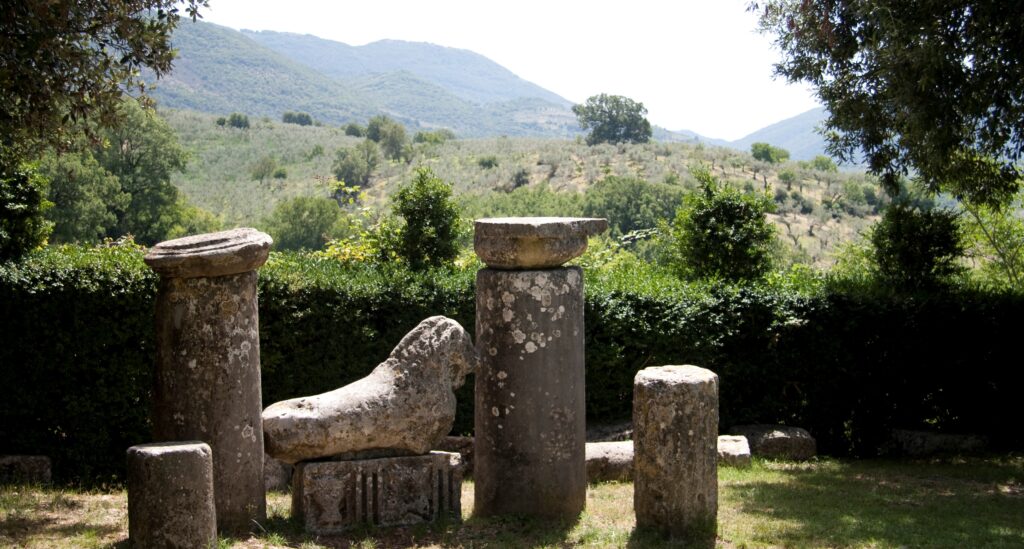
Remains from ancient Trebula Mutuesca
The village probably owes its name to the presence of several lion sculptures or maybe to its the Brancaleoni Family from Romania.The characteristic alleys, streets, and buildings are decorated with Roman artifacts from the Trebula excavations.
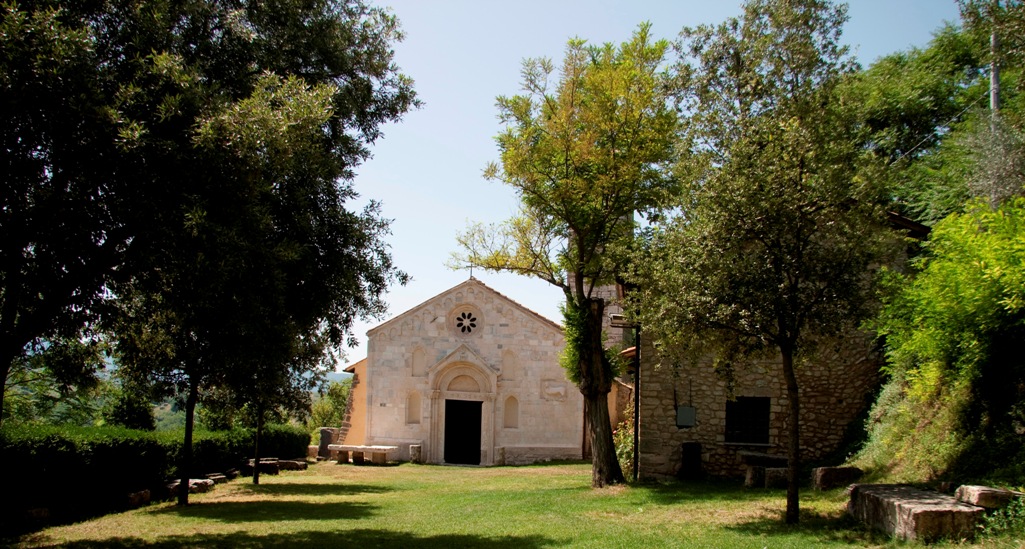
The Church of Santa Vittoria, near Monteleone Sabino
The perfectly preserved Church of Santa Vittoria, a Romanesque jewel in the green countryside, just a short walk away from the village, dates back to the early thirteen century. Decorated with frescoes and reliefs, it houses visitable catacombs.
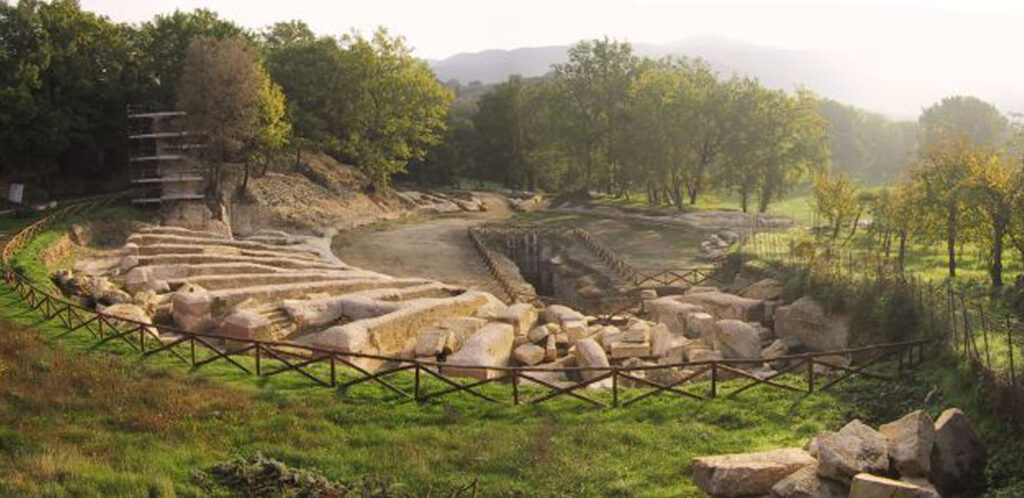
The Trebula Mutuesca Amphitheater – Photo museomonteleonesabino.it
Near the church lie the imposing Trebula Mutuesca Amphitheater and the Trebula Mutuesca Civic Archaeological Museum, which hosts numerous Roman remains discovered in the archaeological area of the same name. Also not to be missed is the Church of San Giovanni Evangelista and the seventeenth-century canvas attributed to Vincenzo Manenti.
The village is linked to the legend of Saint Victoria, who, with the strength of her faith, managed to drive away a hideous dragon that had invaded the surrounding area.
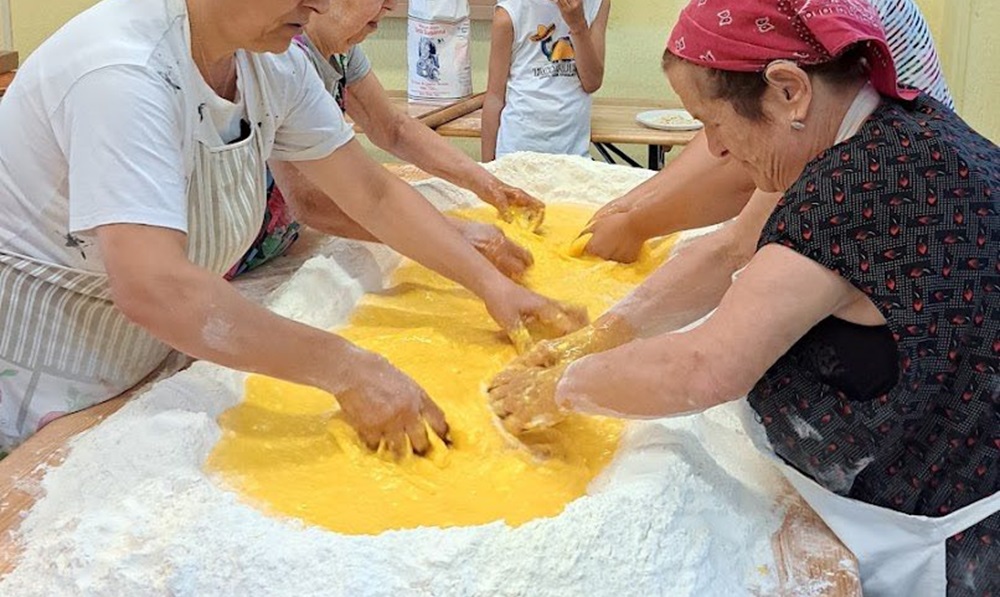
The Preparation of the Fettuccine alla Trebulana – Photo by FB Pro Loco Monteleone Sabino
Every year the Bruschetta Festival celebrates the excellent bread with Sabina DOP Extra Virgin Olive Oil. Other typical dishes are the Fettuccine alla Trebulana, celebrated with a festival in the first week of August, pan-fried fritters, and aniseed ring cakes.
Monteleone Sabino is located on the fourth stage of the Camino di San Francesco, part of the network of the Cammini del Lazio. The stage starts from Poggio San Lorenzo and ends in Ponticelli di Scandriglia.