

The village of Serrone, located at the foot of Mount Scalambra along the Route Prenestina – Casilina/Northern Via Francigena, is the ideal destination for brave paragliders.
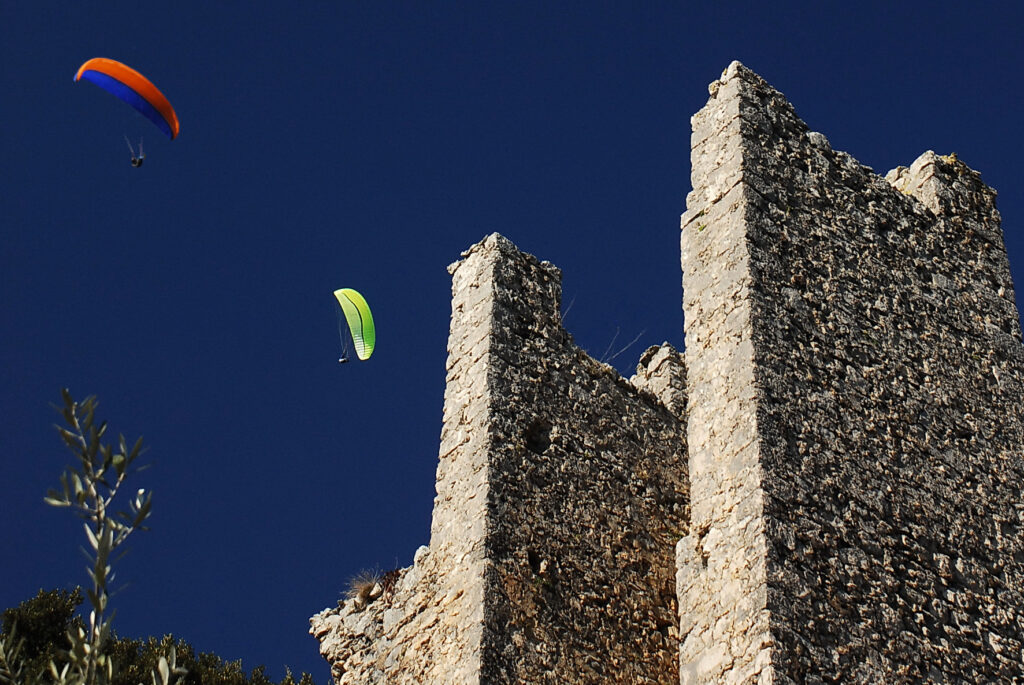
Paragliding in Serrone
From its height of over 700 meters, Serrone boasts a record, the first take-off from Mount Scalambra dating back to 1978.
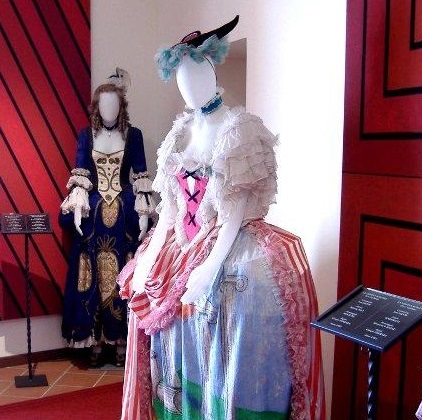
The Museo dei Costumi Teatrali
Worth a visit in Serrone is the Museo dei Costumi Teatrali, where over forty original sumptuous stage costumes from the Italian Renaissance to the present days are displayed. It is the only permanent exhibition of its kind in Lazio, and one of the few in Italy.
The Museum was created by Beatrice Minori, the RAI costume designer and personal assistant of Eduardo de Filippo, born in Serrone in 1923. The costumes were not only worn by Eduardo de Filippo, but also by illustrious figures from the world of entertainment, such as Vittorio Gassman and others.
Almost embedded in the rock, on a rocky ridge of Mount Scalambra at an altitude of 1,100 metres, stands the mystical Benedictine Hermitage of San Michele Arcangelo. According to legend, the Saint defeated the devil after a hard fight, causing him to fall from the cliff, hence the so-called “devil’s footprint” to be found on the spot. The patron saint San Michele Arcangelo is celebrated on September 29.
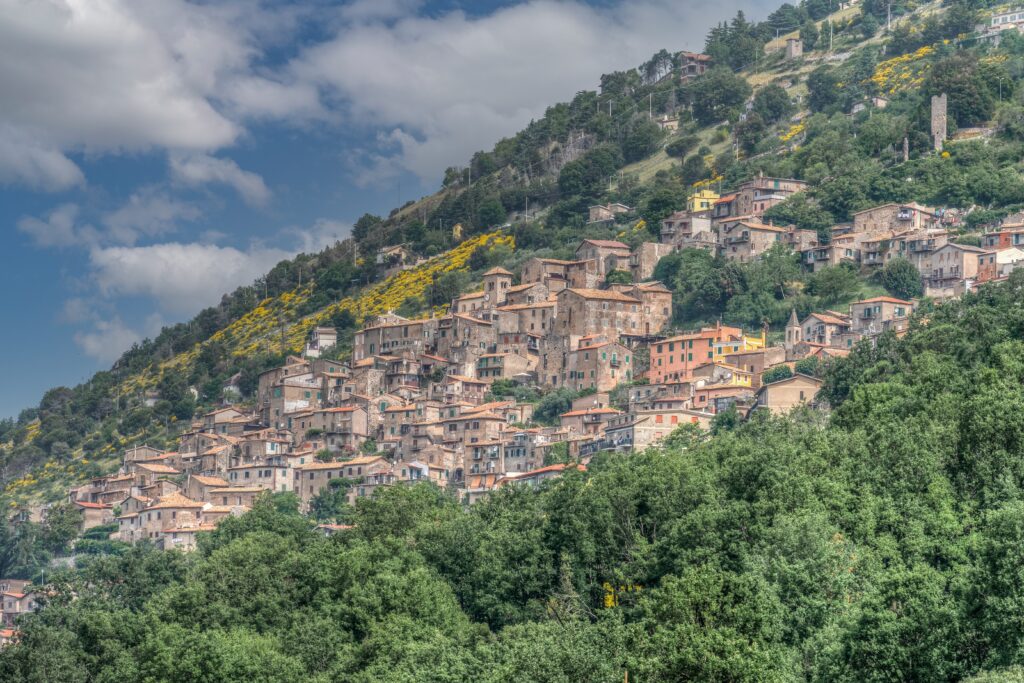
A view of Serrone
Noteworthy remains of Roman villas from the Imperial Age have been discovered in Serrone, but it is certain the Hernici people also inhabited the area. The historic centre of the village is a stone jewel, with alleys, ramps, and stairways opening onto the Sacco River Valley. Worth experiencing is definitely a ride along the Paliano-Fiuggi cycle path, where the railway once ran.
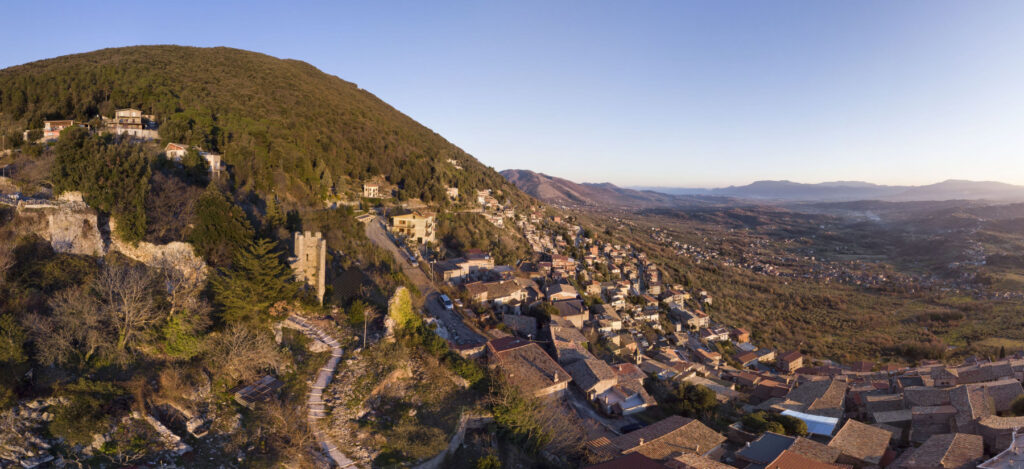
The Parco della Rocca di Torre Colonna – www.retedimorestorichelazio.it
The Parco della Rocca di Torre Colonna is included in the Network of Historic Homes of Lazio. Serrano, whose first settlement arose in the early Middle Ages on the slopes of Mount Scalandra, protected, with its Fortress and Palazzo Paliano, the village of Anagni, the City of the Popes. Unfortunately, the two castles were burned down in 1184.
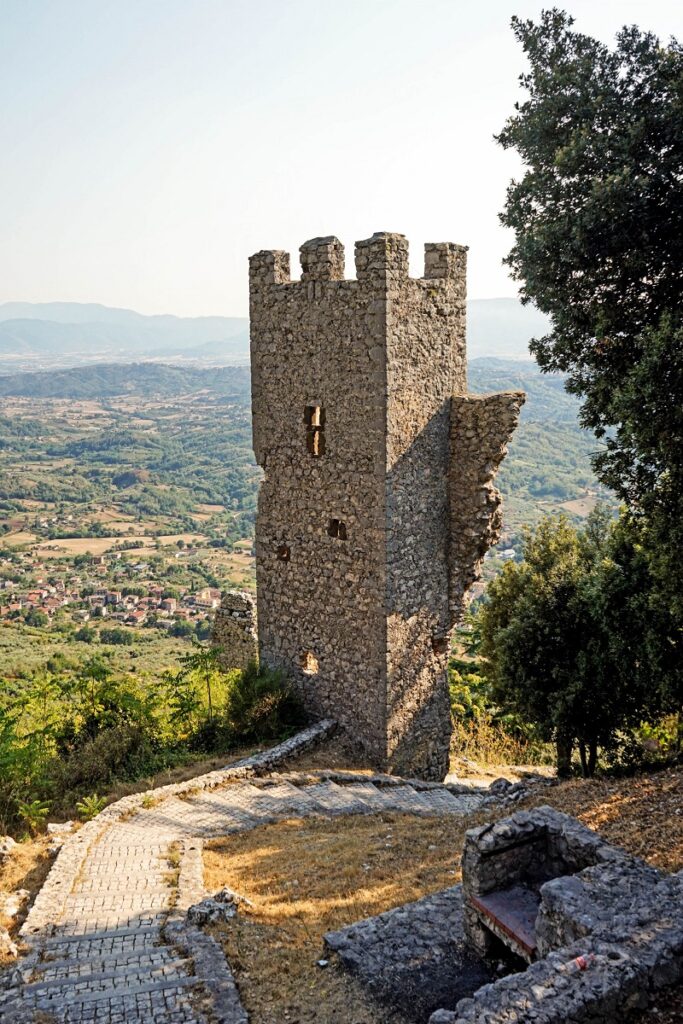
The Colonna Tower – www.retedimorestorichelazio.it
A new fortification was built on their ruins, of which traces of the Colonna Tower and the city walls are preserved. In 1427, the fortress was acquired by the Colonna Family, who held their control over centuries. The stone defensive tower featured a series battlements, arrow slits, and passages.
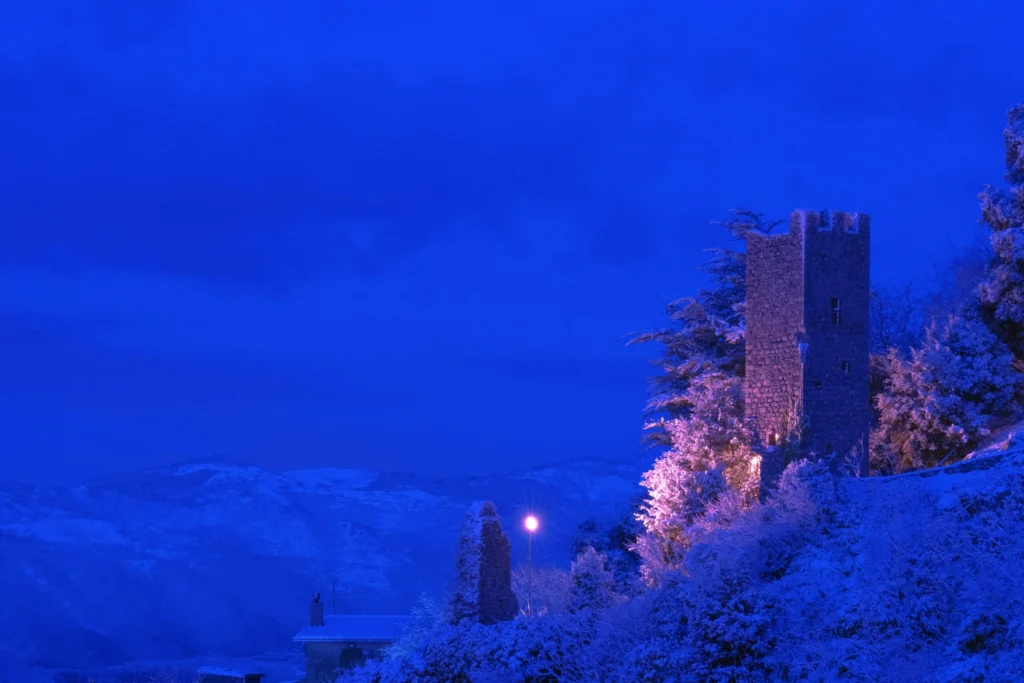
The ruins of the Colonna Fortress in Serrone – www.comune.serrone.fr.it
When it snows, the ruins of the ancient Colonna Fortress are tinged with white poetry and magical atmosphere. Not to be missed are also the cyclopean Lesca Walls, the Church of San Quirico, built in 1600 for the Franciscan Zoccolanti Friars, and the Church of San Pietro Apostolo, with its eighteenth-century organ.
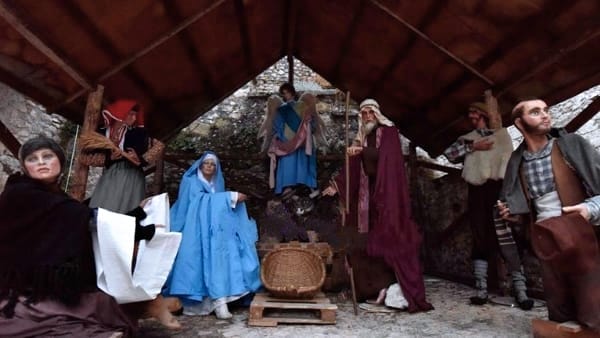
The life-size Ethnographic Nativity Scene in Serrone
The impressive Ethnographic Nativity Scene of Serrone, the longest one in Lazio, consists of more than a hundred life-size statues in traditional Ciociarian costumes, positioned along the alleys of the historic centre. The crib is on display from December 8 to January 6, the Three Kings’ Day.
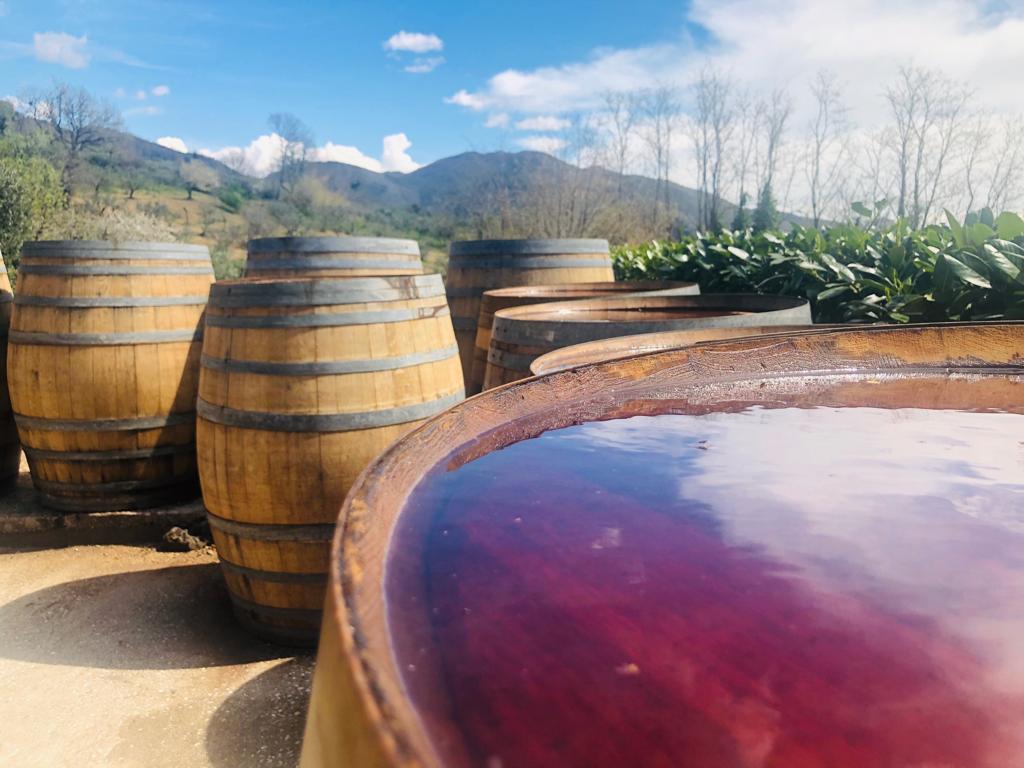
The Festival Cesanese and the Palio delle Botti – Facebook @PaliodelleBottiSerrone
The local DOCG wine Cesanese del Piglio is celebrated at the end of August with the Festival Cesanese. Another important event is the Palio delle Botti, a spectacular race organized by the Associazione Nazionale Città del Vino. Athletes, competing in pairs that alternate each other, roll a 500-litre barrel through the streets of the village.
The Cesanese Festival is also an opportunity to appreciate the local white wine, Passerina del Frusinate, also celebrated at the Festival of the Passerina and Patacca, a fresh pasta dish with lamb or truffles. Also typical of Serrone are the Frascatelli, a very thick kind of pasta made with water and flour, the pizza screscita, and the delicious aniseed ring cake.