

In San Donato Val di Comino, a small village in Ciociaria, a Square serves as a large stumbling stone, which commemorates the survivors from the Auschwitz extermination camp, liberated on January 27, 1945.
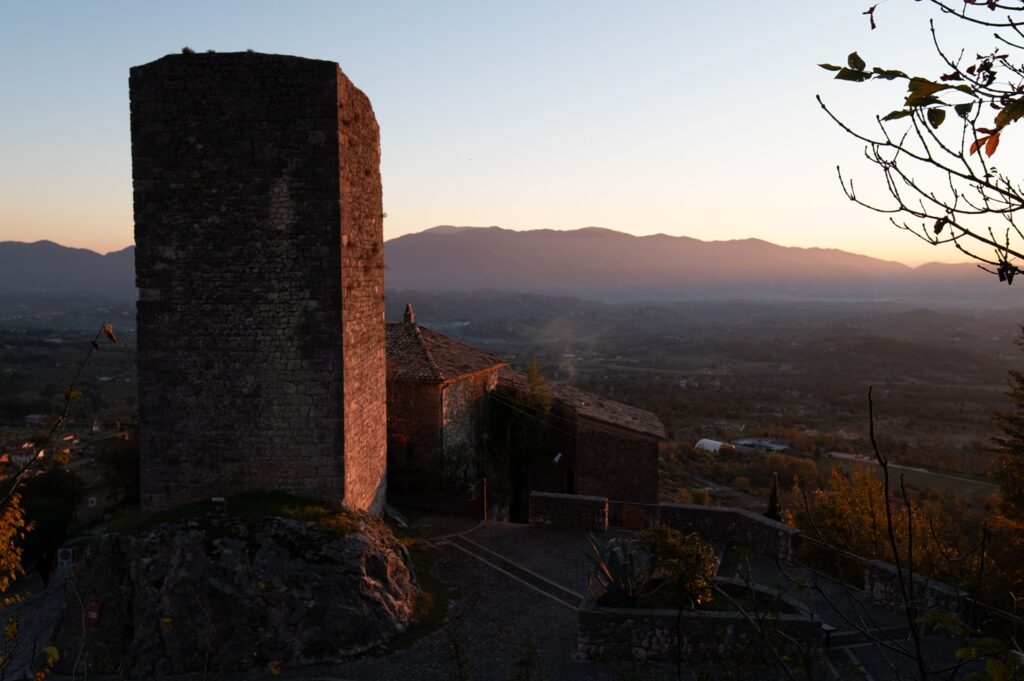
A view of the Gustav Line from the Torre dei Conti d’Aquino
The simple square became a memorial of the Holocaust on January 27, 2023. Here, during the Second World War in 1940, dramatic events occurred, the Germans occupied the village to make it an internment centre for Jews and foreigners. From 1943, after the armistice, the village became a military place, the last inhabited centre before the Gustav Line.
On April 6, 1944, the Jewish Easter Eve and the Catholic Holy Thursday, sixteen foreign Jews interned in San Donato Val di Comino were deceived and, from Piazza 28 ottobre, todays Area del Memoriale della Shoah, deported to Auschwitz.
The Holocaust Memorial in San Donato Val di Comino celebrates their dramatic journey through a sequence of seven key symbols: welcome, deception, abyss, memory, hope, future, and a United Europe.
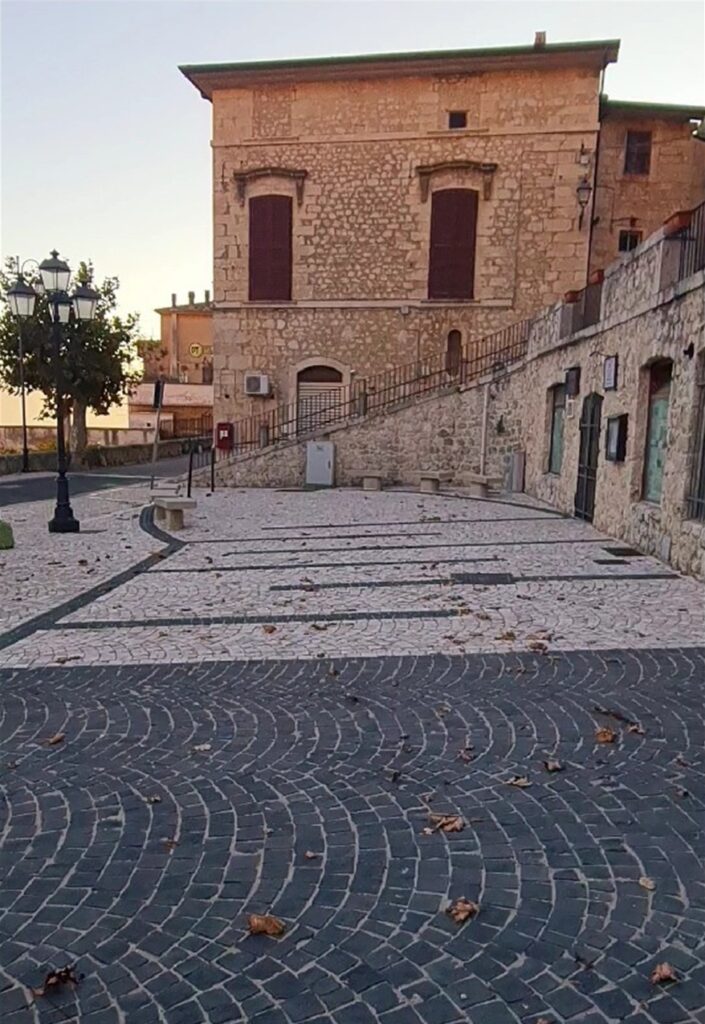
The Holocaust Memorial, the sharp lines and the benches
The benches are a symbol of welcome, as the inhabitants of San Donato Val di Comino, including the authorities and the municipal employees, courageously welcomed and integrated the internees and even saved them from capture by the German military police.
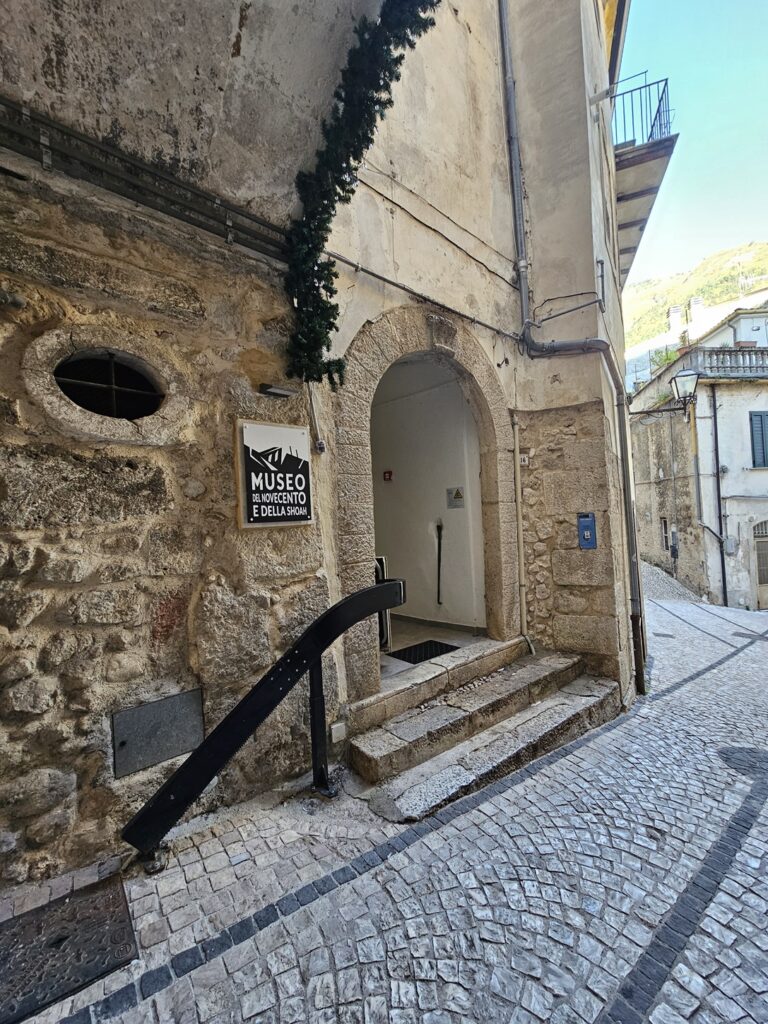
The Museo del Novecento e della Shoah
In the Museo del Novecento e della Shoah, just a few metres from the Memorial, many of these stories of heroism and solidarity are told, such as the one of Costanza Rufo, who saved a Jewish woman by hiding her in a basket full of chicken dung she carried on her head, as the women of San Donato used to do.
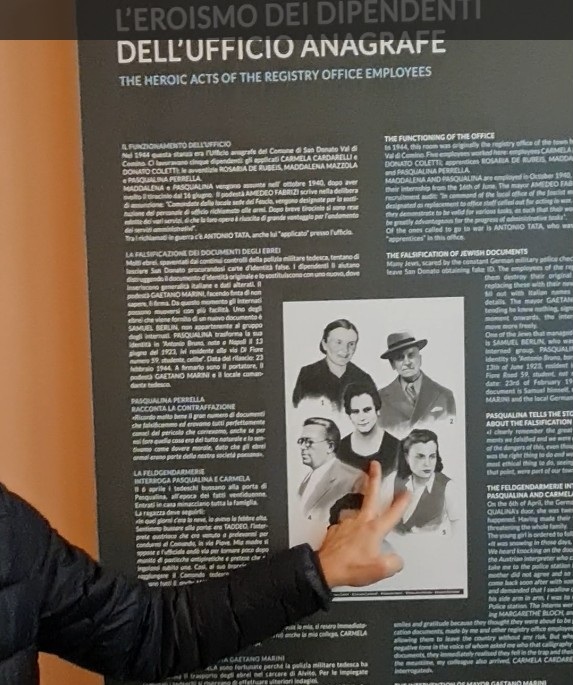
The Museo del Novecento e della Shoah, Pasqualina Perrella and the Registry Office
Another important figure is Pasqualina Perrella, an employee of the registry office who managed to forge the identity of a Jewish immigrant, saving her from deportation. Pasqualina, the last heroin, died at the age of 99 in 2021, the very year the Museo del Novecento e della Shoah was established.
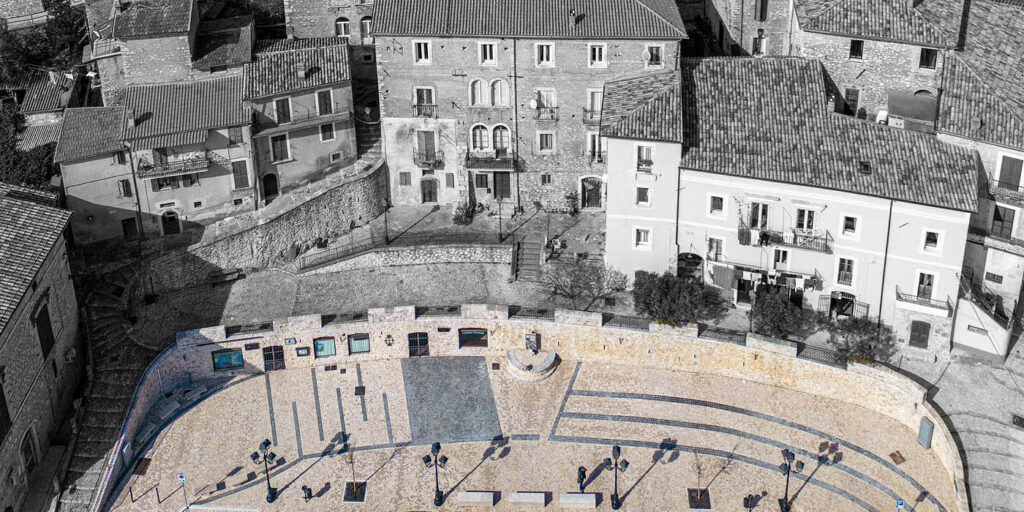
The Shoah Memorial
The sharp lines symbolize the event occurred in March 1944, when the German troops, pretending to collect their passes, identified, interrogated, and arrested the Jews. The black paving on the square marks the exact spot where the captured Jews were gathered. It symbolizes the abyss of deportation, also represented in the black room inside the Museo del Novecento e della Shoah.
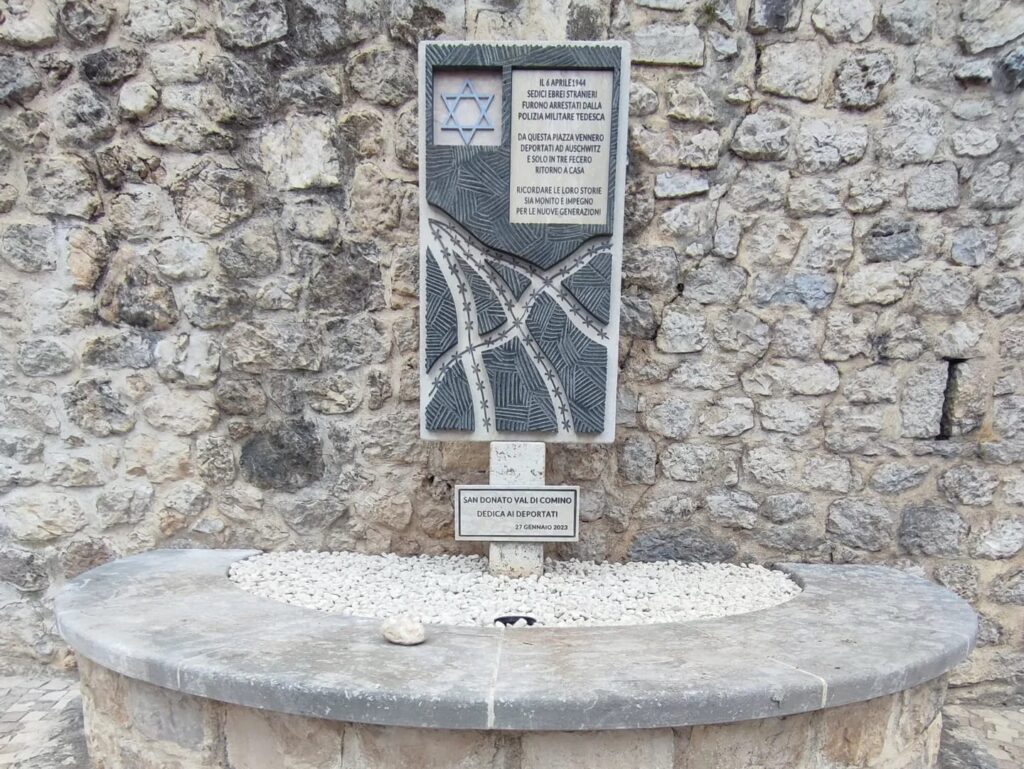
Shoah Memorial, the Stele
The stele, designed by Giuliano Tullio, commemorates the internees deported to Auschwitz. The stones around the stele are a tribute to the Jewish still present tradition of placing with their left hand a stone, instead of fleeting flowers, on the graves of their loved ones.
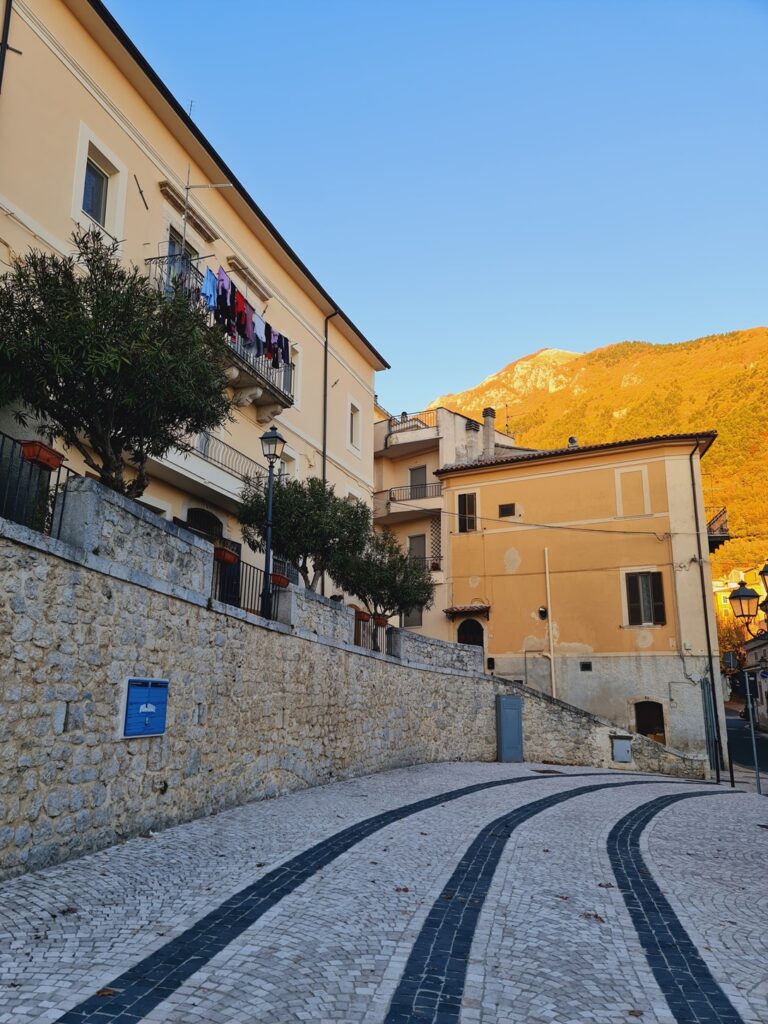
Holocaust Memorial, the three dark lines
The three dark lines leading to the exit of the Holocaust Memorial represent hope. They commemorate the three survivors of the Nazi extermination camps: Rosa Blody, Gertrude Glaser, and Enrico Levi. The sixth symbol, two maple trees, represent the future in the figure of the two children, Italo and Noemi Levi, deported from San Donato Val di Comino and killed upon arrival at Auschwitz. All these stories are a reminder for the future generations.
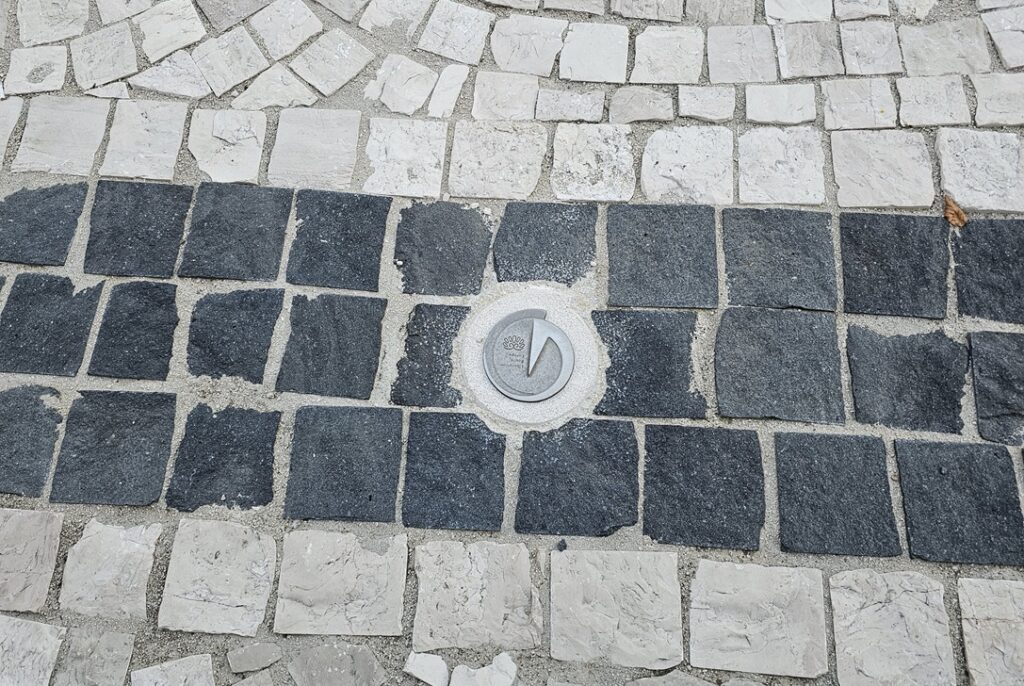
Holocaust Memorial, the “Vector”
The “Vettore”, a symbol of a united Europe, is a work by the Polish architect Daniel Libeskind, who designed the Jewish Museum in Berlin and Ground Zero in New York. It connects San Donato Val di Comino to the sites of remembrance of the Second World War. The Memorial, together with the Museo del 900 e della Shoah and the War Trails, forms a circuit included in the “Liberation Route Europe” project, promoted by the Council of Europe.
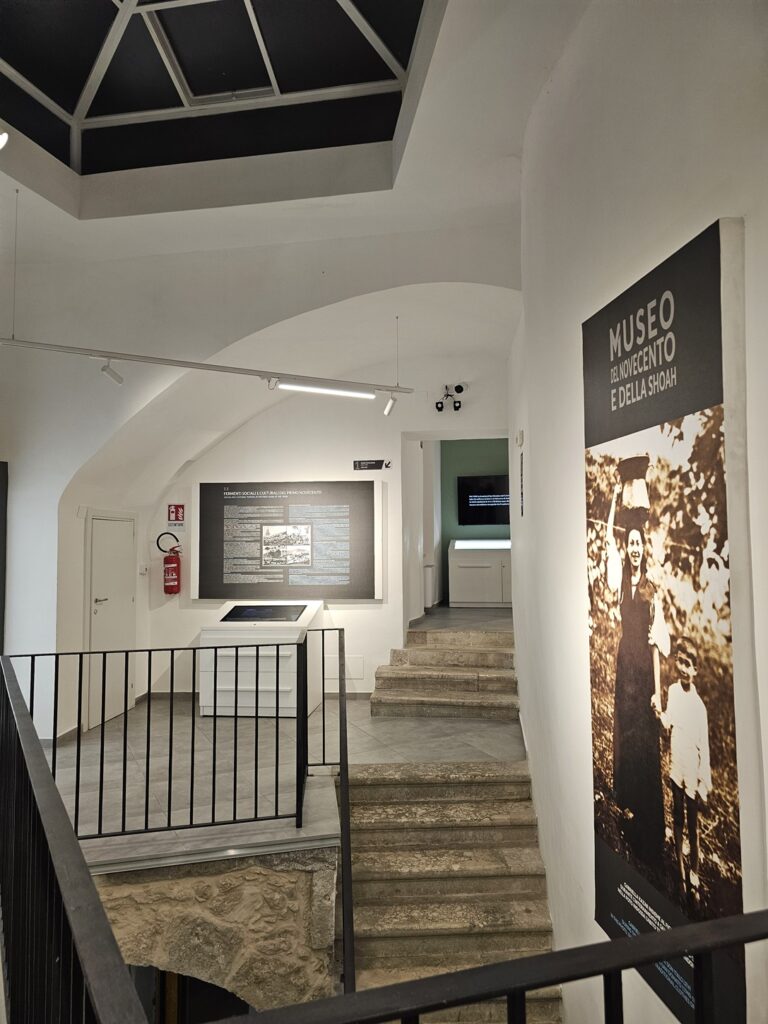
Museo del Novecento e della Shoah, Gabriella Cazar, and her son Italo Raffaello Levi
The stories of the inhabitants of San Donato Val di Comino, who tried to help the internees and the allied soldiers escaped from prison, are narrated in the Museo del Novecento e della Shoah. Many of them are testified by old letters from the survivors, books and magazines, such as those documenting the publication of the racial laws, and by the personal belongings of the soldiers who never returned home.
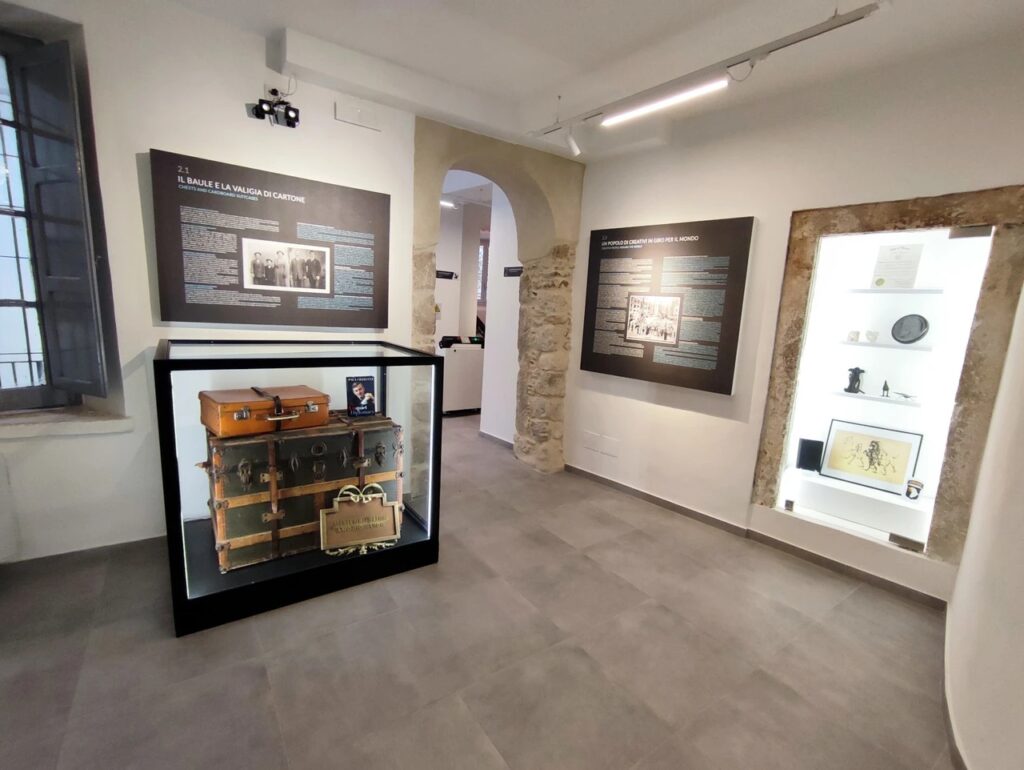
Museo del Novecento e della Shoah, the emigrants – liberationroute.com
Travelling through time, the Museum also tells the stories of the emigrants from San Donato to New York, and of their district, Little San Donato, whose ruins, after the demolition in the 1950s, served as the setting for the musical “West Side Story”. All these intersecting and overlapping stories loudly speak of those who, at the time, were not listened to.