

You absolutely cannot miss this bizarre, unexpected tour throughout both heavenly and gruesome mysterious sites in Lazio, characterized by the presence of water, stone and even bones, where everything is possible!
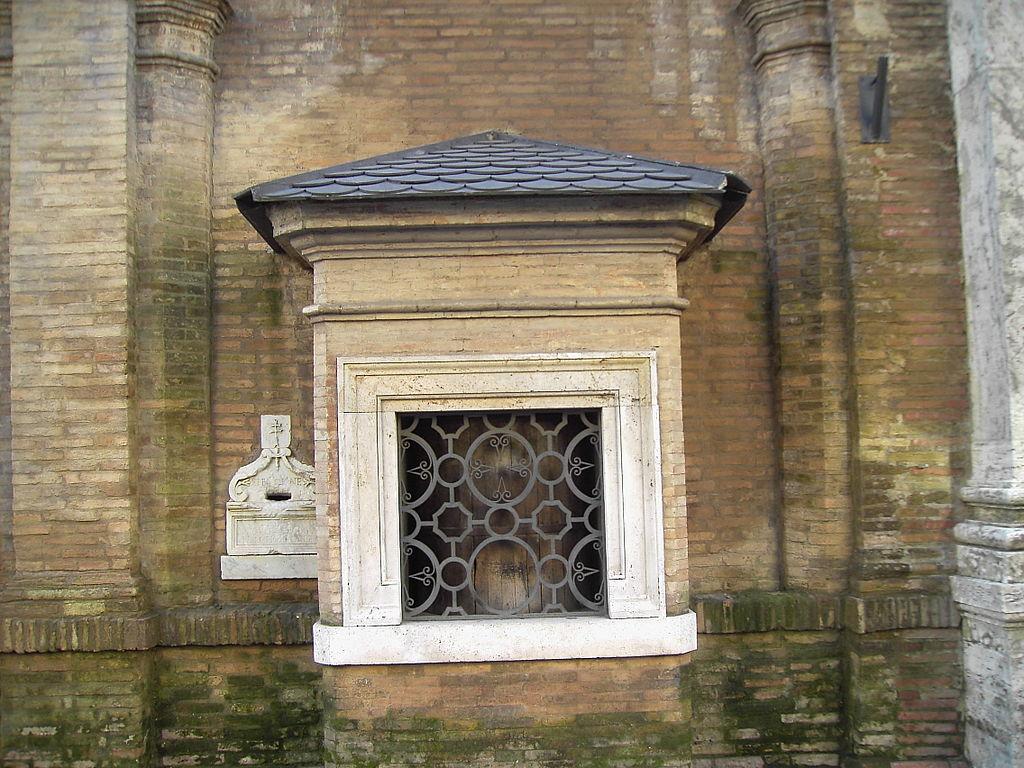
In Rome, a stone’s throw from St. Peter’s Square, in front of the Arcispedale di Santo Spirito in Saxia, we find, behind a grate, the foundling wheel “Ruota degli Esposti”, introduced by Pope Innocenzo III and abolished in 1923. Since medieval times, unwanted or illegitimate newborns were abandoned here. The sound of a bell made the wheel turn and welcome the baby, who was then entrusted to the care of the friars and horribly marked with a double cross on its left foot. The child was recorded as filius matris ignotae, (son of an unknown mother) or, for short, filius m.ignotae, hence Roman insult.
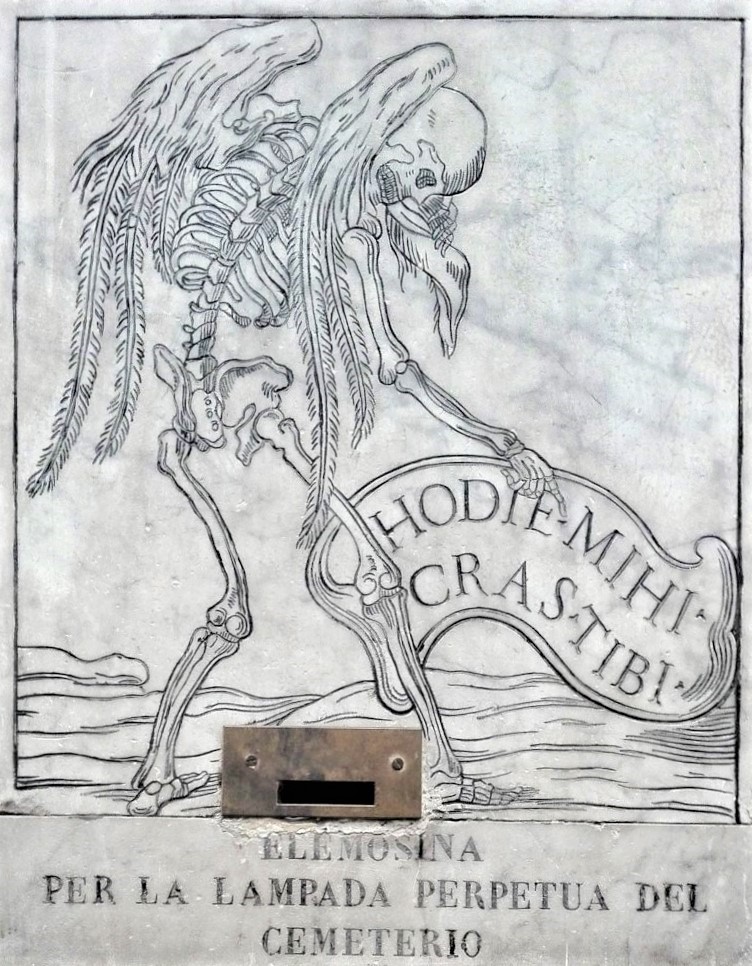
Church of S. Maria dell’Orazione e Morte
Hodie mihi, cras tibi
Let us continue along Via Giulia and reach the weird Church of Santa Maria dell’Orazione e Morte, where we are welcomed by a skeleton portrayed on the façade warning, Hodie mihi, cras tibi (today it’s my turn, tomorrow it’s yours).
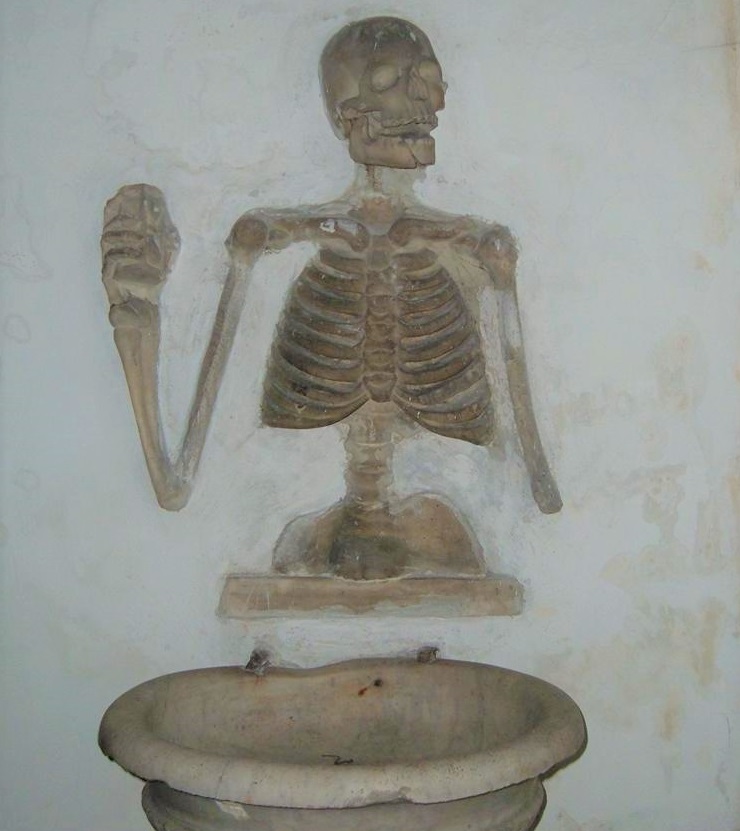
Church of S. Maria dell’Orazione e Morte
We enter the church with our fingers crossed, but the scenario is even worse, with morbid decorations and symbols of death. In the crypt, the Cimitero Ipogeo preserves more than 8000 skeletons, with their name and day of death, as well as the date and place of their findings, engraved on their skull. Embellished with sculptures and chandeliers made of bones, the ossuary was, in 1800, a setting for sacred re-enactments with life-size wax statues. The “Arciconfraternita dell’Orazione e Morte” carried out the post-mortem tradition of burying the unknown corpses found in the countryside or drowned in the Tiber.
But now let us take a trip out of town, to seek relief among the stone statues in Cervara di Roma.
“So 171 li scalini che portano a Cervara. Li primi 30 è un gioco da ragazzi schizzi come li razzi […] l’hai fatti tutti e adesso all’improvviso te pare d’esse annato in Paradiso”.
This is how the actor Renato Merlino describes the 171 steps that lead to this tiny village immersed in the nature at the borders of the “Simbruini Mountains Natural Park”, dotted with rocks and colourful houses.
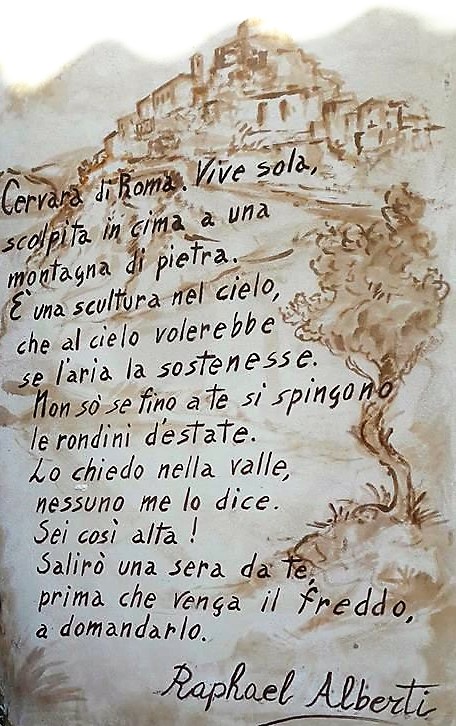
Since 1800, several artists from all over the world have dedicated poems, paintings, frescoes, murals, and sculptures to this jewel over the Aniene Valley, like the French painter Ernest Hebert with his charming creations “Il Picco di Cervara”, “Una strada di Cervara”, “Rosanera alla Fontana”, “La Portatrice d’Acqua” and “Le Donne di Cervara”, the latter exhibited at the Musée d’Orsay in Paris. On the town walls, you can read the verses of the Spanish poet Raphael Alberti and the notes of the “Notturno per Cervara”, composed by Maestro Ennio Morricone.
This is how the actor Renato Merlino describes the 171 steps that lead to this tiny village immersed in the nature at the borders of the “Simbruini Mountains Natural Park”, dotted with rocks and colourful houses. Since 1800, several artists from all over the world have dedicated poems, paintings, frescoes, murals, and sculptures to this jewel over the Aniene Valley, like the French painter Ernest Hebert with his charming creations “Il Picco di Cervara”, “Una strada di Cervara”, “Rosanera alla Fontana”, “La Portatrice d’Acqua” and “Le Donne di Cervara”, the latter exhibited at the Musée d’Orsay in Paris. On the town walls, you can read the verses of the Spanish poet Raphael Alberti and the notes of the “Notturno per Cervara”, composed by Maestro Ennio Morricone.
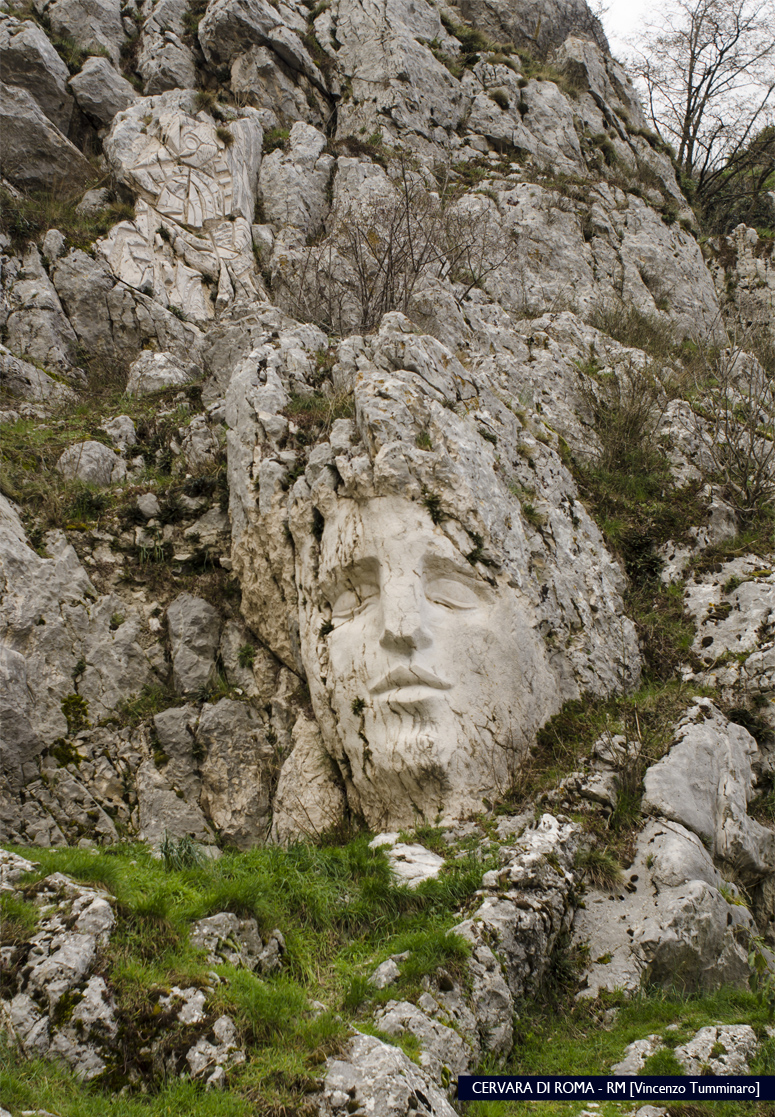
On “The Mountain of Europe”, huge sculptures symbolizing peace were chiselled into the limestone rock overlooking the square by the students of the “Accademia delle Belle Arti di Firenze”.
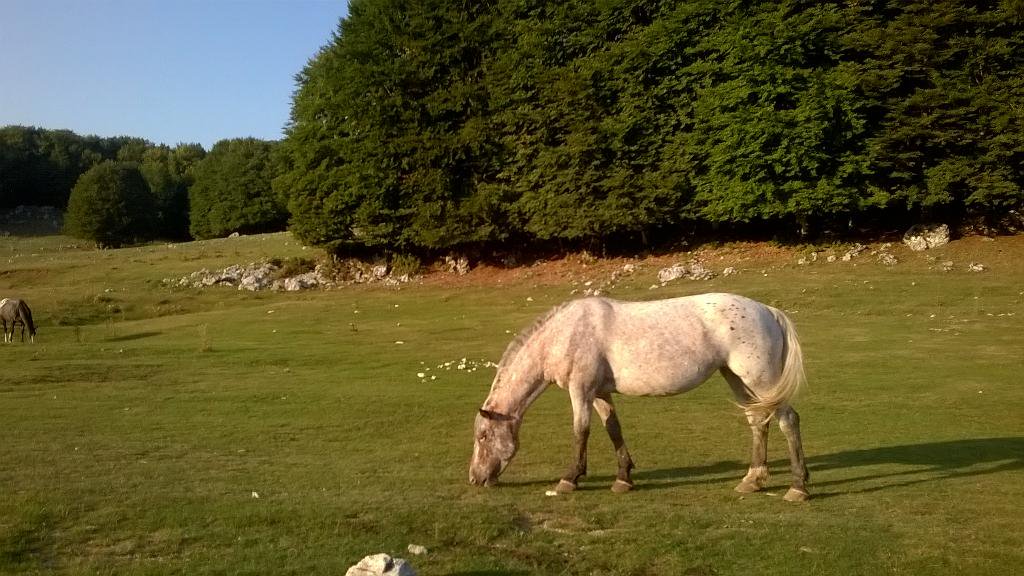
Campaegli – Cervara di Roma
The stone-paved alleys and steep stairways of the village are enriched by original murals by Giuseppe Ciotti and Eric Hebborn. Cervara di Roma also inspired cinema. “Quo Vado?” with the comedian Checco Zalone was filmed in Castrovizzo and “Black Butterfly”, the thriller with Antonio Banderas, in Campaegli, among the spectacular karst plateaus, beech forests and the “Cervo Wildlife Reserve” at an altitude of 1000 metres.
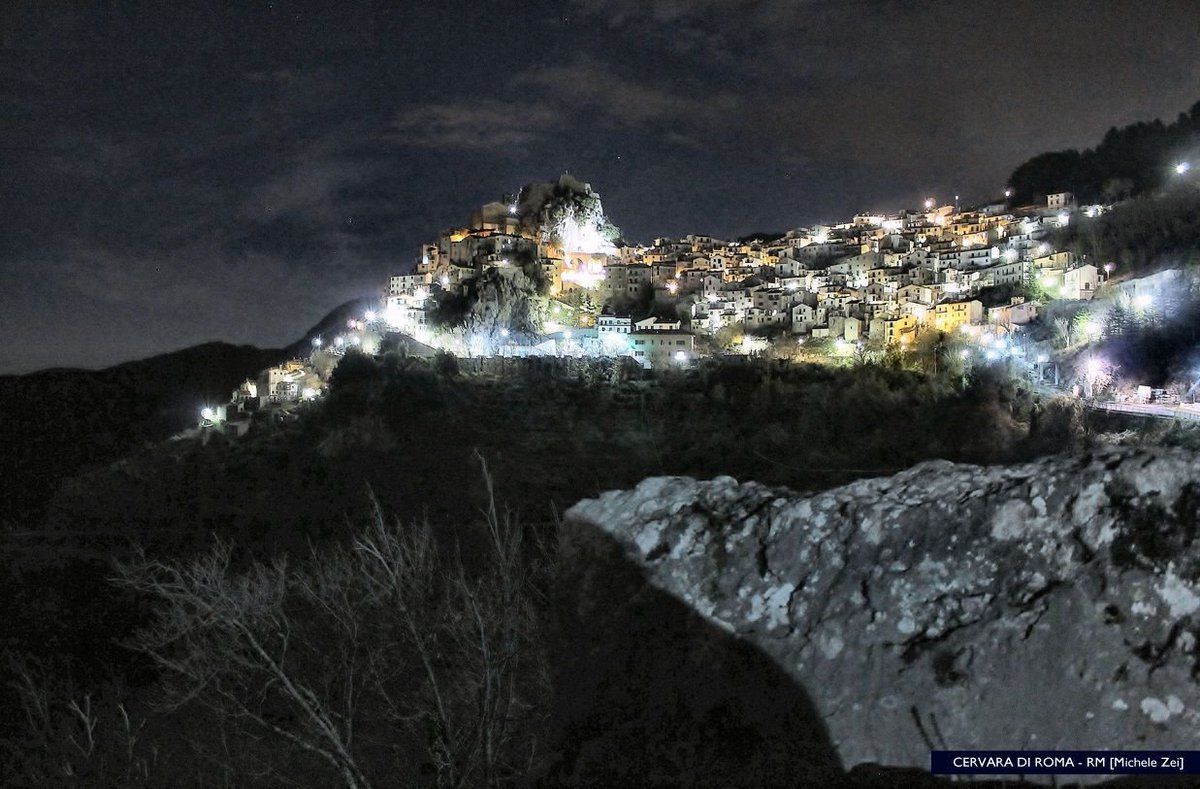
At night, then, how can you not fall in love with a similar necklace, with a face carved into the rock and a body dressed in sequins?
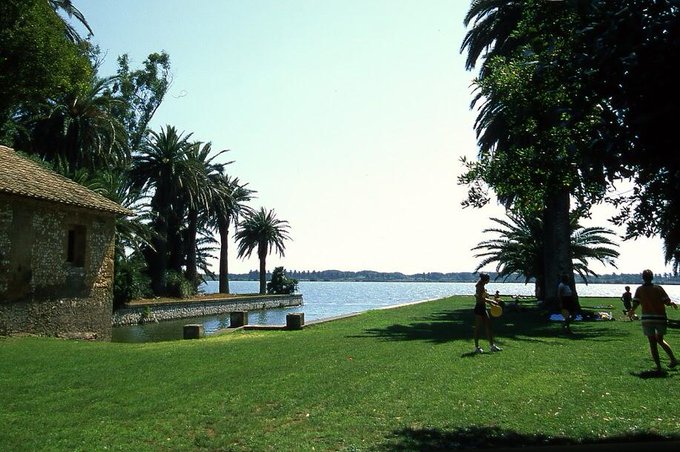
Parco letterario di Omero
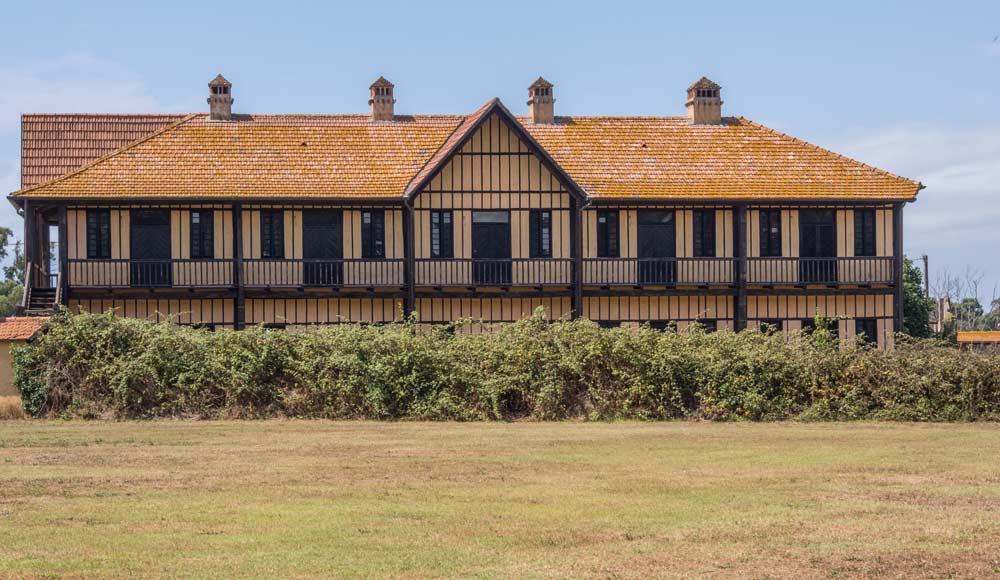
Among the amazing rarities, you will be fascinated by the earthly paradise of the “ Parco di Omero sul lago di Fogliano”, within the “Parco Nazionale del Circeo”, on Lake Fogliano, which hosts an impressive exotic garden. The Park takes its name from the Greek poet who lived here and wrote “The Odyssey”, inspired by the Circeo Promontory, where, it is said, the sorceress Circe bewitched Ulysses.
Villa Fogliano
We proceed towards Villa Fogliano and its little-known literary park, one of the most beautiful in Italy, which inspired Orazio, Goethe and D’Annunzio. The “Fondazione Ippolito Nievo” elected this territory around a village of fishermen and buffalo breeders as the “Centro Internazionale dei Parchi”,
The towns of Sermoneta and Ninfa, and the lakes of Caprolace and Fogliano were reborn thanks to Pope Bonifacio VIII, whose family, the Caetani, created the “Orto Botanico di Villa Fogliano”, the exotic garden conceived in the nineteenth century by Ada Bootle Wilbhram, wife of Onorato Caetani. After a few years of abandonment, a miracle happened, Mediterranean and exotic species spontaneously started to grow and turned the “Parco di Omero” into an enchanted paradise, with palm trees reflecting into the lake, where to take romantic walks under the moonlight.
From macabre death to the poetry of water and stone, mixed emotions linger in our hearts, as we wonder whether you have been impressed by our stories.
ù