

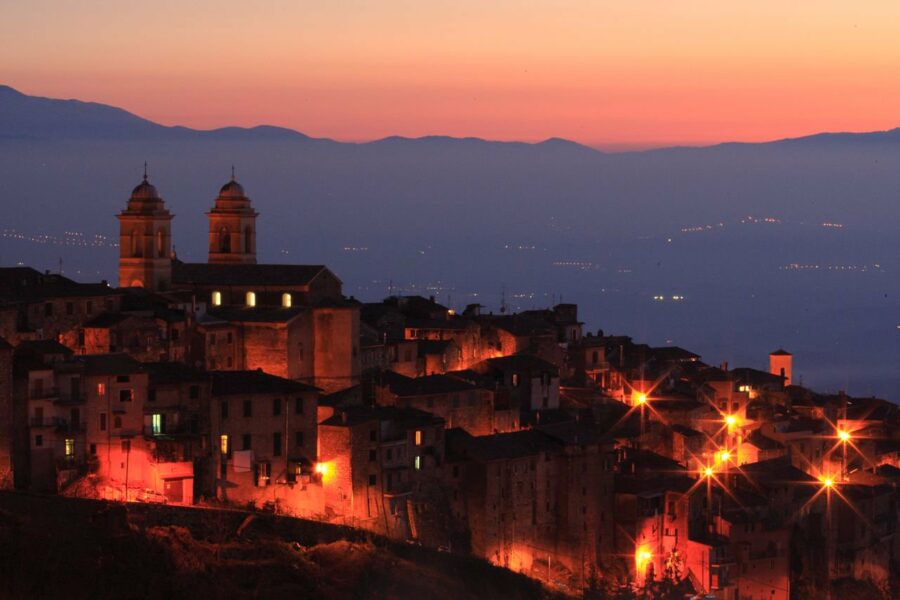
Piglio, a village in Ciociaria along the Southern Via Francigena, overlooks the Sacco Valley from a rocky spur of Mount Scalambra.
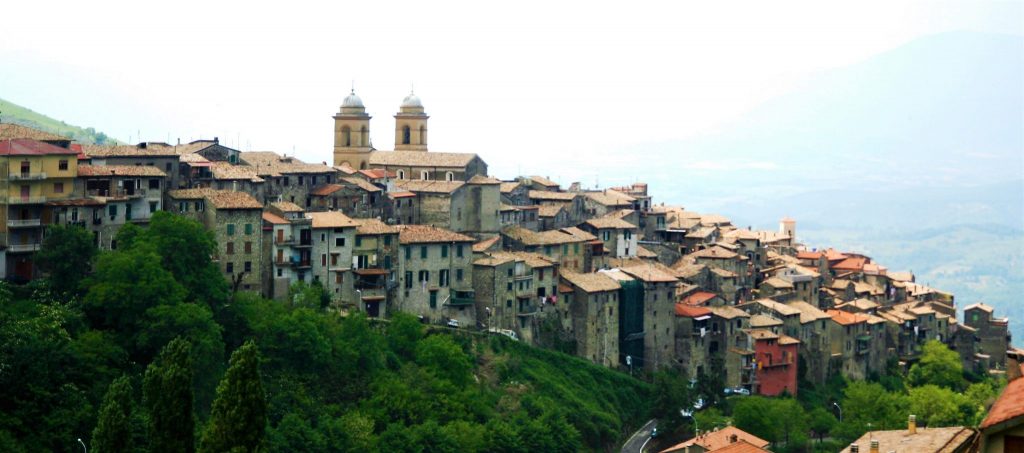 Here, a series of narrow alleys leads to the ruins of the Colonna Castle, also known as Castello Alto. The herringbone arranged houses cling to the steep slopes at the edge of the hill, serving as a defensive line. The Castle, erected around the year 1000, consists of two sections built in different eras with a height difference of approximately 25 meters.
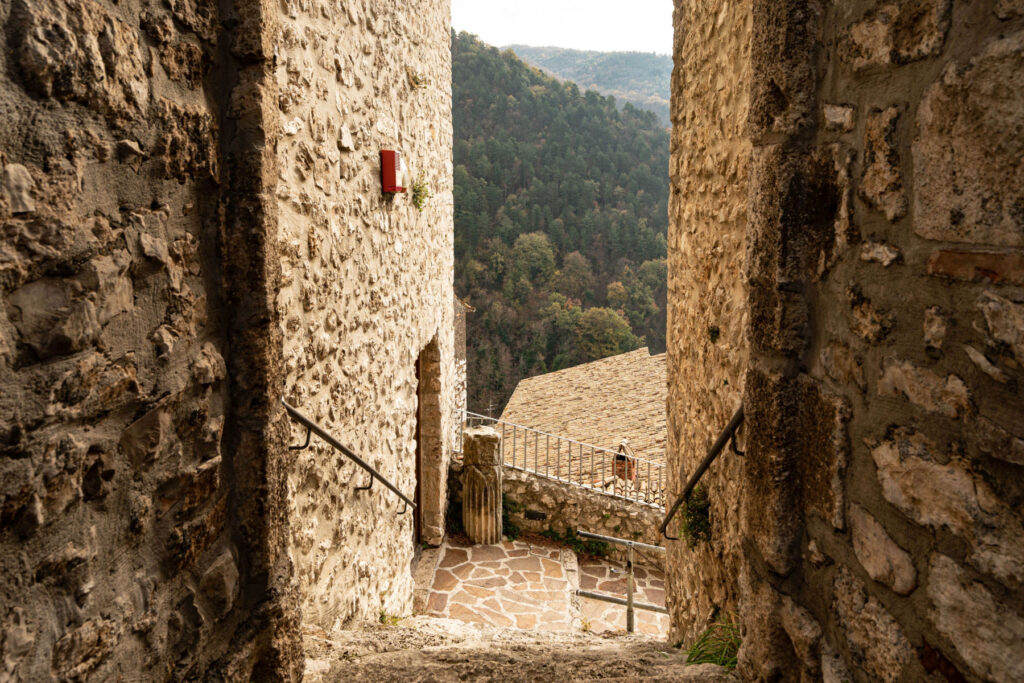
The Castello Baronale Alto – retedimorestorichelazio.it
The Castello Alto monitored the route across the Arcinazzo Plateaus, which connected Lazio and Abruzzo. The stretch from the Church of San Rocco to the Sanctuary of the Madonna del Monte is part of the Southern Via Francigena.
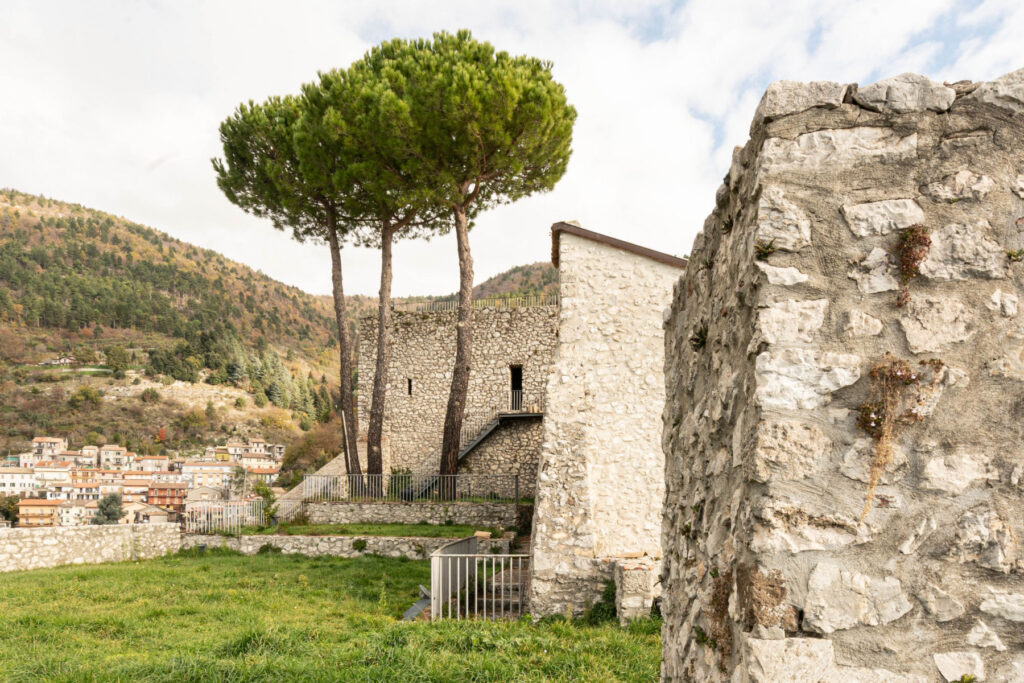
The Castello Baronale Alto, exterior – retedimorestorichelazio.it
The Castle was owned by the Diocese of Anagni and governed by the nobiles viri De Pileo, relatives of Pope Boniface VIII, while, from approximately 1240 to 1480, it belonged to the De Antiochia Family, descendant of Frederick II of Swabia. The De Antiochia championed the Ghibelline cause in Central Italy, making Piglio a stronghold of a sort of Ghibelline state within the heart of the Papal States.
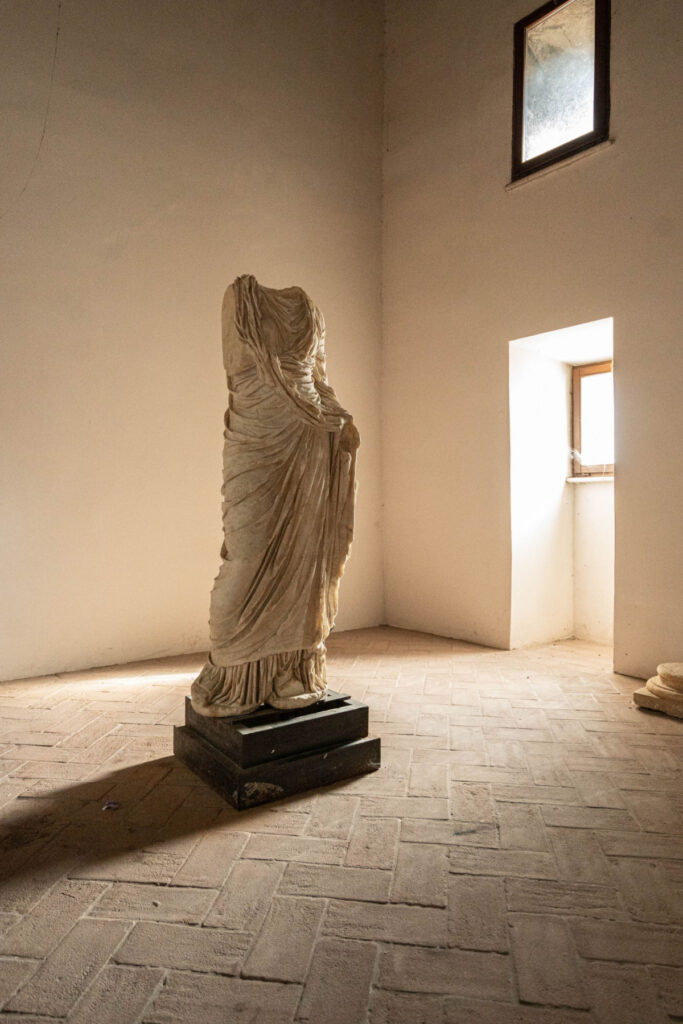
The Castello Baronale Alto, statue of a Roman woman – retedimorestorichelazio.it
The Castello Baronale Alto, one of the Historic Residences of Lazio, underwent several restorations during the second half of the 20th century. It houses an antiquarium, which displays archaeological artifacts from local excavations, included the statue of a woman dressed in typical Roman attires lacking head and arms, dating back to the 1st or 2nd century BC.
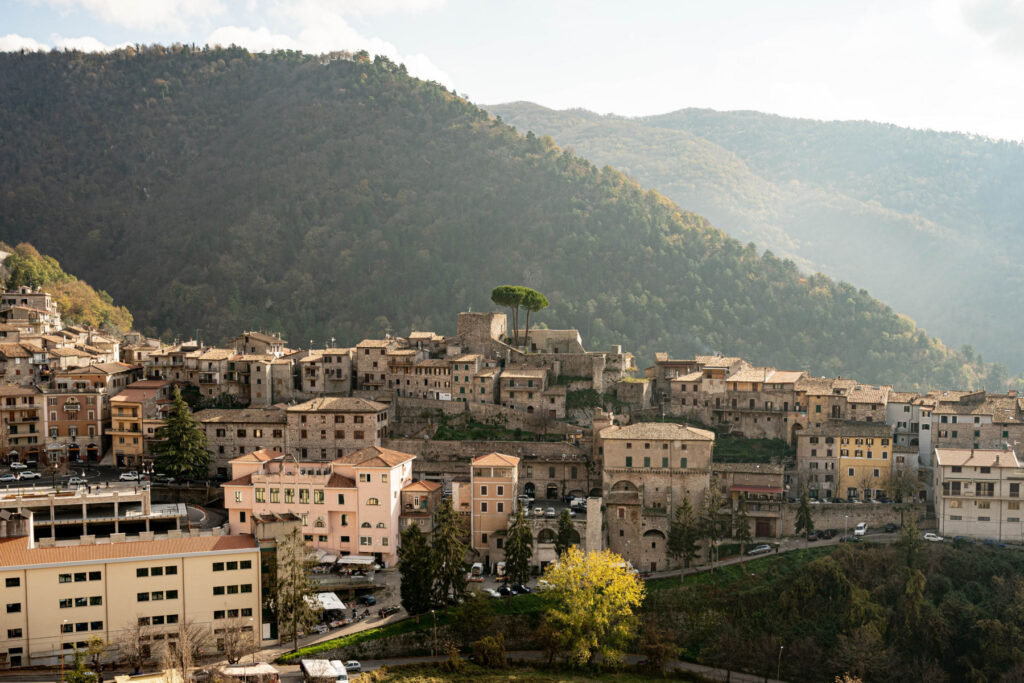
The Upper Baronial Castle, panoramic view – retedimorestorichelazio.it
In Piglio, De Antiochia Family also built the Palatium Inferior, or Castello Basso, which hosts the Arco della Fontana, also known as Porta da Capo. From 1430 onwards, through marriage alliances with the De Antiochia de Pileo Family, the Colonna from Paliano acquired portions of the castle. For a brief period, while the Colonna clashed with the Orsini, Piglio also belonged to the Borgia. The Colonna permanently established here and remained until 1818, when a member of the dynasty died without leaving a male heir. The historic centre of Piglio hosts the Collegiate Church of Santa Maria Assunta and the Church of the Madonna delle Rose, named after the Virgin who, according to legend, miraculously delivered the town from the plague of 1656.
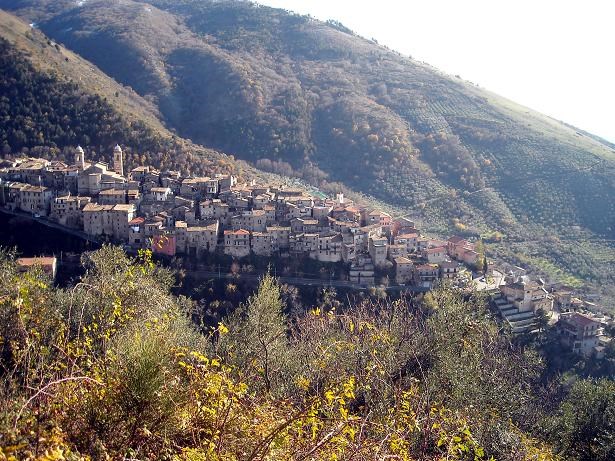
Piglio – www.turismo.comune.piglio.fr.it
The Scalambra, a massif dotted with caves, hosted numerous hermits and followers of Saint Francis. The Church of San Lorenzo, once the site chosen by the friar Andrea Conti, houses an urn with his remains.
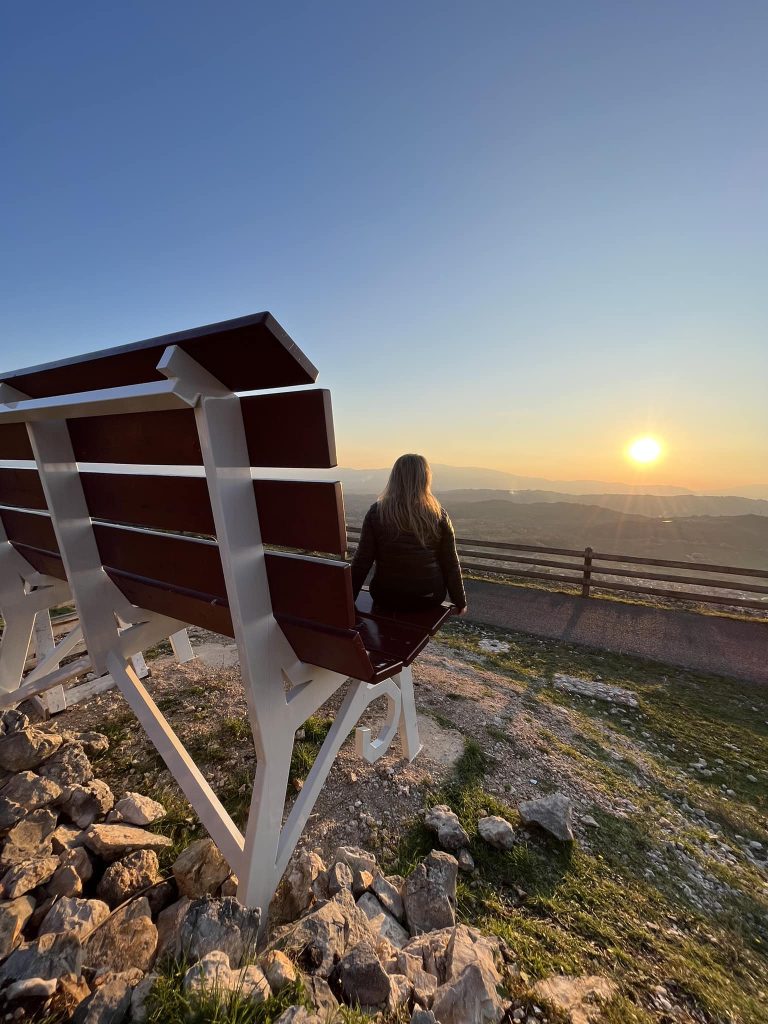
The Big Bench in Piglio – Facebook @annalisa.trivisone
Walking or cycling from Paliano to Fiuggi, passing through Serrone, Piglio, and Acuto along a former railway route offering extraordinary vews, it is possible to reach the Giant Bench, located two km away from the former Piglio railway station on the road towards Acuto. From here, we can admire the valley below and Mount Scalambra, the ideal site for paragliding lovers.
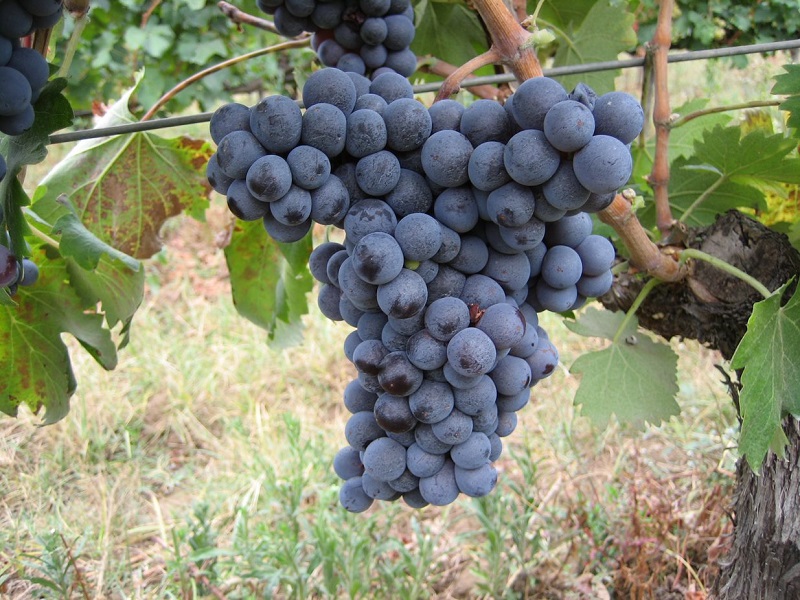
The Cesanese del Piglio DOCG
Piglio’s landscape consists of hills and mountains, with elevations ranging from 290 to 1,420 declared metres above sea level. Both olives and grapes are cultivated here, but the area is mostly famous for its Cesanese del Piglio DOCG red wine, which was declared DOC in 1973 and acquired in 2008, first one in Lazio, the status of DOCG. On the first Sunday of October in Piglio, a famous grape festival is celebrated.
 Wine, however, is particularly appreciated in combination with chestnuts, which grow on the Arcinazzo Highlands. This stretch of Lazio between Trevi nel Lazio, Arcinazzo Romano, and Piglio, offers an Alpine-like red and brown unique landscape.