

Formello, nestled within the Veio Regional Natural Park, lies on the exact spot where the ancient Etruscan city of Veio once stood. The main attractions in the village are Palazzo Chigi, Villa Versaglia, and the Church of San Lorenzo.
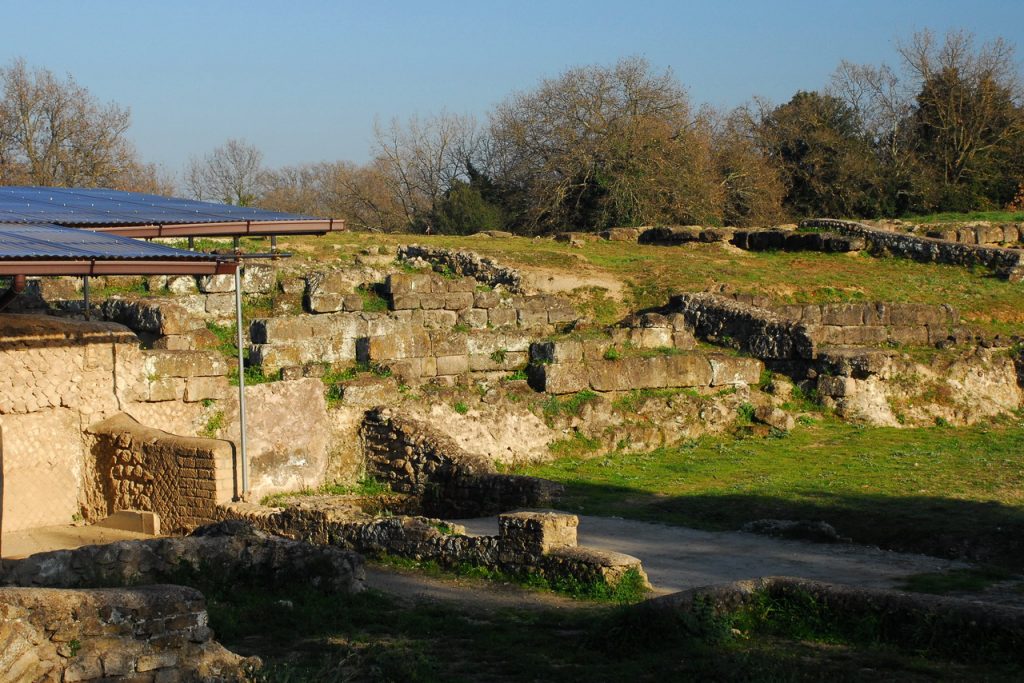
The Ancient City of Veio
The Veio Regional Natural Park, crossed by the Via Francigena pilgrimage route, is a precious 15,000-hectare green lung, which includes the Agro Veientano and vast turkey oak forests. Particularly suggestive in this area is also the Sorbo Valley.
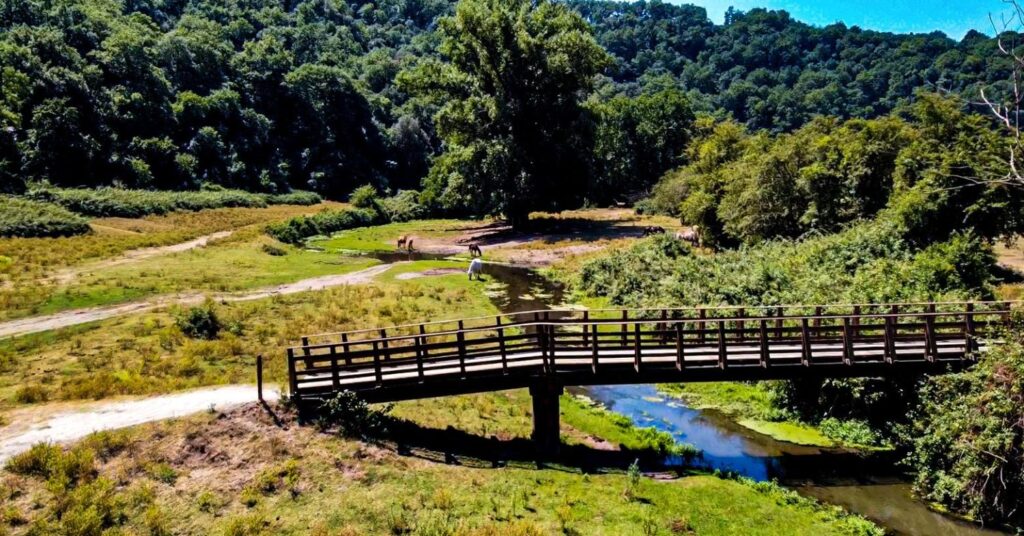
The Sorbo Valley and Mola di Formello – comune.formello.rm.it
The Sorbo Valley, a Site of Community Importance (SCI) located between Campagnano di Roma and Formello, boasts an uncontaminated natural landscape, consisting of small waterfalls, streams, oak forests, and large meadows, where the livestock grazes freely. Amidst Roman and medieval ruins, stands the Mola di Formello, an ancient water mill built by the Orsini Family in the 14th century, in use until 1950.
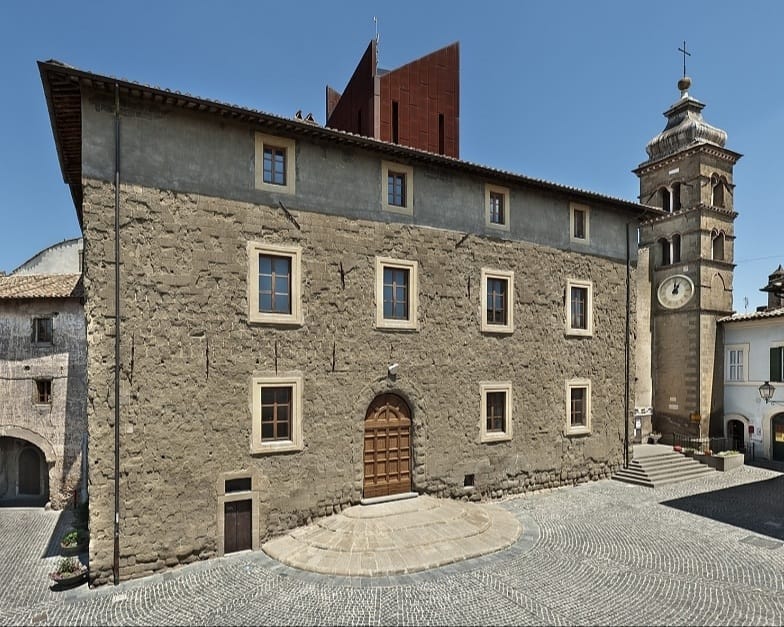
Palazzo Chigi – Facebook @mavformello
Palazzo Chigi, one of the Historic Residences of Lazio, stands out in the medieval historic centre. It was built at the end of the 14th century by the Orsini Family, who became the lords of Formello in the second half of the 13th century. In the second half of the 15th century, the castle was enriched with a porticoed courtyard and a loggia in Roman-Tuscan style and transformed into a noble palace.
Palazzo Chigi, Stanza delli Quadri (Room of Paintings) – retedimorestorichelazio.it
In 1661, when the fiefdom of Formello was acquired by the Chigi Family, an additional floor was built in the Palace to host the Appartamento Novo, featuring a private chapel, frescoes, and painted ceilings. The Cardinal Flavio Chigi created here a museum of natural, exotic, and ancient curiosities, a precursor to the current Museo dell’Agro Veientano, which displayed a collection of naturalistic, ethnological, and ancient artifacts.
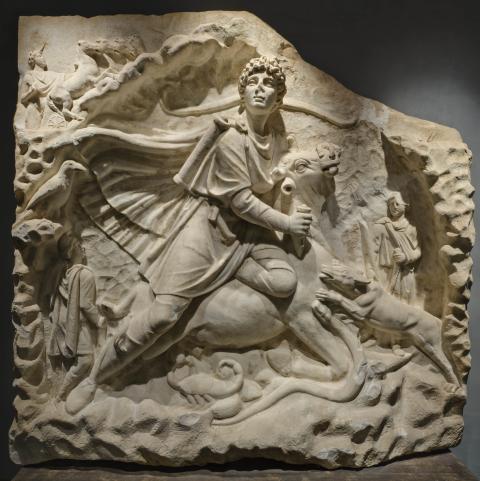
Museo dell’Agro Veientano, high-relief of Mithras – comune.formello.rm.it
Upon the death of Cardinal Chigi in the late 17th century, the Palace declined, only to be acquired three centuries later by the Municipality of Formello. Today, it is open to visitors and houses the Museo Civico Archeologico dell’Agro Veientano, the municipal library, and a few spaces for temporary exhibitions and events.
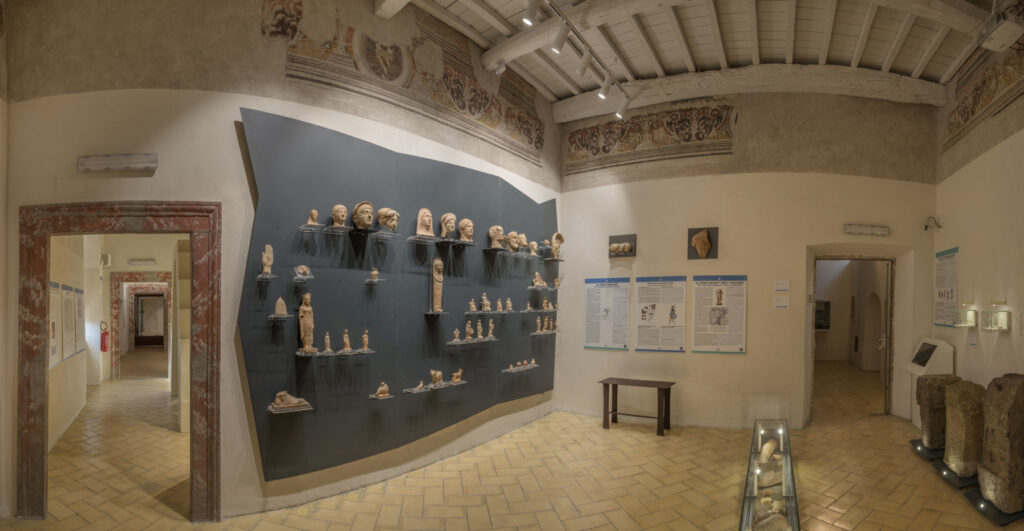
Palazzo Chigi, The Hall of Trophies – retedimorestorichelazio.it
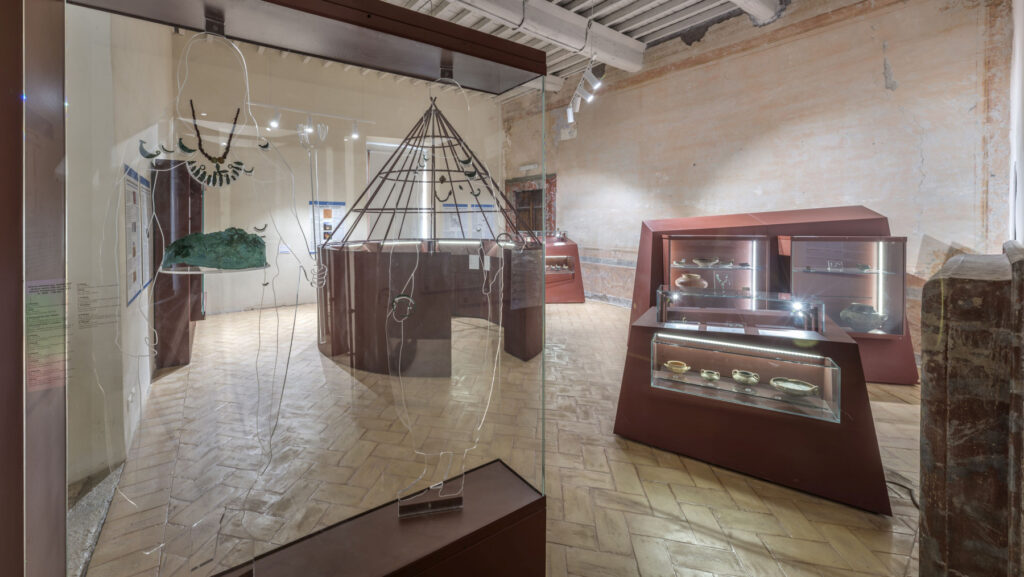
The Museo dell’Agro Veientano (MAV) was established within the prestigious Palazzo Chigi in the late 20th century and inaugurated in 2011. It narrates the history of the territory through different periods: the protohistoric era, the Iron Age, the Etruscan, Roman, and the Early Christian eras, and, finally, the rule of the Orsini and Chigi feudal lords.
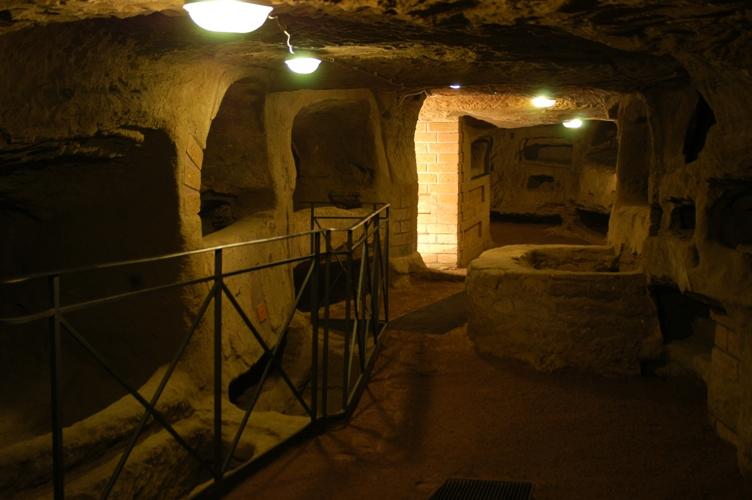
The Monte Stallone Catacomb – comune.formello.rm.it
One of the halls in the Museo dell’Agro Veientano displays artifacts from the Monte Stallone Catacomb from the 4th–5th centuries AD. The latter, discovered in the 1960s, approximately one km from Formello by the archaeologists of the British School of Rome, witnesses the spread of Christianity in the area. The burial site can be visited on a guided tour by appointment or on the last Sunday of every month.
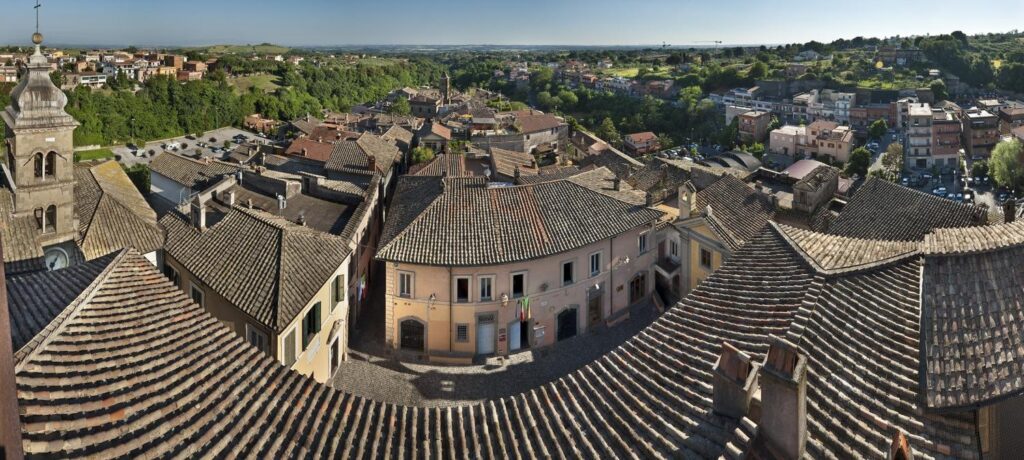
A view from the Formello Tower – Photo: comune.formello.rm.it
From the tower, reconstructed by the architect Andrea Bruno to resemble the watchtower of the Orsini Castle, it is possible to enjoy a view of the entire village of Formello. The internal staircase has been converted into an exhibition space, featuring various artifacts and multimedia installations. The Velly Room, located on the second floor of Palazzo Chigi, hosts rotating exhibitions of engravings by Jean-Pierre Velly.
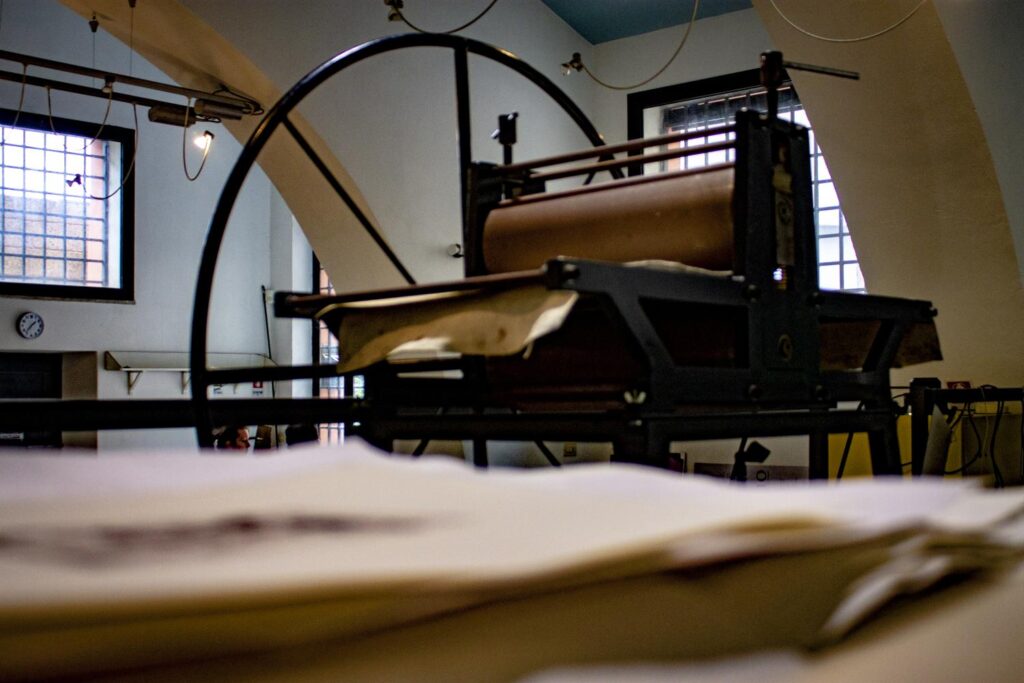
The Centro per l’Incisione e la Grafica d’Arte – comune.formello.rm.it
The Centro per l’Incisione e la Grafica d’Arte was inaugurated in 2003 within a former washhouse. It was established thanks to the artistic legacy of Jean-Pierre Velly, a French engraver who lived in Formello during the 1970s. The Centre promotes graphic and fine art printing by hosting exhibitions, seminars, courses, and conferences.
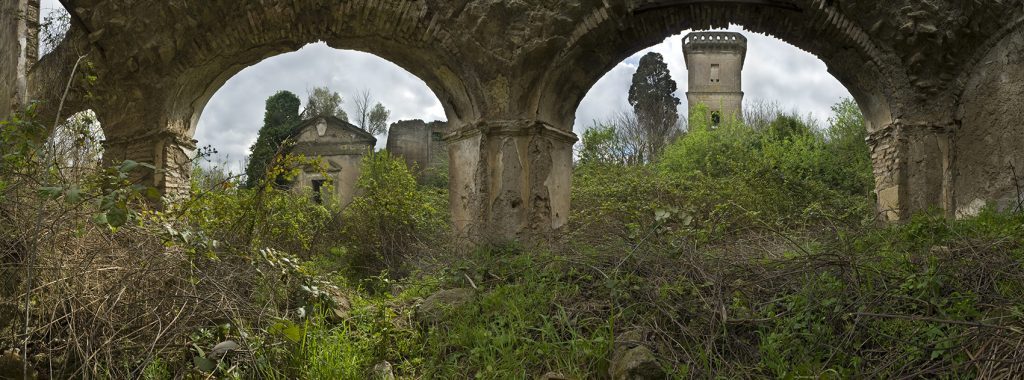
Villa Versaglia – retedimorestorichelazio.it
Villa Versaglia was commissioned by the Cardinal Flavio Chigi as a summer residence. The complex, in modern design, includes a tower, a chapel, a casino, the shepherds’ quarters, and a warehouse for citrus fruits.
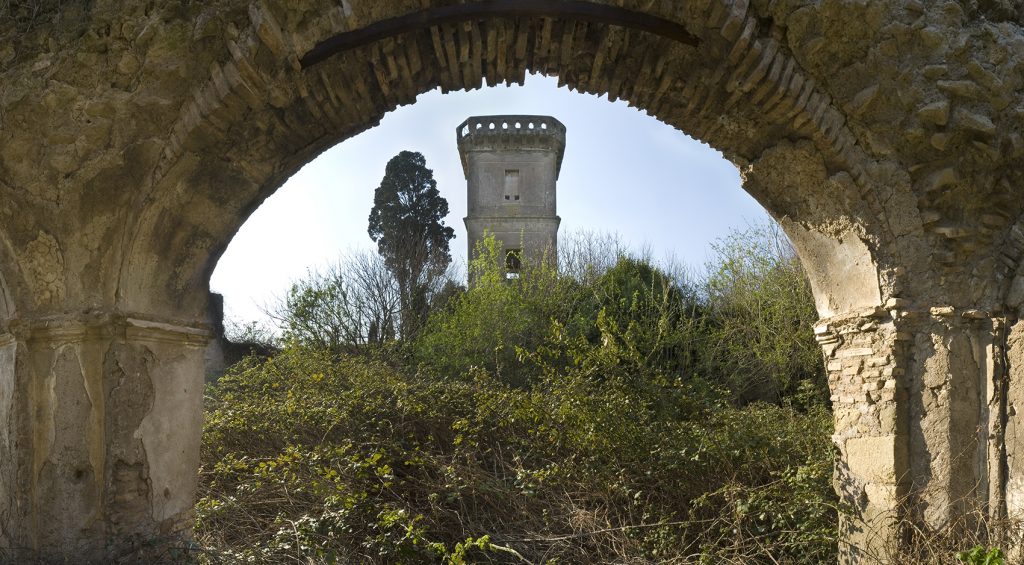
Villa Versaglia – retedimorestorichelazio.it
The dovecote tower spans two floors and the casino, which stands above a pre-existing structure, houses a cistern and two large grottoes. Several cavities have been carved into the tuff rock, including a big two-sectioned cistern with an arched vault and a circular stable located at fifty metres below ground level.
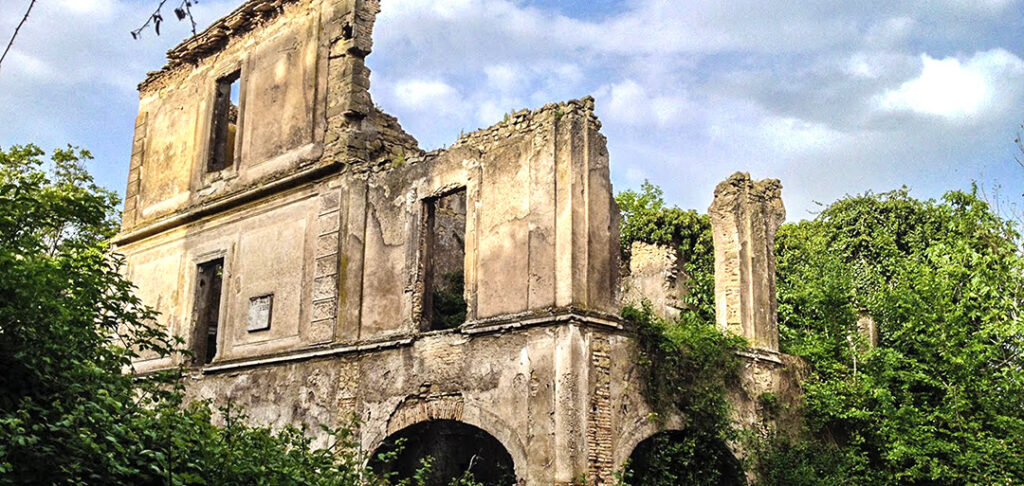
Villa Versaglia – retedimorestorichelazio.it
After a long period of abandonment, Villa Versaglia was acquired by the Municipality of Formello in 2009. The villa, listed in the Network of the Historic Residences of Lazio, is open to visitors by appointment.
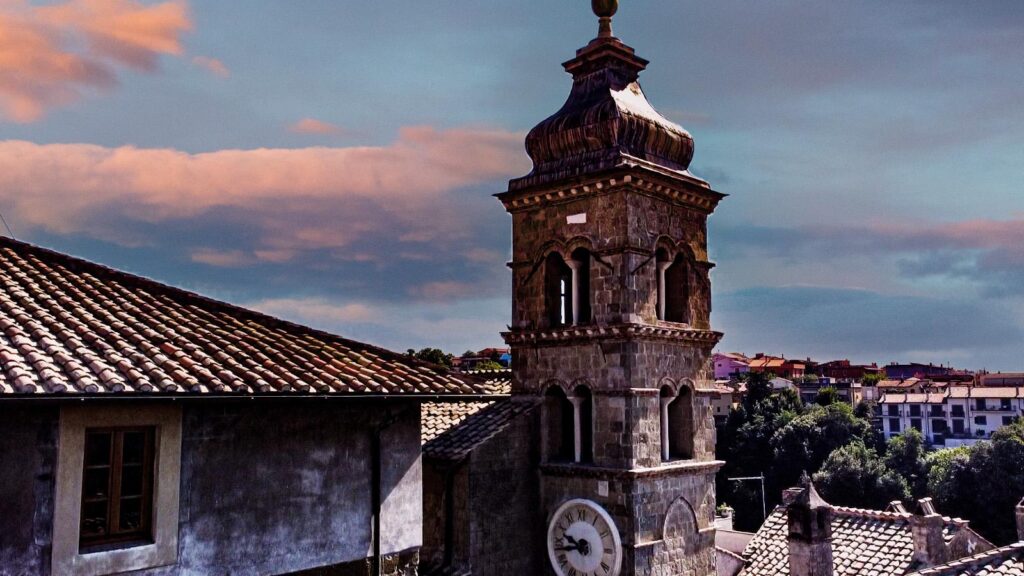
The bell tower of the Church of San Lorenzo – comune.formello.rm.it
The 13th century Church of San Lorenzo overlooks the main square of the same name in the historic centre. It preserves two frescoes by the Mannerist painter Donato Palmieri, a native of Formello, and a 18th century high altar in coloured marble, originally intended for the Church of Sant’Apollinare in Rome. The church houses a rare darkroom sundial similar to the one in Santa Maria degli Angeli in Rome. The patron saint, San Lorenzo, is celebrated with a feast in August.
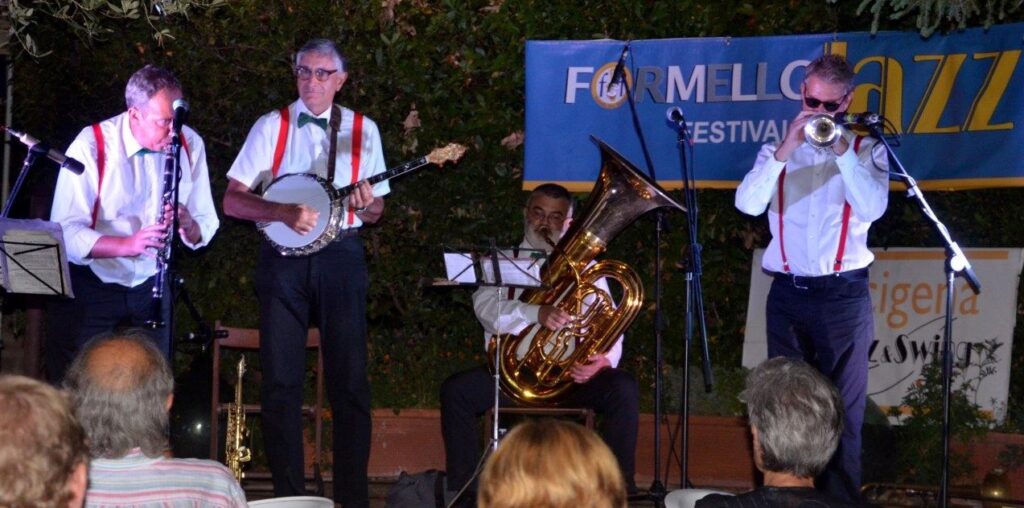
FormelloJazz Festival
One of the most awaited events, which hosts numerous exceptional musicians, is the FormelloJazz Festival, held in the municipal gardens in early August. In early October, Formello participates in “Tevere Day”, around 150 sporting, cultural, and environmental events taking place over three days along the banks of the Tiber River, involving the villages of Nazzano, Capena, Formello, Sacrofano, and Rome, all the way to Ostia and Fiumicino. A renowned local speciality is the padellaccia, a delicious pan-cooked dish made from the minced meat from pork sausages. Not to be missed are the sweet-and-sour porsaraghi tart, prepared with local fruits and, among the wines, Tarquinia DOC.