

The acropolis spindle village of Poli sits atop a tuff ridge in the Prenestini Mountains. The historic centre consists of a main street and over thirty narrow herringbone alleys.
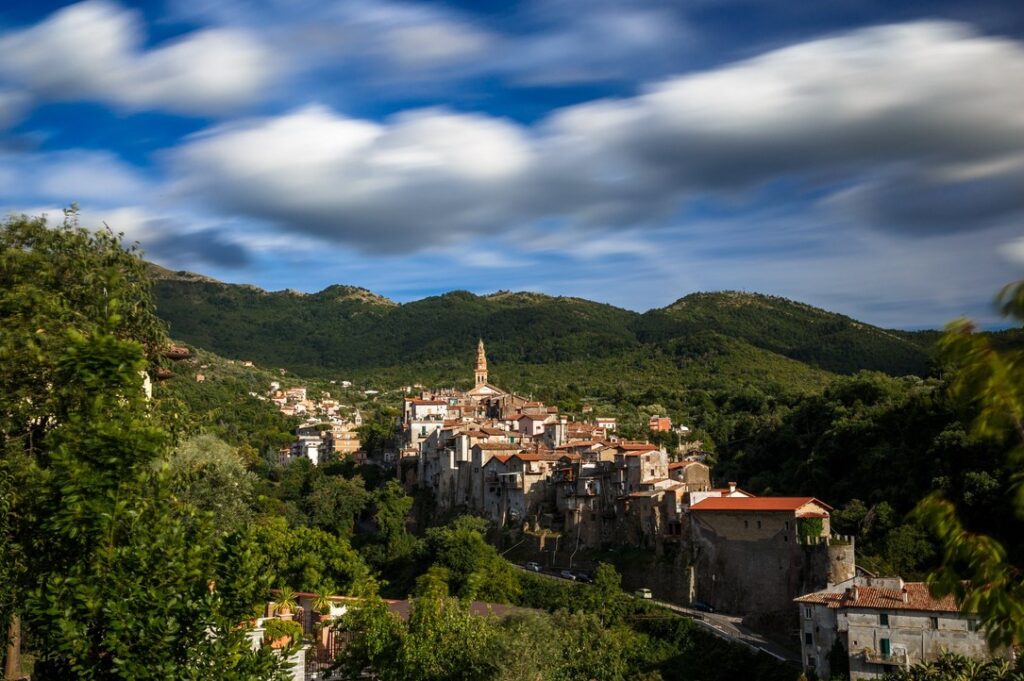
Panorama of Poli – comune.poli.rm.it
Poli, whose origins date back to 992, owes its name to Castrum Poli, or Castrum Pauli. For a long period, it belonged to the Benedictine Monastery of Clivo di Scauro in Rome, from the year 1000, to the Oddoni Family for more than a century, and, finally, to the Conti di Segni, who ruled for six centuries. Following the death of the last heir of the Conti Family, Poli became a property of the Sforza Cesarini Family, and later, of the Torlonia.
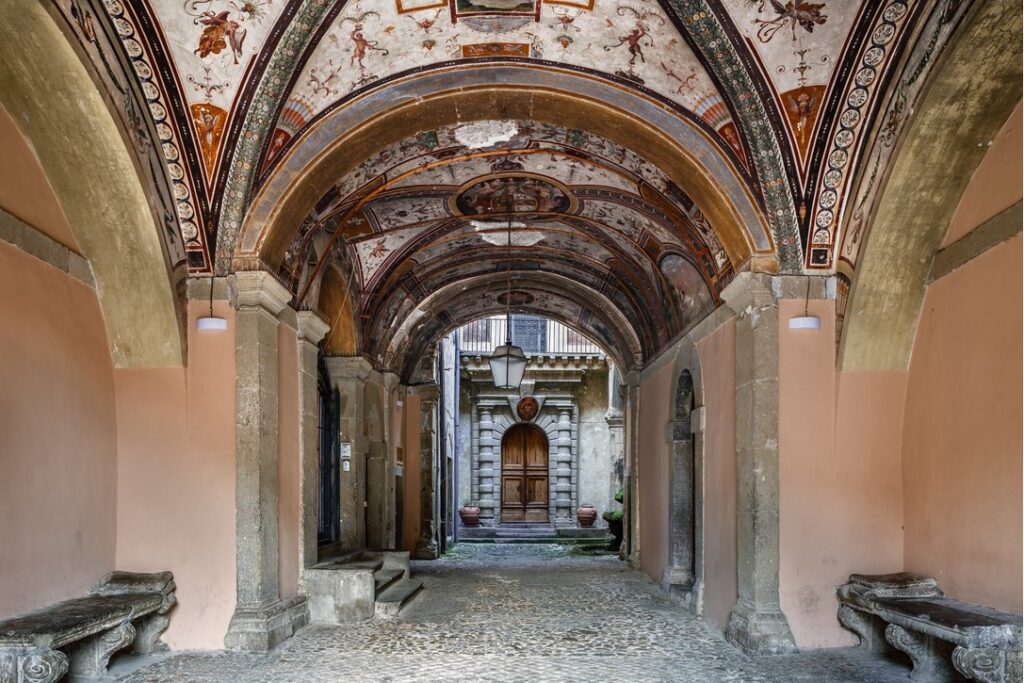
The entrance of Palazzo Conti – comune.poli.rm.it
The medieval fortress of Palazzo Conti consists of two sections: one from the end of the 10th century, which belonged to the Oddoni Family, and the other from the 16th century, converted into a baronial residence.
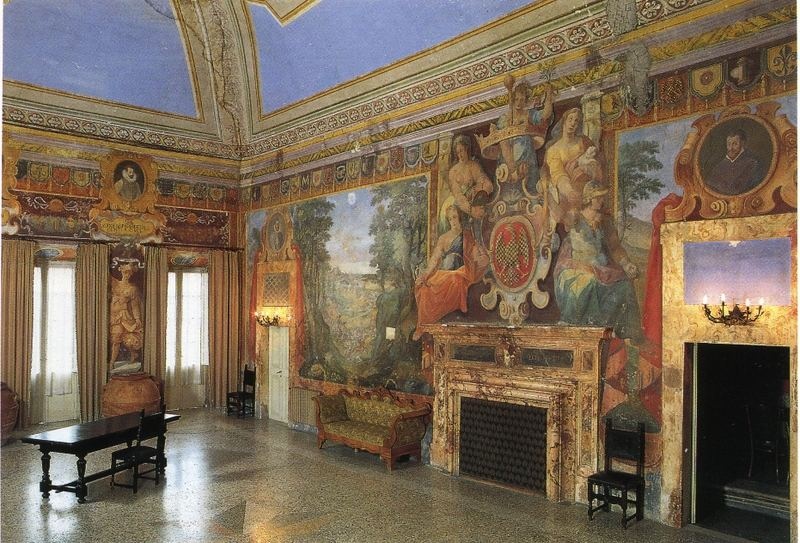
Palazzo Conti, interior – comune.poli.rm.it
The entirely frescoed interior of Palazzo Conti, the former apartment of Torquato I Conti, houses today municipal offices. It can be visited by appointment.
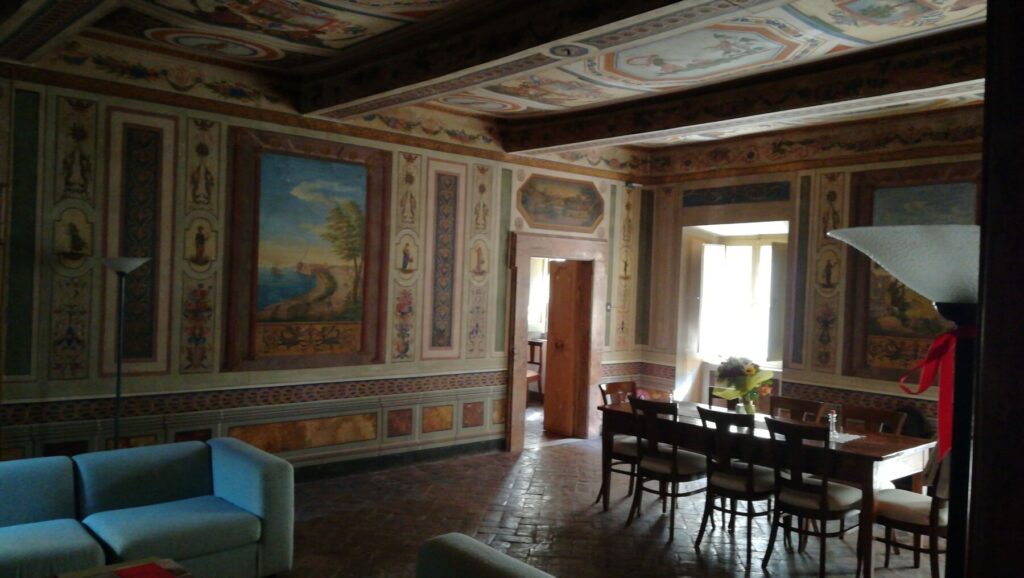
Palazzo Pelliccioni, interior – retedimorestorichelazio.it
Palazzo Pelliccioni, one of the Historic Residences of Lazio, was erected in the historic centre in 1610, by will of the Duke Lotario II Conti, son of Torquato I and Violante Farnese. Later it passed to the Aureli and, in 1769, into the hands of the Pelliccioni Family. The palace preserves walls adorned with mythological, floral, and grotesque motifs. The decorated main hall, overlooking Piazza Conti, Palazzo Conti, and the 17th-century bell tower, houses a beautiful travertine fireplace from the 18th century. The Palace is open to visitors by appointment. The town’s patron saint Sant’Eustachio is celebrated on the Sunday following September 20. The Feast was established in 1633, when the Cardinal Aldobrandini granted Duke Lotario II Conti the right to hold competitions and a trade fair. Since the 1990s, the event, officially declared Historical Reenactment by the Regione Lazio, has been organized by the cultural association “Le Donne del Vicolo”. On Friday, a trekking initiative takes place along the Saint’s Path, which leads to the Sanctuary of the Madonna della Mentorella on Monte Guadagnolo, where Jesus is said to have appeared to the Saint. On Saturday evening, a dinner in Piazza Conti is held, and, on Sunday, a historical reenactment in the local dialect narrates the conversion of Placidus, the Saint’s original name. The event is accompanied by a procession in traditional costumes carrying a painting of Saint Eustace, a pagan general under the Emperor Trajan, who converted during a deer-hunting expedition. While pursuing the animal, he noticed between its antlers a luminous cross bearing the image of Christ, who baptized him with the name Eustace. Refusing to deny his faith, he was then martyred by the Emperor Hadrian with the execution method of the brazen bull. On Sunday afternoon, the Festival of Hospitality is organized with tastings of traditional peasant dishes and performances of flag-wavers, choirs, and folk groups.
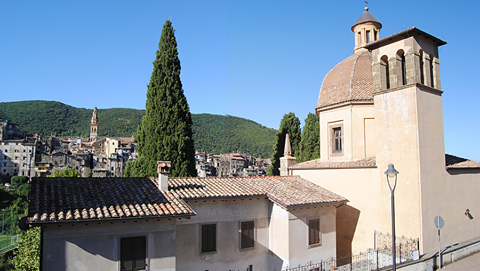
The Chapel of the Pietà (Cappella della Pietà) – comune.poli.rm.it
The Chapel of the Pietà, built at the behest of Violante Farnese, wife of Torquato I Duke of Poli, was consecrated in 1599. It houses a marble group depicting the Pietà, an unfinished work by Adriano Schirati, from the school of Michelangelo. In the 1800s, the Torlonia Family restored the chapel, to make it their family tomb. Today, it is owned by the Municipality of Poli and used for celebrations held by the Piarist Fathers. At Easter, a Good Friday procession takes place in the historic centre, which sees the participation of the agnerelle, young girls dressed in black, adorned with silver stars, and wearing crowns of thorns. The cortege makes its way to the Chapel of the Pietà, accompanied by fifty singers performing “La Pietà,” a hymn whose lyrics and melody have been passed down orally since the 1600s.
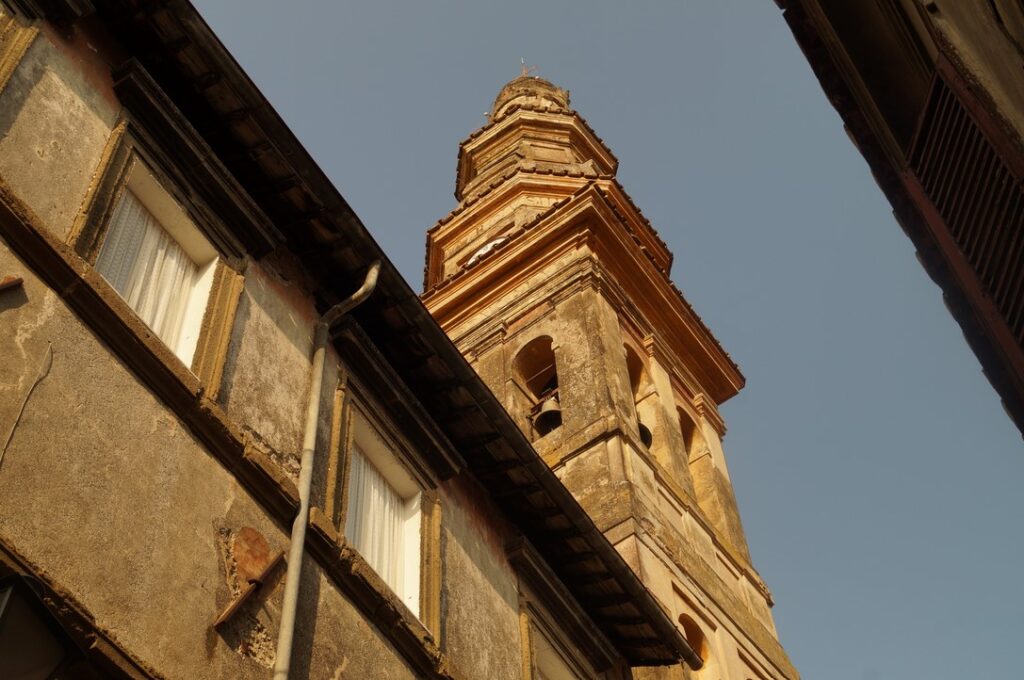
The Archpresbyteral Church of Saint Peter the Apostle, bell tower – comune.poli.rm.it
The Doric-style Arch presbyteral Church of Saint Peter the Apostle was built in the early 1600s over a preexisting structure, by will of Lotario II Conti, Duke of Poli and his brother, Cardinal Carlo Conti. It features a single nave, eight side chapels, stucco decorations, frescoes, marble elements, and an organ topped by the coat of arms of the Conti Family. The 39 metres high Baroque bell tower is accessible to visitors.
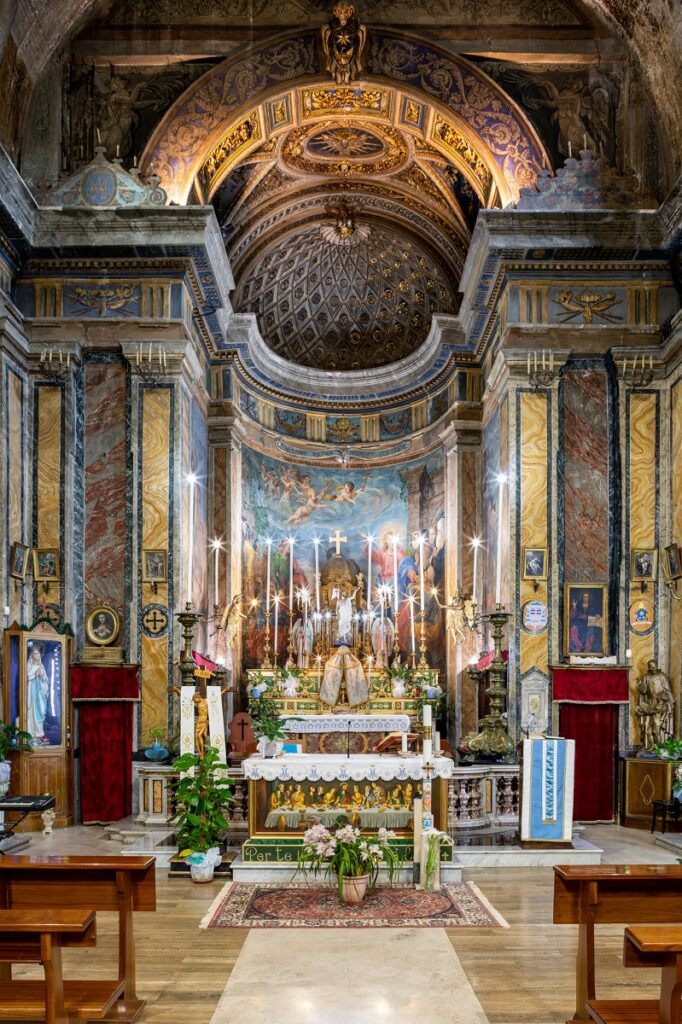
The Archpriest Church of Saint Peter the Apostle, interior – comune.poli.rm.it rev
The Exaltation of the Holy Cross used to be celebrated in Poli on the Sunday before or after May 3, the date associated with the finding of the Holy Cross, whereas today, it is celebrated on September 14. A procession, held to ensure a good harvest, started from the Church of San Pietro Apostolo and reached the rural church of Beata Maria del Peschio, where the ceremony was officiated. The cortege was adorned with laburnum and Judas tree flowering branches and traditional baked doughnuts called scutturate.
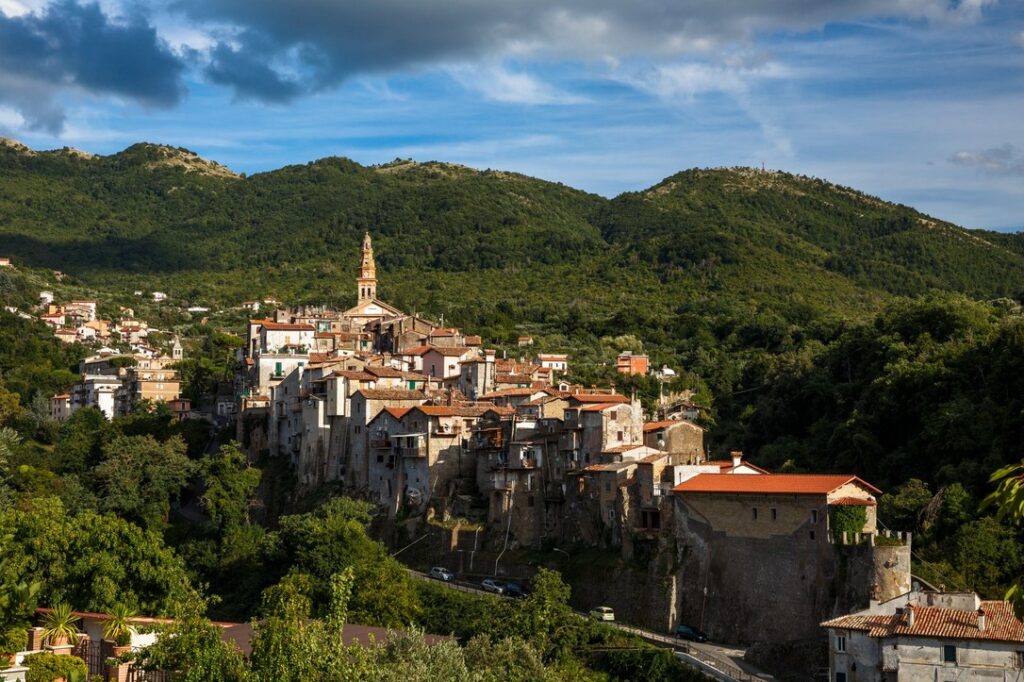
Panorama of Poli – comune.poli.rm.it
The Church of Santo Stefano, dating back to before the year 1000, features frescoes by Taddeo Zuccari and Antonio Rosati. Not to be missed is also the 14th-century Church of Sant’Antonio Abate, consisting of a single nave decorated with 17th-century wall paintings and a bell tower frescoed by Giacomo Antonio da Poli, a student of Fra Angelico, in the 15th-century. The former Church of San Giovanni, partially carved into the rock in the late 14th century, now houses the Museo Civico del Territorio. The church was struck by an earthquake in the late 19th century and, being never restored completely collapsed in the mid-20th century. Following a restoration, the place of cult was turned into a museum in 2022. Local specialties include polenta, unleavened pizza, cucchi co li fasori (pasta and beans), and long-shaped gnocchi with tomato sauce.