

Immersed in the uncontaminated nature between the Parco Naturale Regionale Monti Simbruini and the Riserva Regionale Zompo lo Schioppo, Filettino, the highest village in Lazio, overlooks from its altitude of over 1,000 metres, the Viglio, Cotento, and Tarino Mountains.
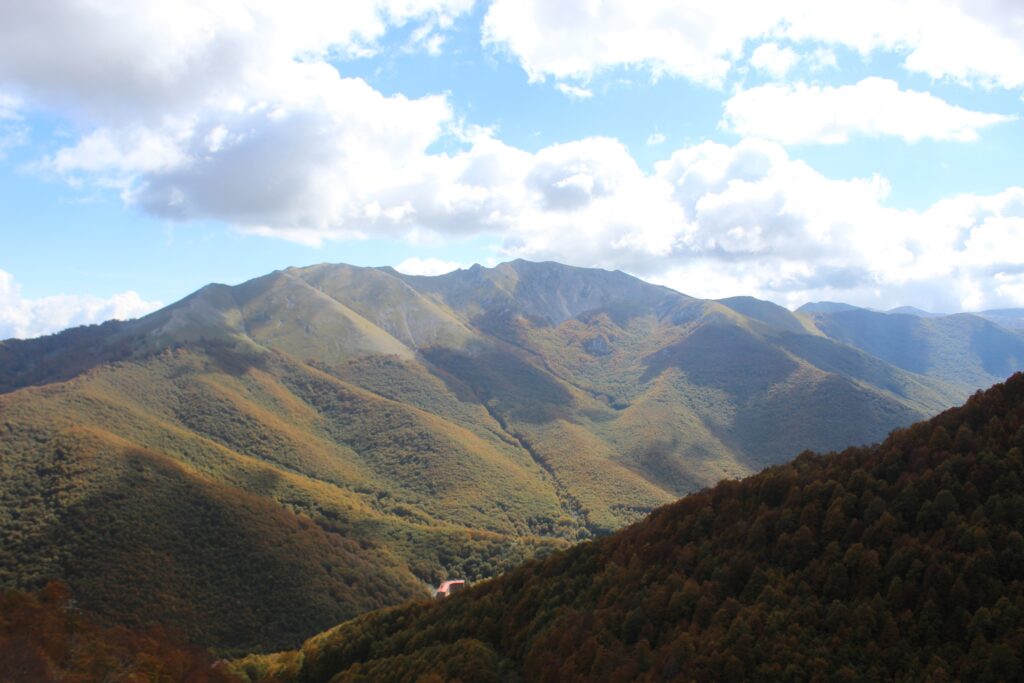
Monte Viglio – Facebook Barbara Fiore @parcomontisimbruini
Monte Viglio (2,150 metres), in the Parco Naturale dei monti Simbruini, is the highest peak of the Cantari Mountains. From the Serra di S. Antonio in Filettino, starts a three-hour hiking track, that leads to the Belvedere, at an altitude of 1,770 metres. From the historical Cross at the summit, it is possible to enjoy a vast panorama that ranges from the Velino-Sirente Mountains to the north, to the Ernici Mountains to the south, and, on clear days, to the Pontine Islands.
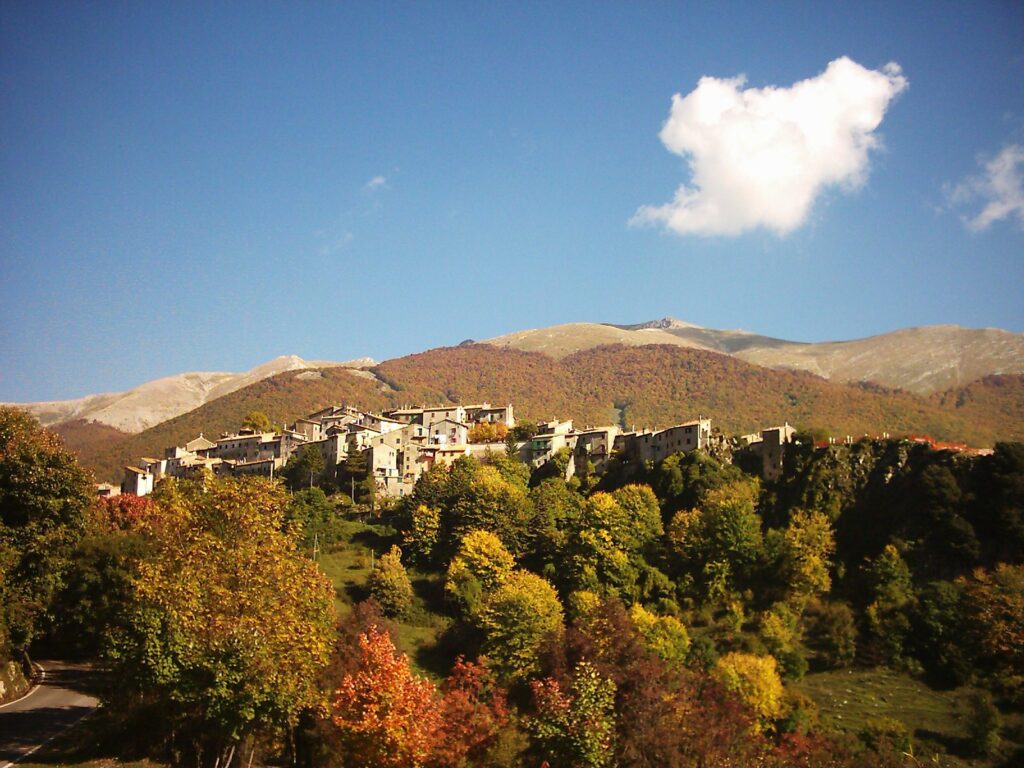
Filettino in autumn – Facebook @comunefilettino
Filettino was probably founded in the sixth century by the inhabitants of lower Lazio escaping the barbarian invasions, as testified by the remains of the Saracen Walls and very ancient churches, such as San Nicola and San Bernardino, with its fifteenth-century frescoes.
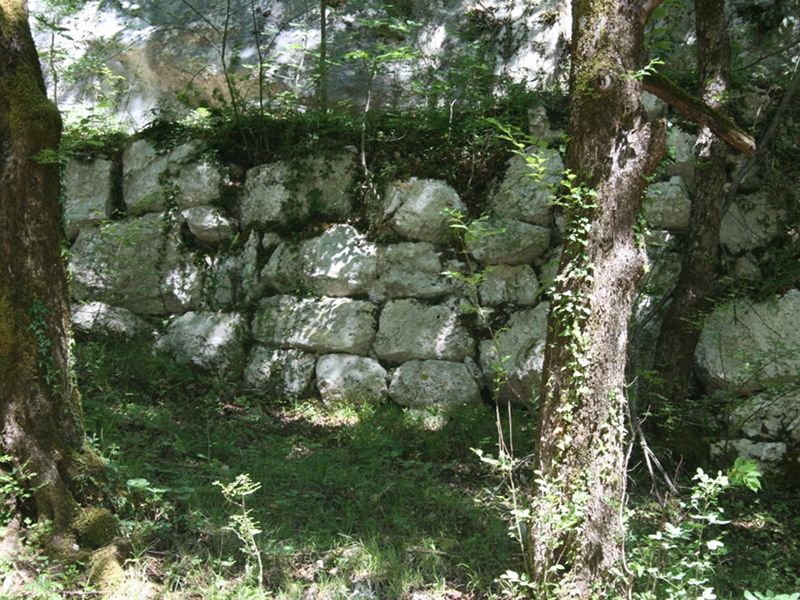
The Saracen Walls in Simbruini Park – www.parchilazio.it
The thirty-seven metres long and up to seven metres high Saracen Walls lie three kilometres outside Filettino, along the Trevi-Filettino Road, at the narrowest point of the upper Aniene Valley. Built according to an Ancient Roman technique, they adjoin the rock face rising above the road characterized by squared limestone blocks of various sizes. Some scholars argue they were erected by the Romans during the Saracen invasions in the nineth century, others after the subjugation of the Aequi, and still others believe they are the remains of an aqueduct.
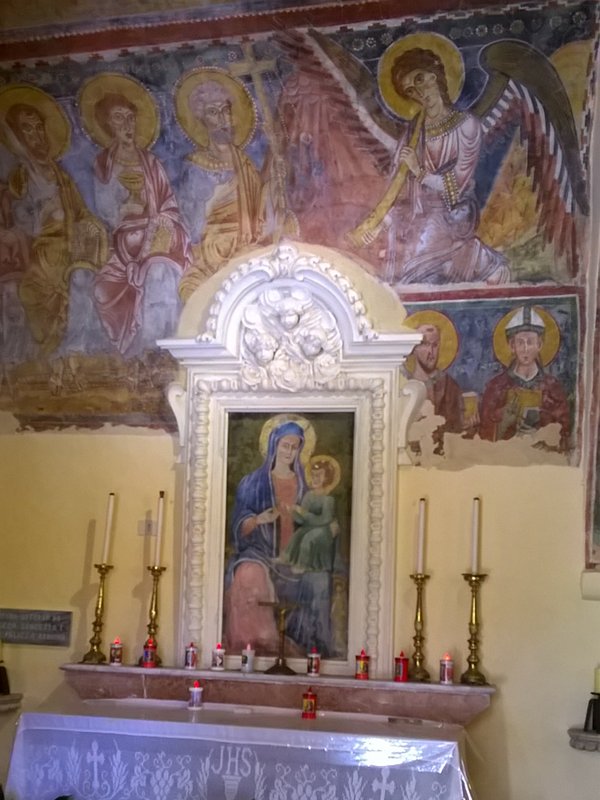
The Altar of the Madonna della Neve in the Abbazia of SS. Nicola e Giovanni www.parchilazio.it
The Church of San Nicola, also known as the Abbey of San Nicola and Giovanni, is associated by some historians to one of the twelve monasteries erected by Saint Benedict in the Aniene Valley. It houses fragments of frescoes dating back to 1220, depicting the Last Judgement and the Twelve Apostles, as well as an altar dedicated to the Madonna della Neve discovered in 1726.
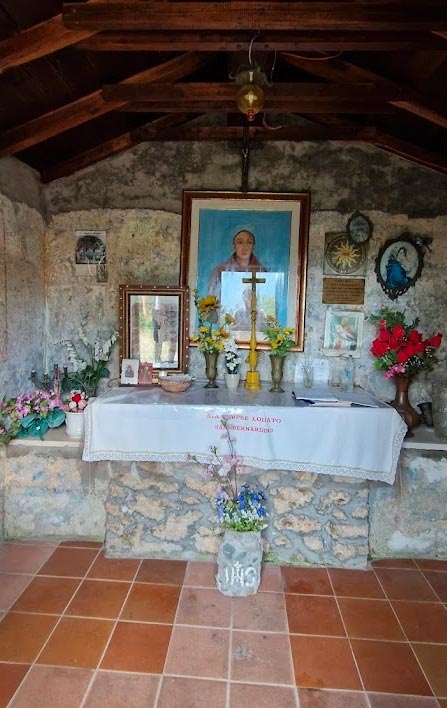
The Cona of San Bernardino altar – www.comune.filettino.fr.it
It is said that, on May 19, 1486, a miracle occurred to the Bishop Saint Bernardino da Siena, while he was visiting Filettino. The Saint knelt in prayer to intercede for the town, besieged by the Orsini Family, and his foot and knee imprints remained on that very spot. The sky darkened and it began to hail, but the stones only struck the besieging soldiers camped in what is now called Cona of San Bernardino, who immediately fled. The saint died in 1444, but locals were so devoted to him, that, in 1500, San Bernardino replaced the former patron saint, San Sebastiano.
The impressive landscape boasts the source of the Aniene River, fir, birch, beech, and oak trees forests, and the Pertuso Lake, whose spring flows at five kilometres from Fiumata, where a rock gorge blocks the Aniene River. The inlet has created an artificial lake considered a paradise by lovers of trout fishing.
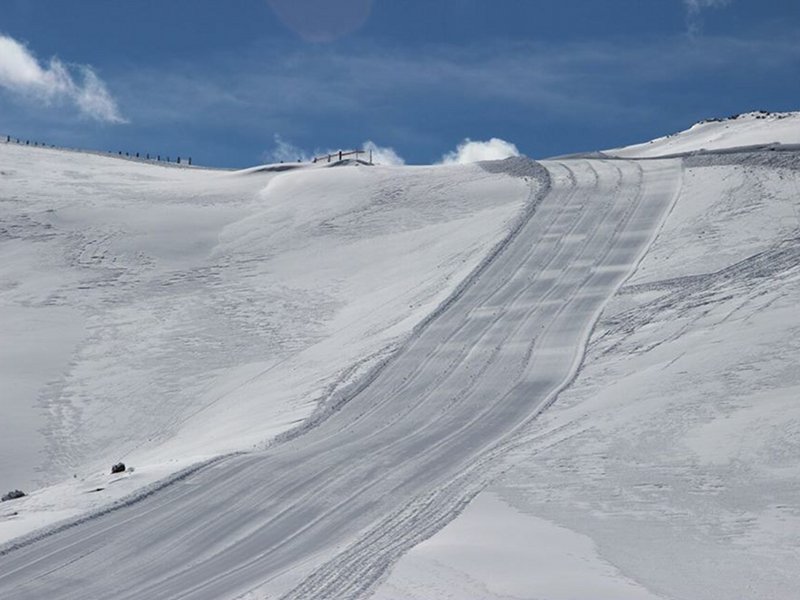
Campo Staffi – www.parcomontisimbruini.it
From Filettino, it is possible to admire a breathtaking view of vast valleys, mountains over 2,000 metres high, and a landscape stretching from the Gran Sasso d’Italia to the Tyrrhenian Sea. Campo Staffi hosts slopes which range from 1,500 to 2,000 metres in height and two ten-kilometre loops for cross-country skiers.