

Embedded in the Ernici Mountains, Guarcino, the ancient Vercenum founded in the eighth century BC, is an important transit point in the Aniene Valley. In 2025, it has been awarded the Orange Flag, the prestigious recognition assigned by the Italian Touring Club for the quality of its tourism and environmental development.
Guarcino lies on the St. Benedict’s Way and also hosted Sant’Agnello, who took refuge in a cave in the Ernici Mountains for seven years. Many years later, the inhabitants elected him as the patron saint. Today, the hermitage is open to visitors, and, on December 14, a solemn procession arrives there from there Collegiata di Guarcino on December 14 and on the last Sunday of August.
With the advent of Christianity, the Roman Christians replaced the numerous temples with churches, like the ones dedicated to the Madonna and Saint Michael the Archangel. Originally built on the ruins of a Mars temple, the latter became, in 1587, a convent of Benedictine nuns. The twelfth – thirteenth century bell tower, unique in Lazio, is perfectly preserved.
The medieval structure of Guarcino consists of a city wall with nine towers and three keeps, four gates, and a surrounding moat, and includes medieval portals, mullioned windows, and stone walls. Worthy of mention is also the large pointed arch supporting the imposing ancient palace of Cardinal Tomassi.
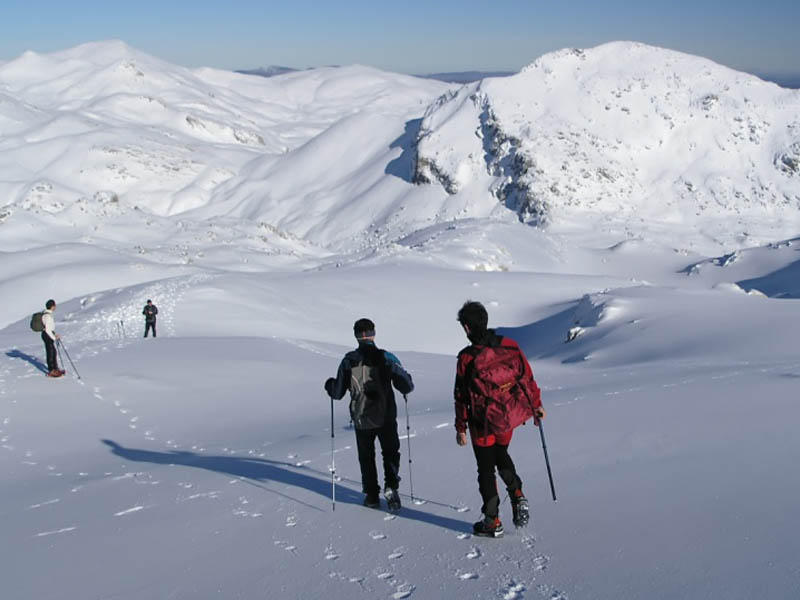
The area around the village is of great natural importance thanks to the majestic Campo Catino massif, one of the first ski resorts in the central-southern Apennines. Established in the 1980s the Campo Catino Astronomical Observatory is located at an altitude of 1,500 metres. Here, a committee of scholars appointed by the Società Astronomica Italiana has studied the phenomenon of light pollution. In the summer, the Observatory opens to the public, offering the opportunity to observe the starry sky, with its galaxies, comets, nebulae, and other suggestive phenomena.
Guarcino is also famous for its low mineral, healing waters, gushing from Fonte Filette, a spring nestled in the uncontaminated nature between the Cantari and the Ernici Mountains, an altitude of 900 metres. Fonte Filette, together with the nearby Fonte di San Luce, has been renowned since the early 1900s. Its first historical records date back to 400 BC, when the Romans dedicated the spring to Venus as a symbol of the Goddess’s connection with the vital water element. Even today, a sculpture at the fountain testifies to this symbolism.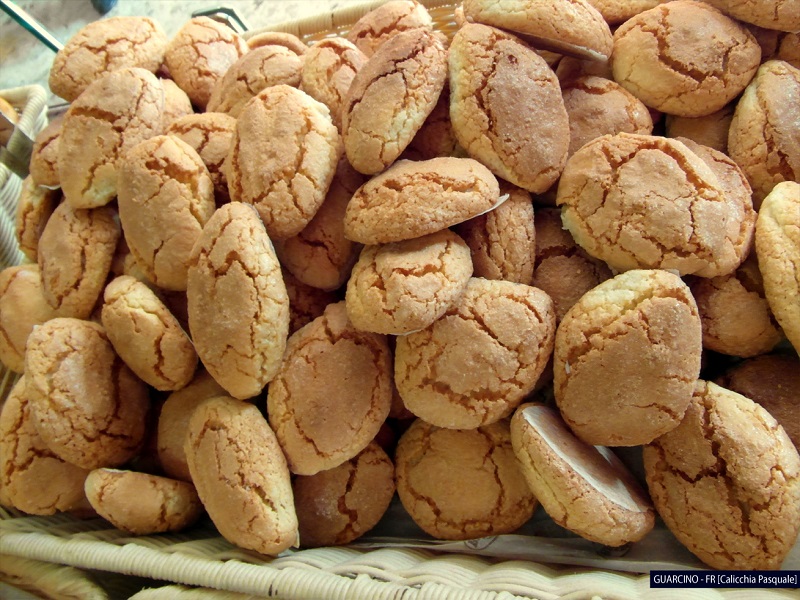
Among the gastronomic specialties, we find the abbotti (beef tripe rolls stuffed with pancetta, celery, carrot, parsley, and garlic), best served with traditional dishes such as sagne e fagioli (pasta with beans), gnocchi alla montanara (mountain-style dumplings), and dumplings with mutton sauce. Not to be missed are also the excellent local DOP ham and the famous Amaretti di Guarcino, biscuits made with sweet and bitter almonds served during the Christmas Season.
The Amaretti, included in the List of the Typical Products of Lazio, are celebrated in late July/early August. According to legend, the recipe of this soft delicacy was given to a family of the village by a passing friar as thanks for their hospitality.
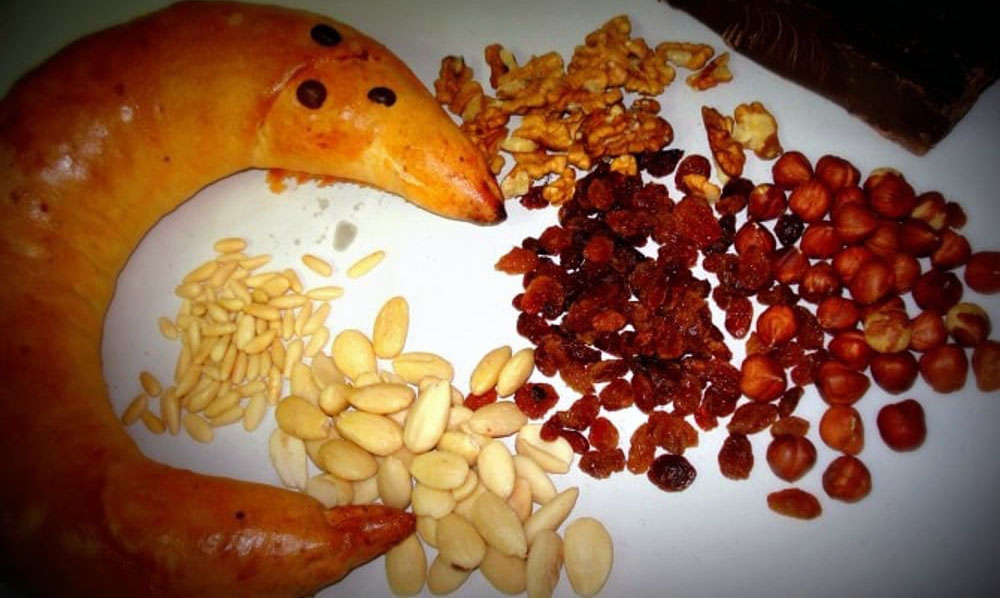
Serpentone di Guarcino
Another bakery speciality from Guarcino and the surrounding villages in the Ernici Mountains is the Serpentone, also served at Christmas, but said to have also pagan origins. Wrapped in a rolled pastry sheet, it is filled with chocolate and dried and candied fruit. Crispy on the outside and soft on the inside, it releases all the scent of the magical Christmas of Ciociaria!
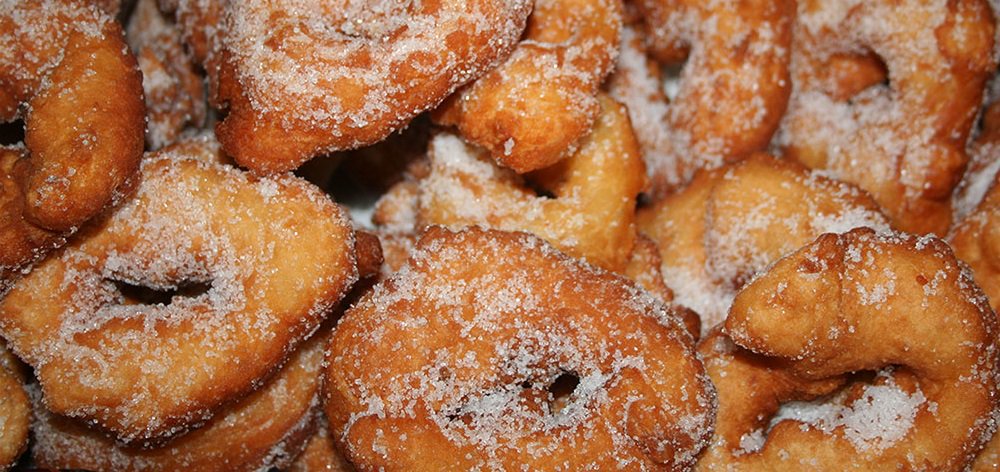
i Tartalicchi a Carnevale
The Tartalicchi, sweet flour and potatoes fritters similar to the soft fried doughnuts of Leonessa, are consumed both in Guarcino and Alatri at Carnival.
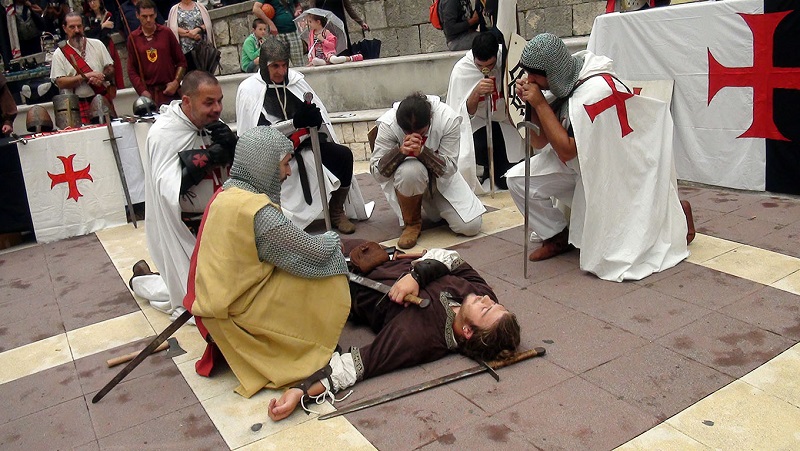
La Disfida del Malpensa
The Malpensa Challenge is a historical two-day reenactment held in Guarcino, where visitors can travel back to 1186, when Malpensa, a young man from Guarcino, defeated Henry VI’s German army, saving the town from devastation. The first day is dedicated to the Medieval Games between the historic districts, while the second celebrates the Malpensa Challenge with the clash between the two armies, the duel, and the final triumph of the young man. The event also involves medieval shows performed by figures in medieval costumes.