

Olevano Romano, a medieval village overlooking the Alta Valle del Sacco from Mount Celeste, still preserves its pre-Roman polygonal walls, the thirteenth-century castle tower, and the church of Santa Maria di Corte.
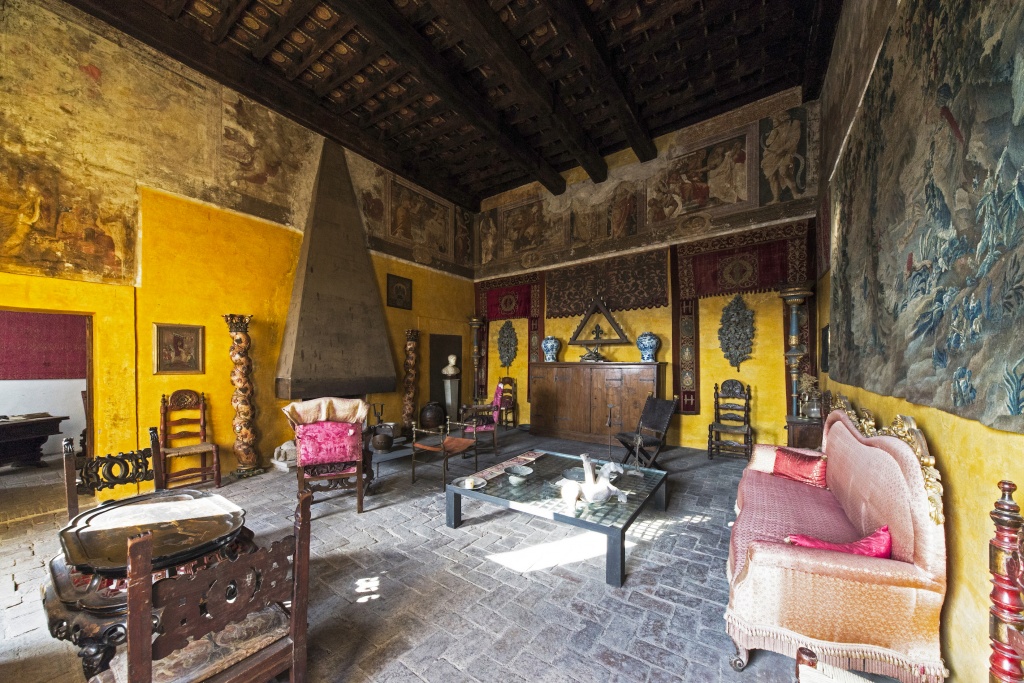
The Palazzo Colonna Marcucci, the hall – retedimorestorichelazio.it
The castle houses the Palazzo Colonna – Marcucci, which almost retains its original structure. Initially inhabited by the Benedictines, it later passed to the Colonna Family and then belonged to the Borghese until the early 1900s. Around 1970, it was acquired and restored by the Marcucci Family. One of the Historic Homes in Lazio, the Palace houses splendid frescoed rooms hosting conferences and exhibitions.
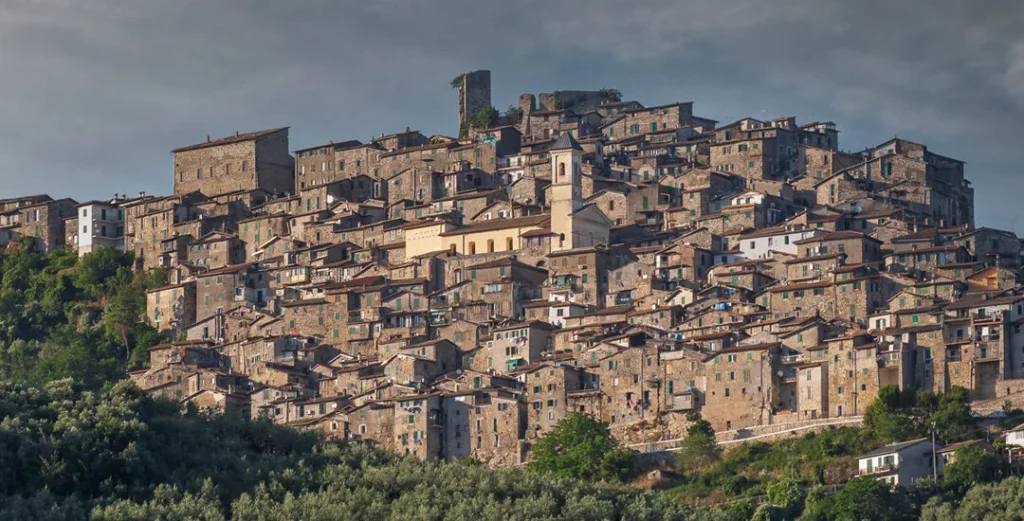
The small thirteenth century church of Santa Maria di Corte, which features a single altar and a single nave, boasts numerous votive paintings and frescoes from the thirteenth and fourteenth centuries. It was the main church of Olevano Romano before the title passed to the Church of Santa Margherita.
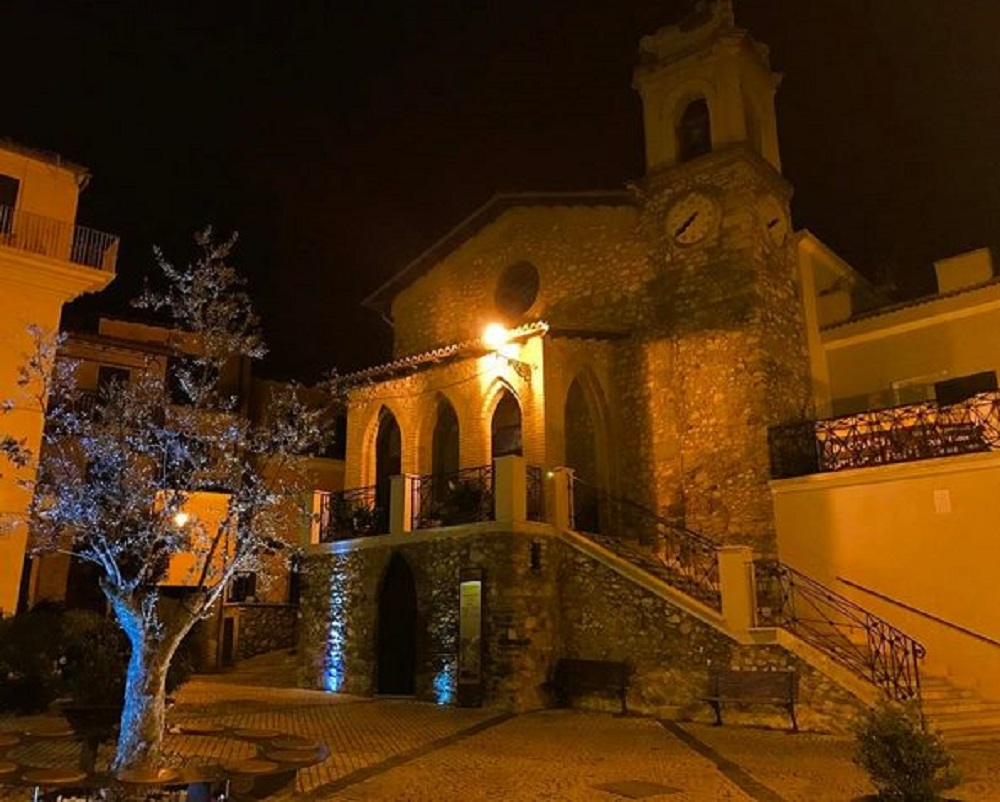
The latter is dedicated to Saint Margaret of Antioch, the patron saint of Olevano Romano, whose cult was introduced by the Olibria Family. Having lost her mother, she converted to Christianity and was repudiated by her father. In addition, after refusing the marriage proposal of Olybrius, the Roman governor of Antioch, she was tortured and imprisoned. It is said that, by praying in her cell, she defeated the devil, who manifested himself in the form of a dragon.
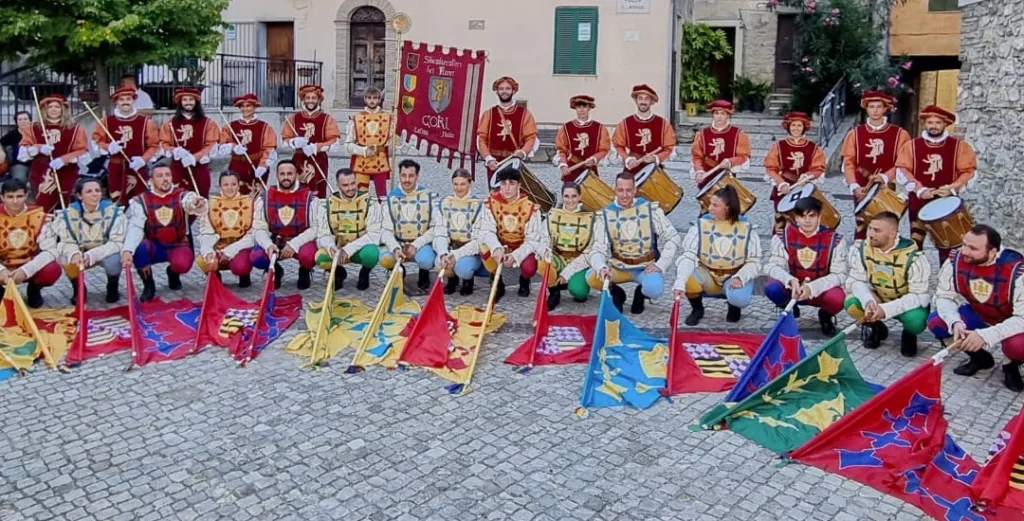
Dies in Castro Olibani
A cross and a dove also appeared to Margareth, announcing her glory in heaven, before she was beheaded on July 20, 290 AD. The medieval historical re-enactment “Dies in Castro Olibani” is celebrated in Olevano Romano in July to commemorate the patron saint and recall medieval crafts and shows.
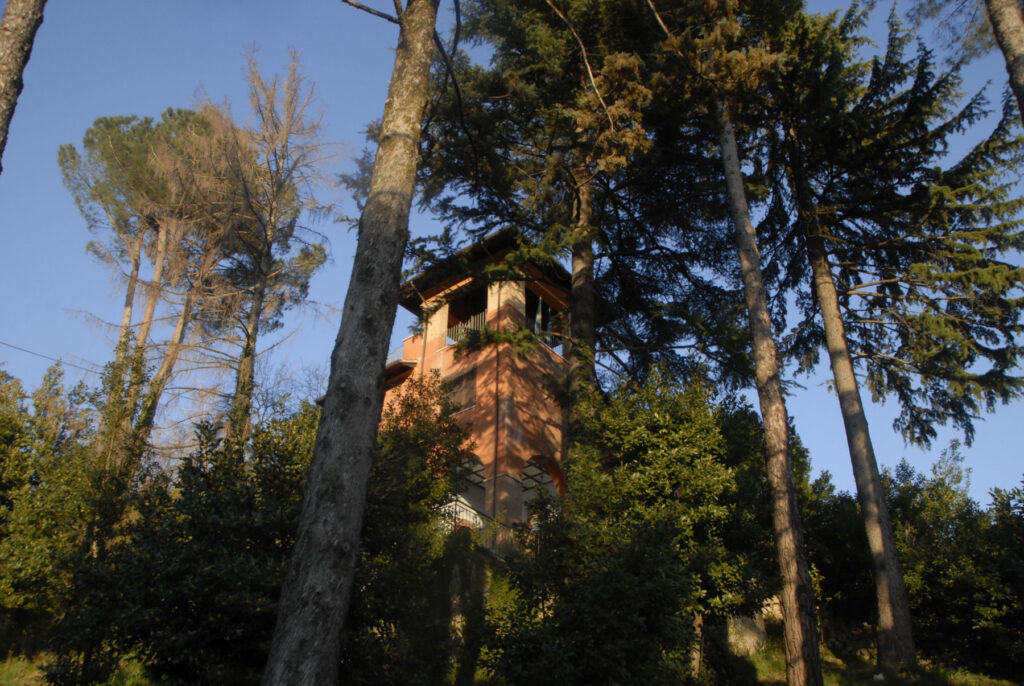
Villa De Pisa – retedimorestorichelazio.it
Villa De Pisa, built between the 1920s and 1930s by the Bondi, a wealthy Roman Jewish family, also belongs to the Network of the Historic Homes in Lazio. During the World War II, it became the headquarters of the German command. Unlike other Roman residential villas, Villa De Pisa is simple and almost entirely devoid of ornaments, whereas the park is embellished by pines, acacias, oaks, and robinias.
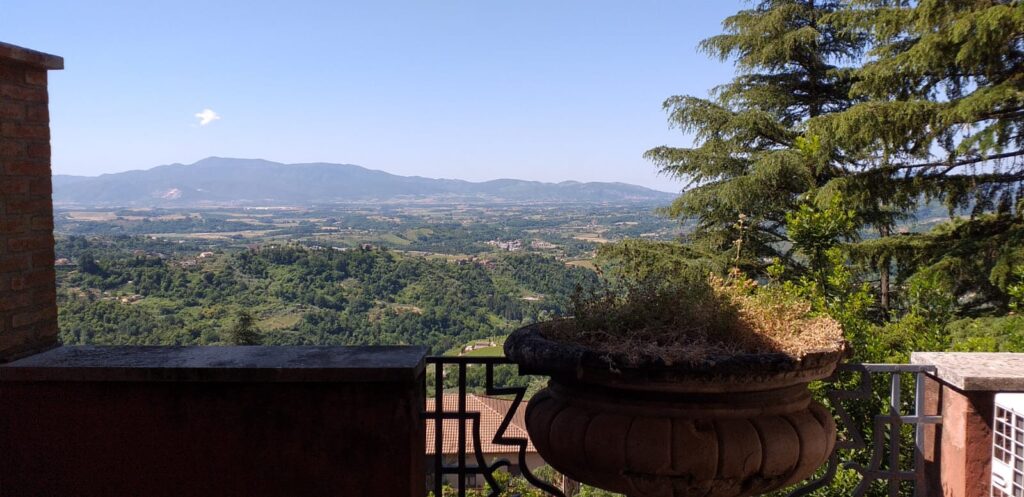
Villa De Pisa, view from the terrace – retedimorestorichelazio.it
In 1989, inside Villa De Pisa, the Museo Civico dell’Arte was established. It houses over 2,000 oil paintings, watercolours, drawings, sketches, and engravings, collected by the Associazione Amici del Museo di Olevano over thirty years. For its natural beauties and its traditions, Olevano Romano inspired in the early nineteenth century numerous foreign artists on their grand tour, and still does.
Artists, fine art scholars, and lovers of plein air painting will appreciate the permanent exhibition by the Tyrolean painter Joseph Anton Koch, which displays Roman views from 1810. The paintings were donated in 1999 by the heirs of the Austrian artist, who spent his life between Rome and Olevano Romano.
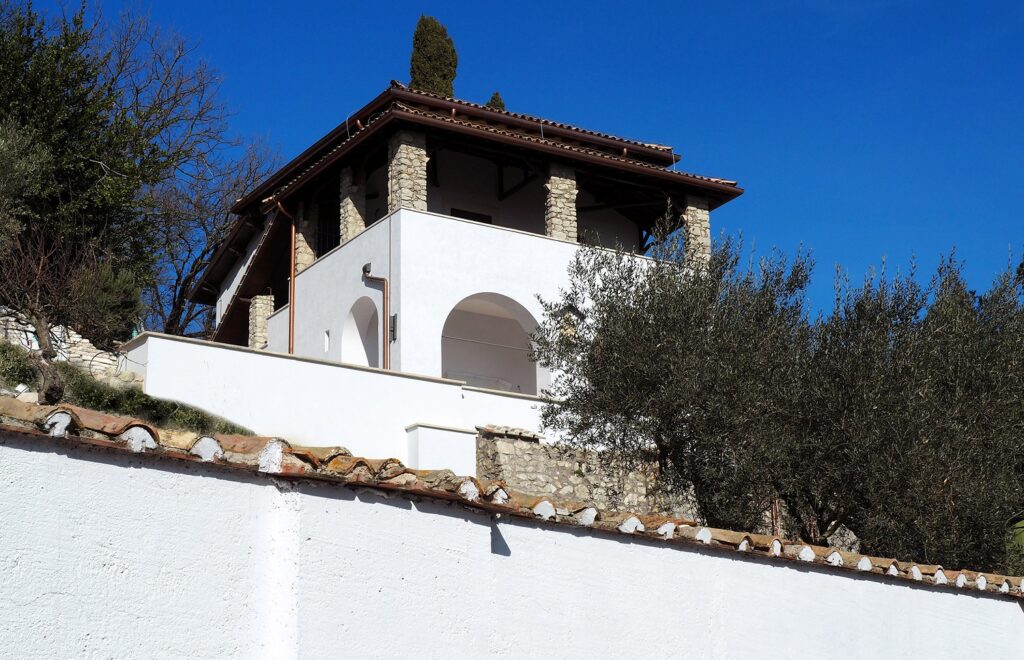
Villa Serpentara – villamassimo.de
Villa Serpentara and the surrounding woods have also inspired many artists, such as Gustave Dorè in his drawings depicting the dark forest of Dante’s Inferno, an ancient oak wood growing on bare rocks. This kind of landscapes was so much beloved by the German exponents of Romanticism, that, in 1873, they purchased it in order to prevent its destruction.
In the early 1900s, the sculptor Kassel Heinrich Gerhardt built a mountain refuge here, which he donated to the Berlin Academy of Arts. The villa, that hosts various artists from the Academy, is managed by the dall’Accademia Tedesca Roma Villa Massimo.

Among the typical products, the panpepato stands out, a traditional Christmas cake, to which even a cooking competition is dedicated. Surrounded by vineyards and olive groves, Olevano Romano owes its fame mainly to the Cesanese di Olevano Romano DOC wine.
At the end of June, the event “Vinointorno”, dedicated to quality of food and wine, is celebrated, while, between August and September, the fiftieth anniversary of the Cesanese Wine Festival takes place. The latter incluses tastings in the cellars along the Cesanese Wine Route and a parade of allegorical floats created by local groups.