

The small town of Palestrina, overlooking the slopes of Mount Ginestro, a peak in the Prenestini Mountains, has dominated the countryside south of Rome for nearly three thousand years.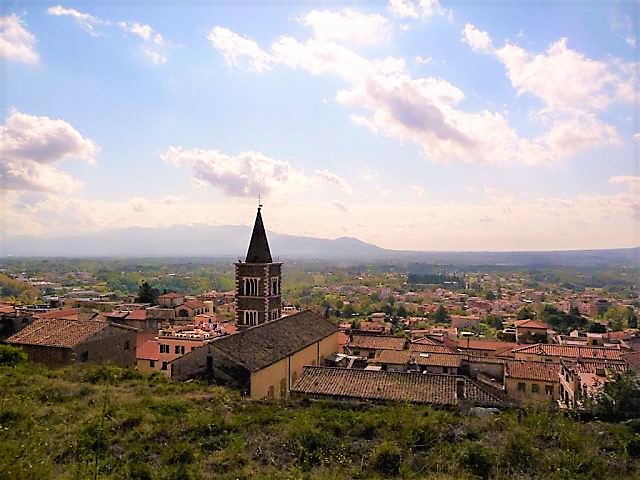
Narrow streets and stairways climb up to the highest part of the village, which rises on the ancient Praeneste. In the historic centre, Palazzo Colonna Barberini, built on the summit of the Santuario della Fortuna Primigenia, stands out.
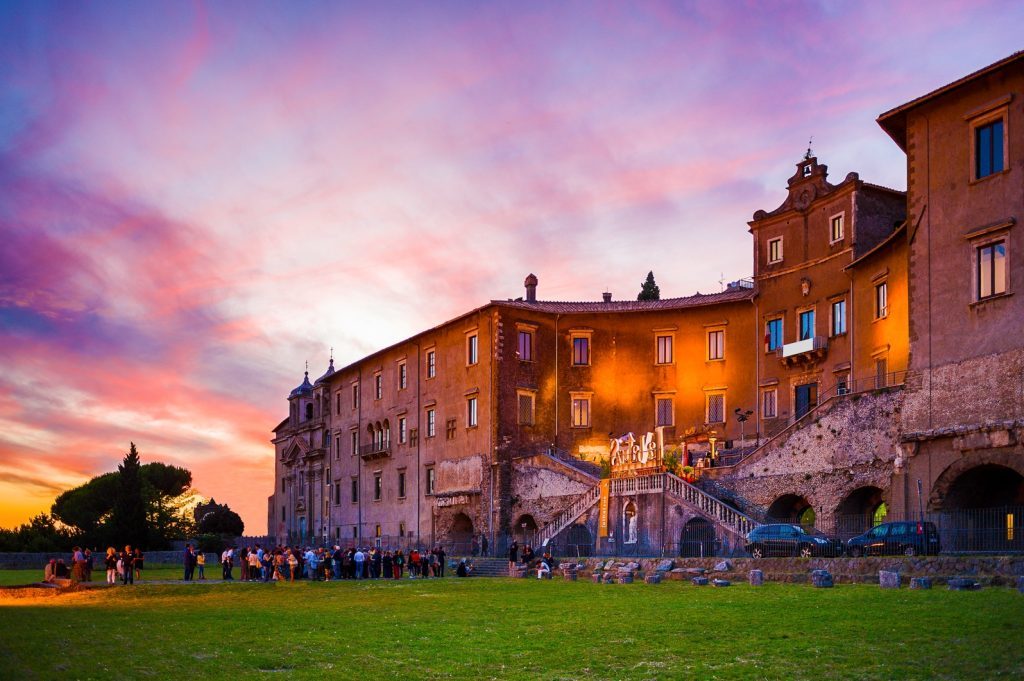
Palazzo Barberini – retedimorestorichelazio.it
Palazzo Barberini is still the residence of Prince Benedetto. Part of the palace houses the National Archaeological Museum, where the remnants of Paestrina’s glorious past are preserved.
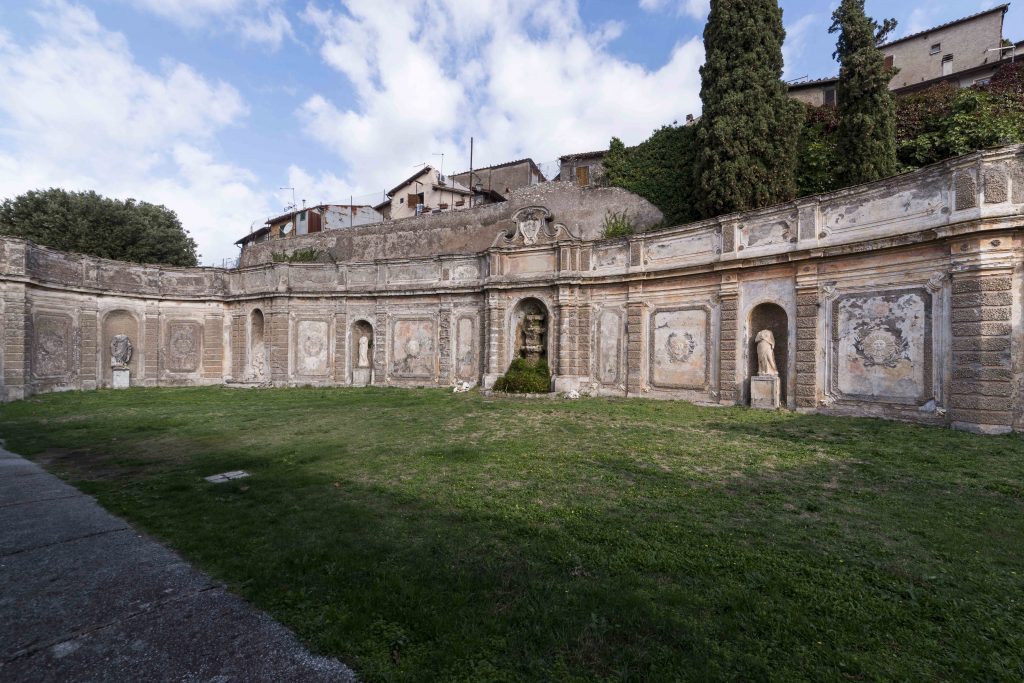
Barberini Nymphaeum – retedimorestorichelazio.it
Entering through the private entrance, you’ll find yourself in the Barberini Nymphaeum, the prince’s magnificent garden, built in the second half of the 1600s.
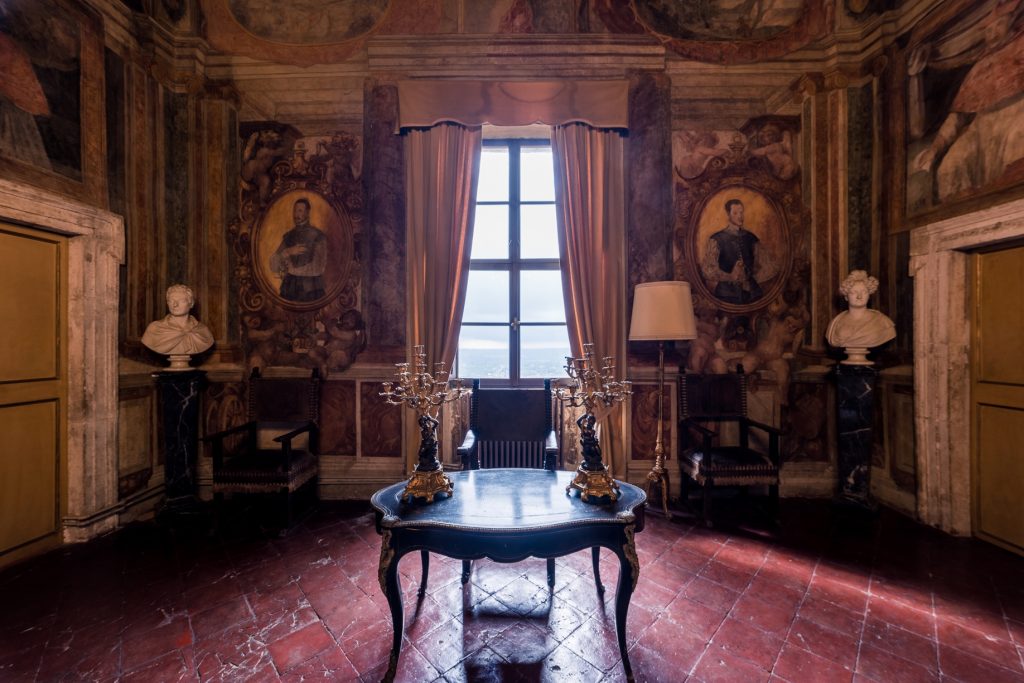
Palazzo Barberini, sala di Bonifacio VII – retedimorestorichelazio.it
From here, you can access the rooms open to the public, such as the Hall of Urban VIII, a frescoed room where the pope received his guests.
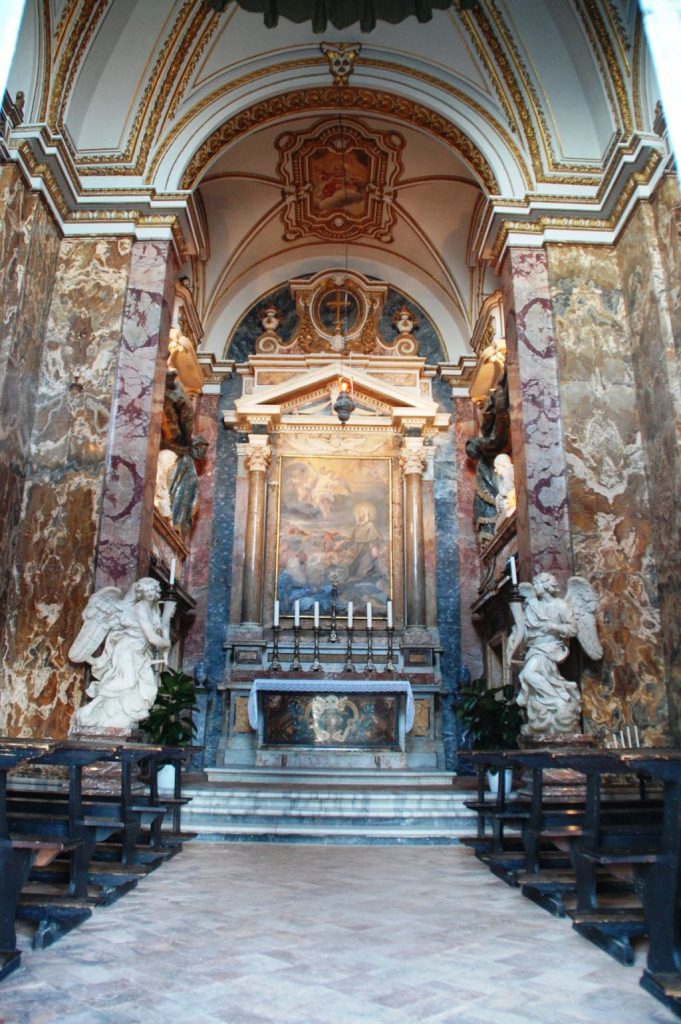
Chiesa di Santa Rosalia a Palazzo Barberini – retedimorestorichelazio.it
The Baroque church of Santa Rosalia served as the palace chapel of the Barberini princes in the late 1600s. A highlight is the painting by Francesco Reali depicting Santa Rosalia defending the city of Palestrina from the plague. The Sala dei Depositi also once housed the Pietà of Palestrina, a work attributed to Michelangelo and now housed at the Accademia Gallery in Florence.
Palazzo Barberini, along with the Nymphaeum and the Church of Santa Rosalia, are designated Historic Residences in Lazio and can be visited with a guide by reservation.
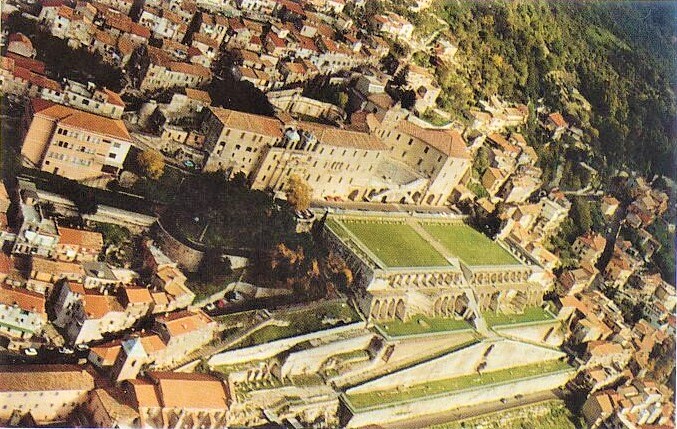
The Museo Nazionale Archeologico di Palestrina and the Santuario della Dea Fortuna
Around the medieval village, stand the remains of the imposing Santuario della Fortuna Primigenia, dedicated to the Goddess Fortuna, the greatest late-Republican complex of ancient Italy. The Sanctuary was one of the most important temples, visited by the Romans in search of omens and predictions. It is considered among the finest examples of Roman Hellenism architecture in Italy.
Generations of local artisans still carry on the traditional workmanship of copper, ceramics, and wrought iron, creating manufacts linked to the artistic history of the village.
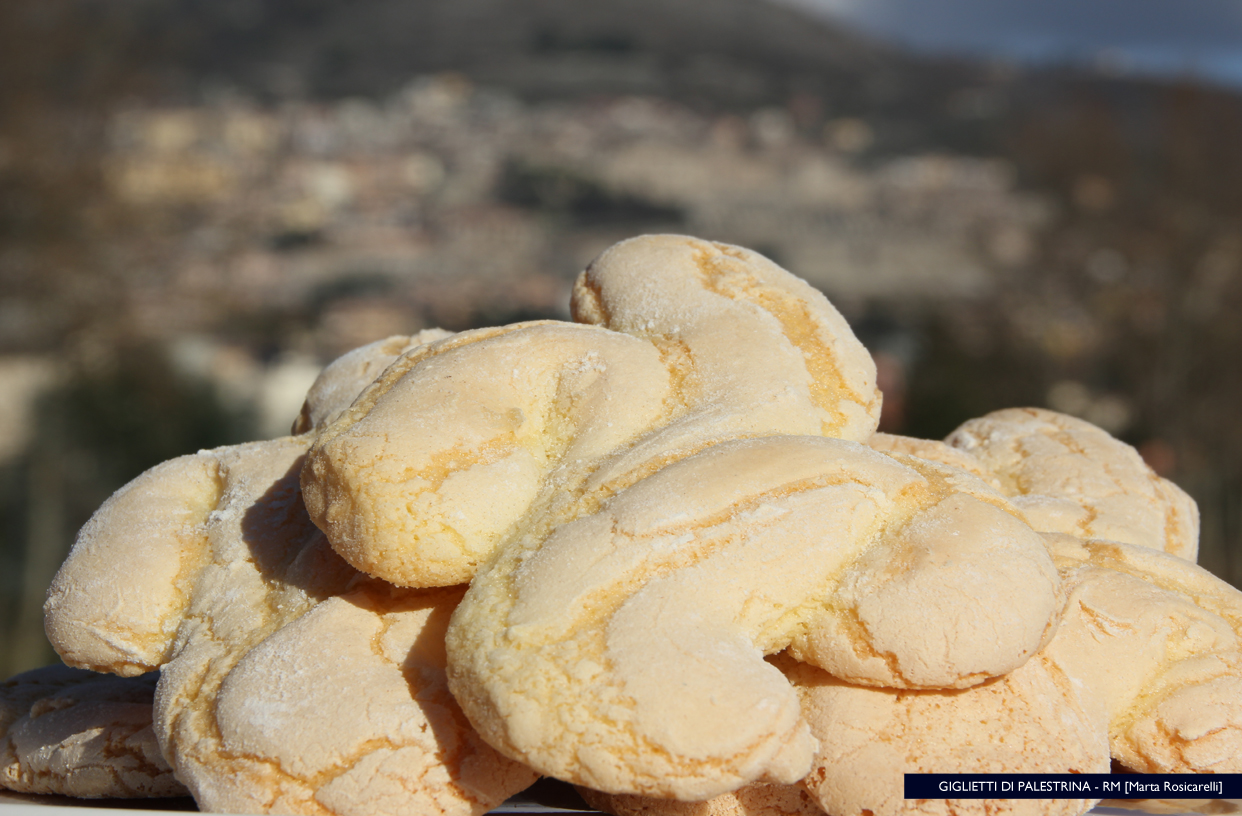
The Giglietti di Palestrina
Among the local specialities are the Sagna, a poor pasta dish, handmade with flour and water, and the Giglietti di Palestrina, dry, fragrant lily-shaped biscuits, celebrated with a Festival in August.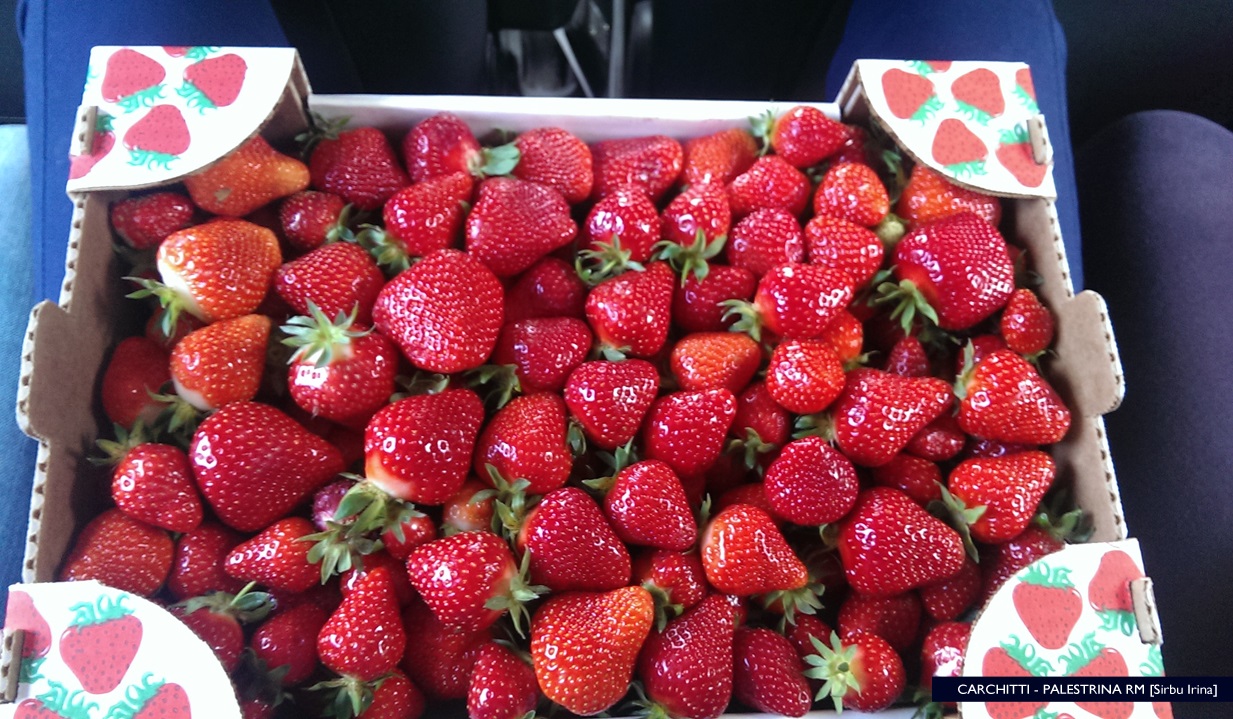 Another unmissable event is the Strawberry Festival, held in the hamlet of Carchitti in May.
On August 18, St. Agapitus, the patron saint of Palestrina, is celebrated with the three-day event Palio di Sant’Agapito and Giostra della Scifa. A galloping knight must throw a wooden lance through a metal circle hanging from a wooden container suspended in the air, the scifa.