

Paliano, nestled between the Prenestini and the Ernici Mountains, dominates the Sacco Valley.

Panoramic view of the town of Paliano (photo: Pro Loco Paliano FB page)
Its period of greatest splendour dates back to the 17th century, which saw the construction of Palazzo Colonna (the Ducal Palace), the Collegiate Church of Sant’Andrea (the burial site of the Colonna Family), and the fortress overlooking the entire Sacco River Valley, today a maximum-security prison.

Paliano, protected by its defensive walls
Well-preserved medieval city walls with three entrance gates surround the village for approximately 2.5 kilometres. Between the 16th and 18th centuries, they were reinforced with bastions and sentry boxes.

Porta Romana, Paliano (photo: comune.paliano.fr.it)
The historic centre hosts the Museum of Arms, featuring a torture chamber, and the Wine Museum, where visitors will be able to appreciate the history of the village.

The portico of Palazzo Colonna (photo: Massimo Brugè)
Palazzo Colonna, next to the Collegiate Church of Sant’Andrea, is undoubtedly the most remarkable architectural treasure. Commissioned in 1620 by Filippo I Colonna, it was later expanded by the architect Antonio Del Grande, who added a beautiful courtyard facing the valley. For information, please visit the Palazzo Colonna website.
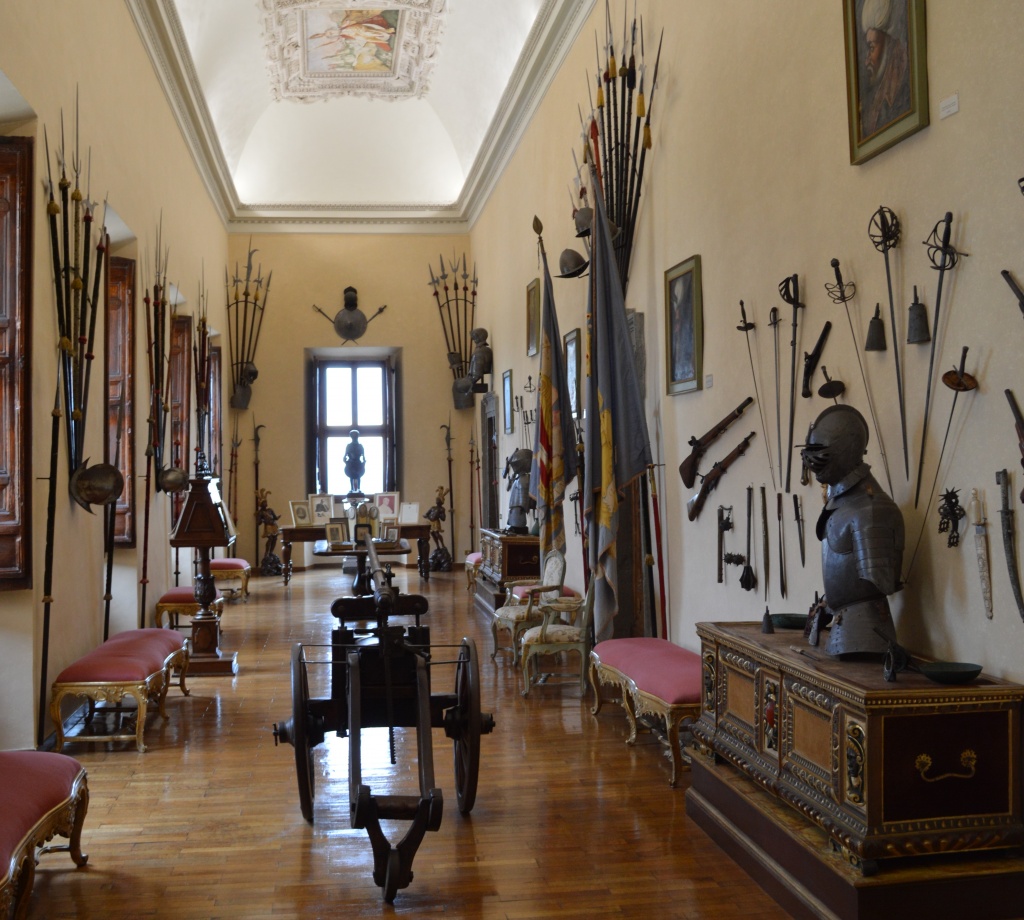
War trophies in Palazzo Colonna – retedimorestorichelazio.it
Palazzo Colonna, today the Family’s country residence, was built between the 1620s and 1630s by Duke Grand Constable Filippo I Colonna. Over time, the palace has been enriched with works of art, such as the war trophies from the Battle of Lepanto occurred in 1571.
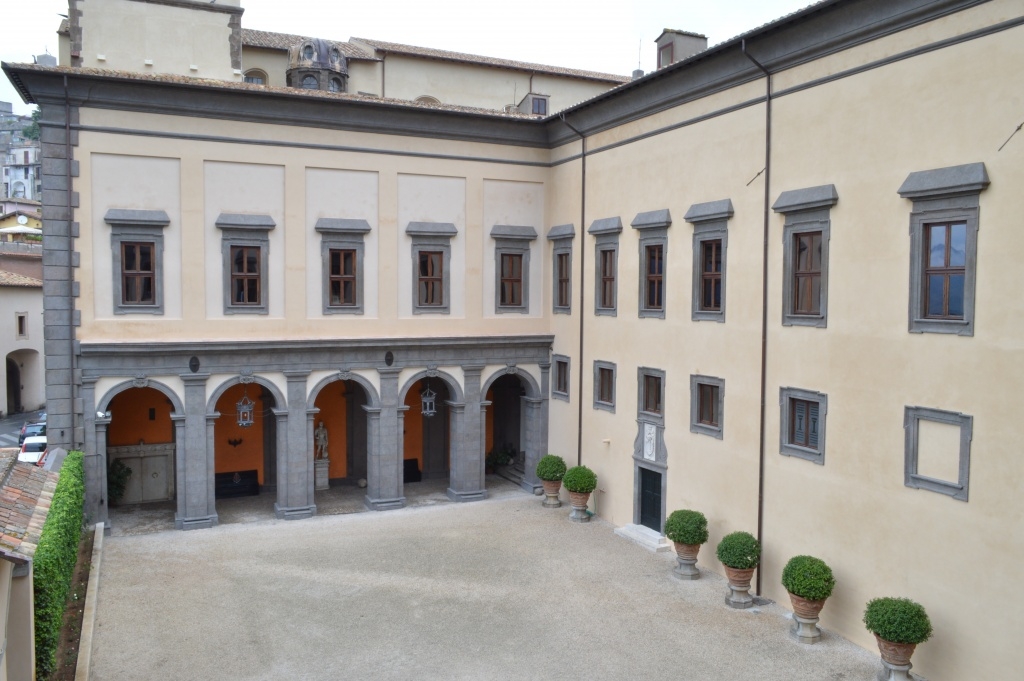
Palazzo Colonna – retedimorestorichelazio.it
Palazzo Colonna, visitable only by appointment, is part of the Associazione Dimore Storiche Italiane.
In 2025, an orange bench was inaugurated in Paliano to raise awareness against all forms of bullying and discrimination. It is located next to a mural depicting Willy Monteiro Duarte, a home-born young man murdered in 2020 while attempting to defend a friend from a violent attack.

A view of the “Selva di Paliano e Mola di Piscoli” Natural Monument
The architecture of Paliano perfectly blends with the surrounding natural landscape. The best example is the Selva di Paliano and Mola di Piscoli Natural Monument, a botanical and ornithological oasis established by the Prince Antonello Ruffo di Calabria.

A hilarious scene filmed within the Selva di Paliano e Mola di Piscoli Natural Monument
This enchanting site was chosen as a location for the most memorable scenes in the film “Nothing Left to Do but Cry”, with Roberto Benigni and Massimo Troisi, including the iconic sequence at the customs checkpoint.

Cycling in the Paliano Forest
Within the Natural Monument area lies the Paliano Forest, 30 hectares of oak trees crossed by five kilometres of cycling paths, a perfect place for walking, learning, playing, and dining.

Evenings at the Rural Theatre in the Paliano Forest
In addition to a wide range of activities for both adults and children, the Paliano Forest hosts numerous cultural events, such as the summer evening performances at the Teatro Rurale, a space surrounded by hay bales.
The village is also the starting point of one of the most beautiful bike paths in Lazio, the approximately 25 km Paliano–Fiuggi route, which follows an old railway line, crossing the villages of Serrone, Piglio, and Acuto. Along the way, cyclists can stop and enjoy the impressing natural scenery in complete tranquillity.
Traditional local cuisine includes pataccaccia, (a simple flour-and-water pasta similar to the maltagliati), co’ra de soreca (long-shaped dumplings), pancotto, and the castrato alla tedesca. Other specialities are spelt with pork rinds, honey mustard, panunto, acqua cotta stortini, pizza gialla al mattone with chicory and herbs, glazed doughnuts, and panpepato, a traditional spiced Christmas cake.

The historical procession during the Palio dell’Assunta in Paliano
Every year, in mid-August, Paliano hosts the Palio dell’Assunta, a series of competitions among the local districts and neighbourhoods, involving 700 participants in period costume. The event also includes a historical procession, and the most awaited Giostra del Turco.
Not to be missed is also the Carosello Festival, a celebration enlivened by street bands, contemporary circus artists, musicians, and acrobats.