

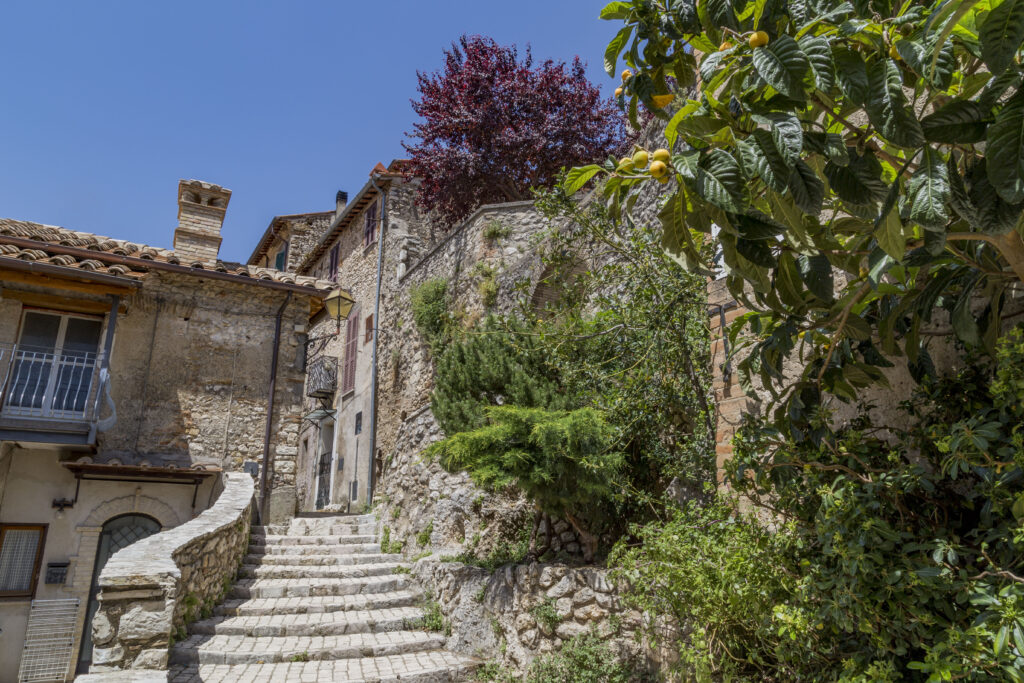
The area of Roccantica has been inhabited and cultivated for millennia, and as testified by numerous archaeological remains, it was used in the Roman era to supply the capital.
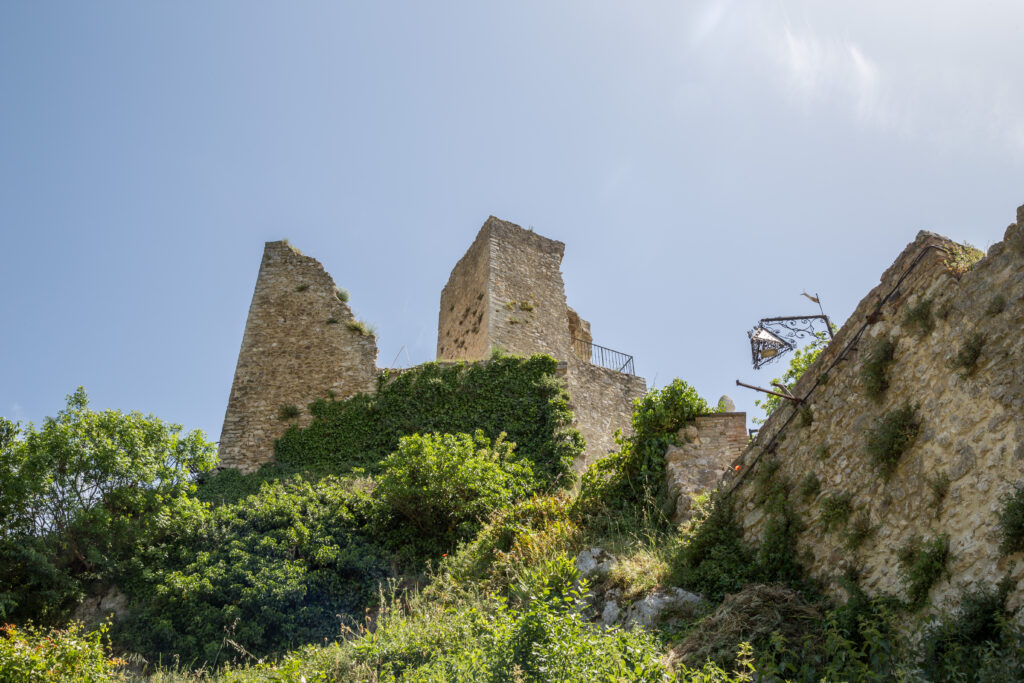
The Tower
In the historic centre stand a square-shaped defensive Tower with a triple circle of walls, and the Church of Santa Maria Assunta in Cielo, built in 1740 over a pre-existing church.
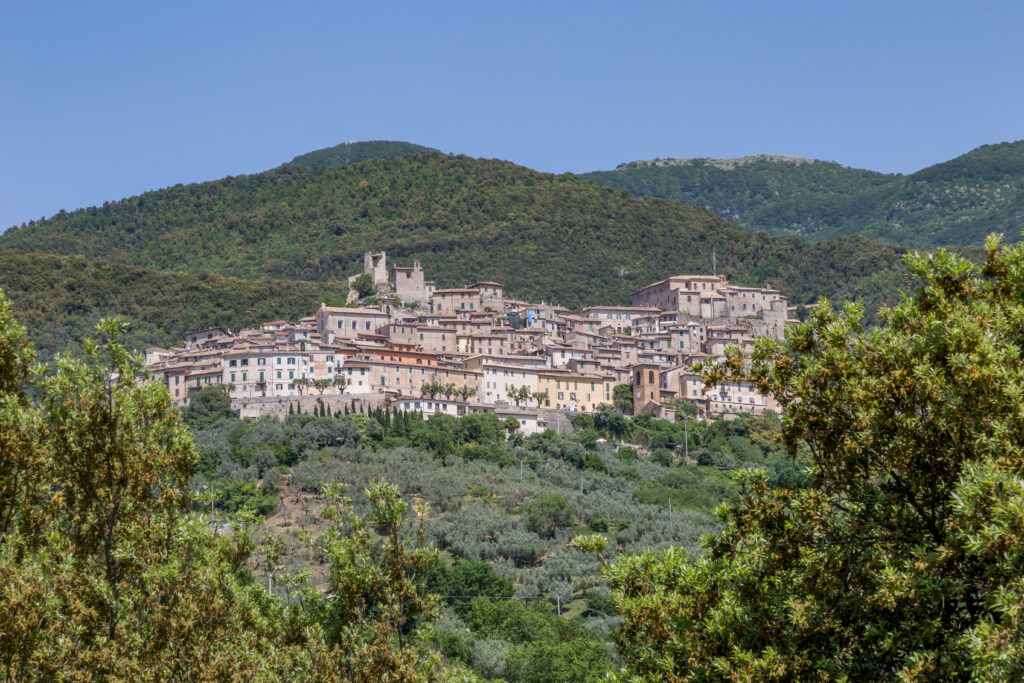
Roccantica
The Castle – Monastery of the Poor Clares, built over the ancient ruins of the Ursino Castle in the mid-1500s, is also worth a visit. Other attractions in Roccantica are the Gothic churches of San Valentino with its five chapels, and Santa Caterina, decorated in 1430 by Pietro Coleberti with frescoes depicting the life of Saint Catherine of Alexandria.
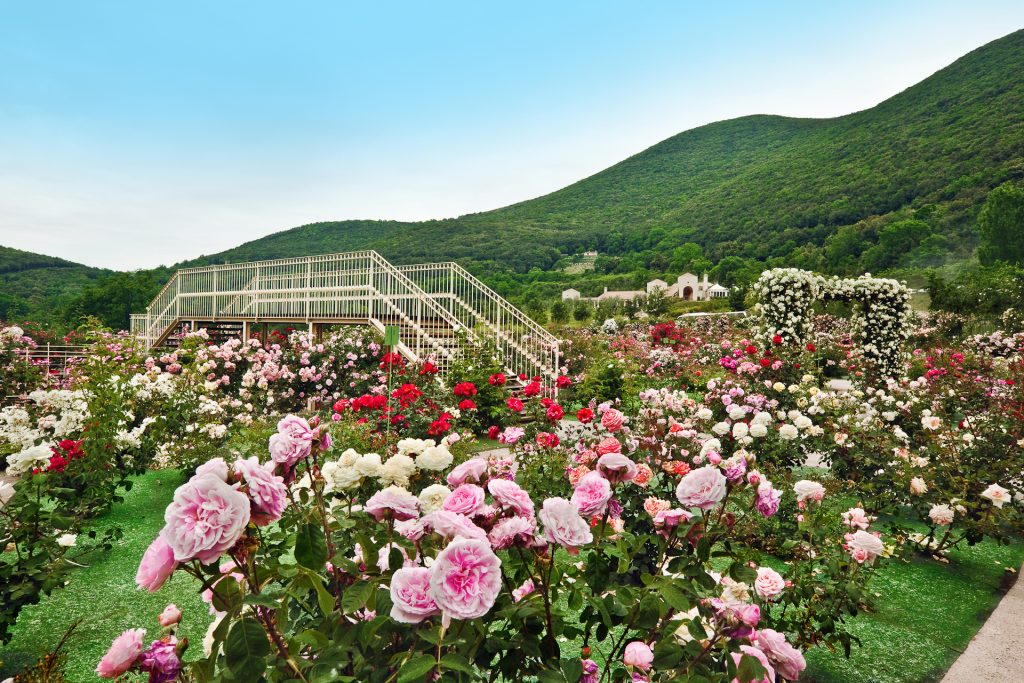
ROCCANTICA RI Vacunae Rosae 1 photo www.latacita.it
Not to be missed is the Vacunae Rosae Garden with over 5,000 varieties of roses, spread across two hectares and adorned with beautiful fountains. One of the most evocative rose gardens in the world, it lies within a mystical medieval village immersed in the woods dedicated to the Goddess Vacuna, named “La Tacita” by Plutarch, in a sort of natural cavea shaped like an angel wing. The garden is open to visitors every weekend in May upon reservation. Of great natural beauty is the Hermitage of San Leonardo, surrounded by the remains of perimeter walls and a stone watermill and preserving an altar with traces of ancient frescoes.
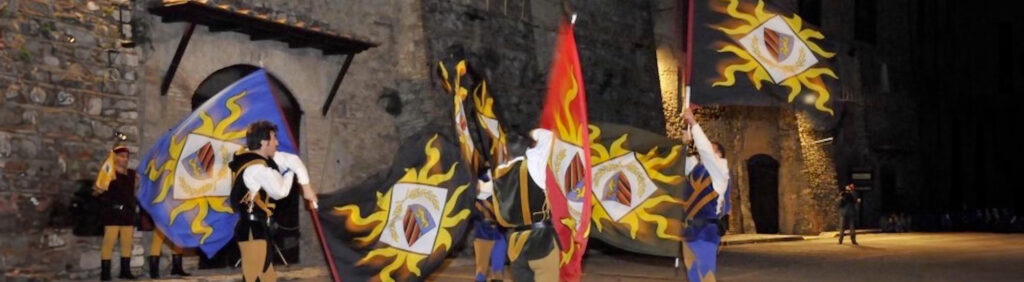
Flag-wavers at the Medioevo in Festa – photo by Proloco Roccantica
Every year in mid-August, Roccantica hosts the reenactment Medioevo in Festa, which celebrates Pope Nicholas II taking refuge in the village to escape the Crescenzi troops in 1059. He was defended by the inhabitants, of whom only twelve survived. For this reason, the Pope granted them a fiefdom with a papal bull on April 18, 1060.
 The event includes medieval music and narration performances and a parade of more than five-hundred figures in period costumes, divided into groups of men-at-arms, knights, notables, and common people. During the feast, visitors will be able to enjoy an unforgettable experience among medieval costumes, food, music, parades, games, gates, towers, weapons, flags, torches, and flares, and to admire the performances of young drummers and trumpeters, flag wavers, dancers, musicians, wild boar hunters, and fire eaters.
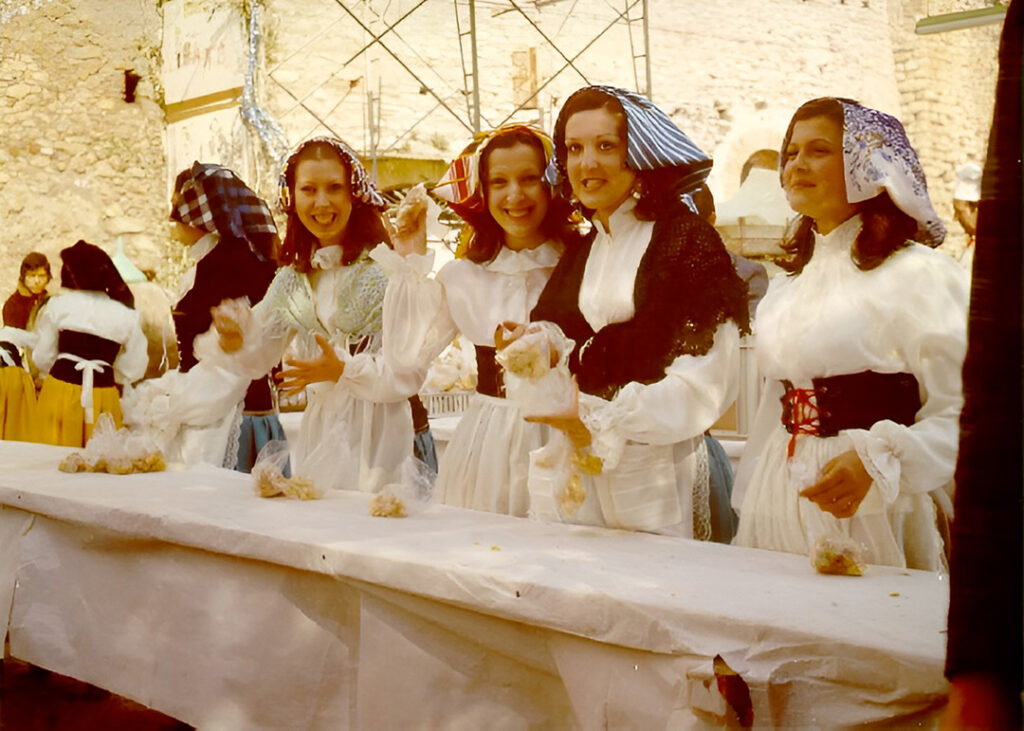
The Frittello Festival 1972 in Roccantica – photo www.roccantica.org
A typical local product is the cauliflower fried in Sabina DOP EVO oil, celebrated for over fifty years during the Frittello Festival on the Day of San Giuseppe, popularly nicknamed “Frittellaro”.
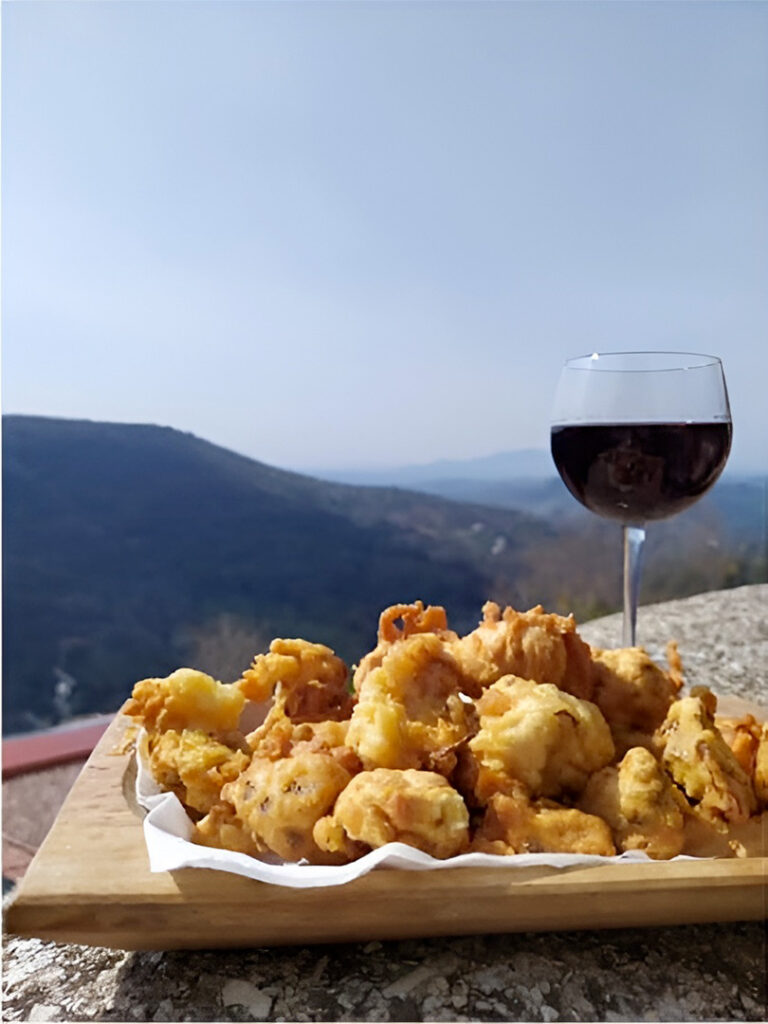
Frittelli di San Giuseppe in Roccantica – Facebook @ProLocoRoccantica
After removing the leaves, the cauliflowers are chopped, washed, and salted. After a few hours, they are immersed in the pastella, a mixture of eggs, flour, water, and salt, and then fried in large pans filled with extra virgin olive oil at a special stand in Piazza San Valentino. Worth mentioning is also the Unione Filarmonica Roccolana, founded in 1882 and composed of thirty-eight members. In addition to establishing music schools for young people, it organizes classical and contemporary concerts.