

Strangolagalli is a small village in Ciociaria perched on the slopes of the Ernici Mountains, that still preserves its medieval layout and peculiar alleys.
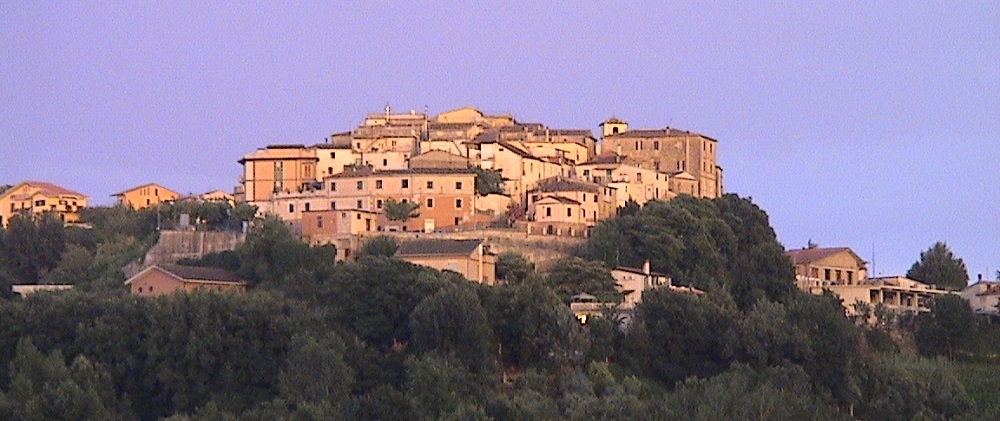
A view of Strangolagalli perched on the top of a hill
Its curious name of uncertain origins may derive from the Byzantine strongylos (circular) and the Lombard wall (palisade). Over time, the Italian letter W changed into G, and the word wall was transformed into gall”, hence, “Strongylos-gall”, Strangolagalli.
According to a seventeenth-century scholar, however, the name of the village refers to the country residence of a Roman patrician, Astragalo Gallo. An imaginative popular legend has it, the inhabitants, finding out that the enemies were supposed to attack the village at the cockcrow, strangled all the roosters in the village. As proof of this fanciful hypotheses, the city’s coat of arms depicts a vigilant rooster and a cunning fox.
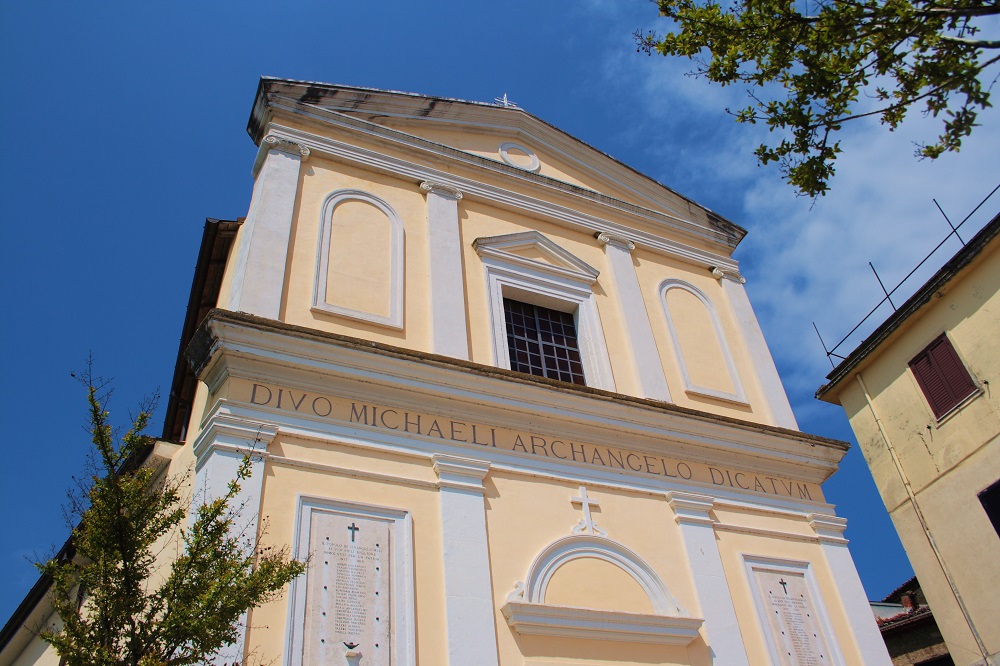
The Church of San Michele Arcangelo – photo by comunedistrangolagalli.it
Noteworthy in Strangolagalli is the mid-eighteenth-century Church of San Michele Arcangelo, dedicated to the town’s patron saint. Here, during excavations, a Roman tombstone with a Latin inscription was found, now embedded in the wall of the bell tower. The tomb belongs to two freed slaves, who had wished to be buried together.
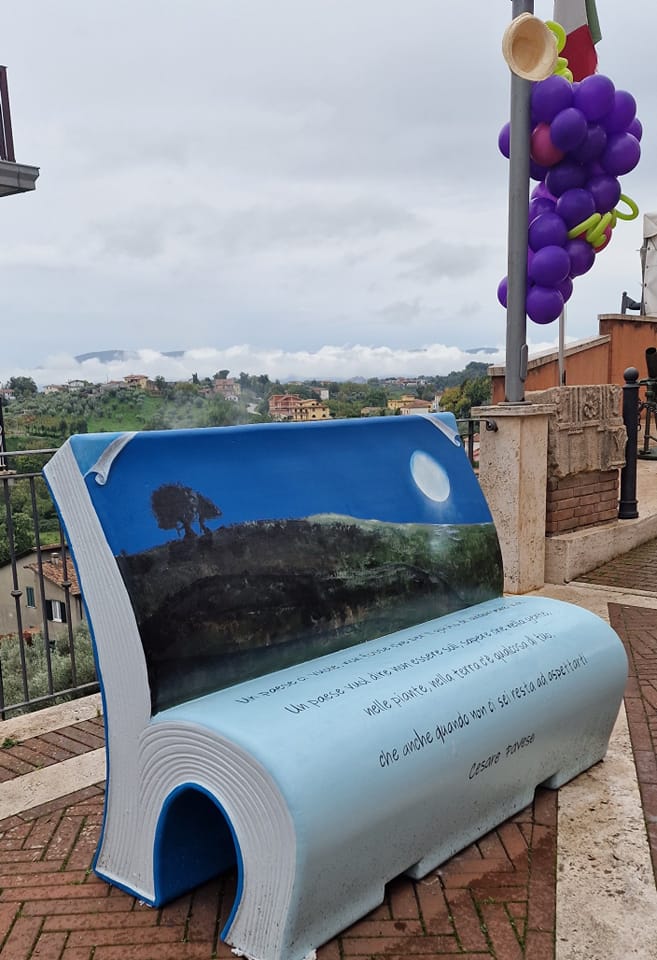
The literary bench – Facebook @comunedistrangolagalli
“Un paese ci vuole, non fosse che per il gusto di andarsene via. Un paese vuol dire non essere soli, sapere che nella gente, nelle piante, nella terra c’è qualcosa di tuo, che anche quando non ci sei resta ad aspettarti.”
In front of the Church of San Michele, engraved on the literary bench, the words from Cesare Pavese’s “The Moon and the Bonfires” summarize the concept of belonging to one’s own land.
The approximately seven km route along the Via Francigena del Sud (stage five, Veroli-Ceprano) is daily travelled by pilgrims from all over the world, to whom eight life-size iron sculptures cut with plasma have been dedicated.
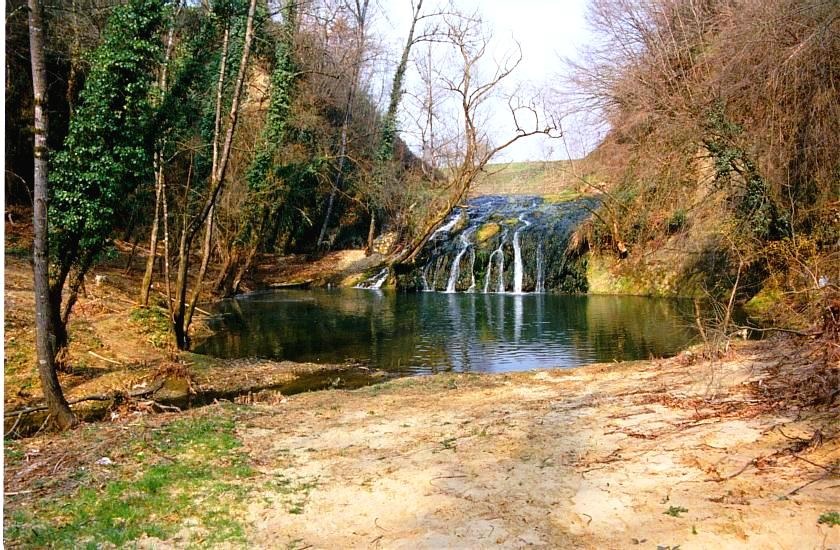
The Borgo Santo Waterfall in the area of Strangolagalli
Nature lovers will appreciate the springs along the slopes, such as the Triano-La Piana Torrent, known as Rio d’Argento, which create natural waterfalls amidst the woods.
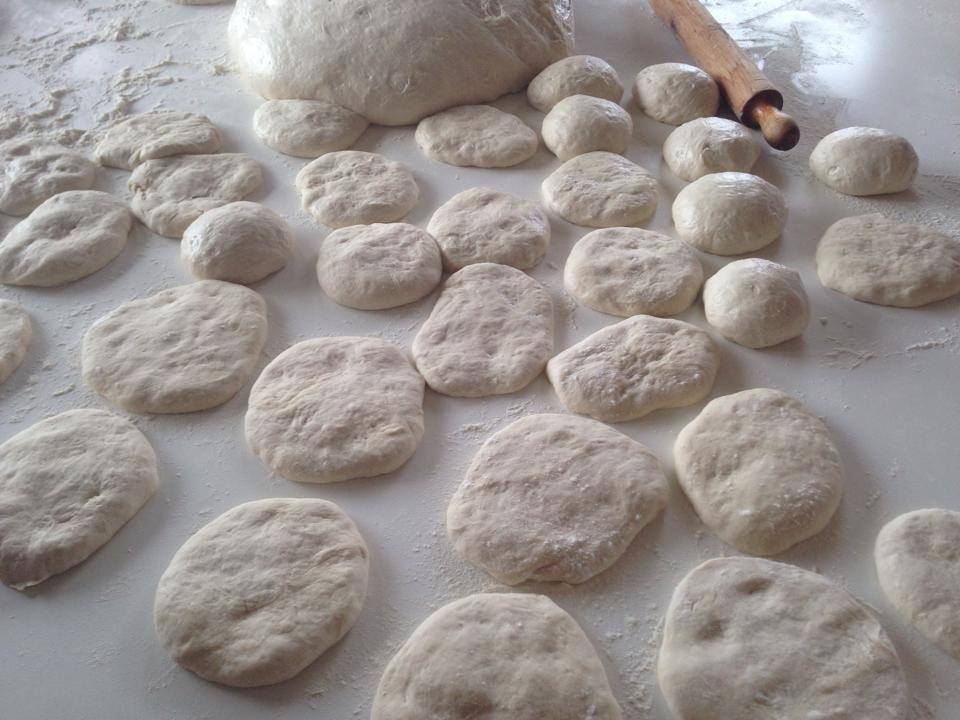
The Stesa, made with water and flour
Among the local dishes, worth tasting is the Stesa, the traditional pizza prepared with just water and flour, and no yeast, fried in boiling oil and then stuffed with cured meats and vegetables. A festival dedicated to this speciality takes place every year in the first half of October. On September 8, the very ancient Feast of the Blessed Virgin Mary celebrates her nativity with musical performances and fireworks shows.
Another unmissable event linked to rural tradition, and, in particular, to the new wine production, is “Le Cantine del Borgo”, held in November during the Feast of San Martino. On this occasion, the village’s historic cellars organise tastings of typical products and local wines, while the streets of the historic centre are animated with musicians, street artists, exhibitions, and craft markets.