

Tarquinia, with its historic centre enclosed by medieval walls, evidence of different historical periods, is one of the oldest towns in Italy, which also attracts art and nature lovers.
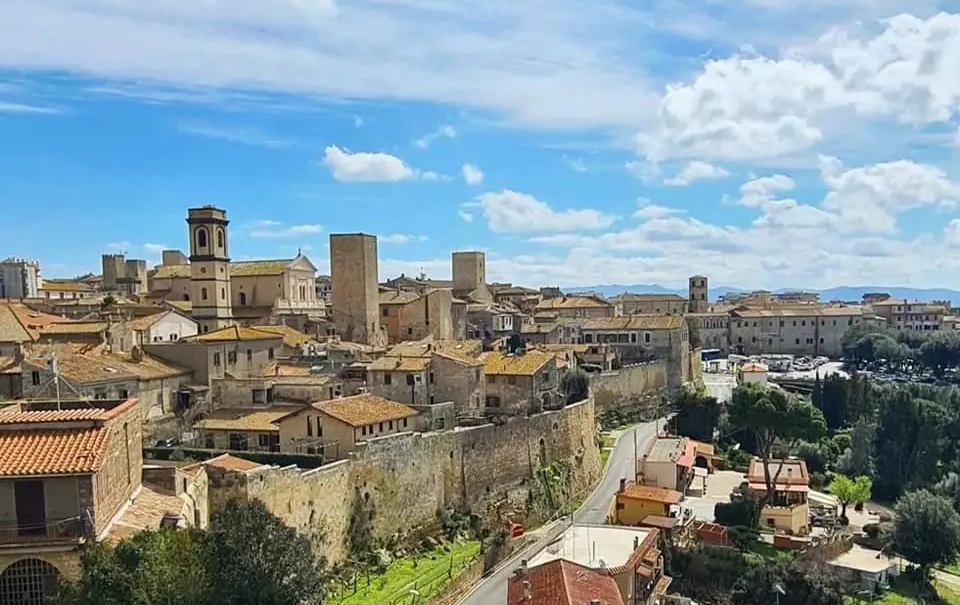
The towers of Tarquinia
Countless towers are scattered on the squares, by the ancient residences of powerful families, or close to elegant historic buildings, such as Palazzo dei Priori and the Palazzo Comunale, with its beautiful Sala degli Affreschi.
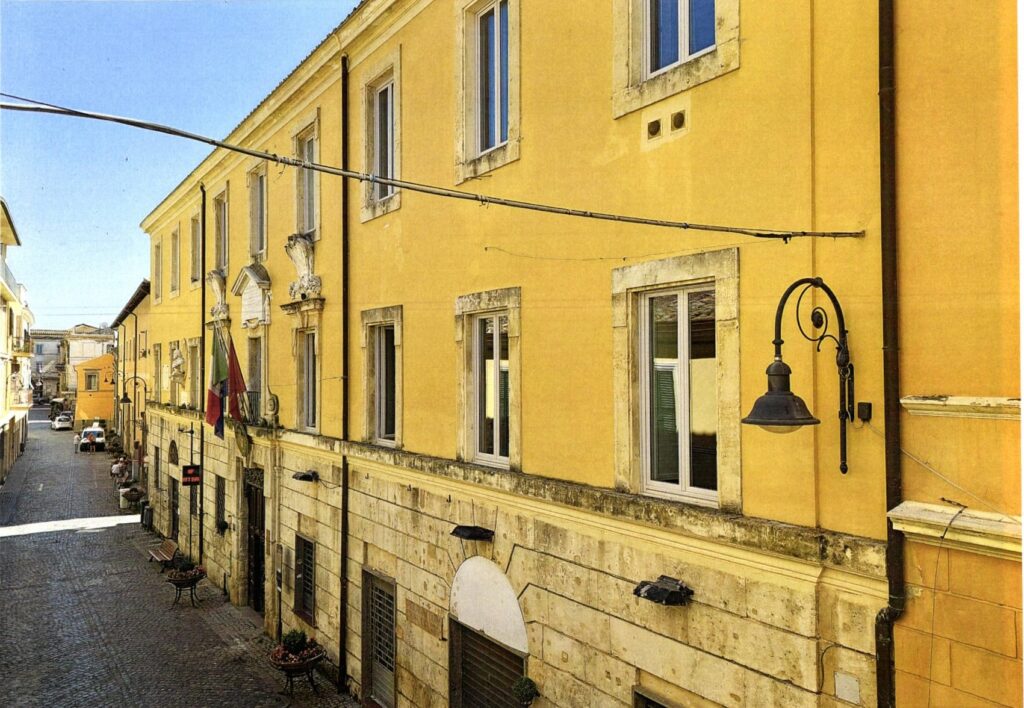
Palazzo Vipereschi – Sede dell’Università Agraria di Tarquinia – retedimorestorichelazio.it
Palazzo Vipereschi – the headquarters of the Agricultural University is one of the historic residences in Lazio. It has stood in the historic center of Tarquinia since the early 1500s. The building was once used as a prison for clergymen.
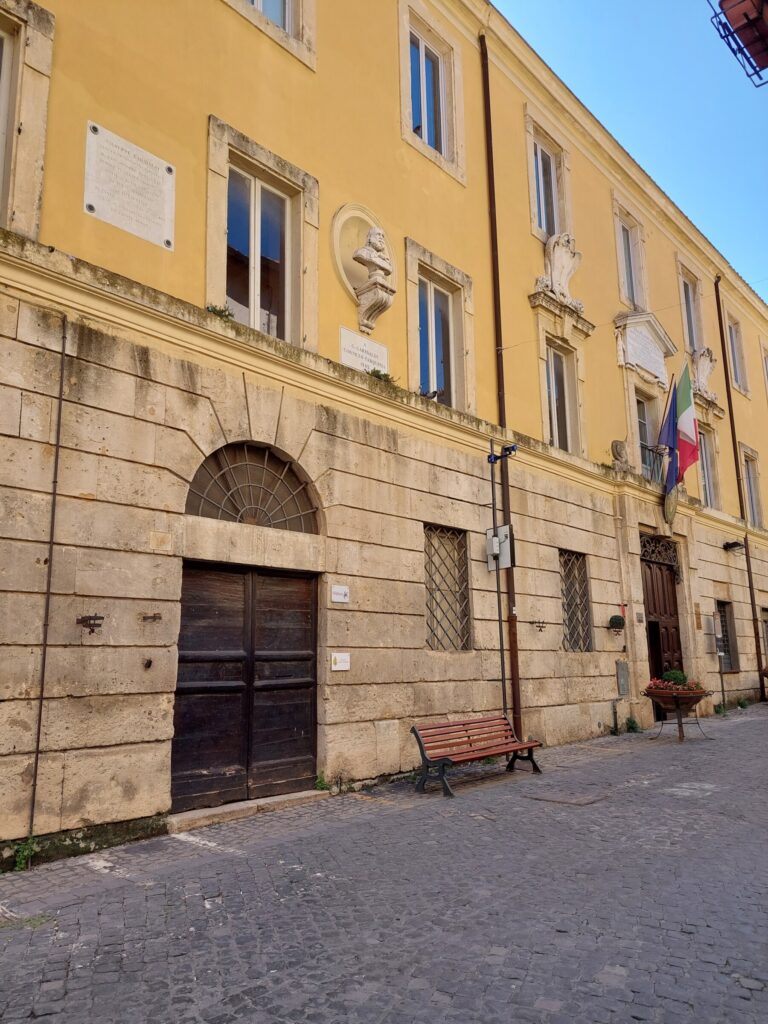
Palazzo Vipereschi – Sede dell’Università Agraria di Tarquinia – retedimorestorichelazio.it
In the late 1800s, it became partly owned by the Agricultural University, but it also housed the Post and Telegraph Office, whose counters with metal grilles are still visible today. The bust of Garibaldi on the façade commemorates his stay there in 1875.
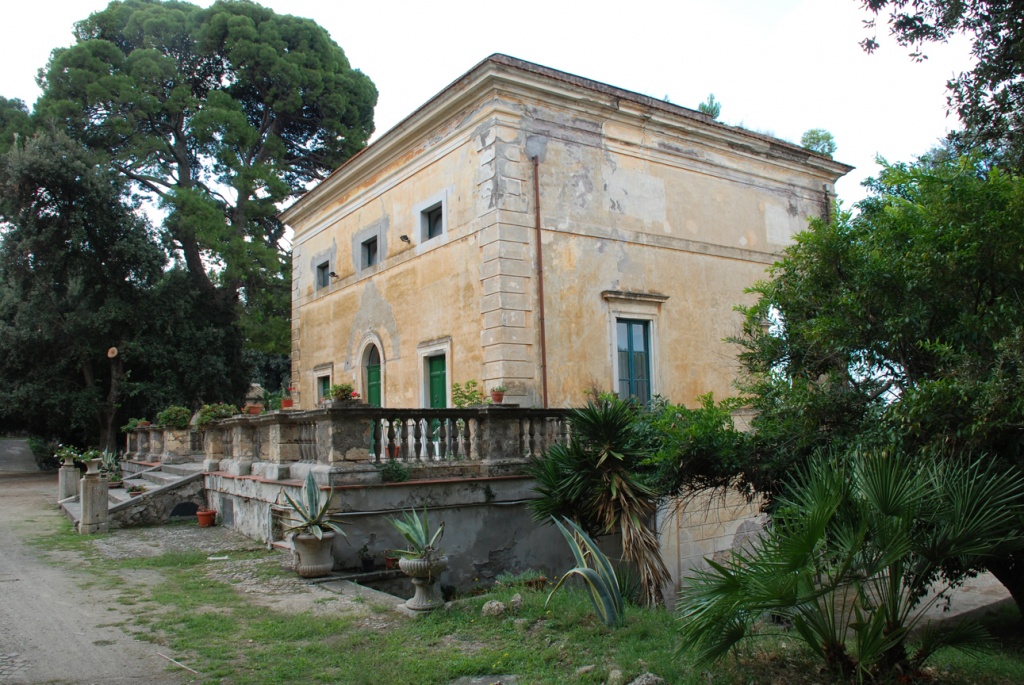
Villa Bruschi Falgari – retedimorestorichelazio.it
Villa Bruschi-Falgari is an architectural complex comprising the villa itself, flanked by the family chapel and a rustic outbuilding, constructed at the behest of the Counts of Bruschi-Falgari in the valley where the Fonte dei Giardini (or Fonte dell’Isaro) spring rises. The classical-style “casino” was designed by architect Virginio Vespignani in 1860.
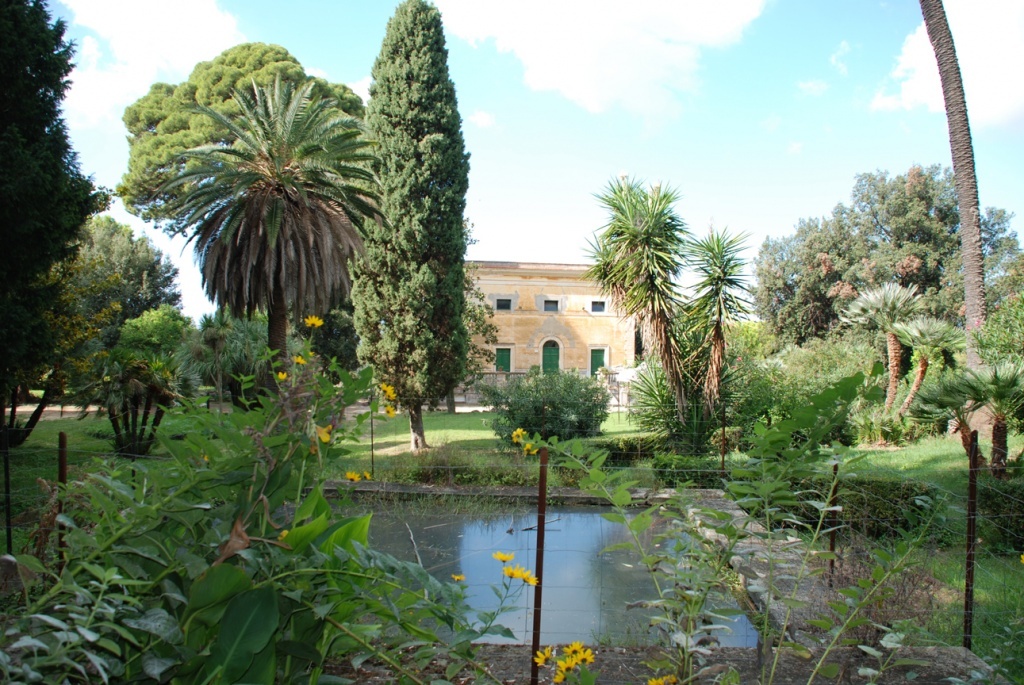
il parco di Villa Bruschi Falgari – retedimorestorichelazio.it
The park surrounding the three buildings is home to a wealth of rare trees and shrubs that the count brought back from his travels abroad. The park also features the “Path of Love”, where lovers used to declare their feelings for one another every Easter Monday.
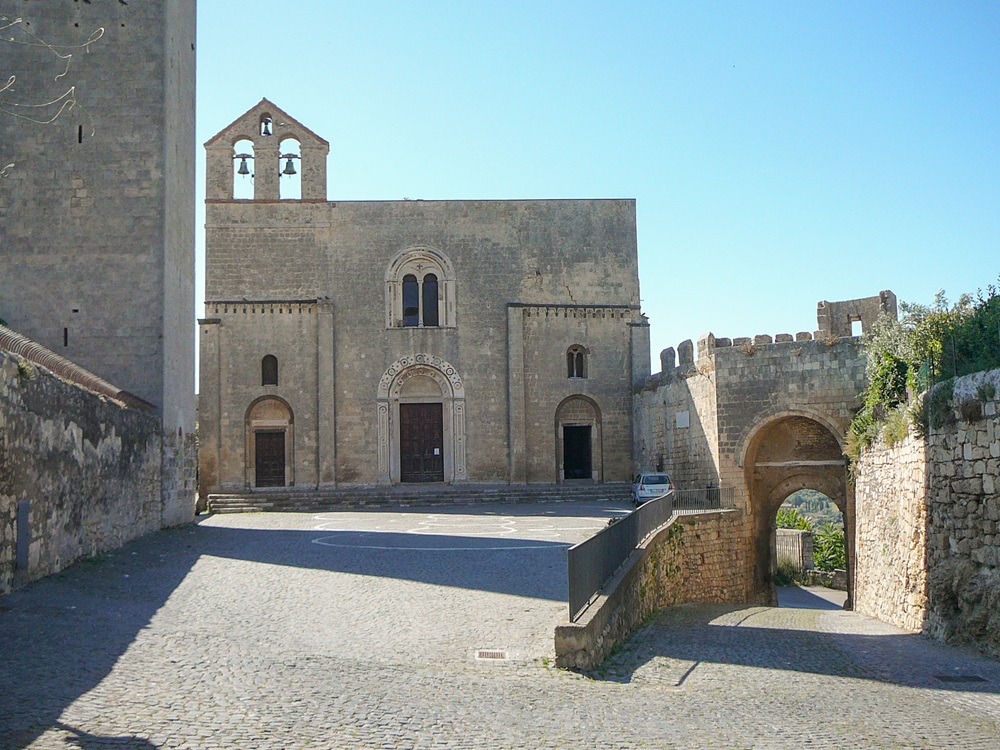
The Church of Santa Maria in Castello
Among the many places of worship, worth a visit are the Cathedral of San Giovanni Battista and the Church of Santa Maria in Castello, reachable through Porta Castello.
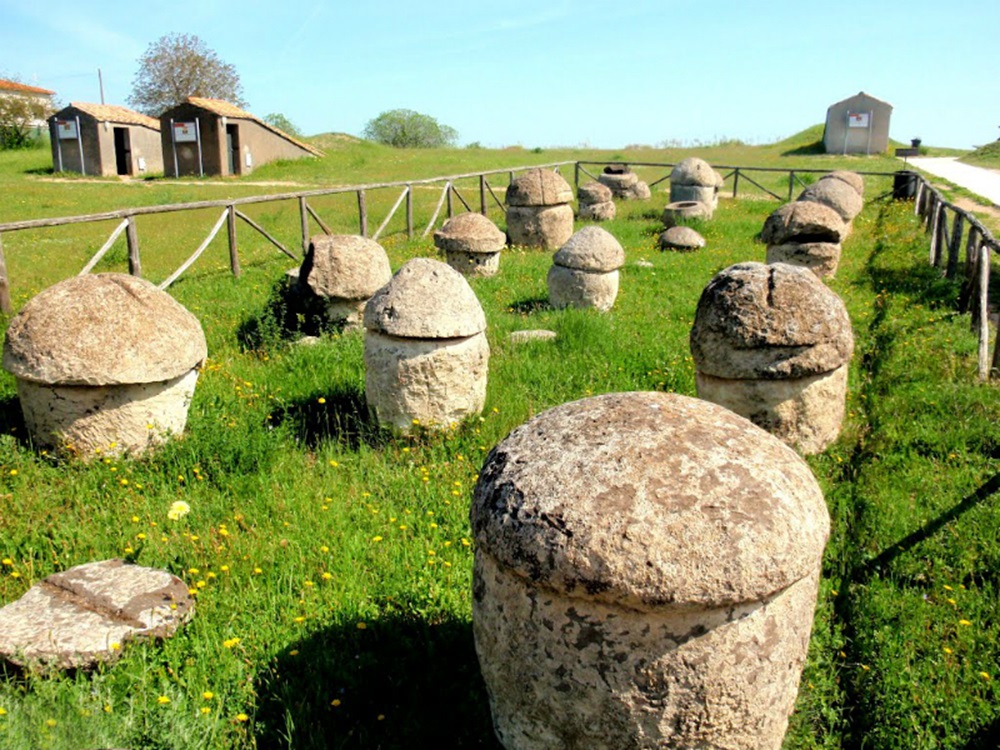
The exterior of the Monterozzi Necropolis
Founded in the nineteenth century BC, Tarquinia was one of the most important Etruscan settlements. It preserves the Necropolis of Monterozzi, the extraordinary archaeological site, which hosts several decorated Etruscan tombs dating from the sixth to the second century BC.
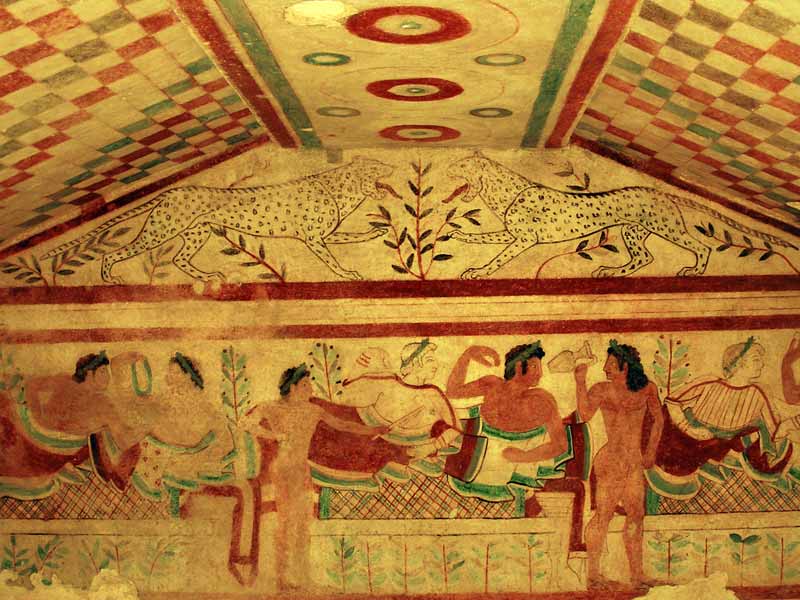
The Tomb of the Leopards
Inside the tombs, scenes of everyday life, religious beliefs and funerary rites of the Etruscans are depicted. In the area of Calvario, twenty-two hypogea are open to visitors, who will admire valuable wall paintings portraying athletes, hunters, fishermen, dancers, musicians, jugglers and animals, as well as banquets and underworld demons. In 2004, the Necropolises of Monterozzi and Cerveteri have been included in the List of UNESCO World Heritage Sites.
Another jewel of Tarquinia is the unmissable National Archaeological Museum inaugurated in 1924 and seat, in the fifteenth-century, of Palazzo Vitelleschi.
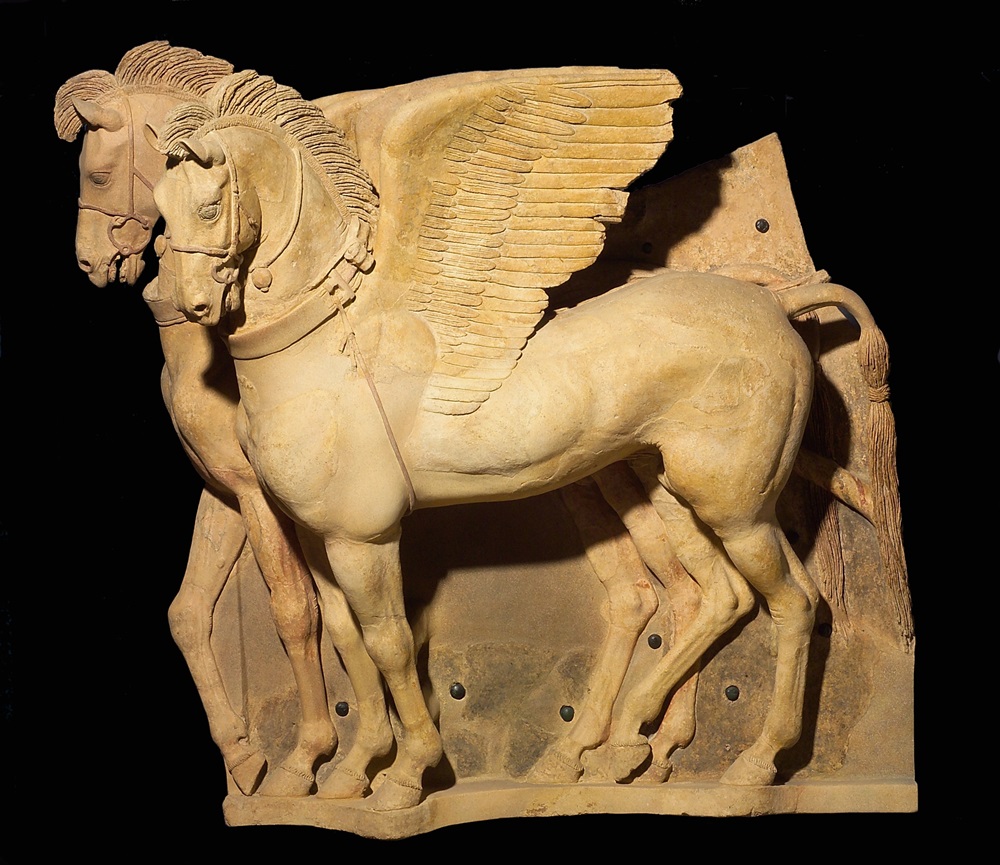
The Winged Horses preserved in the Archaeological Museum of Tarquinia
The three-floor Museum displays, in several thematic areas, a vast collection of sarcophagi, ceramics, bronzes and jewels dating from the Iron Age (nineth century BC) to the Roman era. The highlight of the Museum is the statue of the Winged Horses, an authentic masterpiece of Etruscan art.
Immersed in a gorgeous nature, Tarquinia is also the ideal place for outdoor activities lovers. Along the Cai trails, noteworthy archaeological sites and stretches of ancient roads can be discovered.
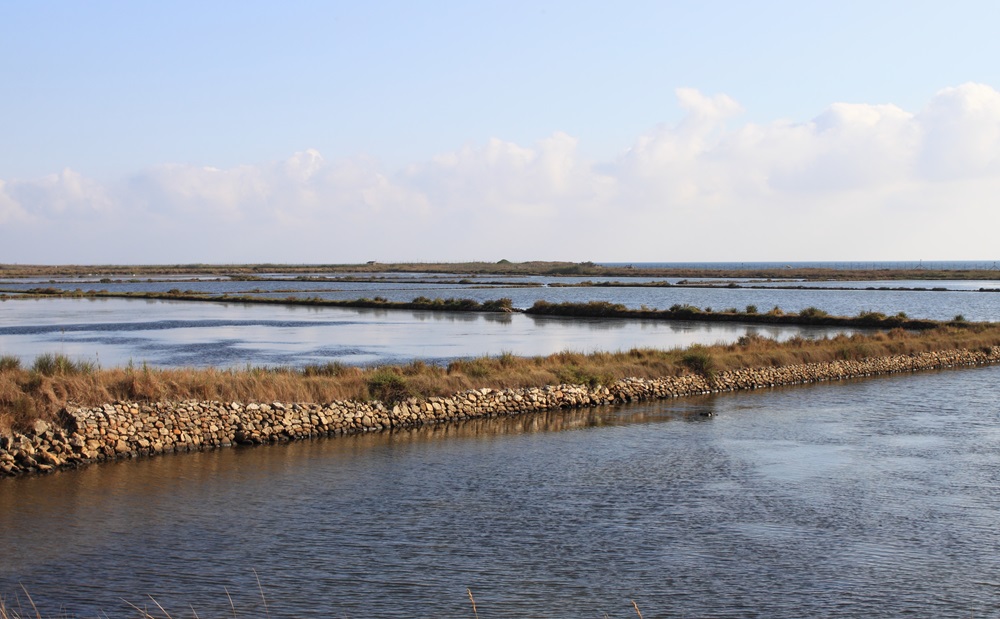
The “Riserva Naturale delle Saline di Tarquinia”
Furthermore, a thick network of paths among woods and mysterious landscapes offers the opportunity of an exciting journey in the past. Unmissable is a visit to the “Riserva Naturale delle Saline di Tarquinia”, the only salt pans in Lazio, as well as a relaxing walk along the beach in Tarquinia Lido.
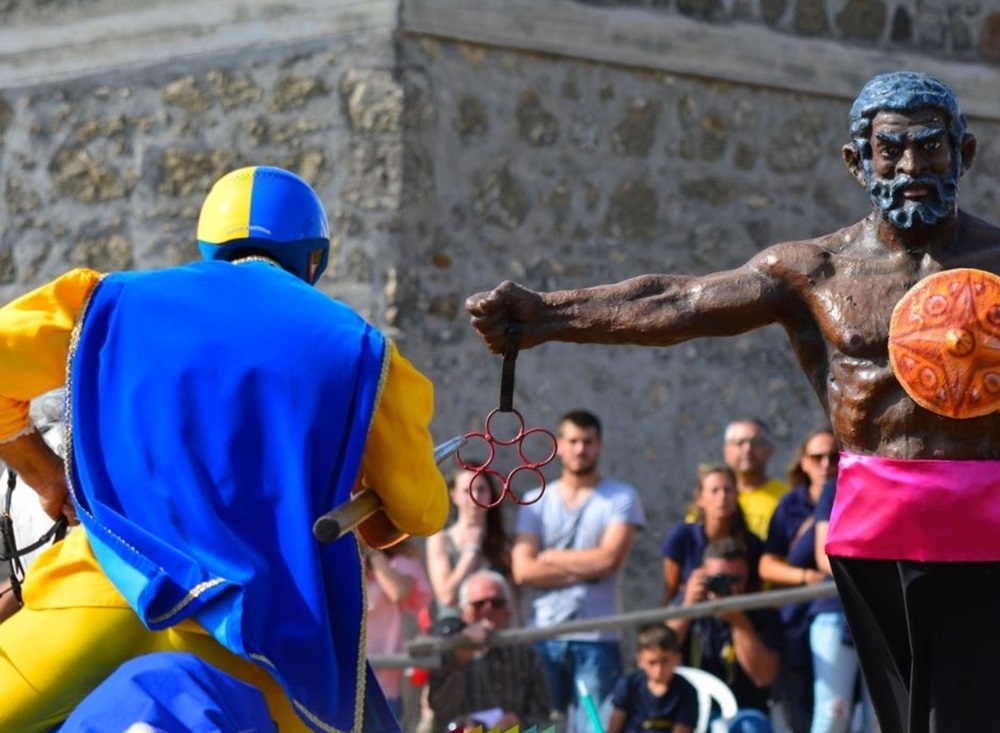
The “Giostra delle Contrade” – photo by FB Prolocotarquinia.it
Tarquinia relives its ancient glories during the Giostra delle Contrade, which is generally held between May and June. Three days of celebrations with hundreds of participants and groups of flag-wavers, archers and musicians. Ten Contrade of the ancient Castrum compete to win the Palio.