

Fiumicino, known as the town within a town, due to its proximity to Rome, hosts not only the busy Leonardo da Vinci Intercontinental Airport, but also beautiful beaches, pine forests, ancient and modern ports, and archaeological remains.
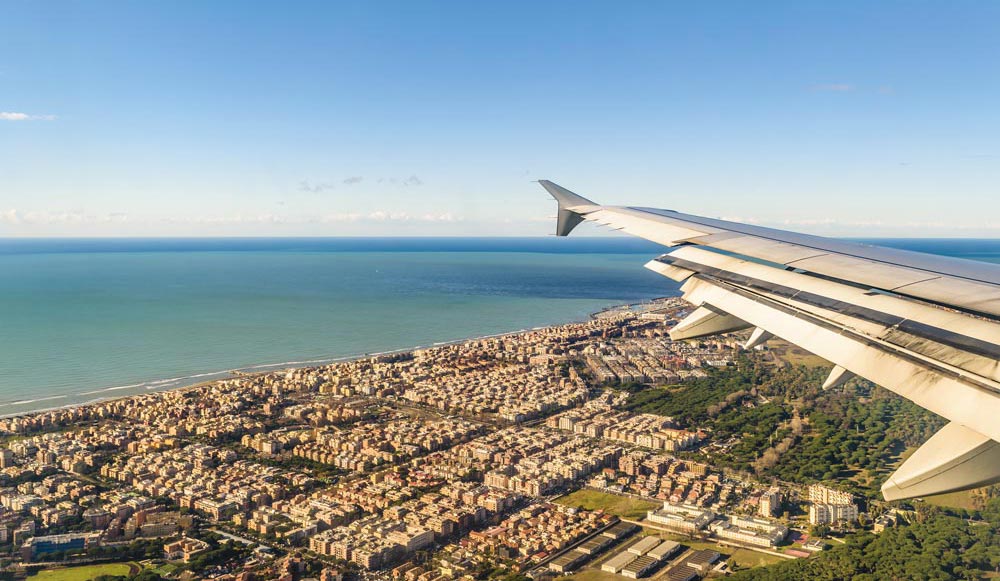
“Roma, si te la fabbricorno, La fabbricorno qui. Ma è naturale, Qui ci aveveno tutto: la pianura, Li monti, la campagna, l’acqua, er vino… Tutto! […] Te piace er mare? Sorti de le mura, Co’ du’ zompi te trovi a Fiumicino”
Thus, at the turn of the 20th century, Cesare Pascarella narrated in local dialect the unique history of Rome and its surroundings in his work “La Scoperta dell’America”.
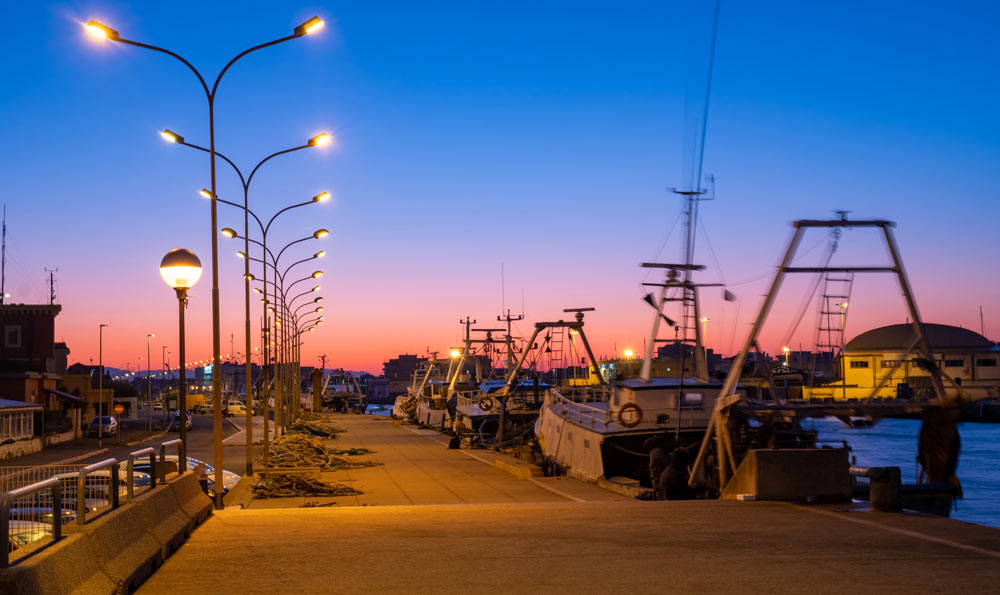
Fiumicino (RM) – The Port
The economic and social life of Fiumicino is still based on the fishing industry. Fascinating are the moored boats spreading their nets across the canal towards the sea along Via della Torre Clementina, where fresh fish can be directly purchased. Nearby, stands the Church of Santa Maria Porto della Salute, dedicated to the Virgin, protector of the sailors.
The two major events in Fiumicino are the Sagra della Tellina, held in spring, and the Fish Festival, at the beginning of June. The latter was established in 1970 by local fishermen to commemorate the town’s maritime origins. Tons of squid, calamari, shrimp, and various kind of fish are cooked, and a huge number of mussels are sautéed in a giant pan of four metres in diameter two metres off the ground.
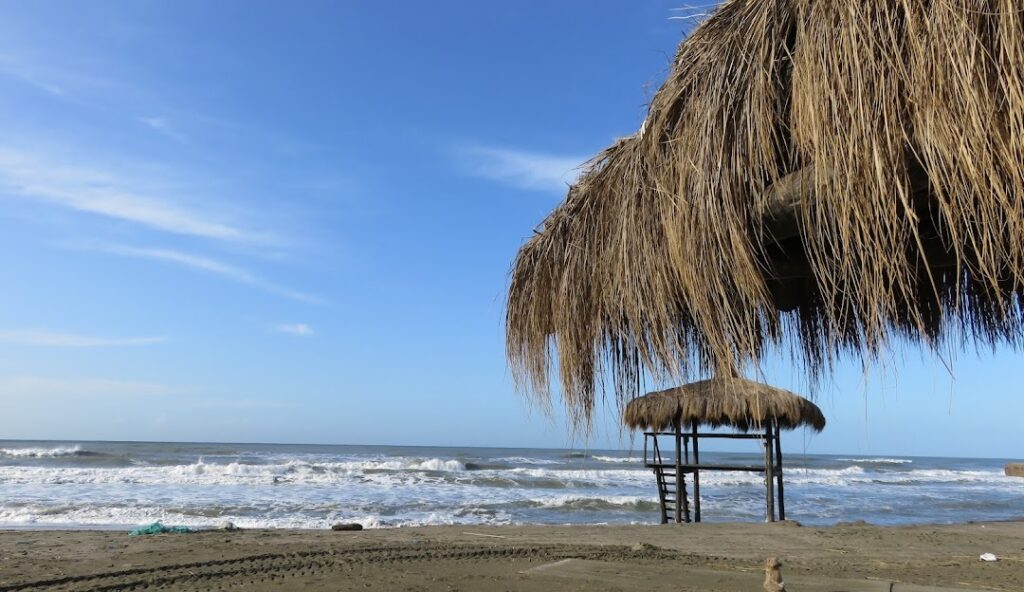
The Fregene Beach – www.comune.fiumicino.rm.it
Fregene is also a main destination for many Roman tourists, willing to relax on the fully equipped sandy beaches or in the cool pine forests within the Roman Coast Nature Reserve. Most renown in Fregene, is the local carrot, celebrated with a festival at the end of May. During the event, delicious specialities based on this root vegetable are served, such as excellent beer and the Maccaresella, a sweet roll filled with carrot and almond cream.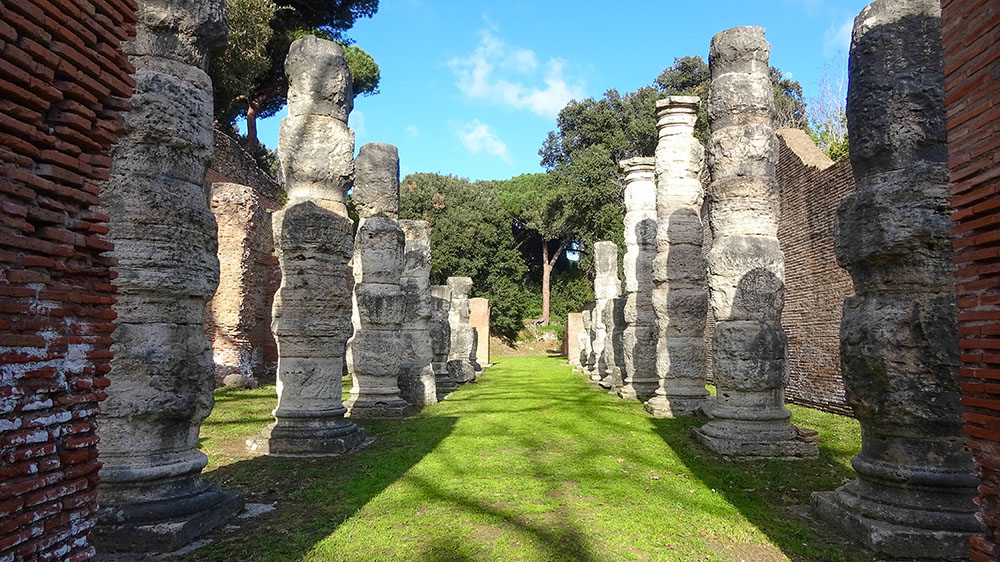 But Fiumicino is also very rich in history. Not to be missed is the Imperial Port of Claudius and Trajan, built by the former in 42 AD in order to facilitate the river traffic from Rome towards the sea. It was later expanded by Trajan in 106 AD, with the excavation of a large hexagonal basin within the Port of Claudius.
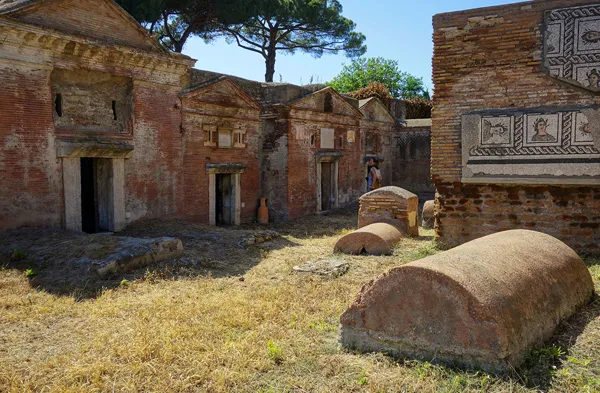
Porto-Necropolis www.comune.fiumicino.rm.it
Worth a visit is the perfectly preserved Necropolis of Isola Sacra, or Porto, and the Museum of Roman Ships, which houses the keels of four merchant ships dating back to the third and fourth centuries.
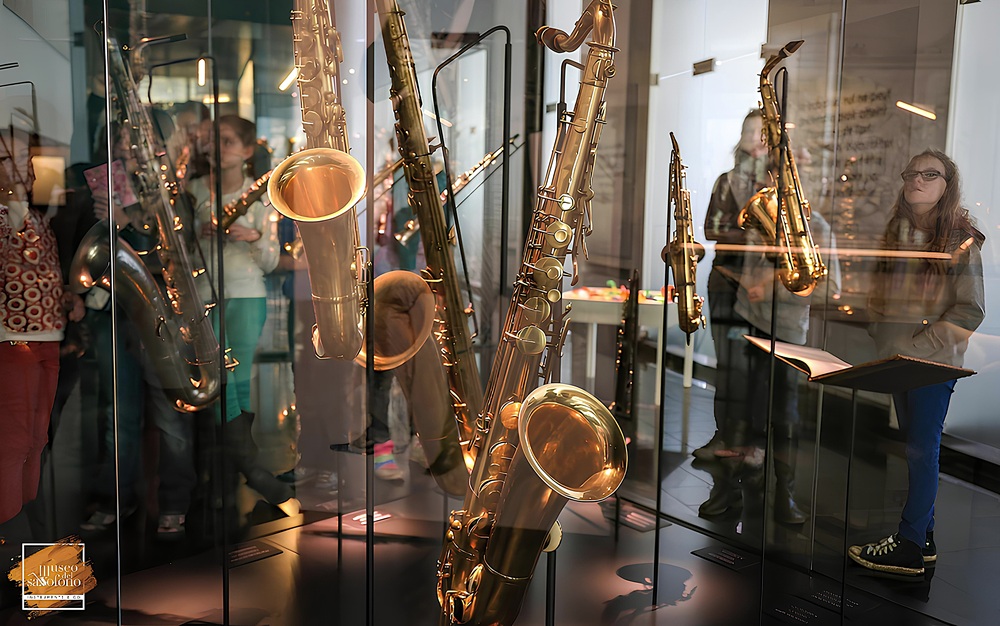
The Saxophone Museum
The Saxophone Museum, an exhibition unique in the world, is also worth a visit. It displays a collection of over 600 rare saxophones divided into four sections: toy saxophones, period photographs, accessories and gadgets, music catalogues, books, and documents. Several concerts and educational activities are organized here throughout the year.
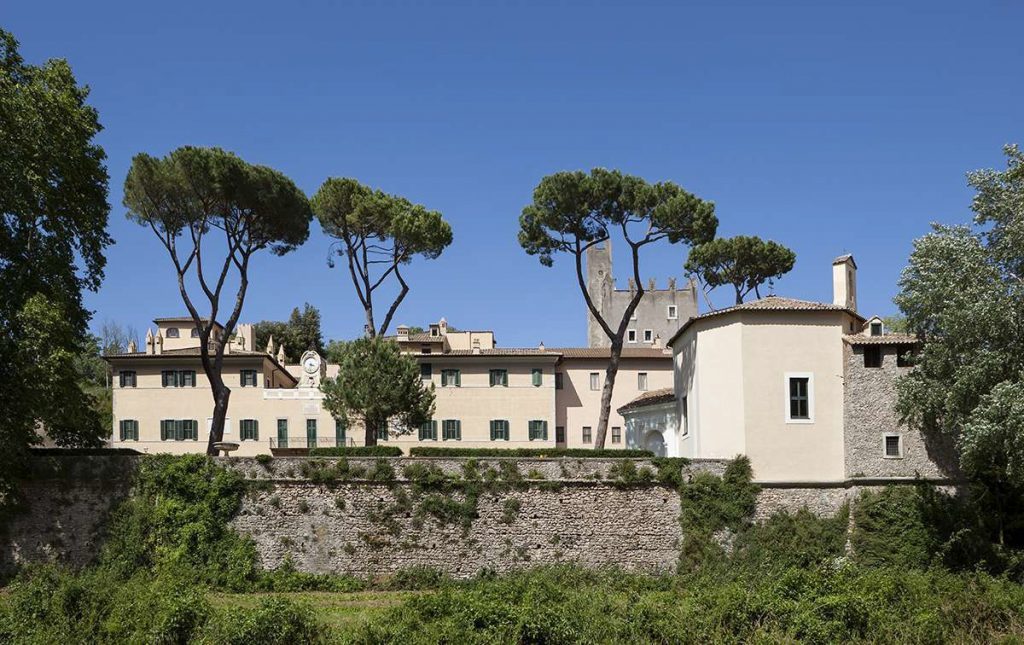
Castello di Torre in Pietra, giardino – retedimorestorichelazio.it
The village of Torre in Pietra takes its name from the “turris in petra” that once protected it and still stands today. The medieval castle and its surrounding walls were the heart of the fortified village.
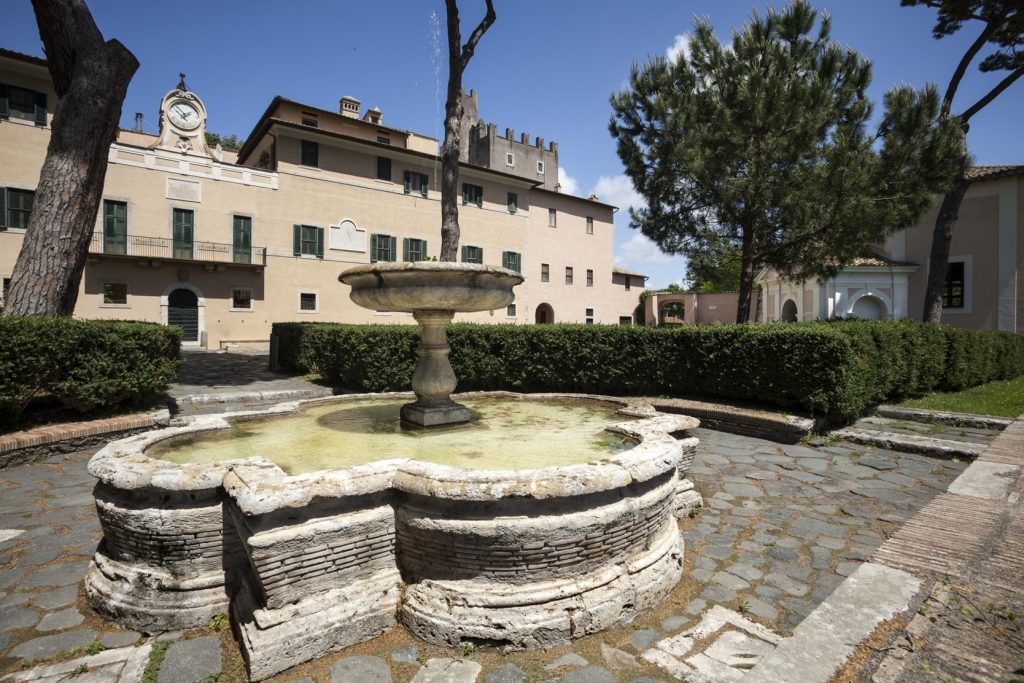
Castello di Torre in Pietra, fontana – retedimorestorichelazio.it
The garden features a 17th-century fountain, sections of Roman paving, and centuries-old plane and pine trees. The palace has been altered several times at the behest of the Peretti and Falconieri families.
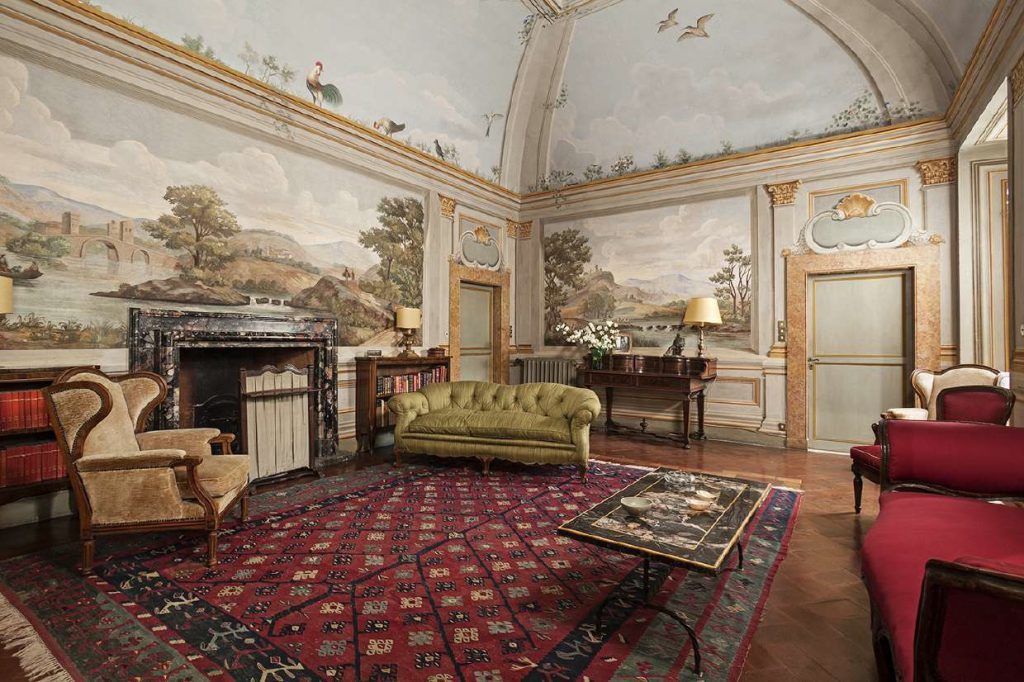
Castello di Torre in Pietra, interni – retedimorestorichelazio.it
By the late 1800s, Torre in Pietra had been abandoned. In 1926, it became the property of Senator Luigi Albertini, who drained the farmland. Since 1990, the children and grandchildren of his daughter Elena and her husband Nicolò Carandini have lived in the castle. This Historic Residence in Lazio is open to visitors and hosts events.
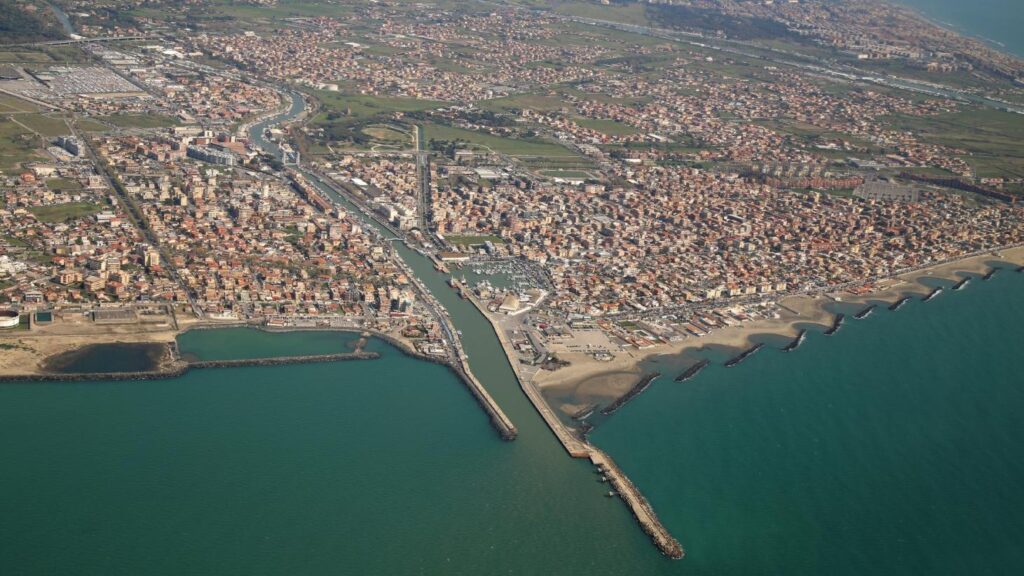 At the end of May, the Fiumicino Paddling Festival takes place at the mouth of the Tiber River. This approximately seven-kilometre route, running between Ostia Antica and Fiumicino, offers canoes, SUPs, kayaks, and rafts enthusiasts the opportunity to discover unexpected sceneries, and to enjoy recreational and physical activity. The event is organized by the DIT – Discesa Internazionale del Tevere Association, in collaboration with UISP – National Organization for the Promotion and Protection of Rivers.
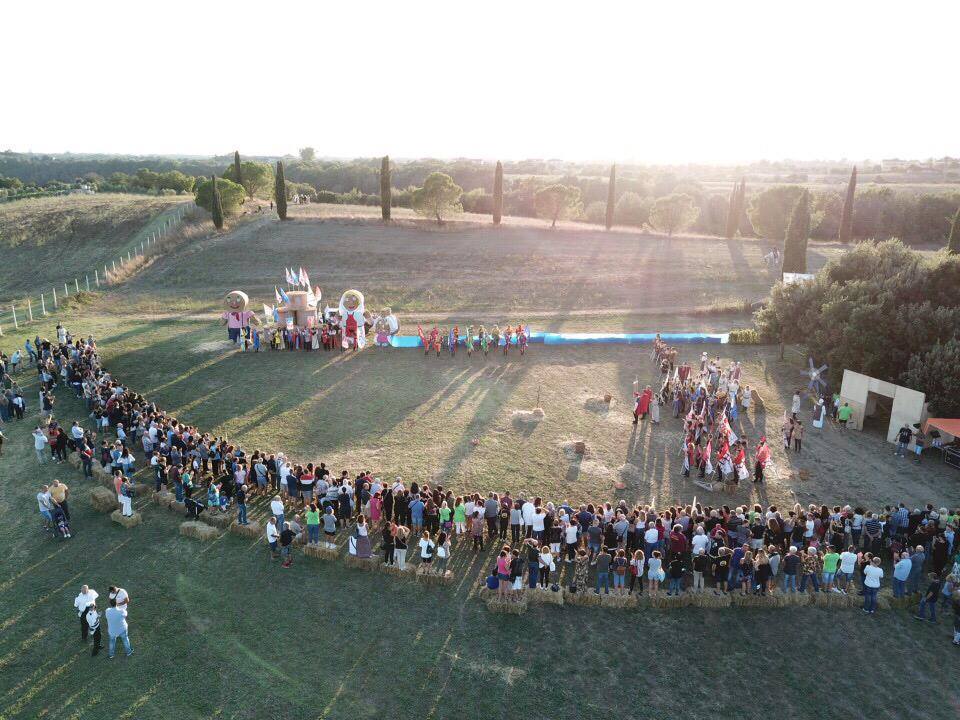
Testa di Lepre – Facebook @Pro Loco Testa di Lepre Aps
From the beginning of September, in the district of Testa di Lepre, the Palio dei Fontanili is celebrated, a long weekend of historical reenactments and tastings of the typical handmade fettuccine.