

Villa Santo Stefano is a perfectly preserved medieval village in Ciociaria, strategically overlooking the Amaseno Valley.
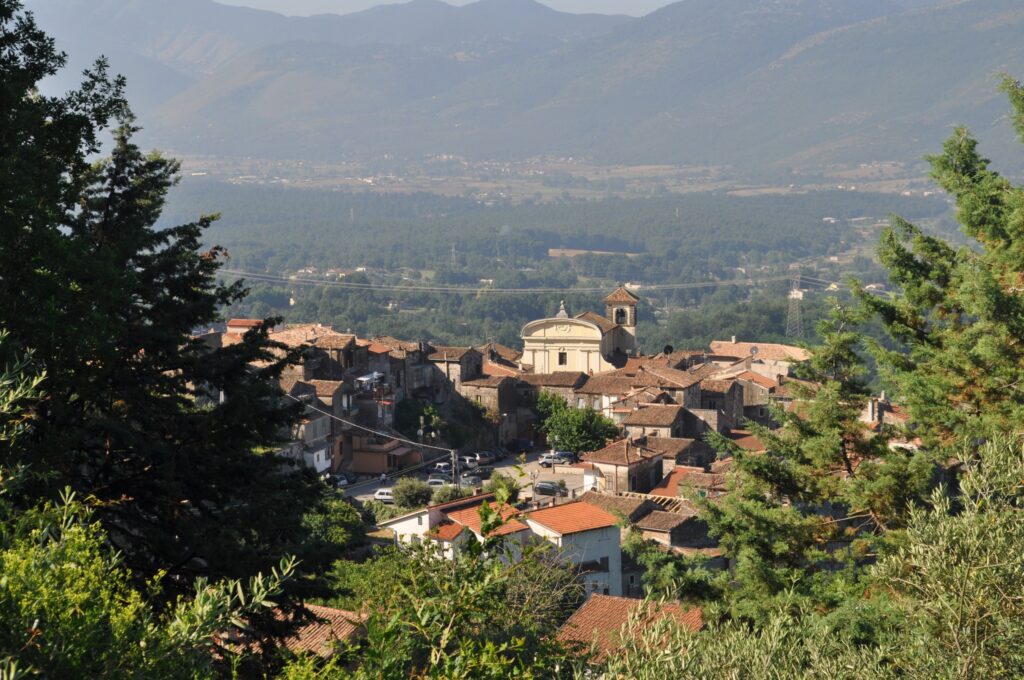
Villa Santo Stefano – Facebook photo @prolocovilla.santostefano.92
“Behold, in the middle of their flight, the Amasenus was foaming as it flowed over the tops of the riverbanks; so much rain had burst forth from the clouds.”
Thus narrates Virgil in its Aeneid the deeds of King Metabo, father of the warrior princess Camilla, who founded Villa Santo Stefano in the area where he used to go hunting. Still visible at the entrance to the historic centre stands the Tower of King Metabo, erected in his memory and fortified by the Counts of Ceccano with a wall and a circular tower. In 1562, the town passed into the hands of the Colonna Family, until the abolition of fiefdoms by Napoleon. During its reign, between the late 1700s and early 1800s Villa Santo Stefano was often attacked by robbers, who entered the village through a small passage called “the Portella” to hide in the border areas between the Papal States and the Kingdom of Naples.
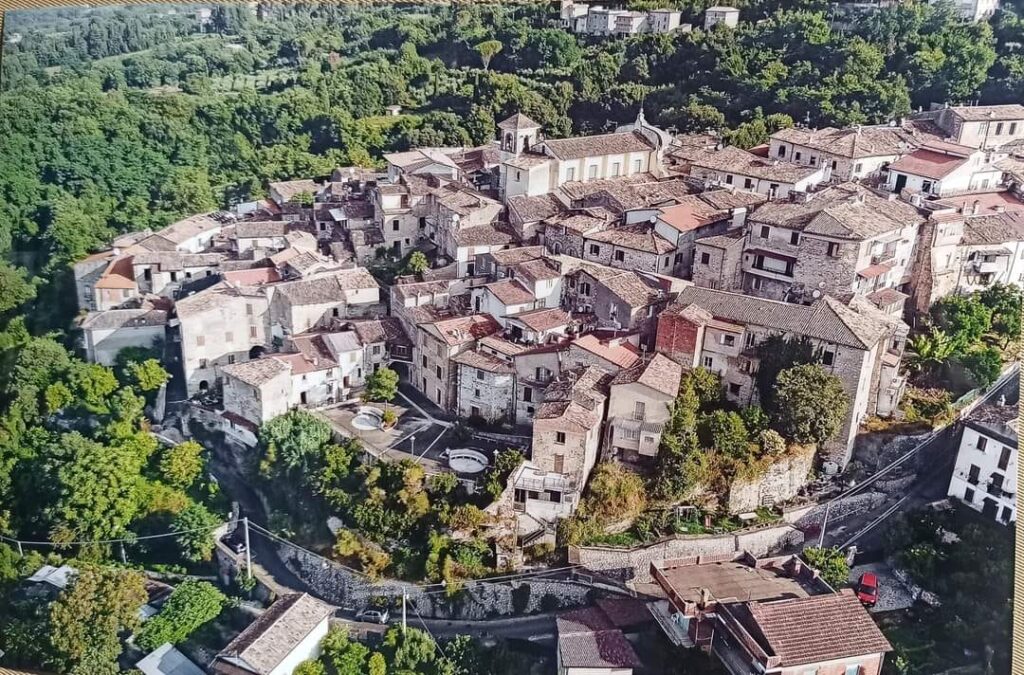
Villa Santo Stefano – Facebook @proloco.villasantostefanobis
The small, charming historic centre with its narrow alleys, houses leaning against, and arches forming cryptoporticoes, hosts, in the small square, the Church of Santa Maria Assunta in Cielo. Renovated in Baroque style, it lies on the ruins of a medieval church, traces of which are still visible on the exterior. Of great interest is also the seventeenth-century Church of San Sebastiano.
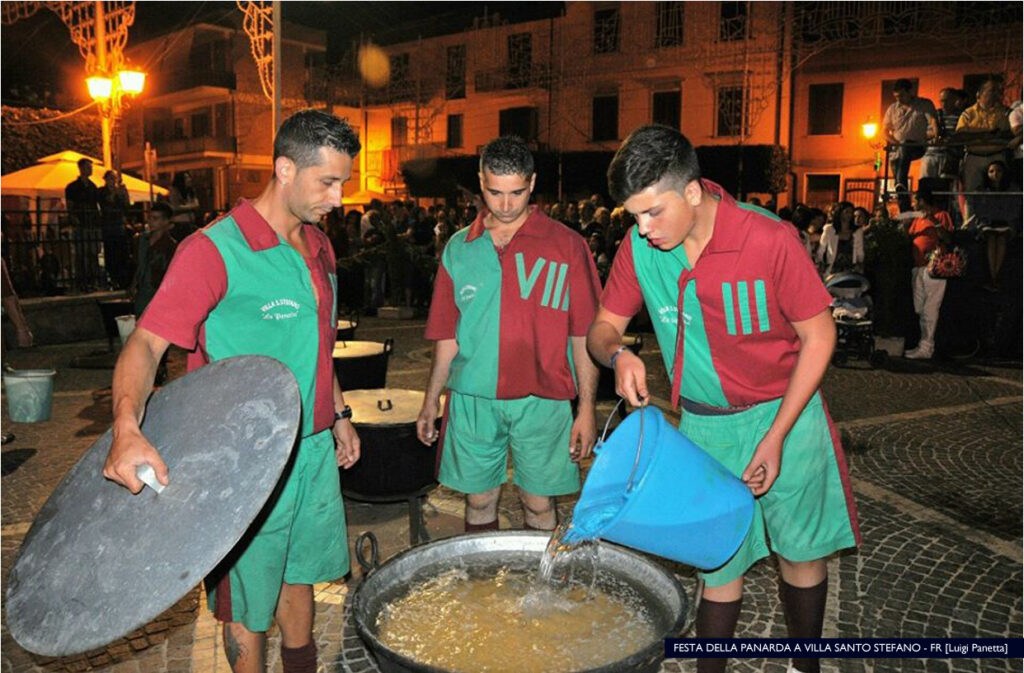
The Panarda
The Panarda, a chickpea soup cooked in twenty-four copper cauldrons, the callare, is one of the oldest and most historically documented recipes in Ciociaria. This typical dish is celebrated during the feast of San Rocco, on August 16, in memory of a terrible famine occurred in the sixteenth century. The festival begins on the evening of August 15 with the transportation of the wooden statue of San Rocco from the Church of San Sebastiano to the Church of Santa Maria Assunta. At midnight, the ritual in seventeenth-century costume with the lighting of the fires by the Princeps begins, followed by the cooking of five quintals of chickpeas seasoned with olive oil and flavoured with rosemary and chili pepper.
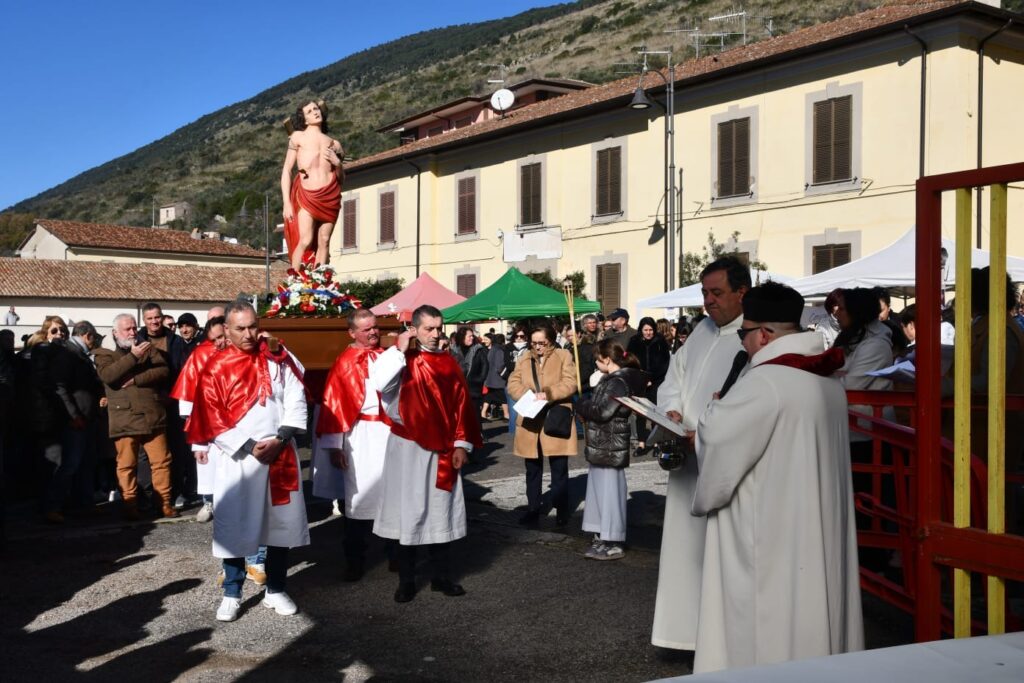
The San Sebastiano Polenta Festival in Villa Santo Stefano – Facebook @prolocovilla.santostefano.92
Another renowned dish in Villa Santo Stefano is polenta with tomato sauce and sausages, that has been celebrated during the San Sebastiano Polenta Festival at the end of January for fifty years. The polenta is cooked in ancient copper pots and blessed by Saint Sebastian, whose statue is then carried in procession.
Another important, that takes place in early August to commemorate the liberation from clerical power, is the festival of the cecapreti, or strozzapreti, and Bufaletta, the stew prepared with buffaloes raised in the nearby Amaseno Valley.