

On a hill overlooking the Pontine Plain, Sezze is at the foot of Mount Semprevisa. Sezze is known as the ‘City of the Passion’ for its almost 100-year-old Sacred Representation of the Passion of Christ.
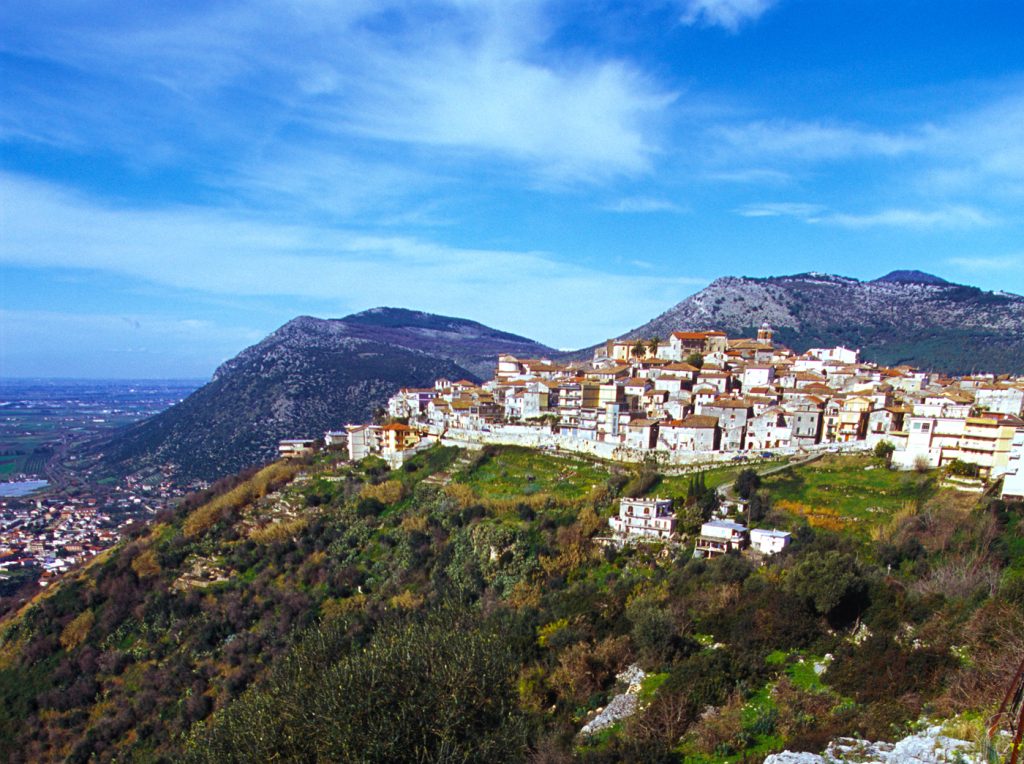
Sezze
It is said that the mythical founder of the city was Hercules, who came to Sezze after defeating the Lestrigons. The ancient name Setia derives from ‘Setis’, meaning the bristles of the Nemean lion that Hercules gloried in. In fact, the coat of arms of Sezze depicts the Nemean lion holding a cornucopia full of fruit.
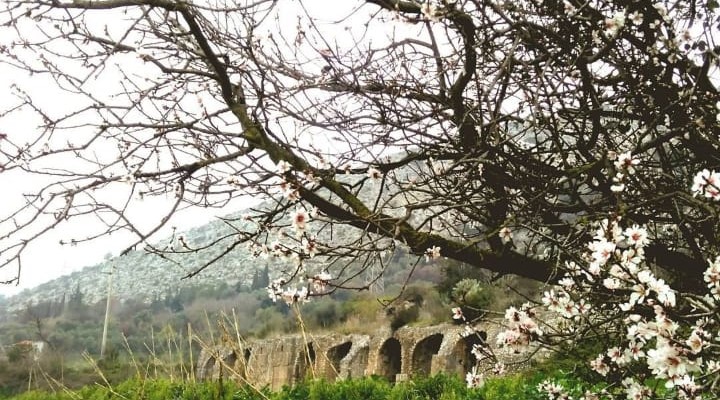
Sezze LT – foto Instagram @visit_sezze
Of Volscian origin, ancient Setia was a strategic Roman colony, being a Latin city in the Volsci territory. The remains of polygonal walls, roads and temples can still be seen in several places in the town, whose medieval core developed around the ancient Latin arce (castrum durum). In the Middle Ages, it experienced all the difficulties of a town along the Volscian foothills, the only road of communication between northern and southern Lazio.
Sezze gave birth to illustrious personalities. Caius Valerius was the great Roman poet of the 1st century A.D. who wrote ‘The Argonauts’, the work about Jason’s exploits in the conquest of the Golden Fleece. Many centuries later, in 1690, the Literary Scientific Academy of the Argonauts, one of the first in Italy, was founded in Sezze. St. Charles of Sezze (1613 – 1670) was also born in Sezze, known for his theological writings despite being semi-literate.
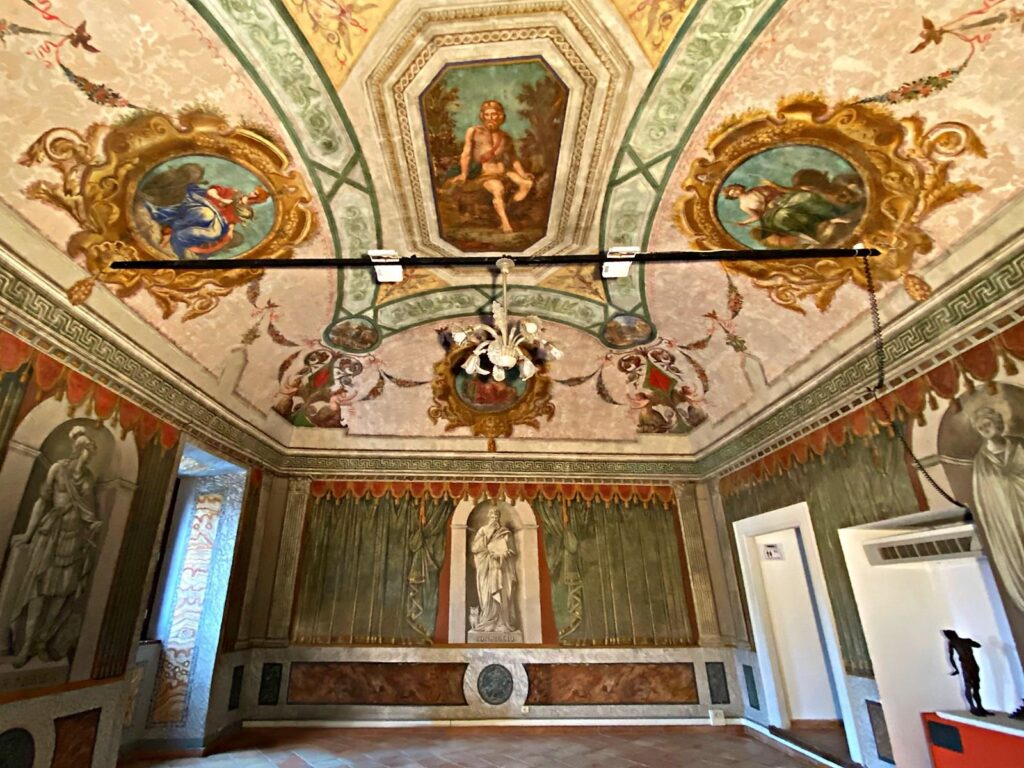
Museo Archeologico di Sezze
Highlights in Sezze are the Cathedral of Santa Maria and the Palazzi del Vescovado. Also not to be missed is the Archaeological Museum in the former Antiquarium, which houses numerous exhibits from prehistoric times to the Bronze Age.
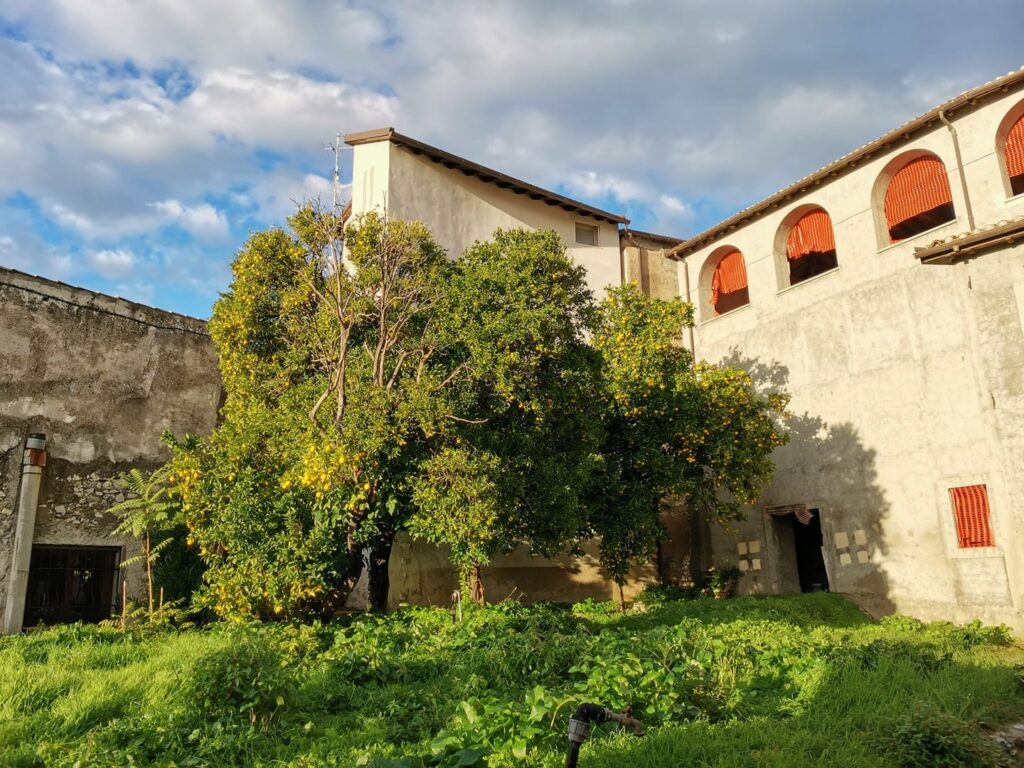
former monastery of the Poor Clares – retedimorestorichelazio.it
The former monastery of the Poor Clares is the Historic Residence in Lazio where Saint Charles of Sezze was raptured into ecstasy while praying. The Poor Clares had been living in Sezze since 1313 in the Castle of Trevi, which was razed to the ground in 1400. They abandoned the castle and returned to Sezze only after the plague of 1527, beginning to live in the monastery.
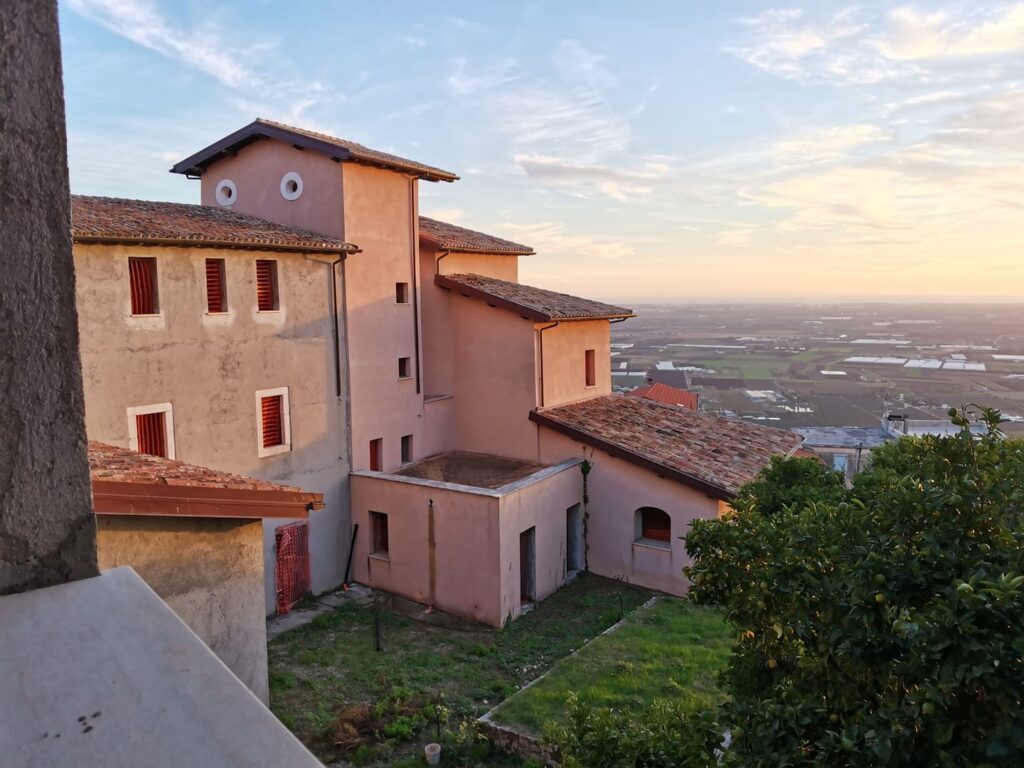
former monastery of the Poor Clares – retedimorestorichelazio.it
Over the centuries, they added a cloister, a garden and a complex of houses with internal courtyards. The Poor Clares had to abandon the monastery at the end of the 1800s, returning only for certain activities, and moved away permanently at the end of the 1900s. Access to the monastery is not permitted.
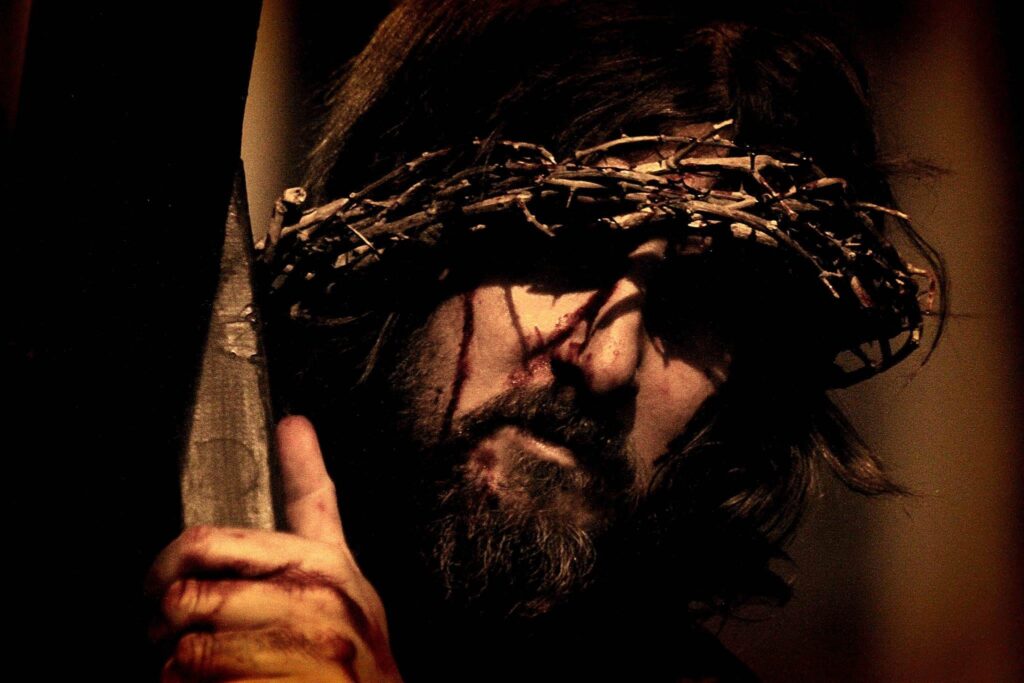
Sacra Rappresentazione della Passione di Cristo a Sezze – foto Facebook @passionedisezze
On Good Friday, the Sacred Passion Play (Sacra Rappresentazione della Passione di Sezze) is staged in Sezze. Along the streets of the ‘City of the Passion’ takes place the historical re-enactment with 40 itinerant living scenes and over 500 local participants in period costume.
The Sacred Representation of the Passion of Christ in Sezze is one of the highest expressions of the genre on an Italian and international level. The traditional re-enactment has its origins in the Middle Ages when it was celebrated by local religious Confraternities. It was later revived in the 1600s by Saint Charles of Sezze, who valorised the route of the Passion of Jesus. Since 1933 it was revisited by the Passion of Christ Association.
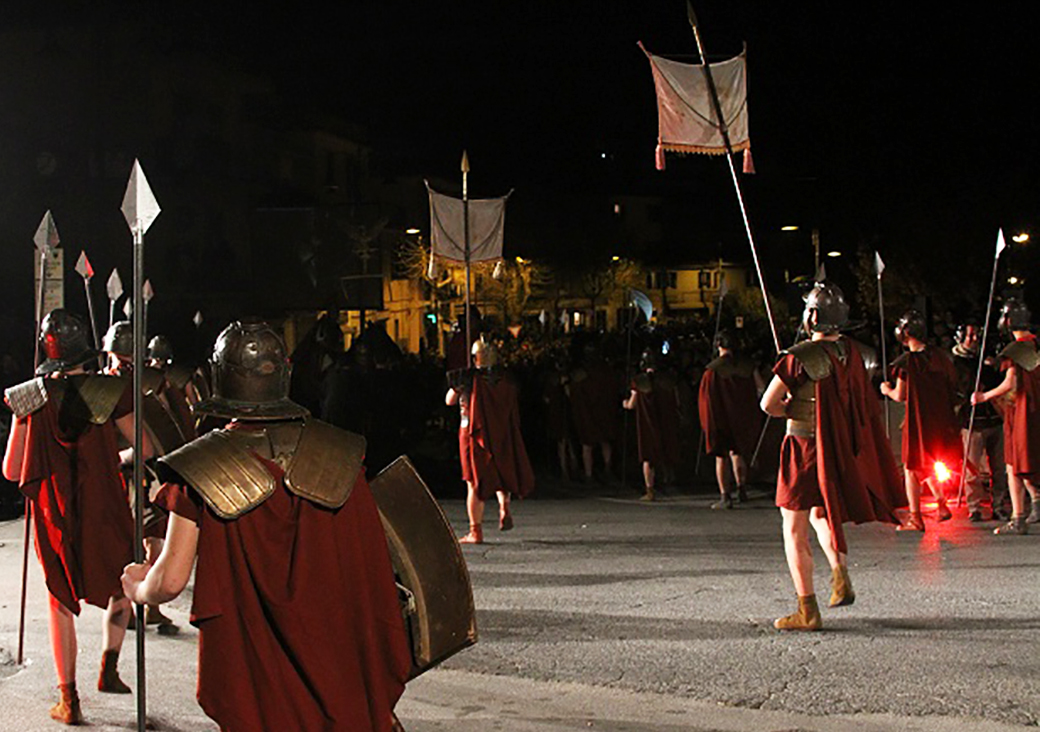
Sacra Rappresentazione della Passione di Sezze
The procession proceeds in the evocative atmosphere of the ancient city lit by torches and torchlight, amidst music and choirs. The procession is preceded by the statue of the Madonna and the Dead Christ, and by the confraternities. Many costumes are from the 1930s, when it all began, and from the 1950s. The living pictures are faithful reproductions from the Old and New Testaments at the climax of which is the Passion of Christ. The direction and artistic direction is by Piero Formicuccia.
The Sacred Representation of the Passion of Christ in Sezze is organised by the Association of the Passion of Christ, a founding member and component of Europassione. Europassione is the organisation that groups the most important European associations that re-enact the Sacred Drama. In April 2011, the event was awarded a new important recognition by the President Giorgio Napolitano.
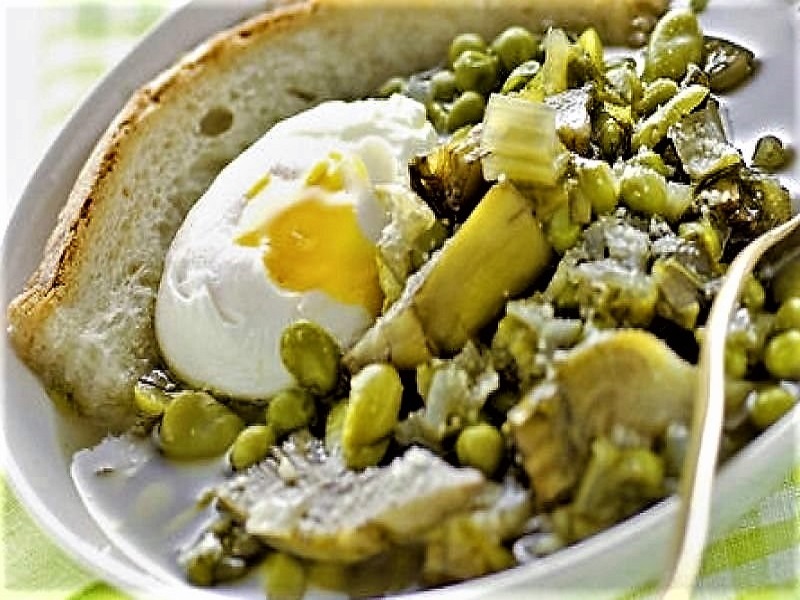
bazzoffia
The typical cuisine is simple and of peasant origin. The Sezze artichoke is the holder of the festival of the same name and reigns supreme in many recipes, for example in the bazzoffia, a soup of vegetables, eggs and bread. The homemade bread and the sweet types with almond paste and sour cherries are worth tasting.