

On the Strada dei Vini dell’Alta Tuscia (High Tuscia Wine Road), Capodimonte shines in one of the most picturesque landscapes of Tuscia. The houses perched on a small, sloping promontory draw the ‘best profile of Lake Bolsena’. In summer, visitors sunbathe here and in the past, noble families, cardinals and popes loved to stay here.
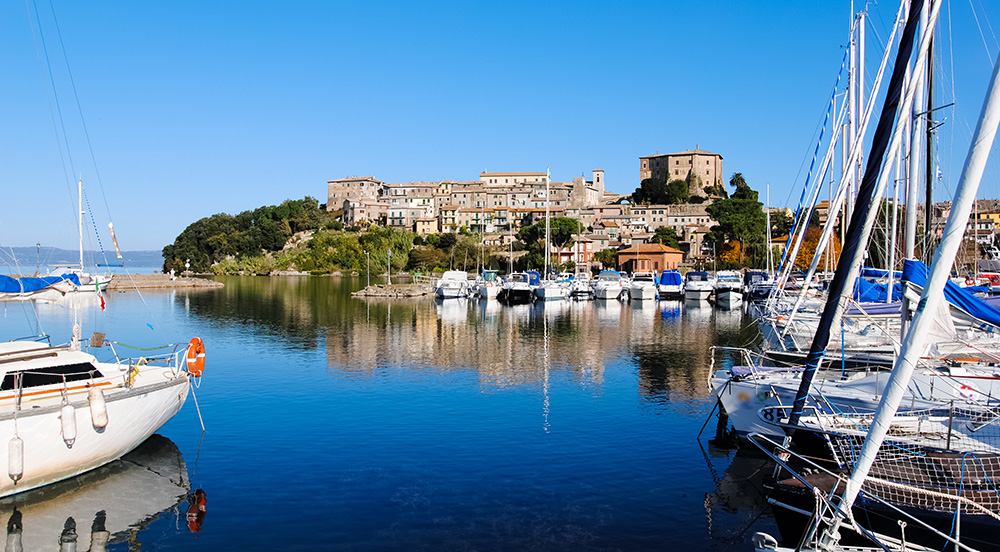
The Farnese family fell in love with it to such an extent that they made it their favourite residence. The Farnese family therefore commissioned three extraordinary works. The majestic octagonal Rocca overhanging the volcanic cliff of the Capodimonte promontory is surrounded by an Italian-style garden and restored in 1500 by ‘Sangallo il Giovane’.
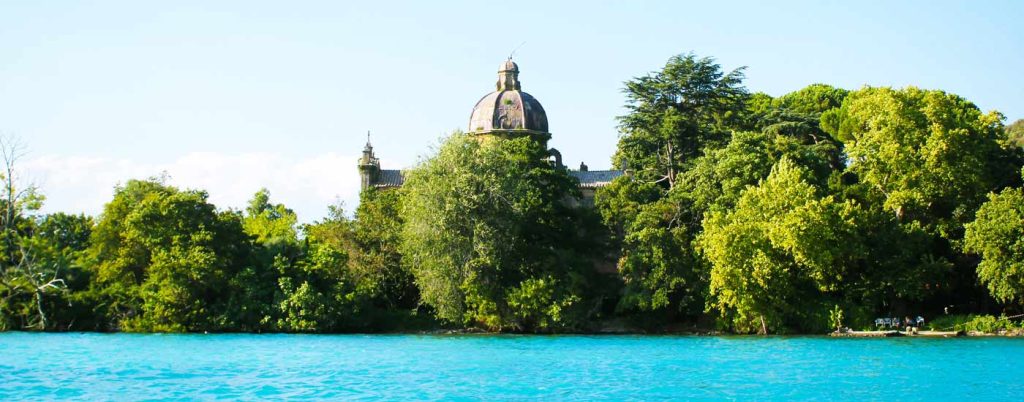
Bisentina Island and Vignola dome on Lake Bolsena
On the island Bisentina are the church of S.S. Giacomo and Cristoforo di Vignola and the octagonal edicola by ‘Sangallo il Giovane’, mentioned by Dante Alighieri in the Divine Comedy.
Lake Bolsena and the scenic lakefront are perfect for sailing, fishing, diving, hiking and trekking, walking, horseback riding and mountain biking. The lakefront beautifully alternates volcanic sand with enchanting Italian gardens. Ferries leave from the marina for small lake cruises that circumnavigate the two islands on Lake Bolsena, Bisentina and Martana.

La Bella e la Bestia
Giulia Farnese loved to stay at the Rocca Farnese in Capodimonte. Not everyone knows that the fairy tale of Beauty and the Beast really existed. Its characters, Don Pedro Gonzalez and his wife Catherine Raffelin, lived in the Rocca di Capodimonte until the end of their days. The nobleman, originally from the Canary Islands, was a courtier of the Farnese family known as “il Peloso” (the Hairy One). His life inspired the fairy tale written in the second half of the 16th century and, much later, Walt Disney’s cartoon adaptation.
Visit also the Church of Santa Maria Assunta and the Church of San Rocco, decorated with frescoes by Martin Figura. And also the Church of San Carlo, the Archaeological Park of Monte Bisenzo with its Etruscan necropolis and the Museum of Navigation.

coregone
The typical dish of Capodimonte is ‘coregone’ (whitefish). This lake fish is sought after for the high quality of its meat and celebrated at the Sagra (festival) in August, together with pike, tench and latterini.
On 17 January, Sant’Antonio Abate is celebrated with the traditional blessing of the animals, the lighting of the bonfire of Sant’Antonio and the typical bruschetta topped with new local oil. On 20 January, it is time to celebrate the patron saint, St Sebastian. Not to be missed is the Infiorata on the third Sunday after Easter.
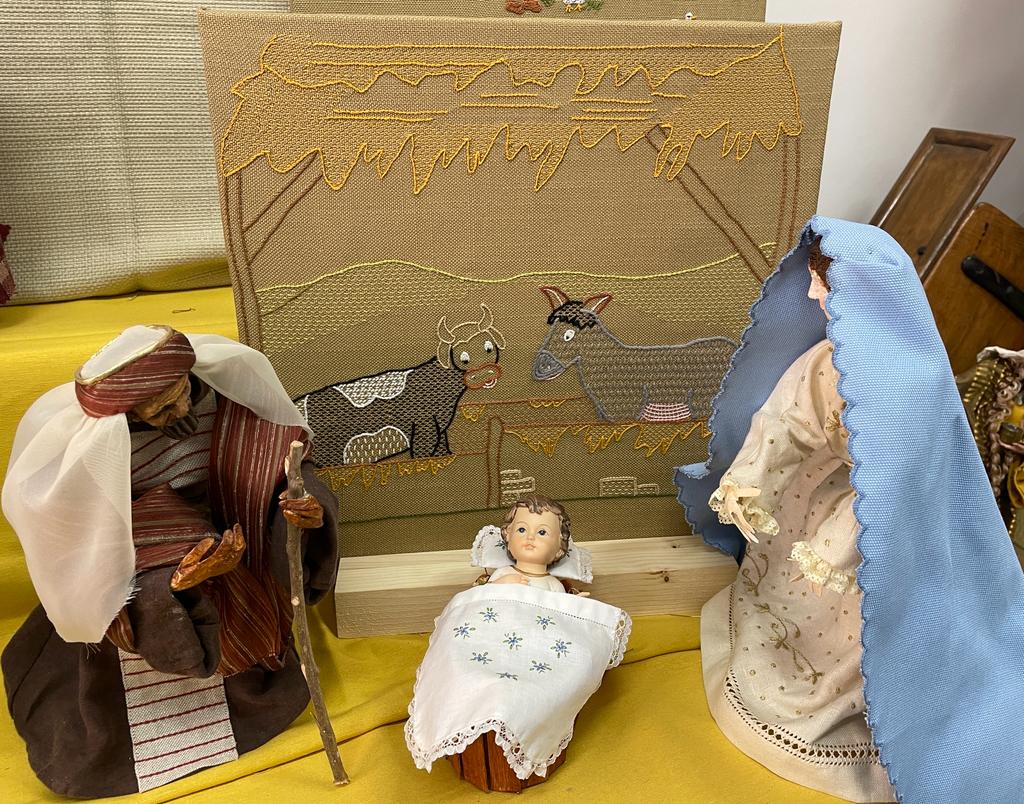
Presepe Ricamato in Capodimonte
Two extraordinary nativity scenes can be seen in Capodimonte. In a small town setting is the ‘Presepe Ricamato’ (embroidered nativity scene), completely handmade with needle and thread. The different sets, as well as the various characters, are the result of the careful hands of embroiderers and reproduce slices of life in Capodimonte. The small sequences of everyday life and typical local crafts lead to the final backdrop represented by the Nativity. The simplicity and grace with which the ‘Presepe Ricamato’ is imbued give this work a striking beauty.
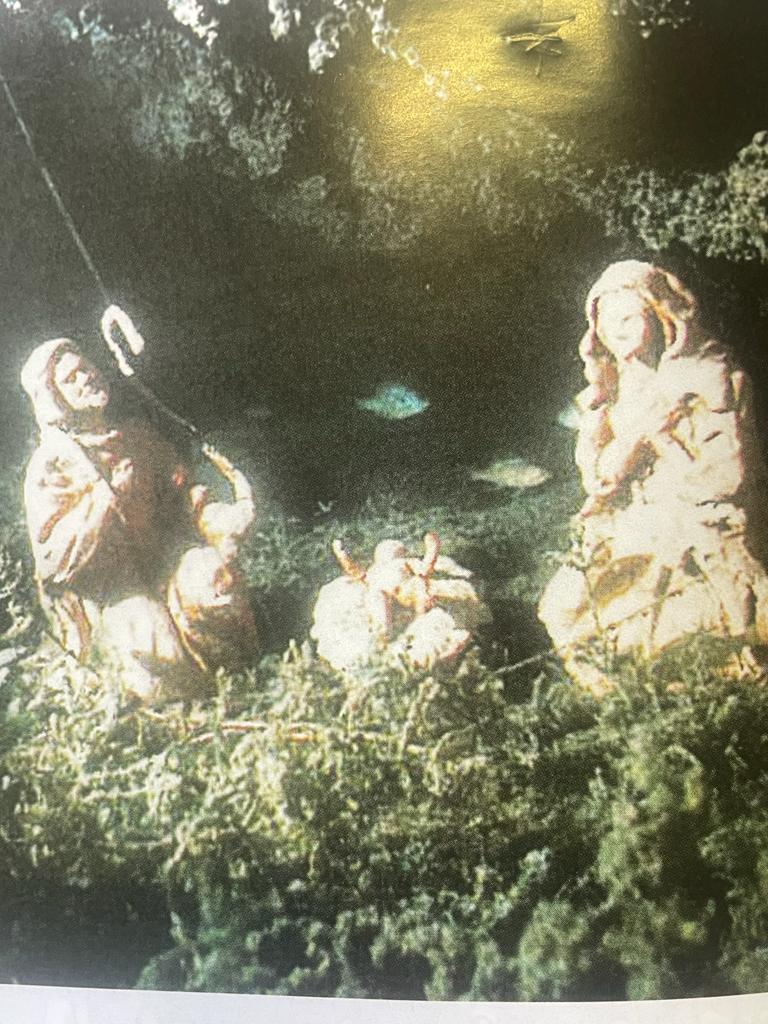
Underwater Nativity Scene in Capodimonte
The small village of Capodimonte slopes down to the shores of Lake Bolsena where the ‘Presepe Subacqueo’ (underwater nativity scene) is hidden, commissioned from the Viterbo sculptress Catia Cutigni and created in 1992. It consists of three life-size statues placed below the gardens in Via della Rocca.
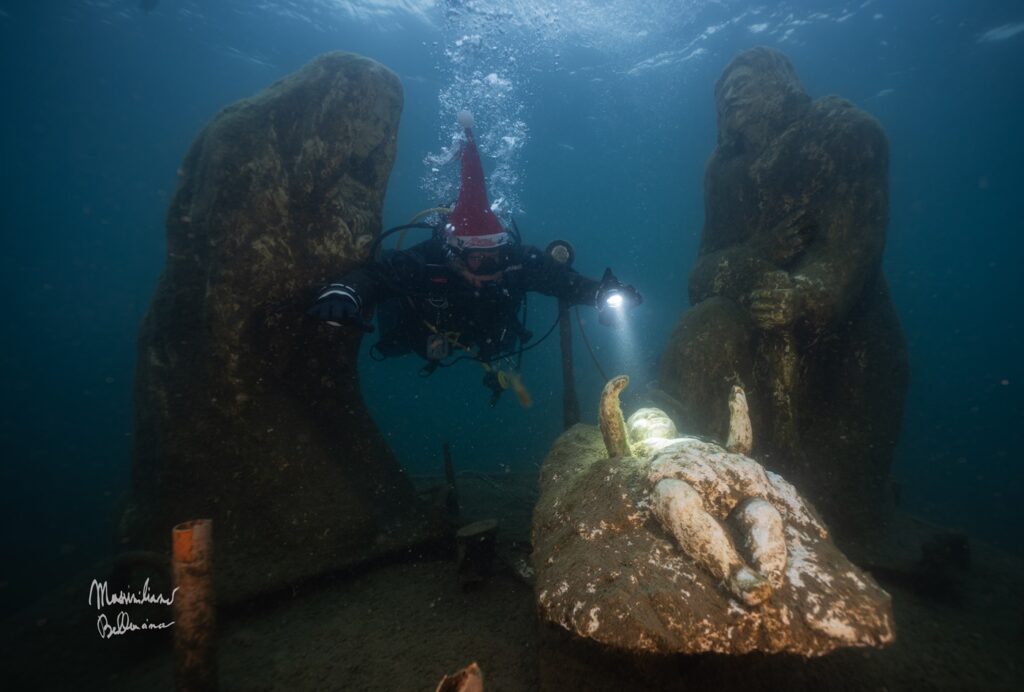
Presepe Subacqueo – foto di Massimiliano Bellacima @Comune di Capodimonte rev
The divers of the Fire Brigade placed them in Lake Bolsena at a depth of about 7 metres. The sculptural group is also visible to the bare eye through a spectacular lighting effect, enhanced by the twinkling of a large comet.