

If you see the heraldic lilies of France on the windows and portals of the ancient buildings, you are close to Viterbo and the three-petalled lily is the coat of arms of the Farnese, the Lords of Tuscia since 1500. Rich, famous, powerful. The popes protected them and they extended their power and dominion, making Tuscia a true kingdom. Let’s discover the indelible marks left by their passage.
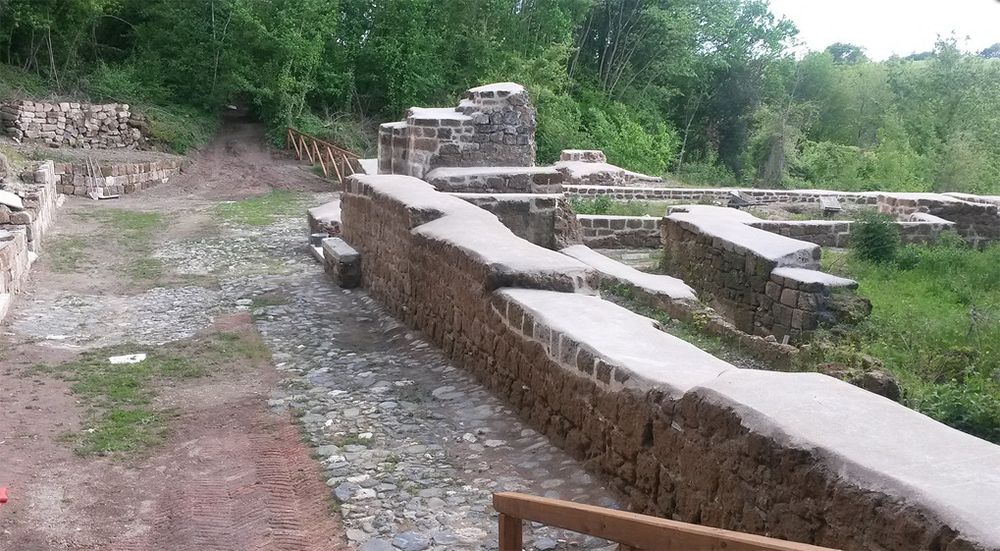
Castro
The ‘treasure hunt’ of their possessions begins in Ischia di Castro, among the ruins of Castro, the sixteenth-century capital of the duchy, built by Antonio da Sangallo the younger. A pope had it built, a pope destroyed it as an exemplary punishment for the ‘disgrace’ of having challenged the power of the Church. It was 1649. The vegetation now mercifully hides the story. Now it is nice to walk among the ruins at a slow pace and reconstruct with your imagination churches, houses and convents, squares and streets, or go in search of frescoes, which are still visible.
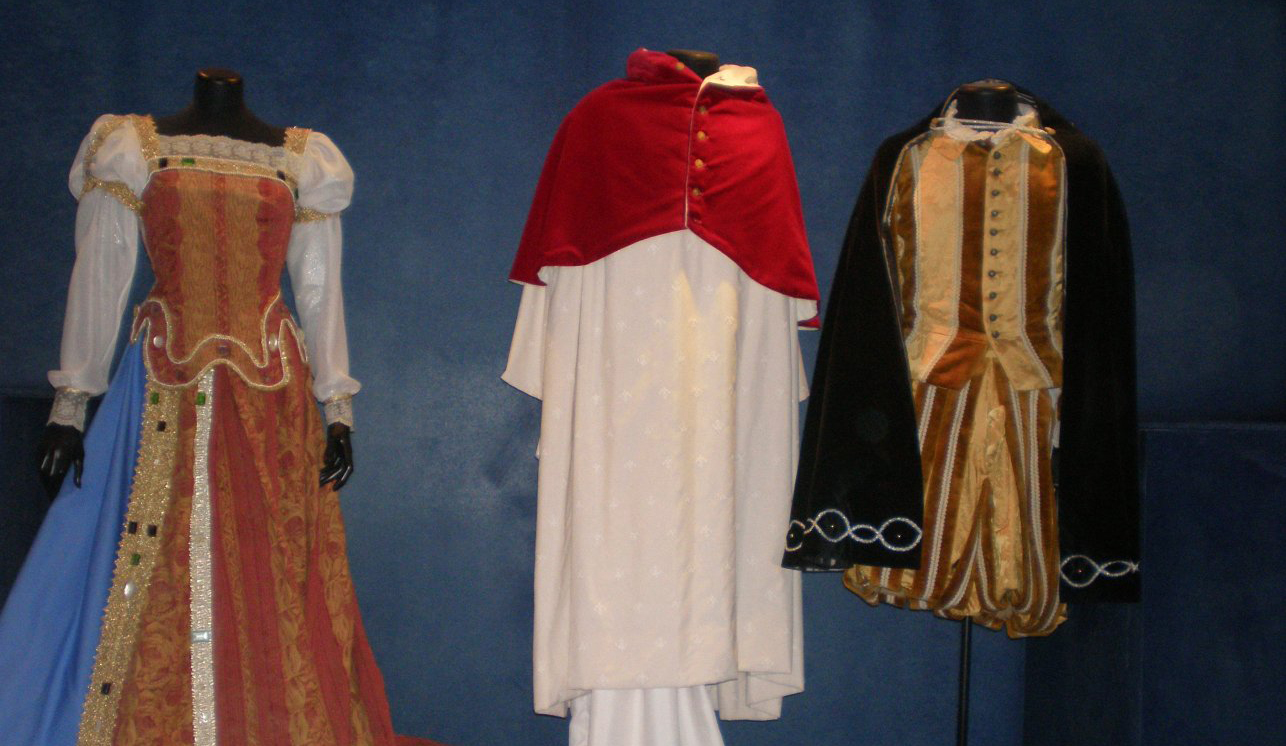
Gli abiti dei Farnese
Sangallo was the architect of Pope Paul III, who built Palazzo Farnese in Rome, and the ‘modern’ bastions of the ancient Aurelian walls, which still surround the centre of Rome and that only Michelangelo could complete. Sangallo was, after Raphael, the chief architect of St. Peter’s Basilica!
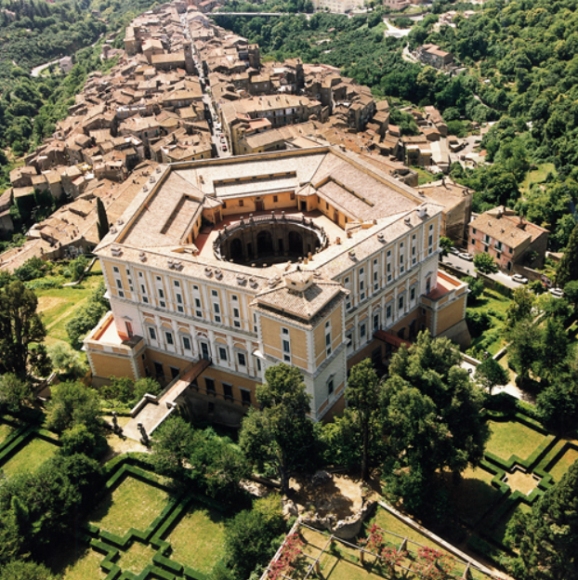
Palazzo Farnese a Caprarola visto dall’alto
From the ruins we move on to the sumptuous glory of Caprarola, the intact pride of power, the majestic Palazzo Farnese. This scenic street created specifically to make it stand out is the work of Vignola. And never mind if the necessary elevation to create the right telescope perspective of the street was going to ‘injure’ buildings, reducing entrances.
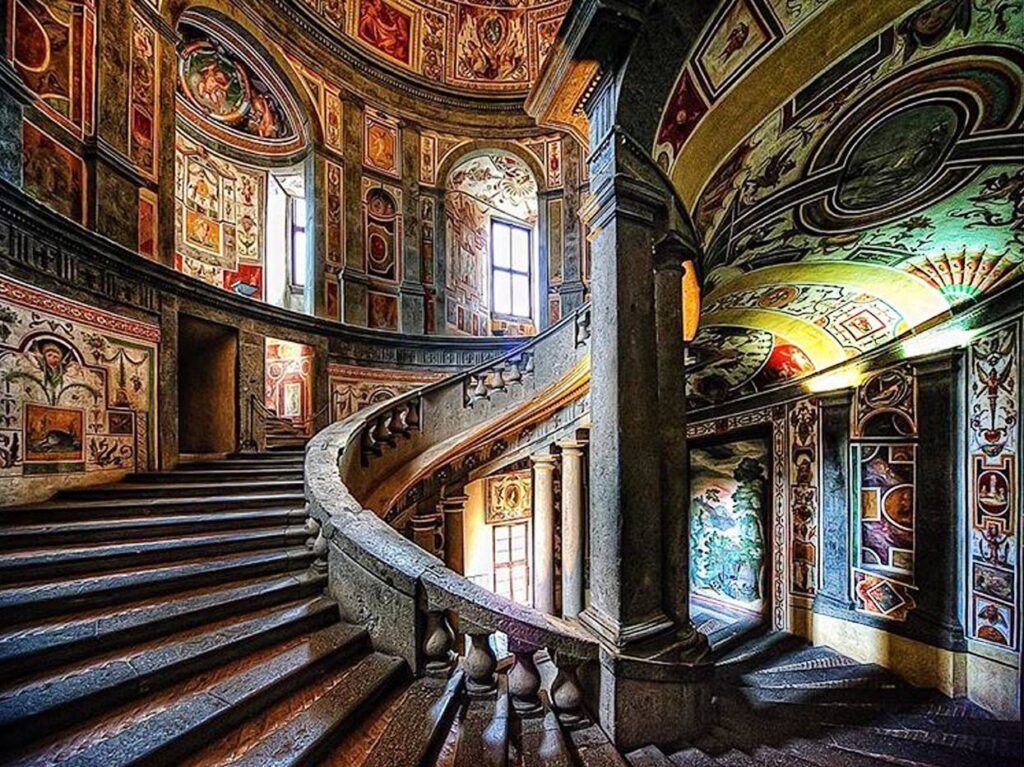
CAPRAROLA VT Palazzo Farnese Ft Roberto Ricci
The impact is incredible, from the outside and even more after entering. The helical staircase which could be covered on horseback, like that of Paul III, is entirely frescoed. It allows you to reach the splendid painted rooms: that of the echo, much loved by children and that of the enormous geographical map of the world, as it was known at the time. And finally the Italian garden, among the most beautiful in Lazio.
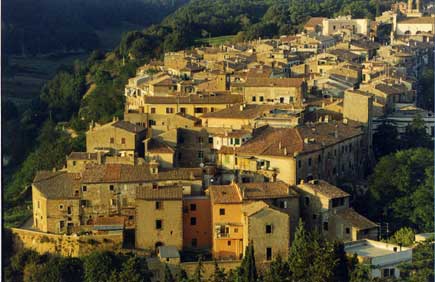
Panoramica di Canino – Foto di Pippo-b @ Wikipedia
A long summer day is not enough to learn about the Farnesian ‘signs’: between Castro and Caprarola a series of small towns were dominated by the family. While hunting the Farnese lilies, let’s stop in Canino. It was the birthplace of Pope Paul III Farnese and is now known for its excellent EVO Dop oil, emerald green with golden reflections.
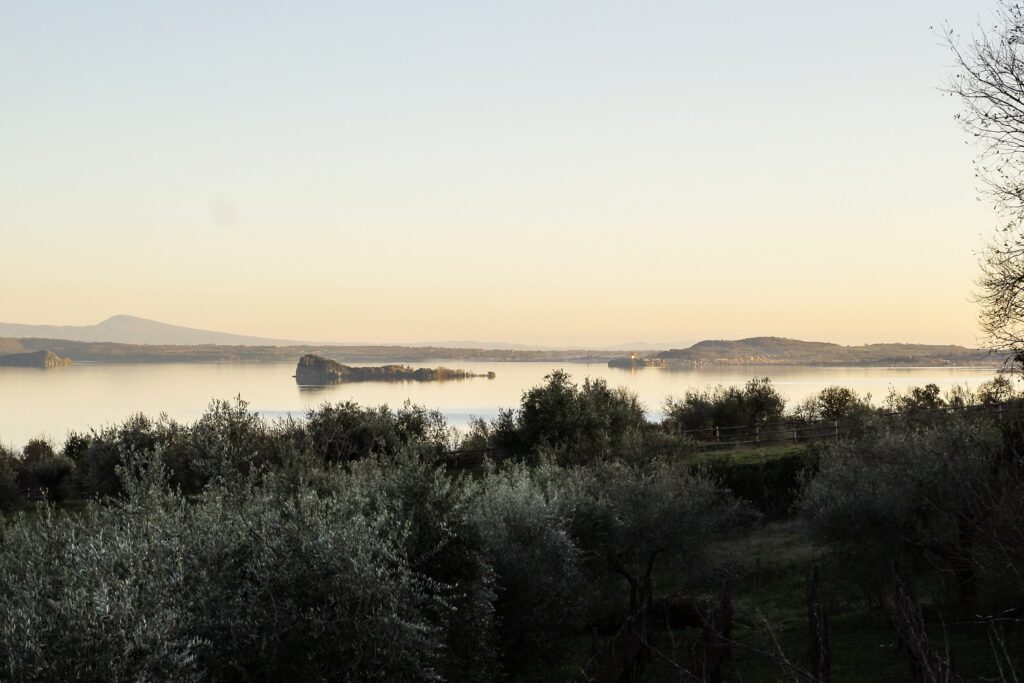
Gradoli
We continue to Gradoli, to the ancient Farnese palace which dominates Lake Bolsena. The decoration in the main hall, the terracotta floors, over 500 years old, and the coffered ceilings are beautiful. But what fascinates everyone is the ‘fashion show’ of the Farnese Costume Museum. Here you can find sumptuous clothes like on a film set, mostly reproductions, in a history journey made of precious fabrics and ornaments that covers the entire period of Farnesian domination.
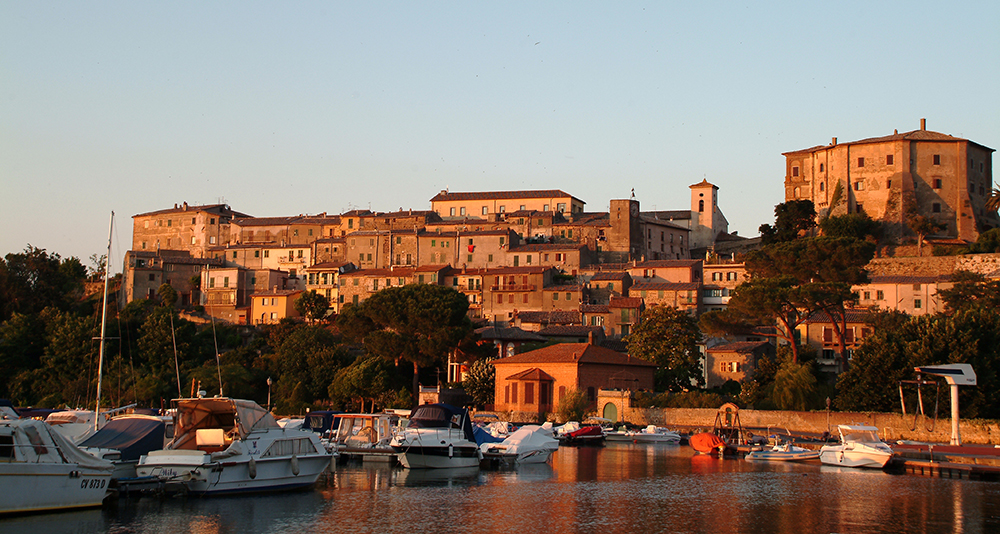
Capodimonte
From Gradoli you can see all the villages that, from above or on the shore, surround Lake Bolsena. Let’s stop in Capodimonte, right on the water. The village is small and pretty, perfect for Giulia Farnese‘s feminine taste. The beautiful Giulia loved living in the splendid residence with the windows overlooking the lake and the wild Bisentina Island, the final home of the of the family.
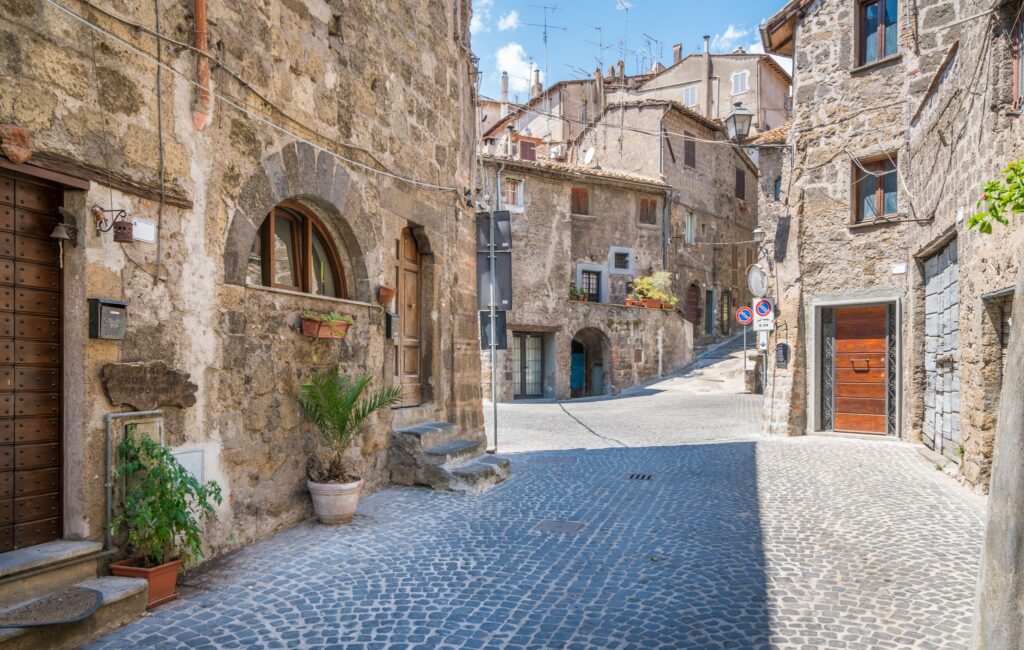
Ronciglione VT
Ronciglione is the only surviving example of Farnesian urban planning, because it lies on the Cimina variant of the Via Cassia Francigena, a major transit route from Europe to Rome and towards the East. It boasts a food and wine tradition that merchants, armies, popes, kings and pilgrims in transit have enriched with flavours. Lattarini and eels from the nearby Lake Vico, fettuccine, mushrooms and grilled meats, as well as excellent EVO oil are just some of the examples. But hazelnut is the most important product, used in cooking and available in all versions, sweet, savoury, and as a cream.