

Nestled among the chestnut woods of the Ernici Mountains, Fiuggi hosts ancient thermal baths, a Golf Club, and the ghostly Lake of Canterno. The most awaited local event is the Stuzze Festival.
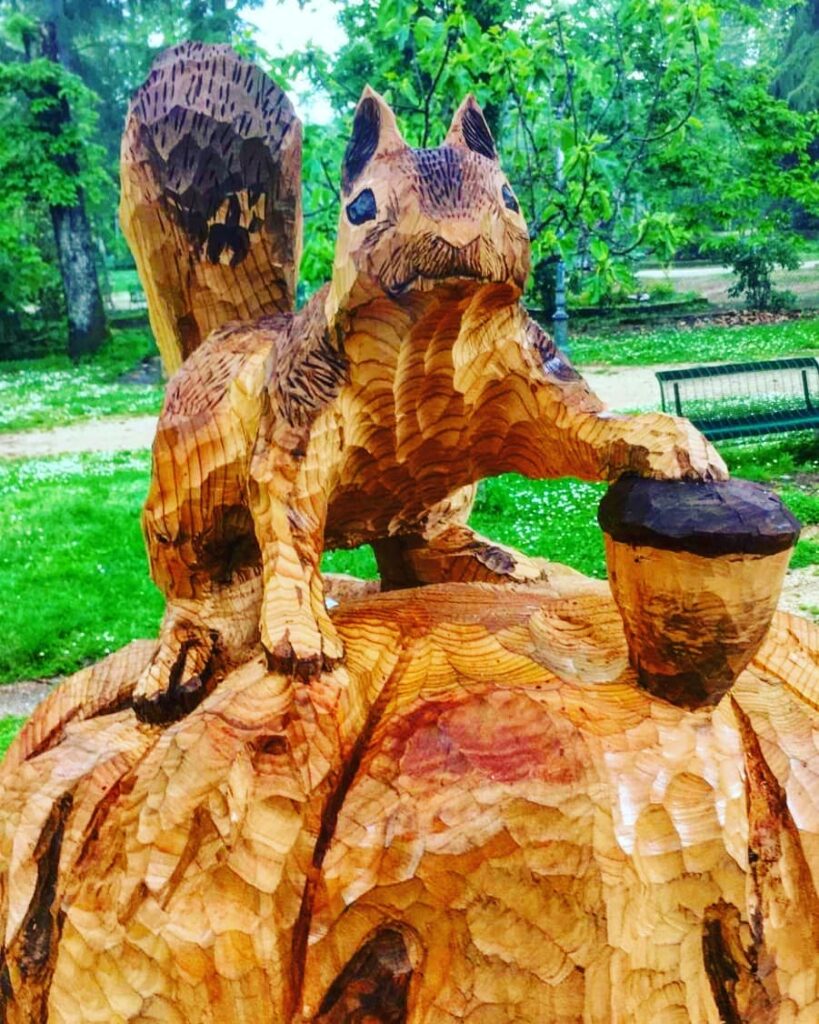
“Scoiattolo” by Andrea Gandini in Helmestedt Park – Facebook @visitfiuggiofficial
In the historic centre of Fiuggi, near Helmestedt Park, stands the statue of a squirrel carved from a tree trunk, a tribute to nature by the Roman sculptor Andrea Gandini.
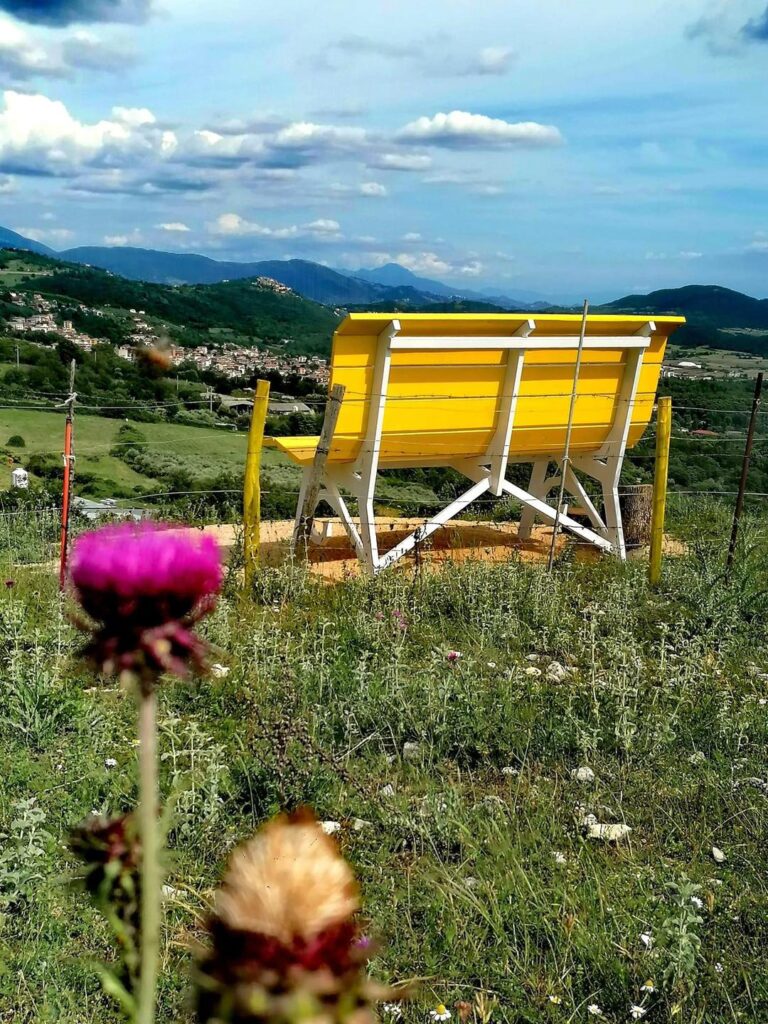
Big Bench 328 in Fiuggi – Facebook @proloco.fiuggi
From a panoramic spot on Mount Cesino, among broom bushes, it is possible to enjoy a 360° view of the ancient village of Fiuggi all the way to Lake Canterno, while sitting on the comfortable white and yellow Big Bench 328.
The twenty-five km Paliano-Fiuggi cycle path crosses the Ciociaria villages of Serrone, Piglio, and Acuto, following an old disused railway, while breathtaking peaceful landscapes appear along the route. Another cycle/pedestrian path runs through the fifth stage, Paliano-Anagni, on the Prenestina-Casilina stretch of the Southern Via Francigena. Fiuggi also lies on the St. Benedict’s Way, a 300 km route that connects Norcia to Subiaco and Montecassino.
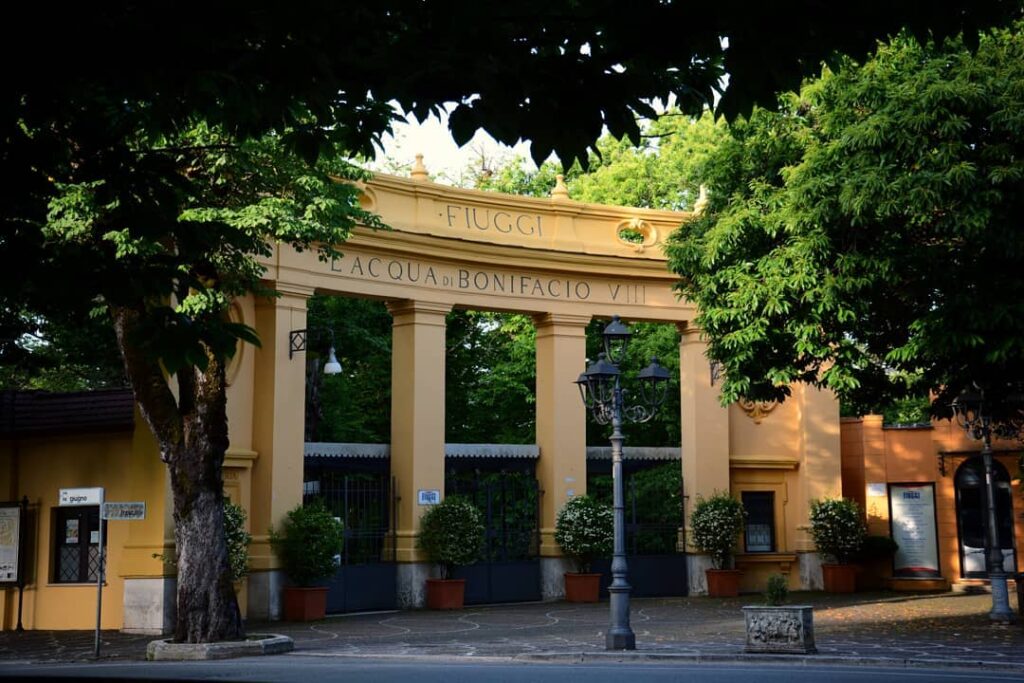
The Baths of Boniface VIII – Facebook @visitfiuggiofficial
“Io ò bevuto circa due mesi sera e mattina d una aqqua d’una fontana che è a quaranta miglia presso Roma, la quale rompe la pietra.”
This is how Michelangelo praised the low-mineral, detoxifying therapeutical water of Fiuggi in the sixteenth century, but already in the Middle Ages, Pope Boniface VIII used it to treat kidney stones. Healing waters flow from the two springs of Bonifacio VII and Anticolana, respectively functioning in the morning and in the afternoon.
The thermal establishment, one of the oldest in Italy, also hosts the 18-holes Fiuggi 1928 Golf Club, nestled in the greenery of the Lake Canterno Nature Reserve.
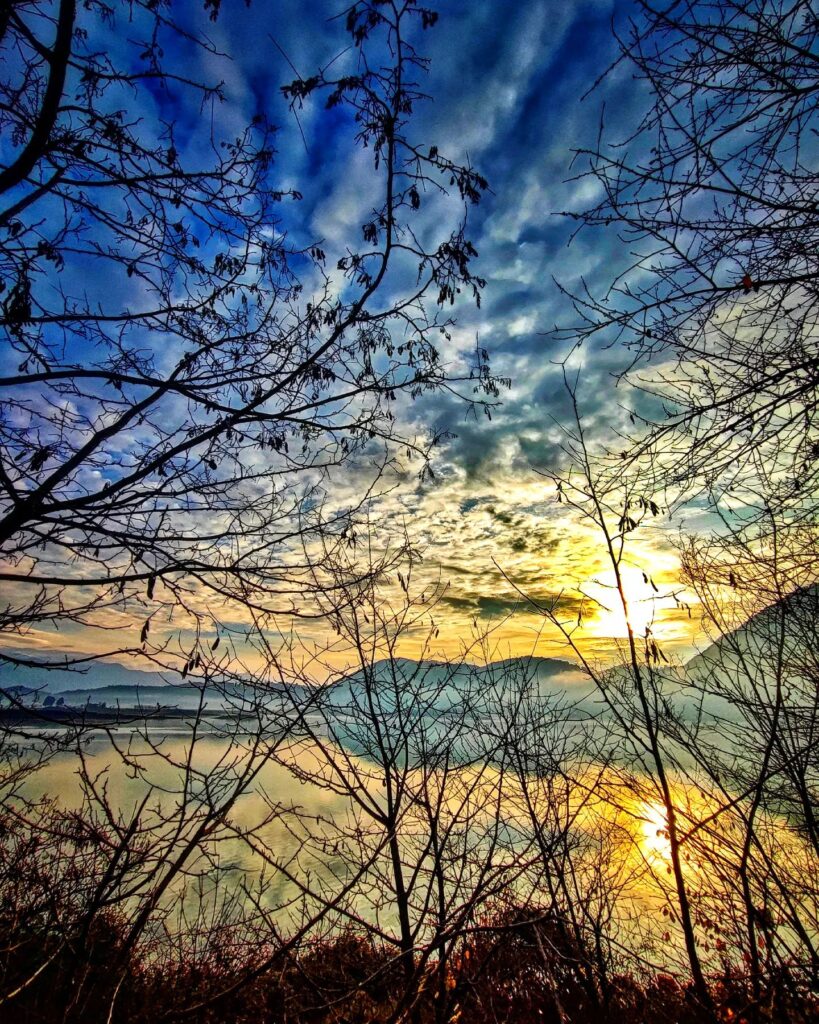
Sunrise at the Lake Canterno Nature Reserve – Facebook @visitfiuggiofficial
Lake Canterno, the gostly lake, is surrounded by the towns of Ferentino, Fiuggi, Fumone, and Trivigliano. In 1800, a sinkhole was blocked by debris and the waters converged into the lower part of the lake, creating a new one. After days, months, or maybe years, the debris dissolved and accumulated again, making the lake suddenly disappear or reappear, hence the name of ghost lake.
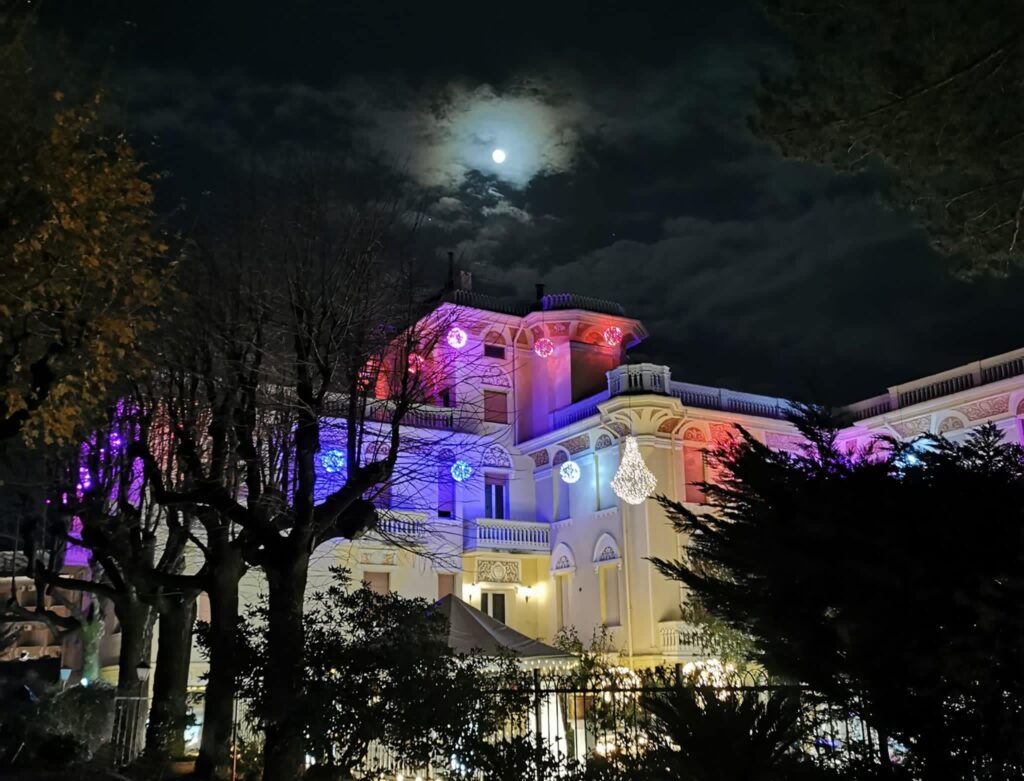
Fiuggi – Facebook @proloco.fiuggi
Among the most important events in Fiuggi, not to be missed is the historical re-enactment of the Stuzze, which celebrates the miracle of the fire of San Biagio, the patron saint bishop and martyr. On February 2, large bonfires are lit to commemorate the burning of San Biagio, who, in 1298 saved the village from the army of the Cajetani Family, enemies of the Colonna, the feudatories of Fiuggi. It is said that Anticoli di Campagna, as Fiuggi was called at that time, was saved by the Saint on that Candlemas night, when a huge bonfire made the enemies believe their comrades had preceded them.
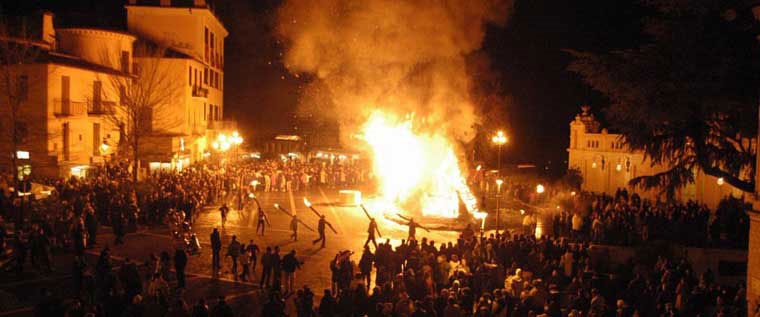
The Stuzze Festival in Fiuggi
Every year, to the cry of “Viva San Biagio”, the inhabitants of Fiuggi carry the stuzze (branches and logs of dry wood) on their shoulders, which they light to illuminate the town, just as they did on February 2, 1298.