

The Castagneto Prenestino Natural Monument in Capranica Prenestina, a 166-hectare protected area rich in chestnut woods and evocative centuries-old trees, brings together man and biodiversity.
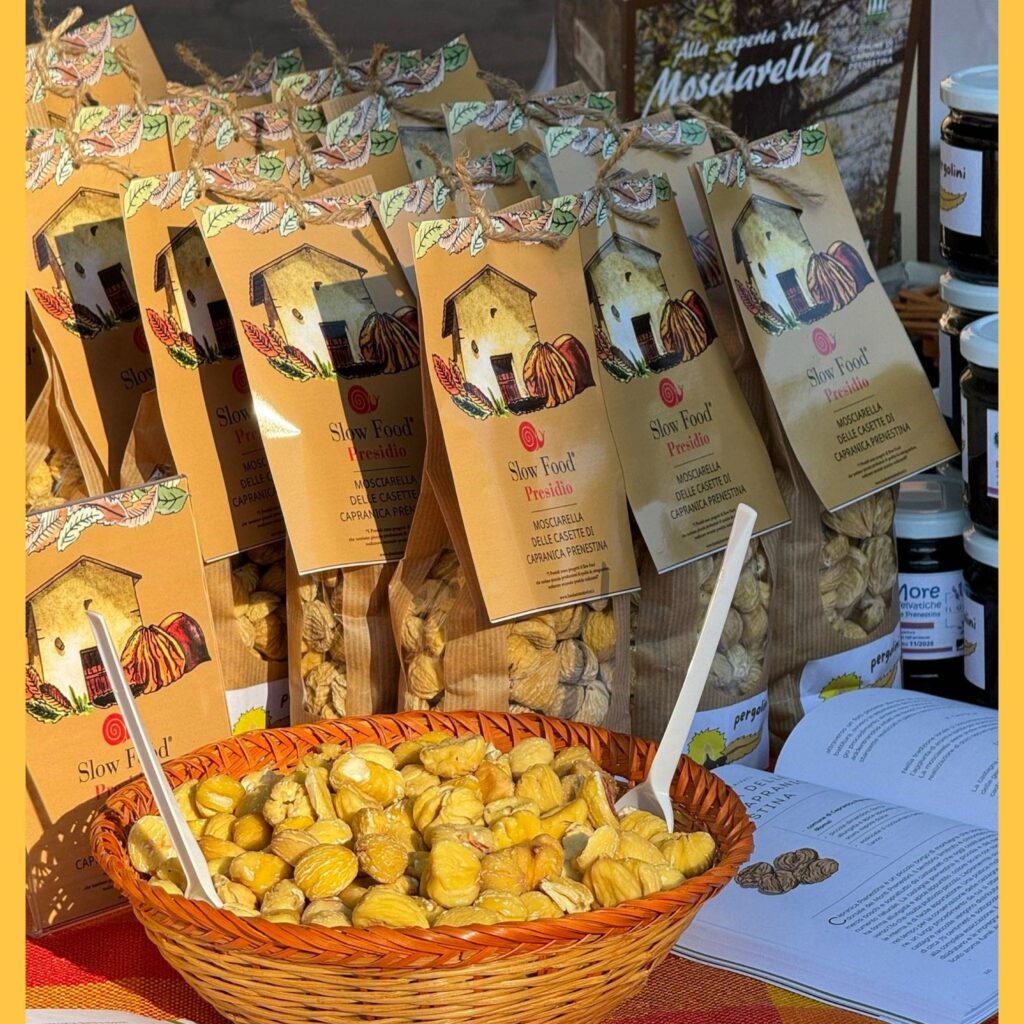
The Mosciarella of Capranica Prenestina (Photo: Facebook @Comunità della Mosciarella di Capranica Prenestina)
The dried chestnut Mosciarella delle Casette di Capranica Prenestina has been cultivated here for generations. In fact, the landscape is dotted with small stone buildings, the casette, where this unique product, recognized as a Slow Food Presidium, is put to dry.
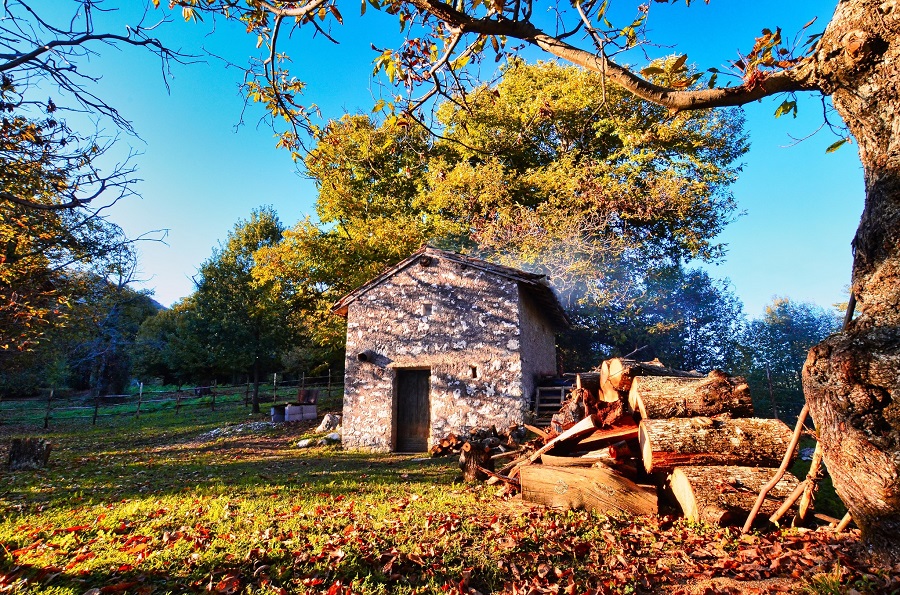
The Casette of Capranica Prenestina
After the drying, between October and December, the Mosciarella undergoes a light smoking process that gives it a unique, delicious flavour. In November, Capranica, declared one of the Most Beautiful Villages in Italy, hosts the Mosciarella Festival. This dried fruit is traditionally eaten boiled in water or milk, or added to legume or pork soups, lending a sweetish, slightly smoky flavour to these dishes. 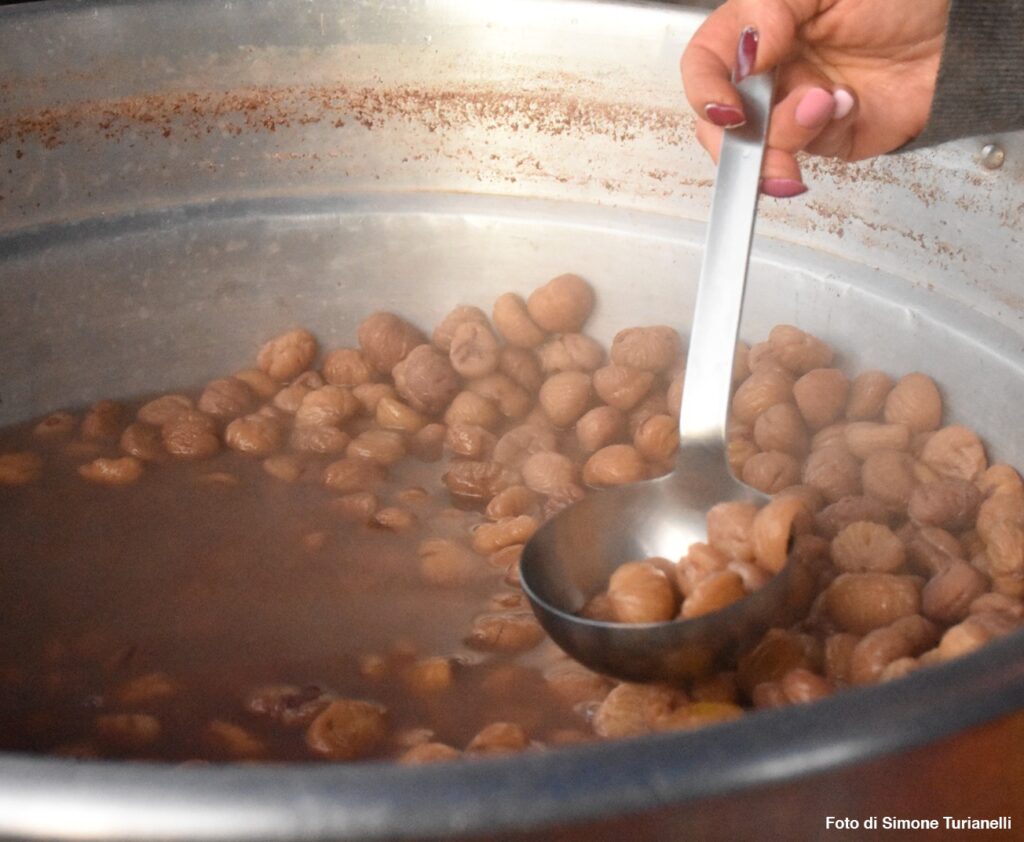
No chemicals are used in the cultivation of the local chestnut (Castanea sativa Miller), so much that the area hosts a wide variety of flora and fauna. It is said that chestnuts were cultivated in Capranica Prenestina in the Middle Ages, around 1200, by will of the Countess Matilda of Canossa. Indeed, the first groves were present here already in Roman times, when the local population, besieged by the troops of Lucius Cornelius Silla, Marius’s rival and future dictator, survived eating chestnuts.
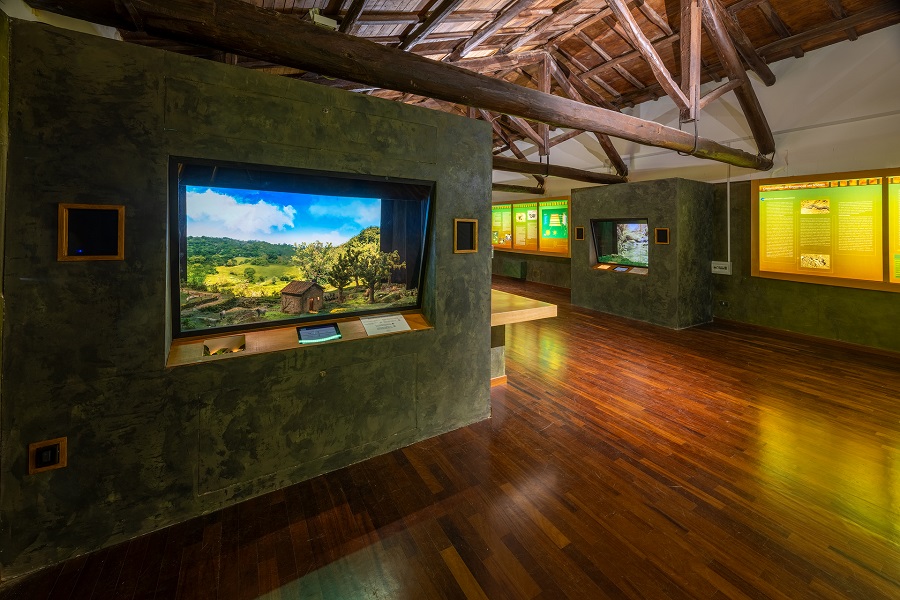
The Civic Natural History Museum of the Monti Prenestini
The Castagneto Prenestino Natural Monument aims at a century’s old integration between humans and the environment, enhanced by the preservation of an anthropological, historical, and architectural heritage, and by agro-silvo-pastoral traditions. The Museo Civico Naturalistico dei Monti Prenestini displays the various species inhabiting the territory of Capranica Prenestina, ranging from the rare Salamandrina perspicillata to the peregrine falcon. Educational panels and recently installed digital dioramas offer visitors the possibility to discover this spectacular landscape. In collaboration with the Consiglio per la Ricerca in Agricoltura e l’Analisi dell’Economia Agraria (CREA), the museum is currently conducting research about an insect, which has been damaging the chestnut trees for some years, in order to restore the groves.
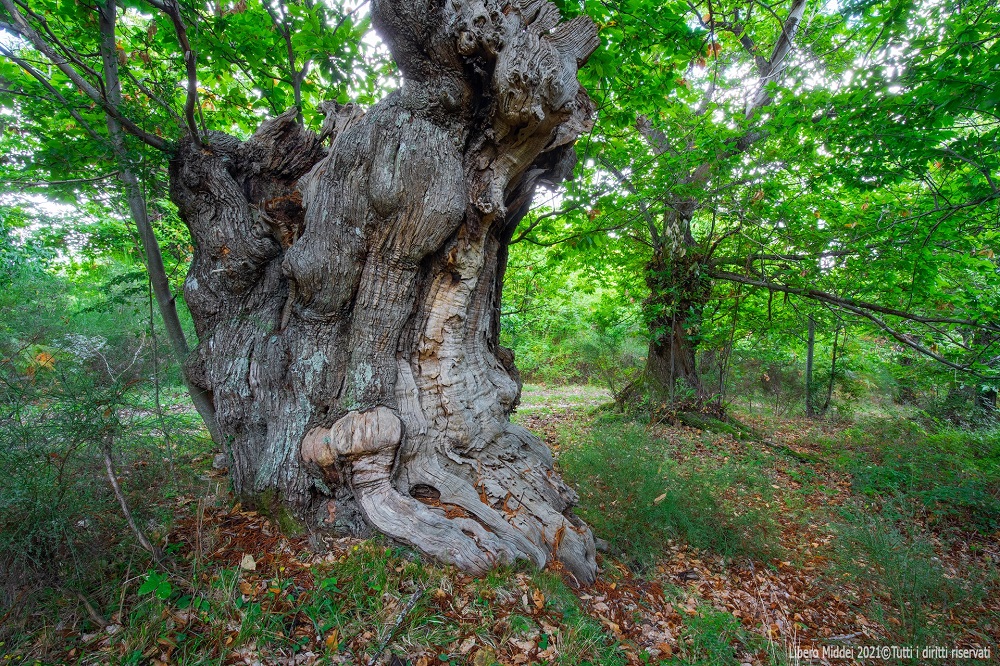
The Capranica Prenestina Chestnut Grove
From the museum, hikers can follow, accompanied by a guide, an easy three-hours loop trail within the Natural Monument. The landscape is particularly impressive in autumn, thanks to the warm colours of the foliage and the smoke rising from the tiled roofs of the casette. 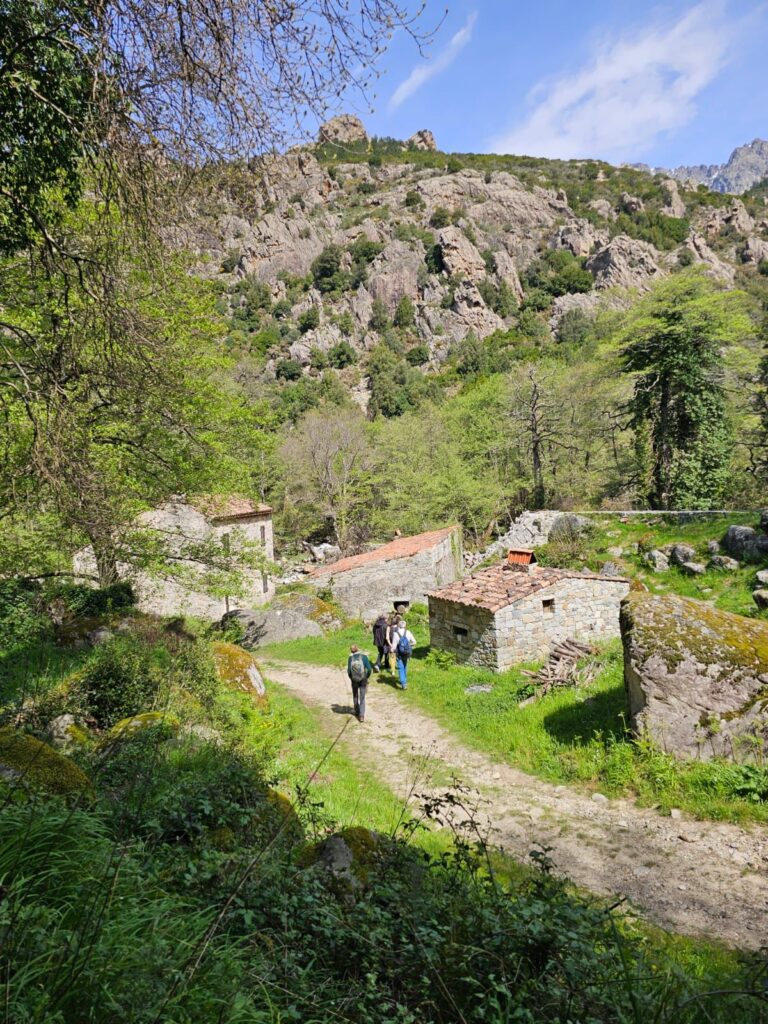
The imposing chestnuts trees, with trunks sometimes exceeding six meters in circumference, dominate the magic green forest, which also hosts mosses, mushrooms, and lichens. Unmissable in Capranica Prenestina is the Church of Santa Maria Maddalena, which houses a majestic dome designed by Bramante and a marble sculpture by Michelangelo depicting a lion bearing a coat of arms.