

Giorgio De Chirico’s works being displayed in the Monastery of Saint Philippa Mareri in Borgo San Pietro, a small hamlet in Petrella Salto, is due to a story linked to the Lake of the same name.
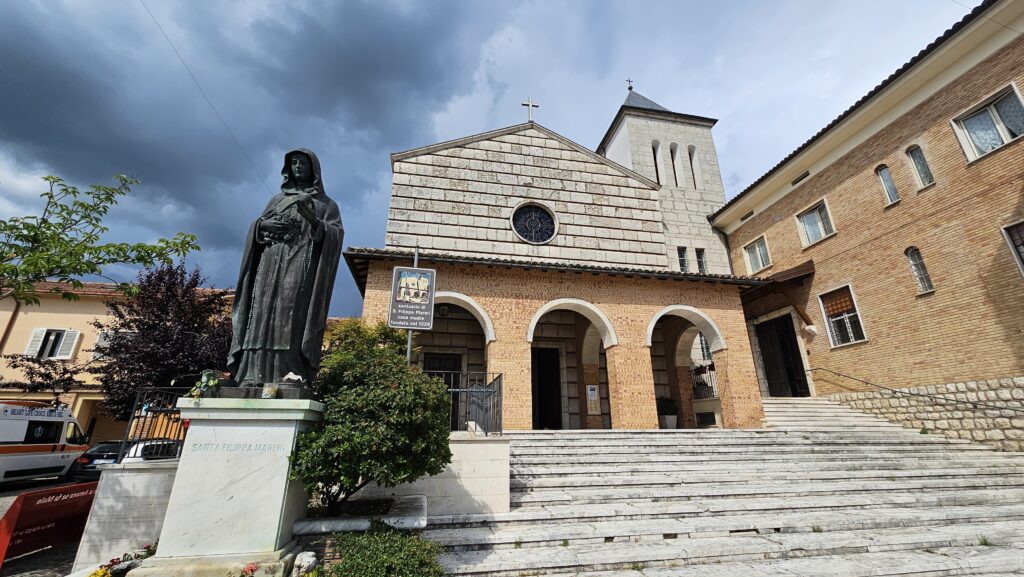
- The Motherhouse of the Franciscan Sisters of Saint Philippa Mareri
The Motherhouse of the Franciscan Sisters of Saint Philippa Mareri was rebuilt around 1940 in Borgo San Pietro, using the remains of the ancient Monastery disappeared under the waters of Lake Salto
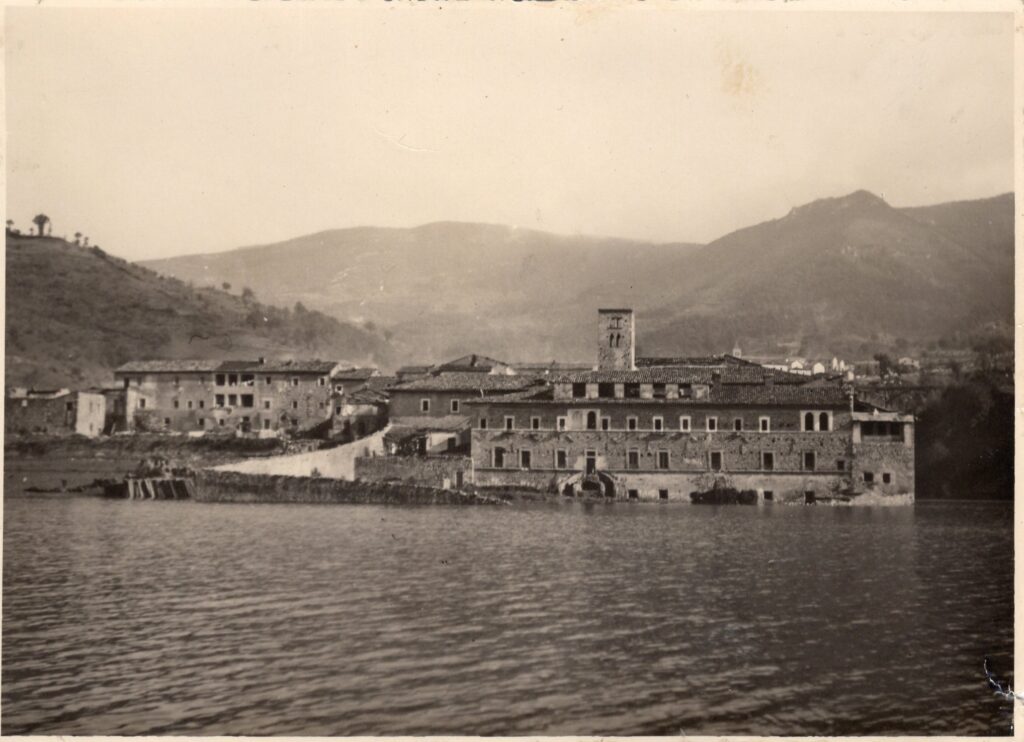
- The Ancient submerged Monastery of Saint Philippa in Lake Salto
It all began in 1936, when Mussolini commissioned a dam in the Salto River Valley to power the Cotilia hydroelectric plant and the Terni steelworks. Thus, the ancient Monastery was submerged, and the bell tower peeked out of the water for a long time before totally disappearing. Even today, this magnificent transatlantic still lies under the lake waters.
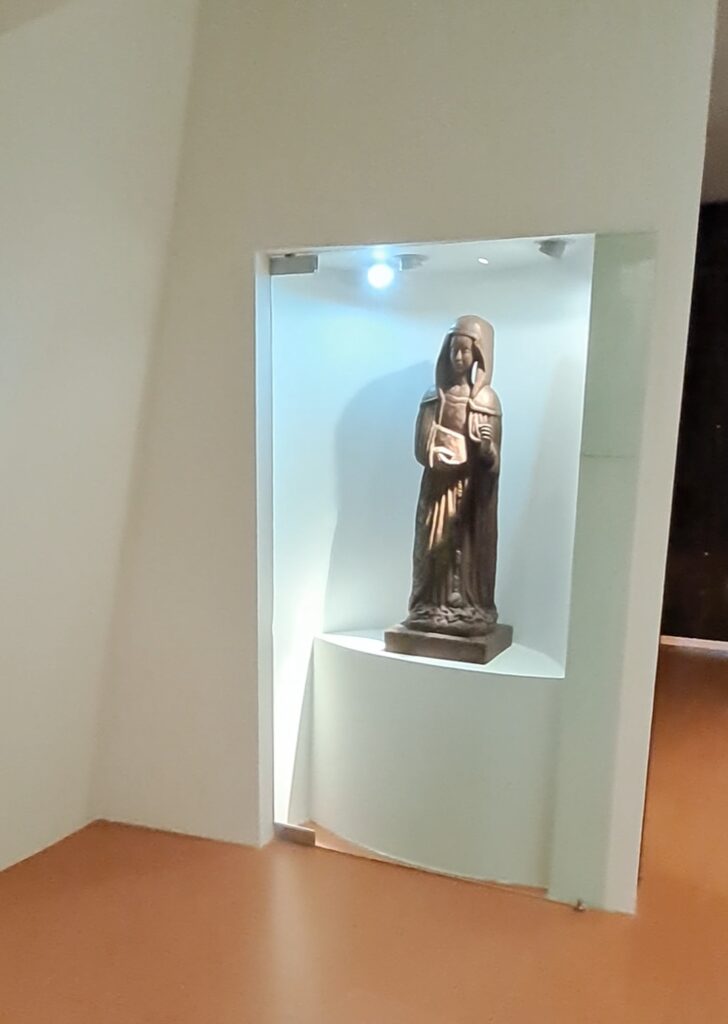
- The Statue of Saint Philippa
The Saint was born in Castel Mareri di Petrella Salto in the early thirteenth century. She descended from a wealthy local family, who enjoyed patronage rights over local churches.
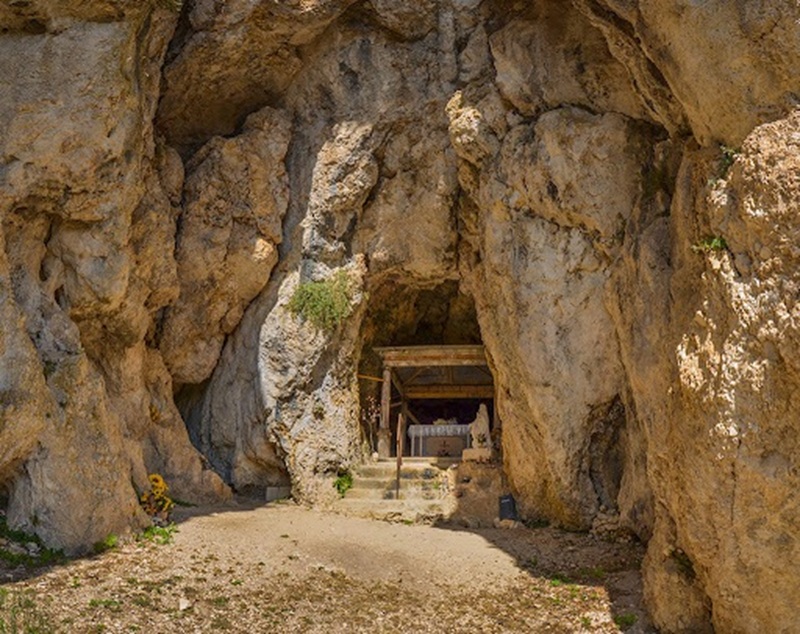
- The Grotto of Saint Philippa
A contemporary of Saints Francis and Clare, like them, she chose to live in poverty in a cave on a mountain near Borgo San Pietro. When her brothers gave her a villa and the patronage rights over the adjacent church of Saint Peter, Philippa transformed it into a monastery.
In 1231, to avoid breaking her vow of poverty, she sought the protection over her new monastic community from Pope Gregory IX, whose Bull is now preserved in the archives of the Motherhouse. The Pope also decided the Philippa’s nuns to belong to the female Franciscan Order of San Damiano, which would soon become the Poor Clares’ Order of Saint Philippa.
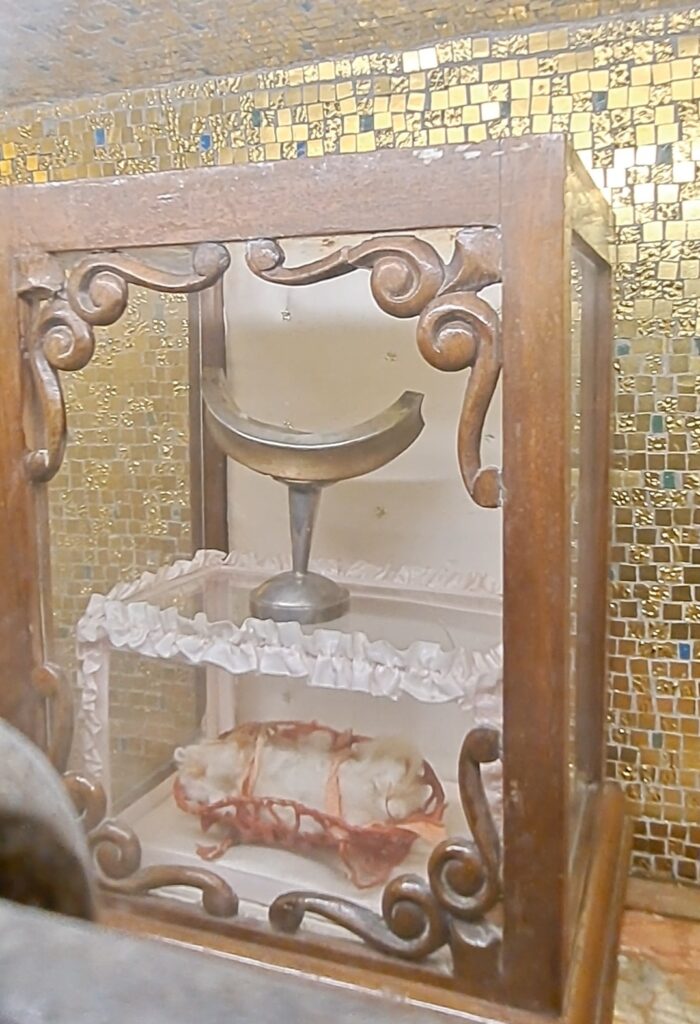
- Saint Philippa’s miraculous spittoon bowl
However, Sait Philippa Mareri is still little known. On February 16, 1236, after her death due to a lung disease, she was declared a saint for the great number of miracles she had performed. Although there are episcopal documents in which the young nun is mentioned as a saint, there is no official evidence of her canonization process, and probably the Saint’s little notoriety is due to the lack of these proofs.
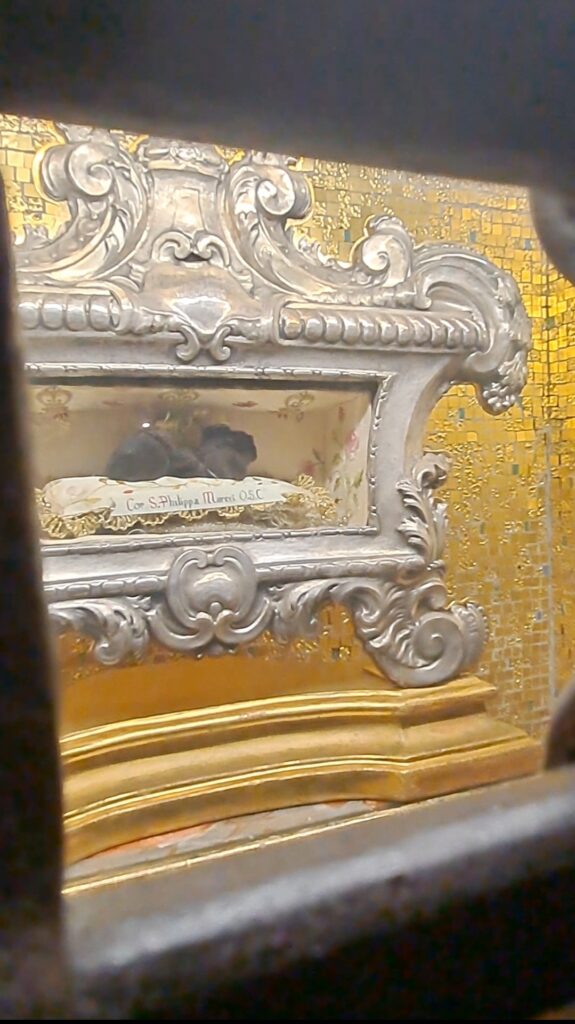
- Saint Philippa’s intact heart
Centuries later, several miracles reignited the doubts about the sanctity of Philippa and, in 1706, her body was exhumed. Incredibly, after 470 years, her heart had remained intact. This symbol of undying vitality is still preserved in the Monastery Chapel, together with other objects, such as the spittoon bowl used by the Saint during her fatal illness, the instrument of numerous miracles.
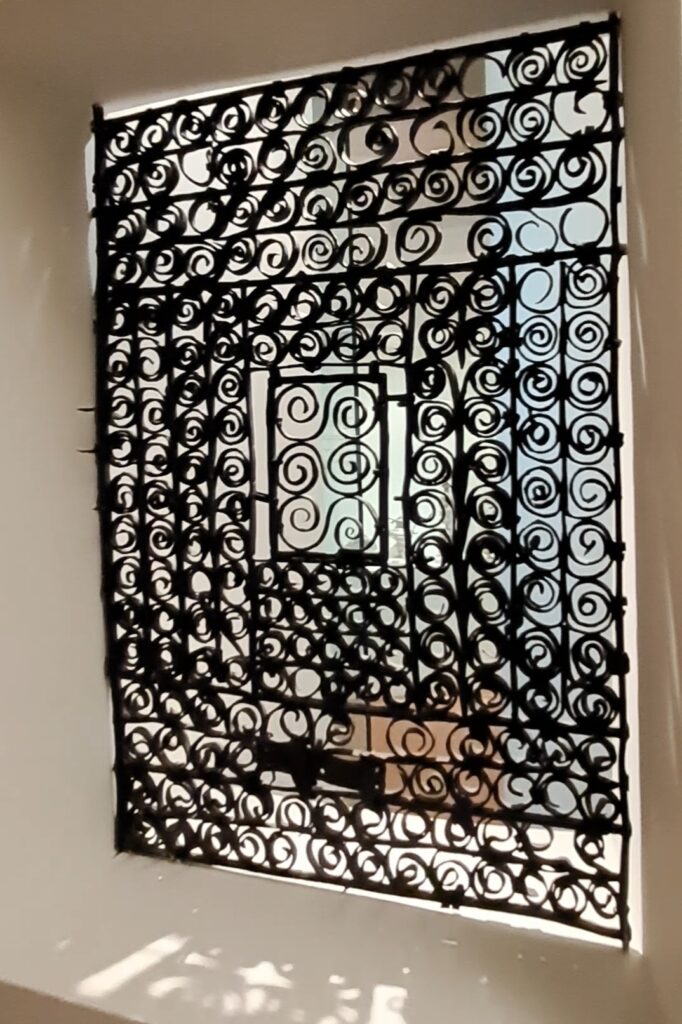
- The grate with stings, a symbol of seclusion
“Either husband or walls”
This is how the older nuns described the cloister life, almost never a vocation. From the beginning, Saint Philippa’s lack of fame allowed the nuns to open themselves to the world despite their seclusion, with their discreet vitality.
In 1905, they managed to acquire the monastery at an auction miraculously unattended. In 1929, upon the bishop’s request to loosen the observance of seclusion in female monasteries, the Poor Clares of Saint Philippa could finally take care of the orphans, the sick, and the students.
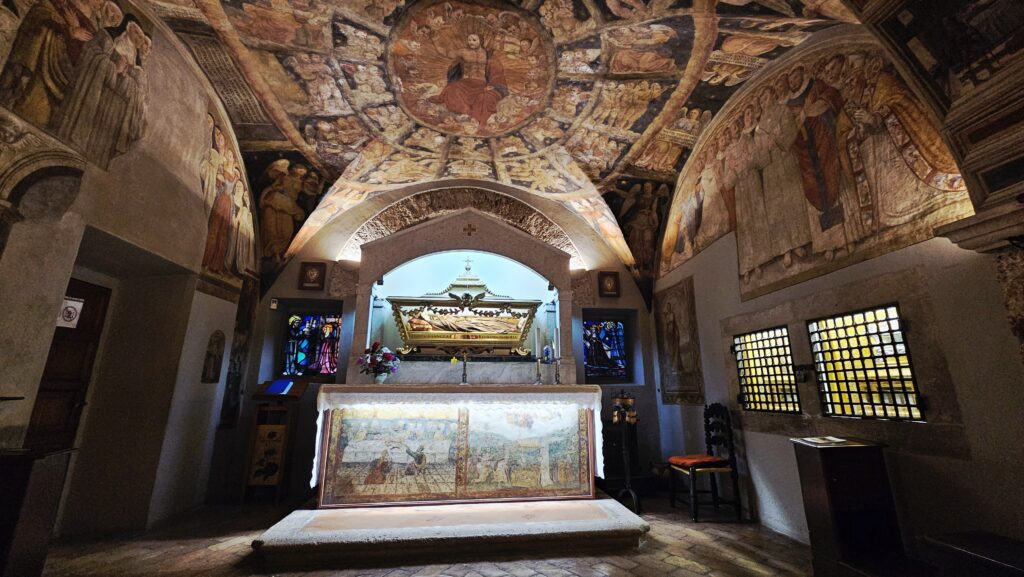
- The Frescoed Chapel with the Relics of Saint Philippa
A plaque inside the Chapel bears the writing “The Deeds of God renew themselves, they do not die”
In the 1950s, after the creation of the new Salto Lake, the nuns moved further upstream and the old chapel was dismantled and then rebuilt in the new monastery by the faithful. Around the relics of Filippa Mareri, some impressive frescoes from the 1400s and 1500s can be admired.
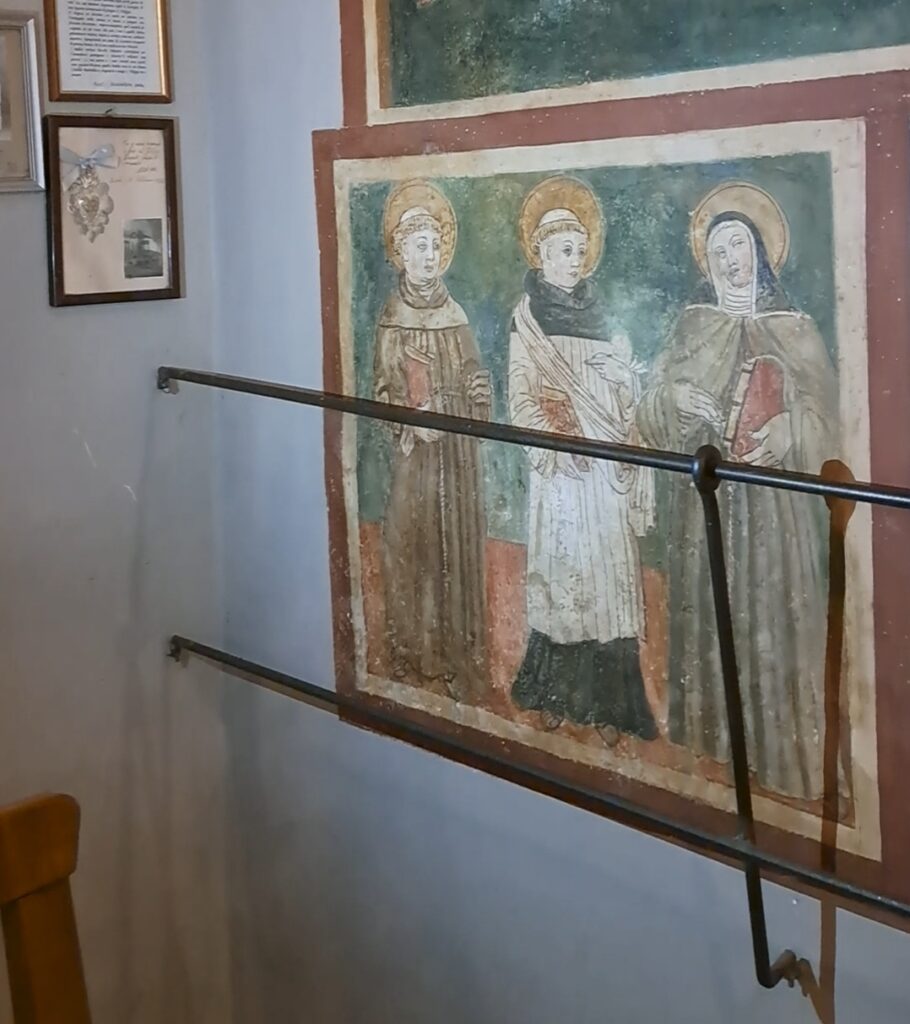
- The fresco of the three Saints
A fresco by Umbrian-Marchigian artists from the mid-1400s depicts Philippa, Saint Anthony of Padua, and another saint, probably Saint Nicholas of Tolentino. Looking closely, an innovative detail for that time emerges; the saints hold the Bible in their hands, with the cover facing inward, thus showing the faithful the God’s Word. Saint Philippa is portrayed at the same level of the two men, a revolutionary posture for a woman of her time, a sign of authority only reserved to the male clergy.
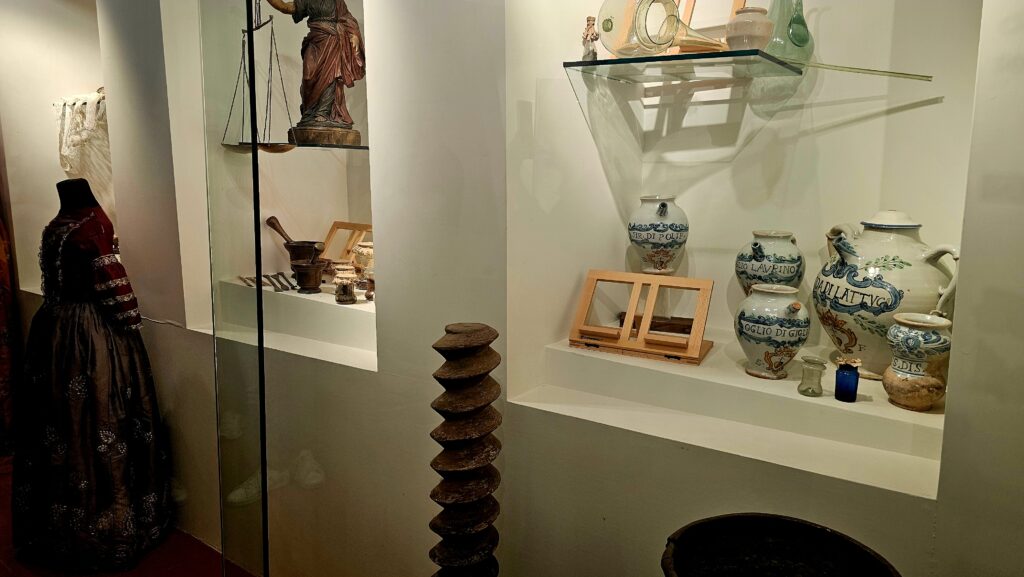
- The Poor Clares’ Dispensary of Santa Filippa
The monastic complex houses a museum, which displays several items and furnishings from the abandoned monastery. Noteworthy are the centuries-old daily life objects used by the Poor Clares and the trunks containing the dowry, a symbol of poverty. The exhibition also hosts spinning, weaving, and dispensary tools, evidence of the nuns’ relationships with the people from outside.
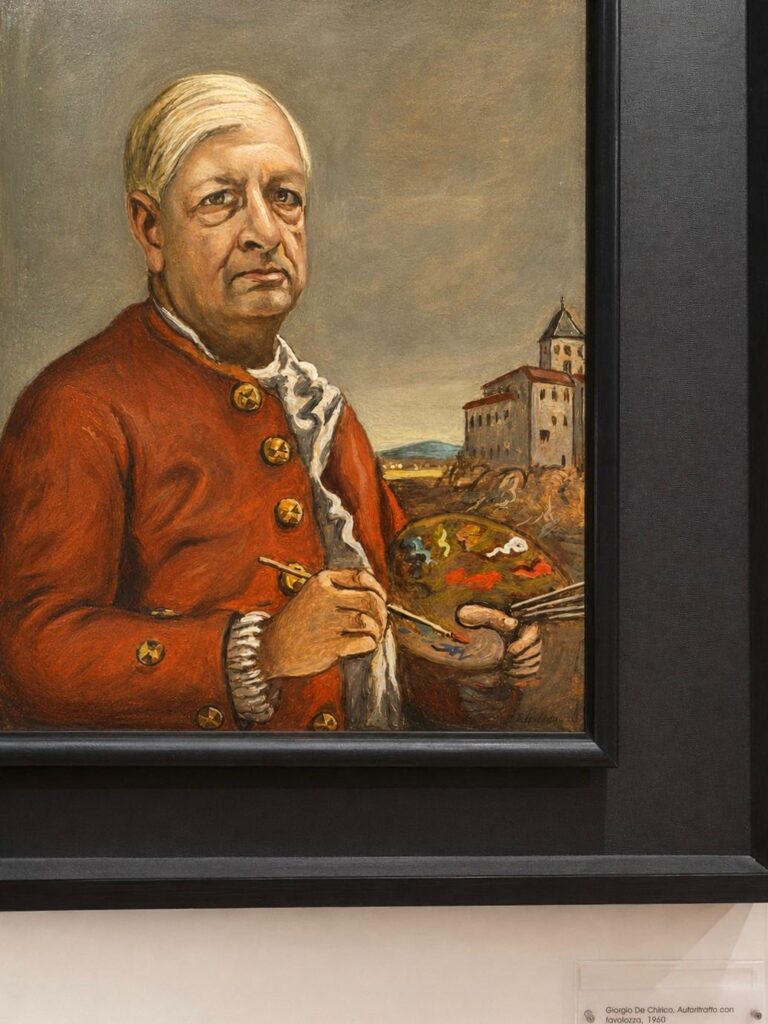
- Self-portrait of Giorgio De Chirico
But the highlight of the museum are the works by Giorgio De Chirico, whose housekeeper, Vincenzina, was born in Petrella Salto. Being an orphan, she could not become a nun and therefore started working for the artist and his wife Isa, serving them from the 1950s until their death in 1997. It was thanks to Vincenzina that the couple used to spend their holidays in Petrella Salto.
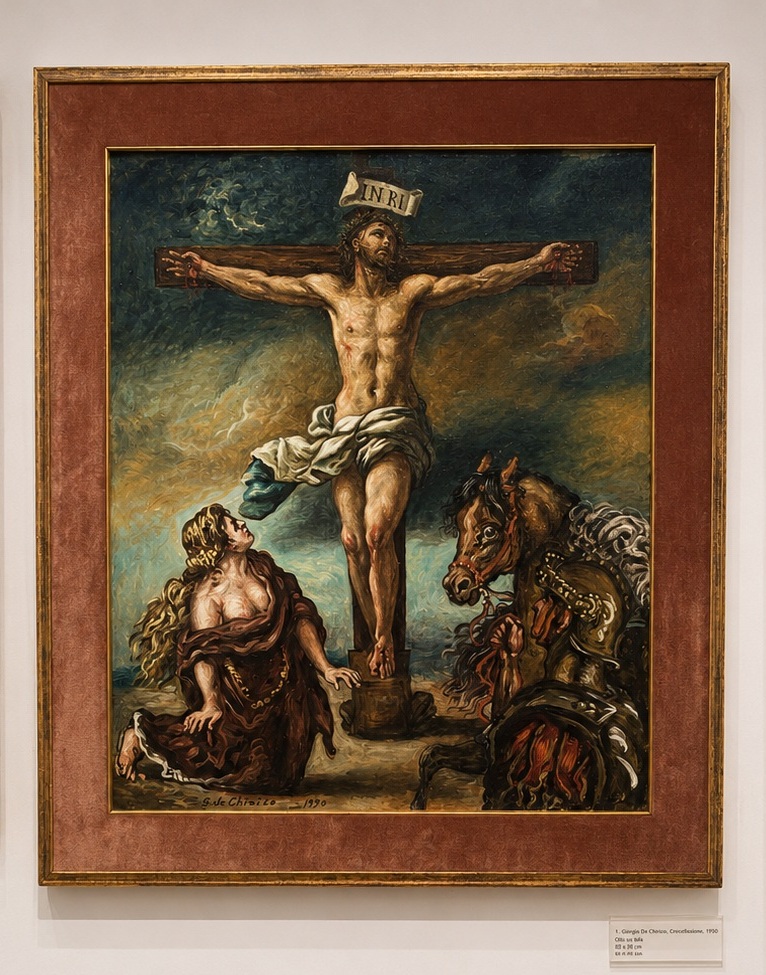
- The Adoration of the Cross by Giorgio De Chirico
Thus, the Poor Clares of Saint Philippa experienced the religious sense of De Chirico, an artist considered anticlerical. Among the works in the Museum bequeathed by De Chirico in his will, the “Adoration of Christ Crucified” stands out. At the foot of the cross, as a symbol of faith, the artist chose to portray Mary Magdalene, a centurion, and a horse, respectively representing the forgiven sinner, the repented unbeliever and himself.
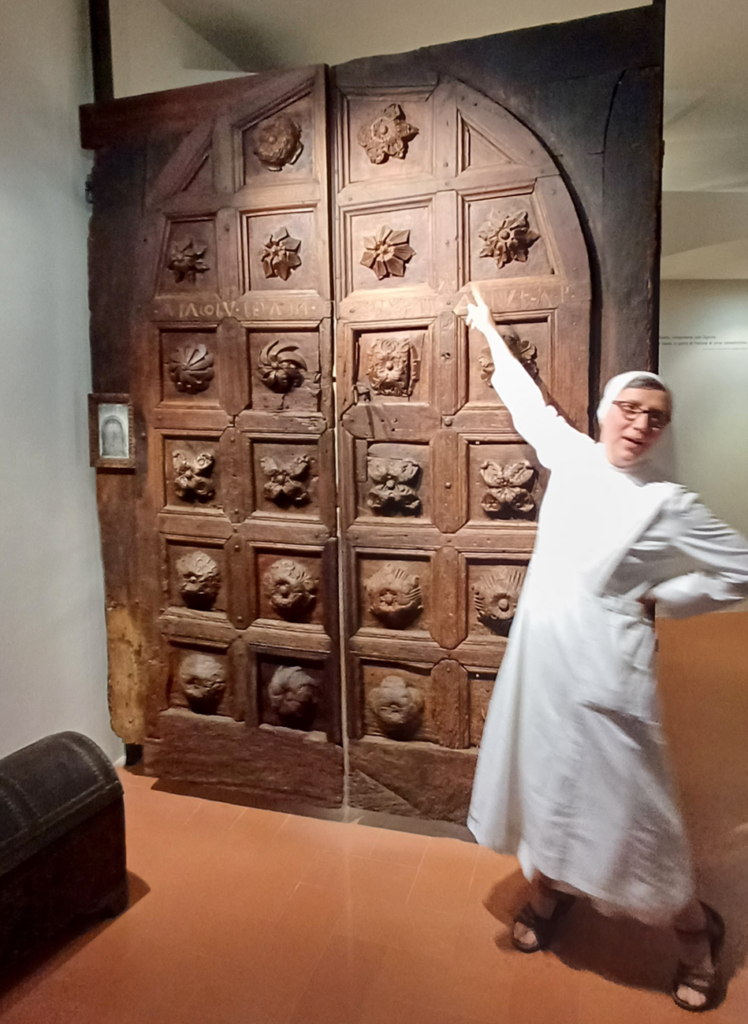
- An exciting guided tour of the Motherhouse of the Saint Philippa Mareri
Franciscan Sisters
Today, in Petrella Salto, only a small community remains, preserving a little-known historical, spiritual, and artistic heritage. Visitors will be able to join guided tours led by the Poor Clares of Saint Philippa for free.