

«Carnuale è ‘ne bon’ome, tè la faccia de galantome, uà gerènne pe’ Frusenone, pe’ magnasse gli maccarùne», says the traditional tune “La canzone de Carnuale.
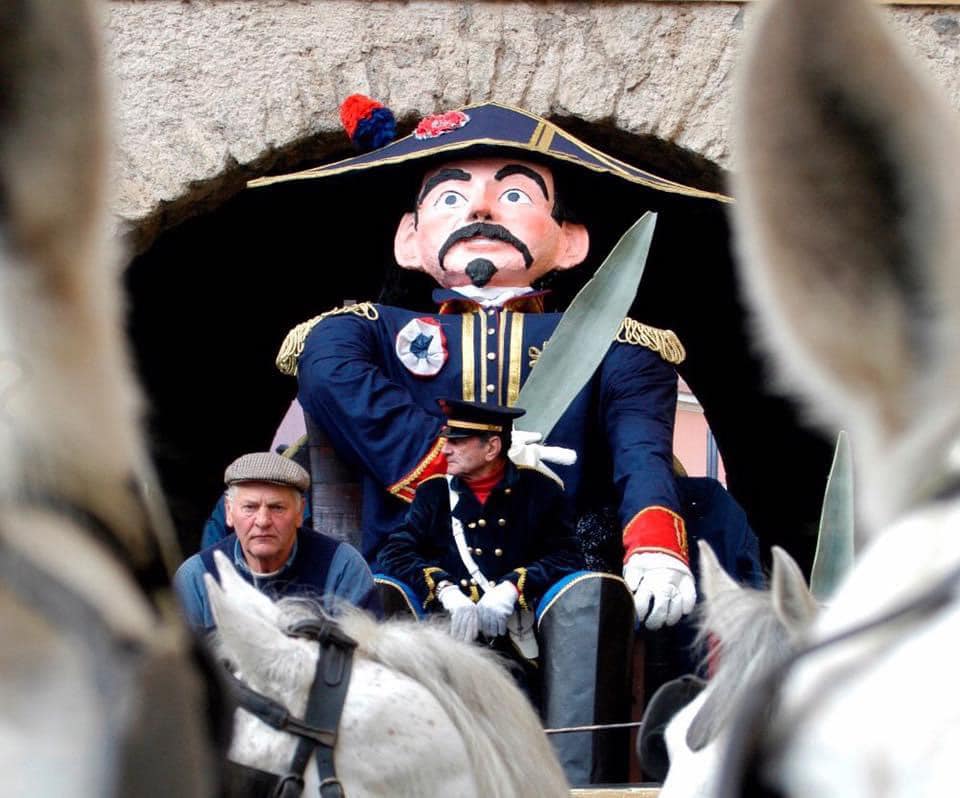
The historical Carnival and the Ràdeca Festival in Frosinone – Facebook @RioneGiardino
The Historical Carnival of Frosinone, one of the four most important celebrations of this kind in Lazio, offers participants a rich calendar of events that culminate, on Shrove Tuesday, with the most awaited Ràdeca Festival. The Feast celebrates the heroic upspring of the people from Frosinone against the French occupation troops, that took place from 1798 to 1799 and saw the well-known French General Jean Antoine Étienne Vachier, known as Championnet, as a protagonist.
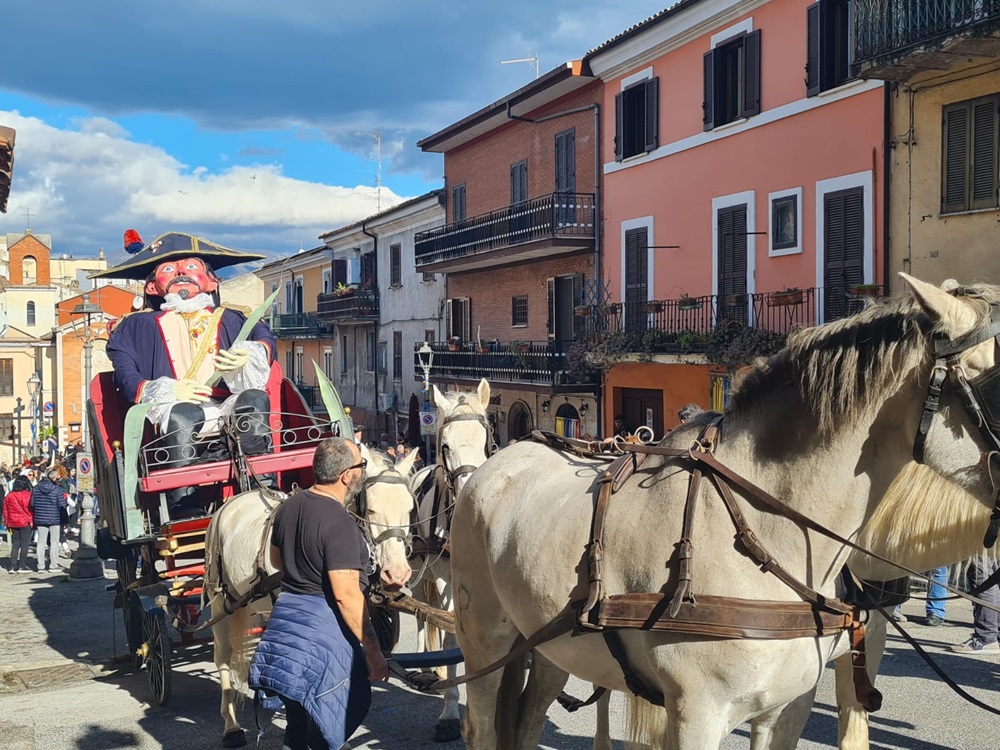
The allegorical float of General Championnet
Around 2 pm, after a traditional lunch based on Maccarune, the procession starts from the Rione Giardino, in front of the Carnival House, a donation by an unknown wealthy citizen. A wine barrel cart parades followed by the Radecàri who, sated with fine red wines, dance the Saltarello raising the agave leaf, the so-called Ràdeca, to the rhythm of the “Canzone de Carnuale”. The parade continues with the Municipality representatives bearing the town’s Gonfalone, a musical band and the allegorical float of General Championnet. Other towns from Ciociaria also participate in the parade.
The procession recalls the stratagem adopted by the people of Frosinone to free themselves from the French usurper. Although frightened and hungry, they still celebrated their traditional Carnival and Ràdeca Festival, a symbol of fertility. With a surprising trick, the inhabitants involved the genera into the jovial atmosphere of the Carnival.
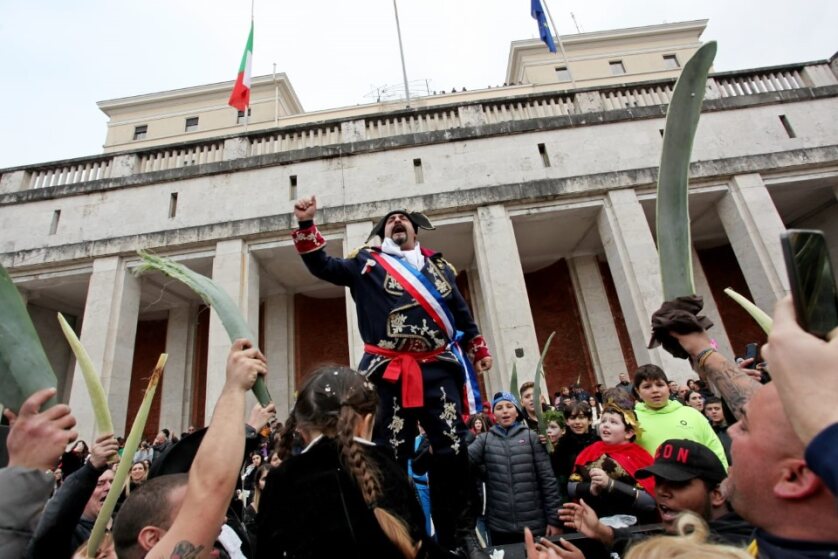
General Championnet participates in the Radeca festival together with the people of Frosinone
Finally, drunken and satiated with the Fini-fini (thin egg noodles), he was dragged into the main square, where he was judged by the Notary and burnt at the stake. The Fini-fini, the typical dish of Frosinone.
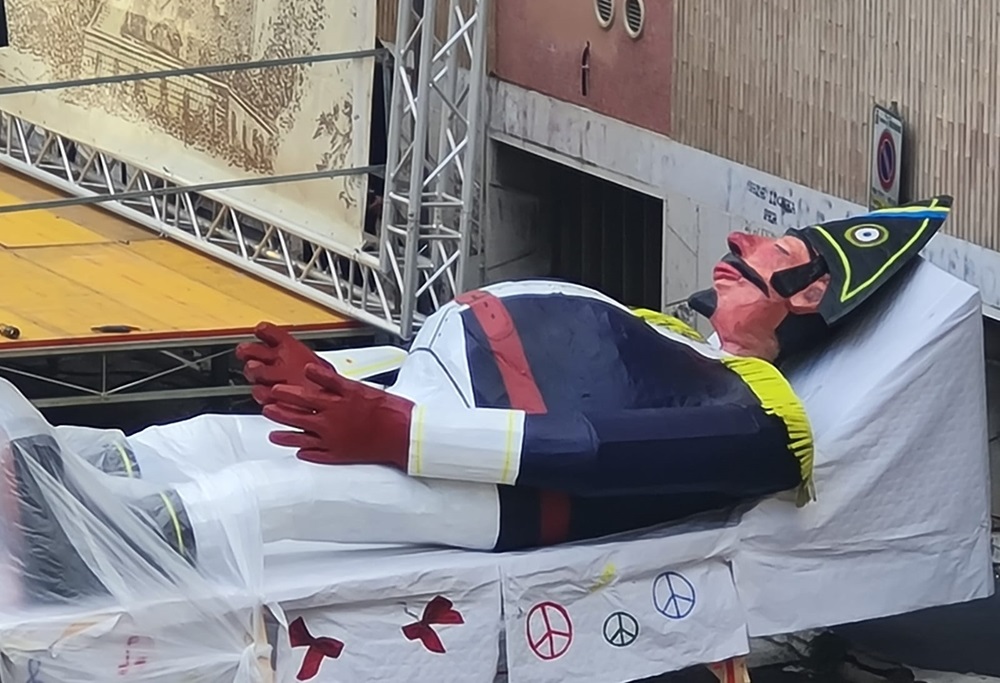
General Championnet before being set on fire
Since then, General Championnet has become the symbol of the Carnival. His puppet, after parading throughout the historic centre, is set on fire at sunset. The Feast continues until late with tastings of wines, fettuccine and Fini-fini noodles.
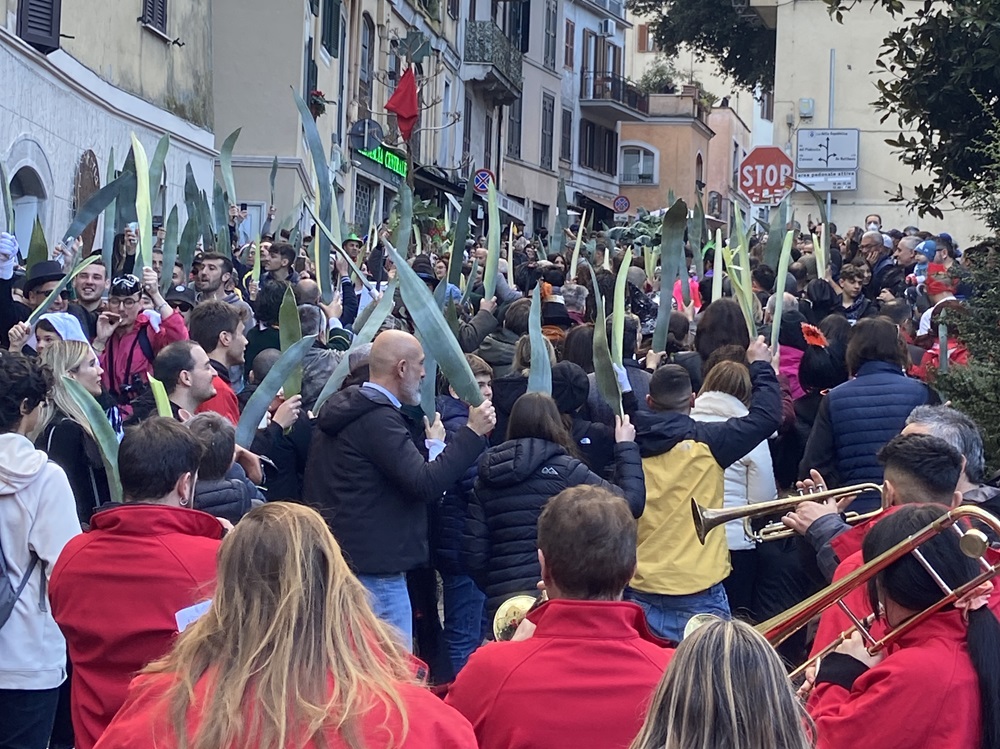
All participants brandish the Radeca during the Carnival celebrations
During the cheerful procession, all participants wield the Ràdeca and a few ones, the Pantanari, raise cauliflower tops. All of them dance, at first at a slow rhythm, in memory of the oppressions suffered, and later more cheerfully, in honour of the regained freedom. Radecari and Pantanari perform a wild dance in various circles, exclaiming all together: “Esseglie’, esseglie’, esseglie’!”.
But, during the festival, precise rules have to be followed: every participant must bear a Ràdeca, and, if he refuses, he will underwent the punishment of being beaten by the others.