

The Banditaccia Necropolis, the only ancient Etruscan preserved site, is part of the UNESCO World Heritage along with the Monterozzi Necropolis in Tarquinia.
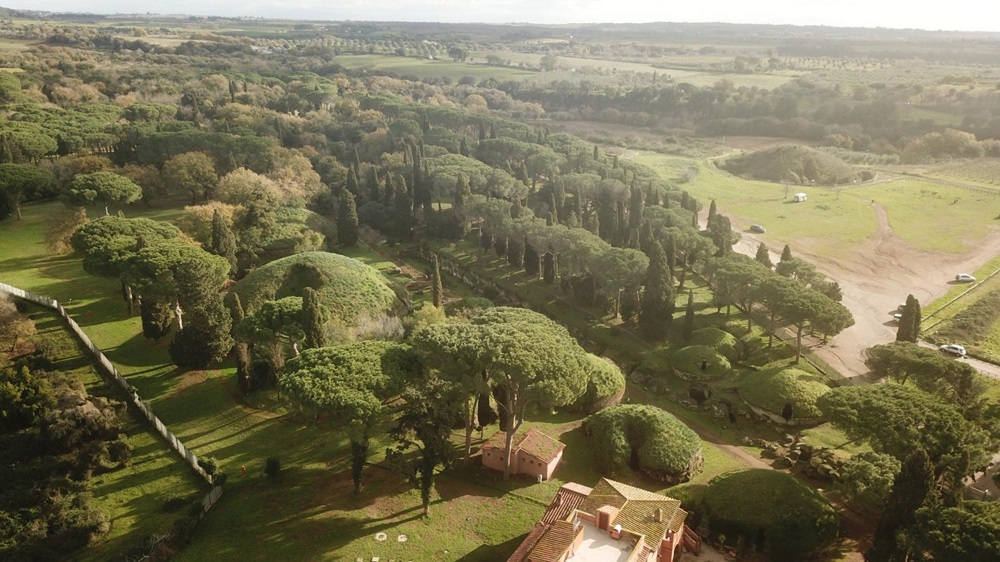
A view of the Banditaccia Necropolis in Cerveteri – comune.cerveteri.rm.it
The enclosed area, accessible to visitors, houses approximately 2,500 burials, but the over 100 hectares plateau boasts hundreds of thousands of tombs. The presence of such a great number of graves is due to the Necropolis being a burial ground already in the 6th century BC, when Caere, the current Cerveteri, was a Mediterranean metropolis with 40,000 inhabitants.
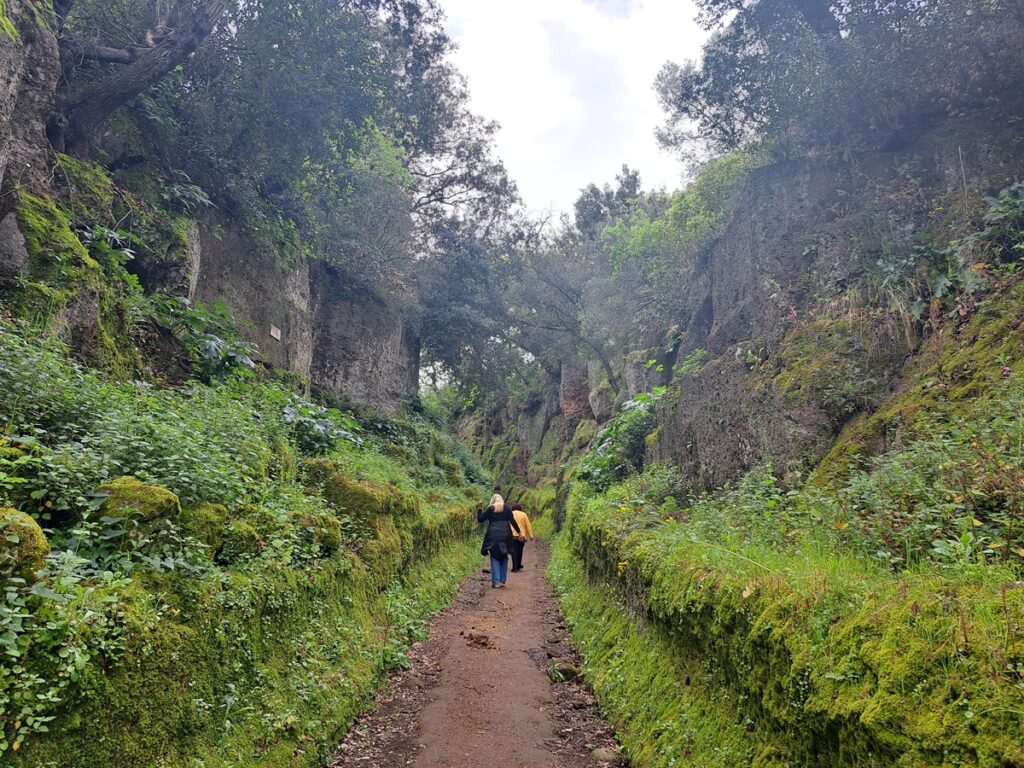
The Via degli Inferi in the Banditaccia Necropolis
Like all necropolises, the Banditaccia lies outside the city walls along the Via degli Inferi, the first stretch of the famous route connecting Caere to Pyrgi, todays Santa Severa. This evocative hollow road is now submerged in the wild beauty of an uncontaminated vegetation.
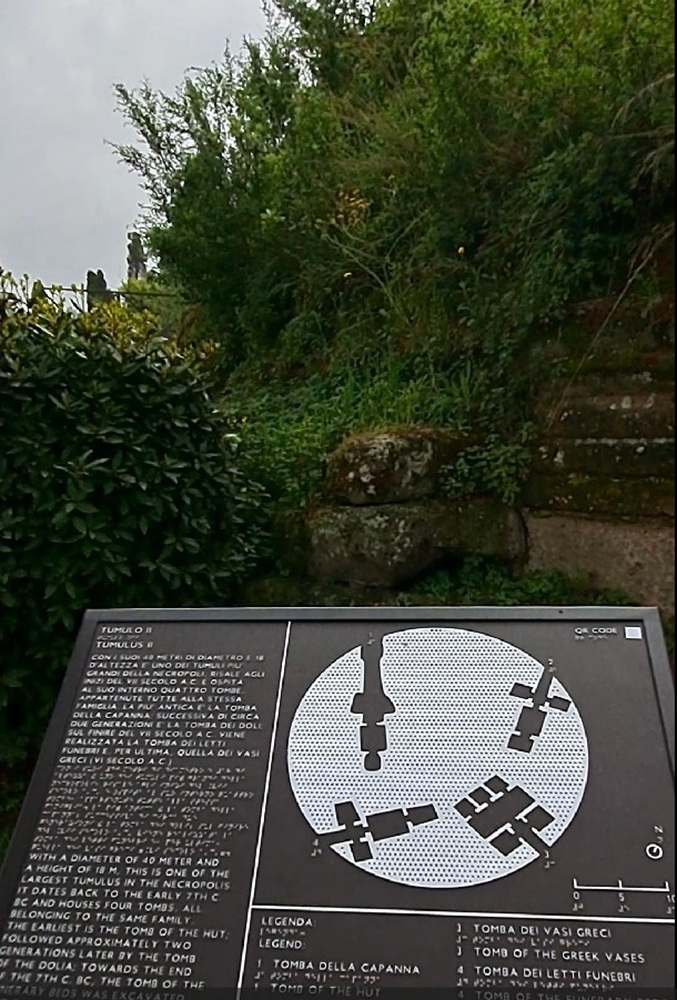
The tactile panels in the Banditaccia Necropolis
The Banditaccia Necropolis, which hosts the more ancient tombs in the upper part and the more recent ones in the lower area, testifies to the evolution of funerary architecture from the Danubian period to Romanization. Bilingual tactile panels help the visually impaired follow the itinerary through the Necropolis.
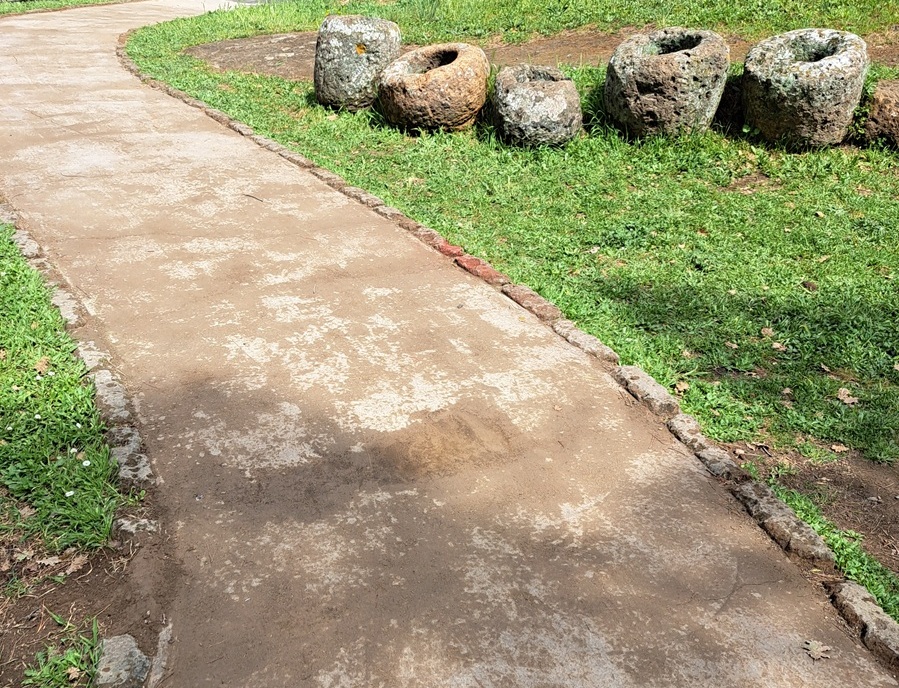
Shaft tombs in the Banditaccia Necropolis
Shaft tombs, terracotta urns in tuff containers preserving the ashes of the deceased, were the most ancient kind of burial. They were in use in the early Iron Age (9th-8th centuries BC), before the urban phase, when cremation was the most common practice.
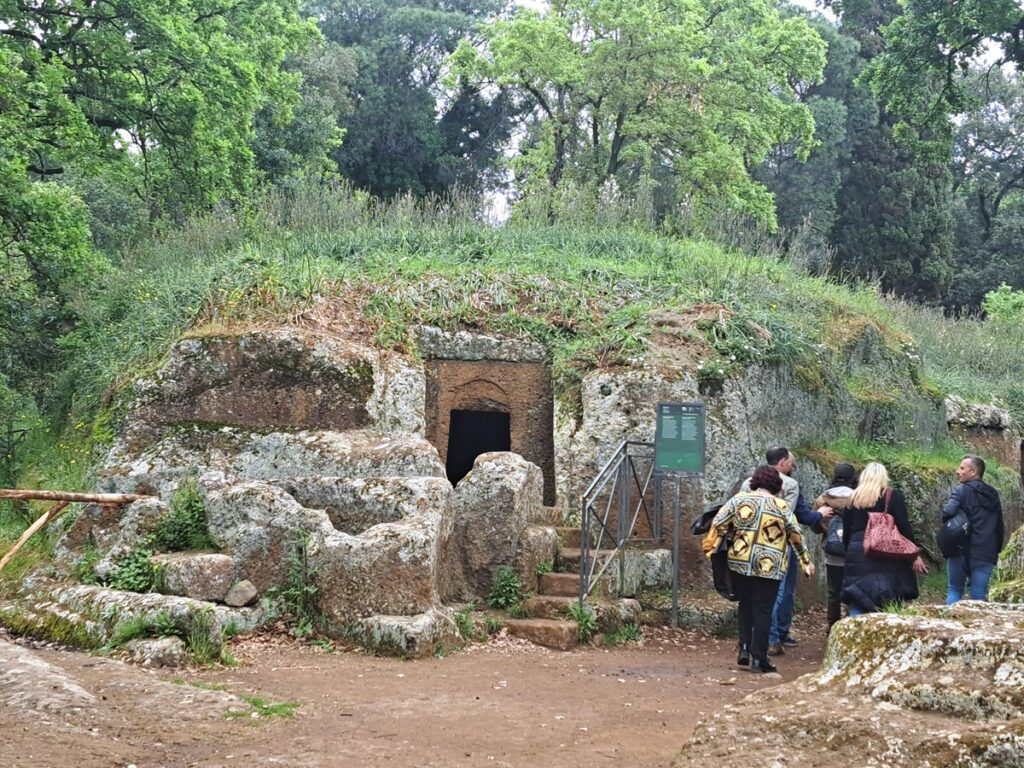
A mound tomb in the Banditaccia Necropolis
In the 7th and 6th centuries BC, the increase in wealth in Southern Etruria, due to the monopoly of the iron trade routes in the Mediterranean, encouraged wealthy families to build more prestigious funerary monuments, the mounds.
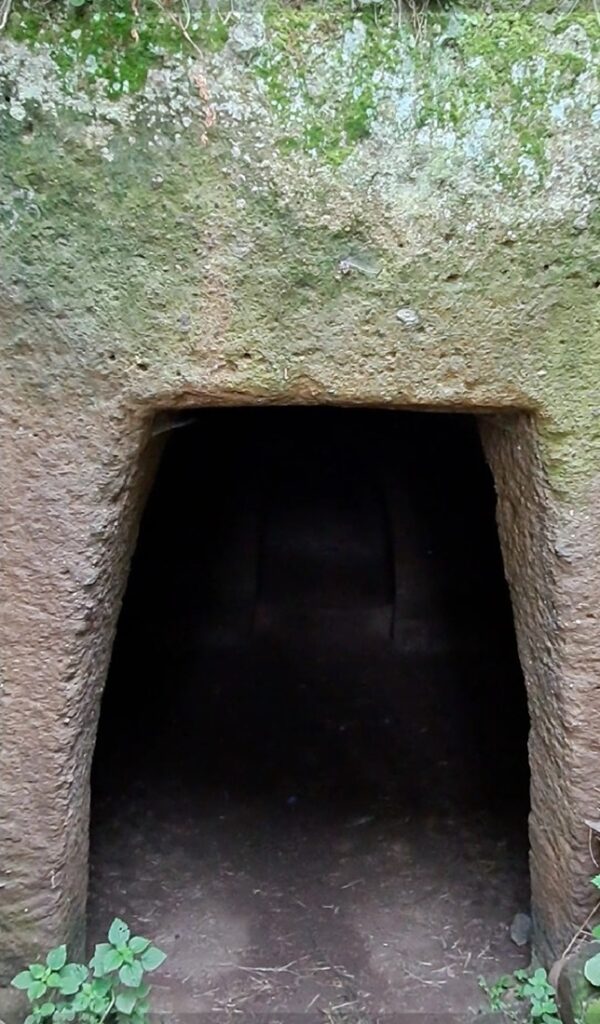
The Tomb of the Hut
Members of a single family were buried in a private mound, such as the Tomb of the Hut, dating back to the 7th century BC. Two deceased people were found in the burial chamber, having the process of cremation fallen into disuse among the aristocrats.
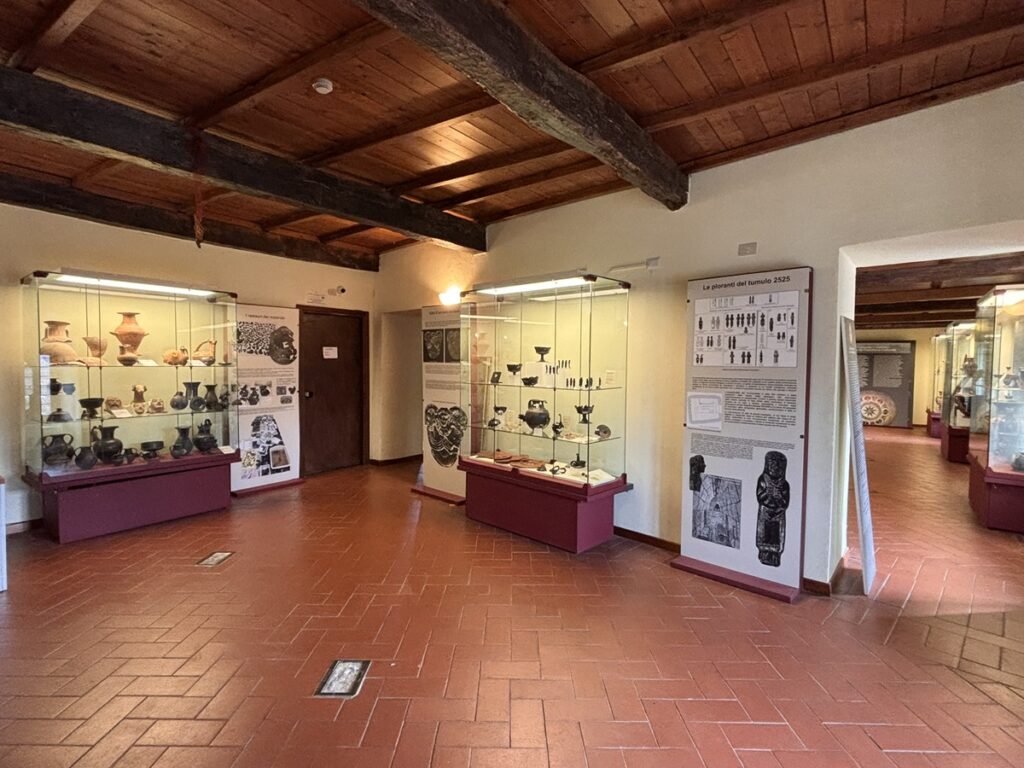
The Cerite National Archaeological Museum
For the Etruscans, the tomb was not the final destination; they continued to exist in the afterlife in an eternal bliss. The first room housed everyday items, to be used in ceremonies, such as the banquet, when the deceased reunited with their ancestors. The second room, the actual burial chamber, contained personal objects, such as several amulets, now displayed in the Cerite National Archaeological Museum, the travel kit for the journey from the tomb to the afterlife. The mid-sixth century BC Tomb of the Greek Vases belongs to the same gens as the Tomb of the Hut. By that time, the burial mounds of the aristocrats were no longer simple huts, but complex masonry buildings. The same kind of structure began to extend to private homes respecting the same floor plan: the pantry room, the banquet hall and, beyond the doors, the master bedroom.
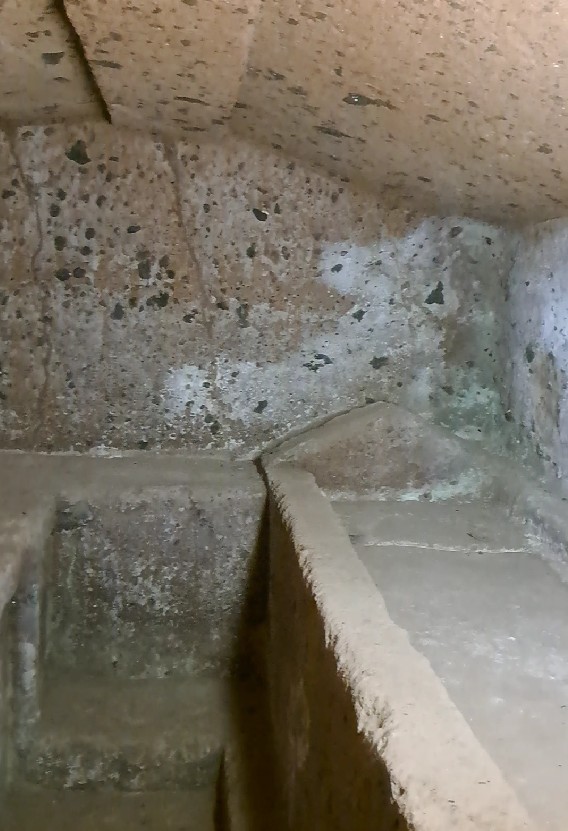
A female burial bed in a mound tomb
The stone beds, where the bodies were laid to rest, reproduced the kline, the small sofa on which the Etruscans were used to eat in a semi-reclined position. Women burial beds were embellished with a triangular sarcophagus-shaped tympanum, while the ones intended for men were very simple.
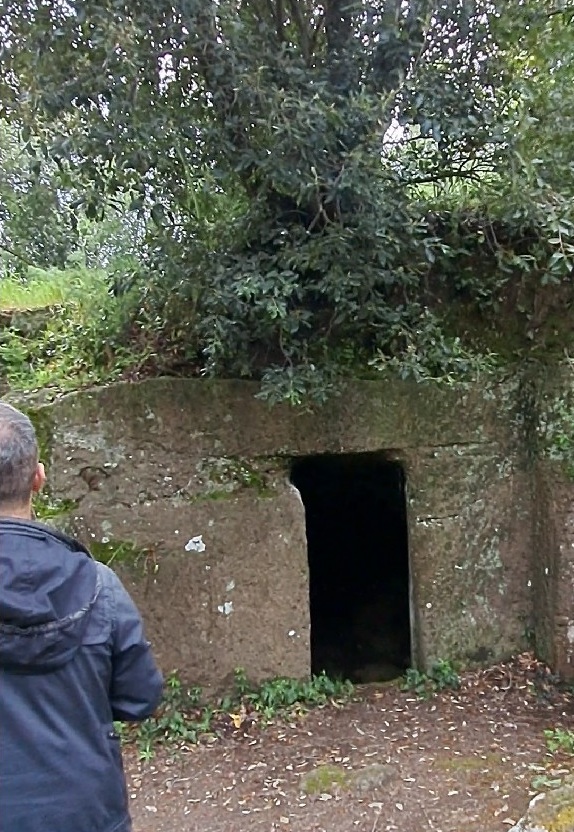
The picnic area at the entrance to the sixth-century BC burial mounds
In the 6th century, the relatives visiting the tombs of their ancestors, used to set up a sort of picnic on the clearing in front of the mound entrance, in order to feel closer to them. The Tomb of the Cornice also features an innovation introduced in the 6th century, the Doric-style frame on the entrance doors to the burial chamber. As in all the tombs of the Necropolis, the decorations, painted directly onto the tuff walls, are now almost completely disappeared.
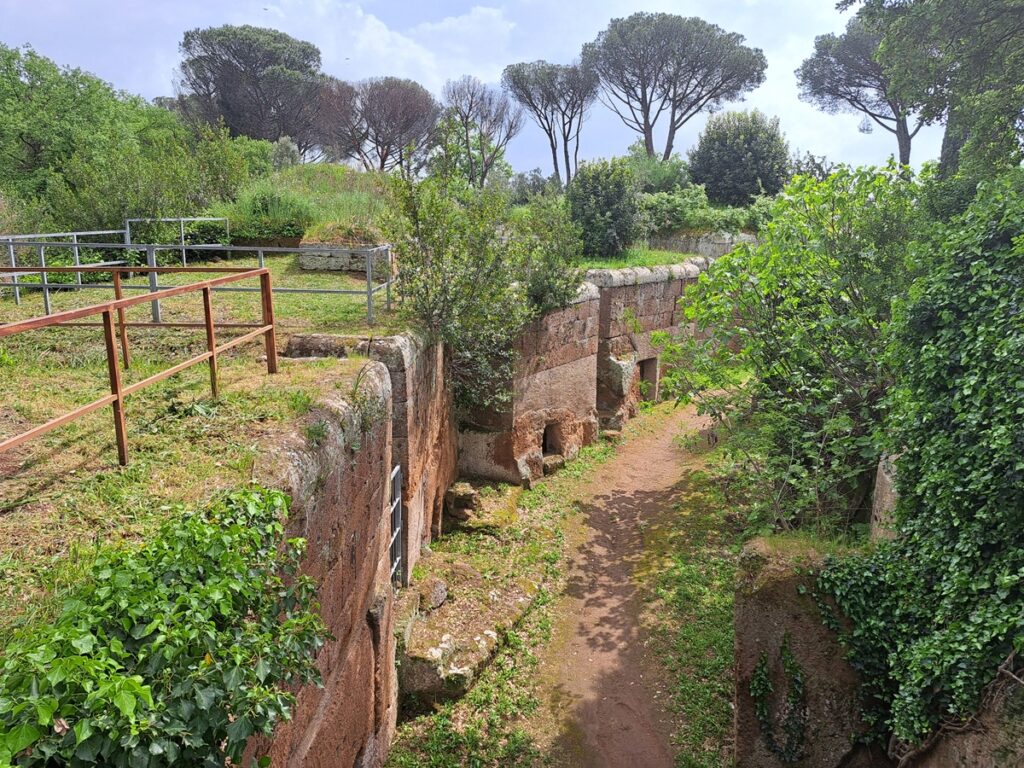
Cube tombs in the Banditaccia Necropolis
Between the 6th and 5th centuries BC, a new urban organization was favoured by the construction of cube tombs, multiple burials arranged one after another along parallel and perpendicular alleys, like in our modern cemeteries. The rocks were hollowed out, and the external cube-shaped covering set up using interlocking tuff blocks. The interiors partly preserve several frescoes depicting apotropaic animals, as in the case of the Tomb of the Lions.
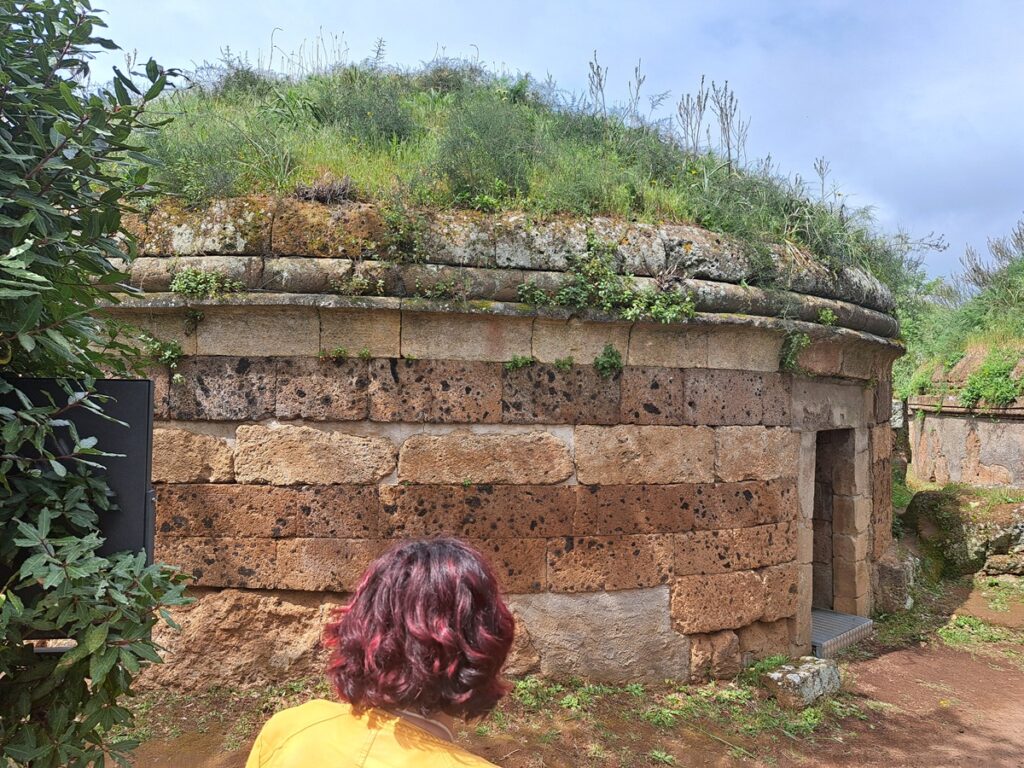
The Polychrome Tumulus
But dice tombs were built for the upper class of merchants, and therefore the aristocrats, with the aim of distinguishing themselves, continued to use the mounds throughout the 6th century BC. One extraordinary example is the Polychrome Tumulus, whose different colours are due to the three layers of tuff, Tarquinia macco stone from, and nenfro (or peperino).
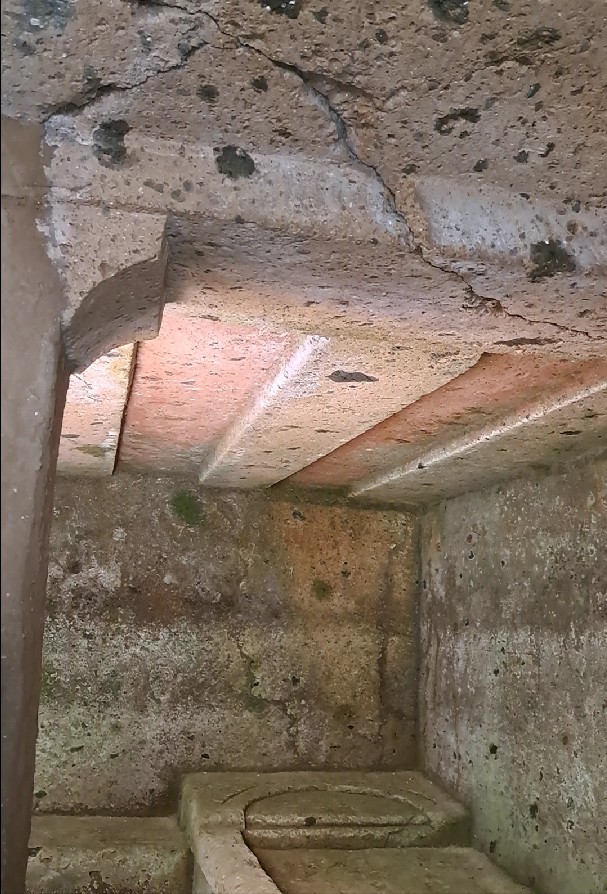
Traces of red decoration in the Polychrome Tumulus
Along the walls inside the mound, traces of red pigment decoration suggest the presence of a sort of attic in the Etruscan dwellings. In the Polychrome Tumulus, the men’s resting beds recall the tombs of the warriors, who took part in the great naval battle of the Sardinian Sea in 535 BC.
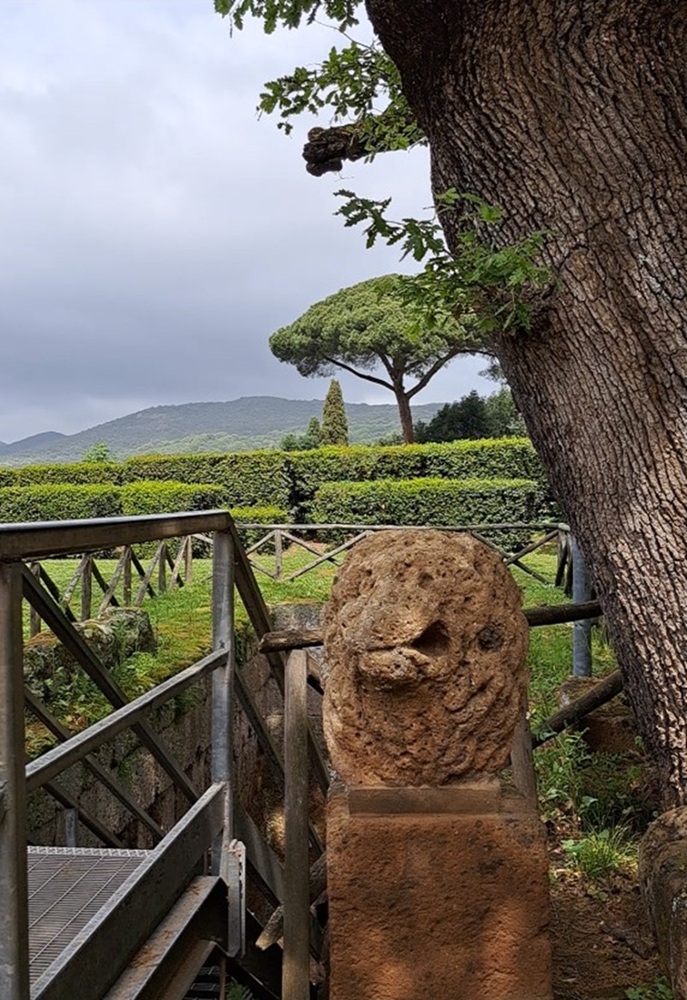
The entrance to the Tomb of the Reliefs
In the 4th and 3rd centuries BC, large single-chamber underground tombs were built to accommodate all family members. Among these, the Tomb of the Reliefs stands out. It hosted, in the upper thirteen niches and in the lower platform, the bodies of fifty-members of the Gens Matunas.
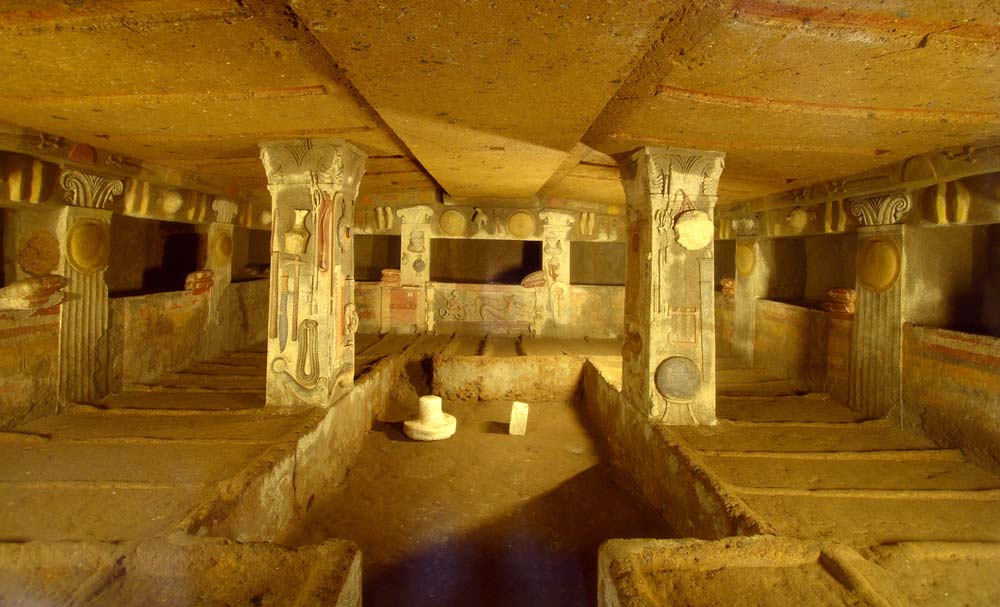
The Tomb of the Reliefs
The Tomb of the Reliefs is the only one in the Banditaccia Necropolis to preserve its original colours, still visitable on the three-dimensional stucco ornaments. The walls are decorated with reproductions of objects, tools, and weapons dating back to the late 4th century BC.
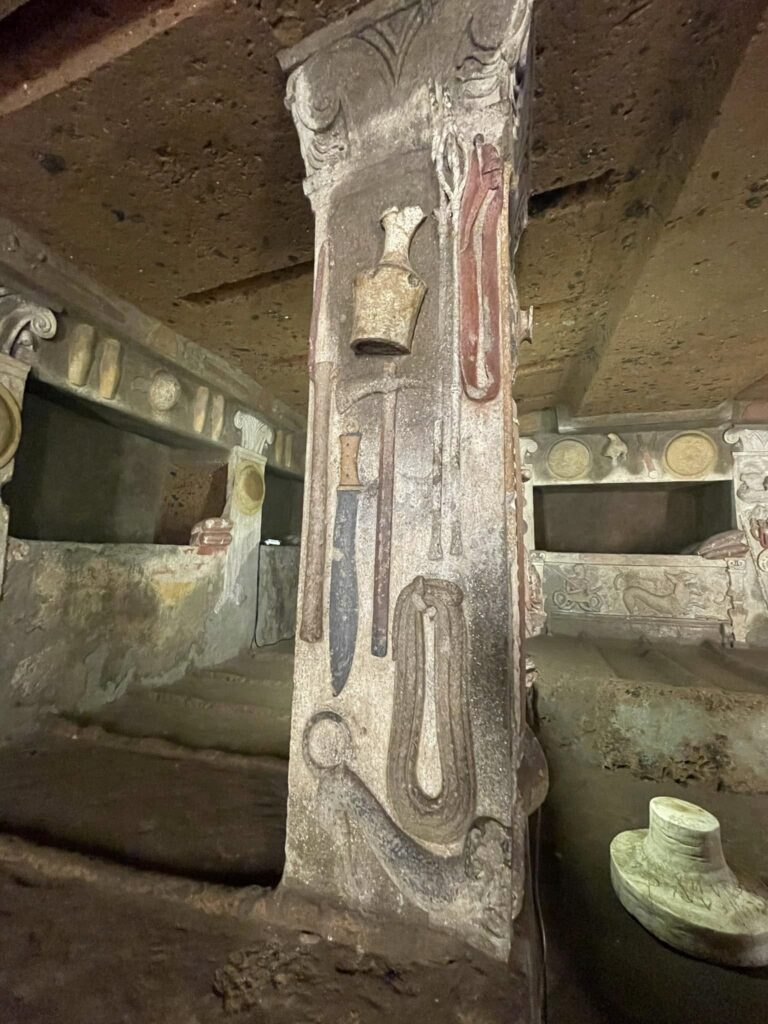
“The Male World” engraved on the pillar of the Tomb of the Reliefs – Facebook @necropolidellabanditaccia
Two pillars in the Tomb are decorated with reliefs depicting everyday objects used by men and women. Items related to craftmanship, agriculture, warfare, and political prestige symbolise the world of man.
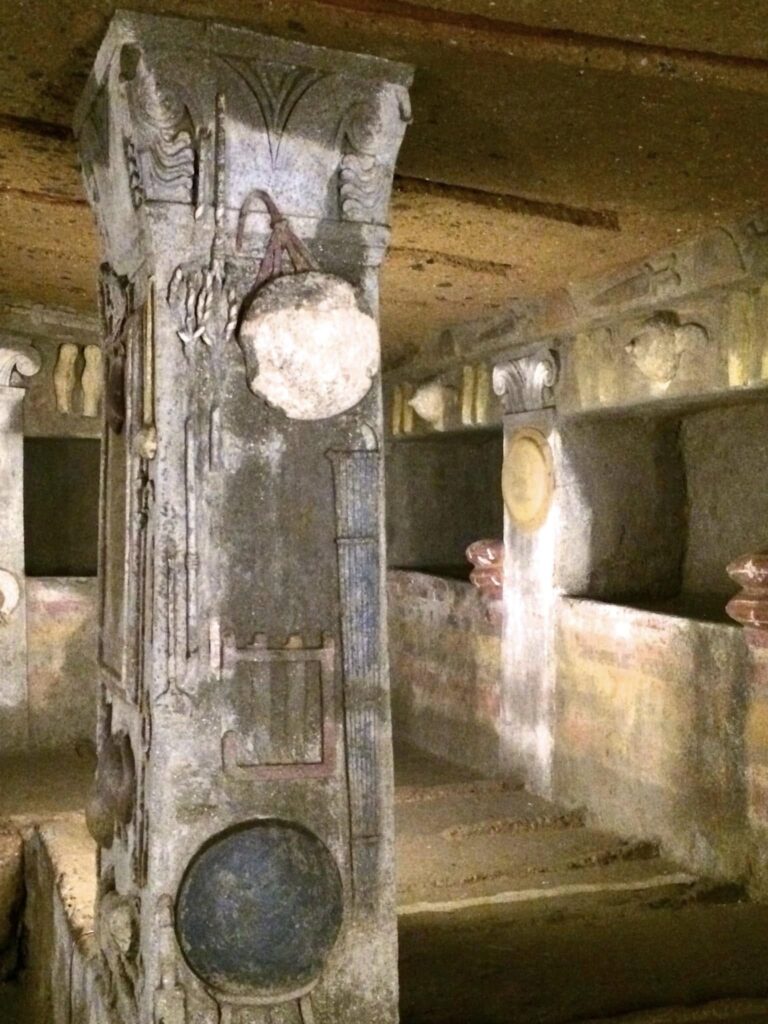
The “Female World” engraved on the pillar of the Tomb of the Reliefs – Facebook @necropolidellabanditaccia
The female world is represented by the tools used in the preparation of food and the breeding of animals, as well as by objects related to recreational activities, such as a tabula lusoria (a sort of chessboard, probably intended for a game of checkers).The engravings on the pillar testify Etruscan women to be emancipated and integrated into social life, unlike their much less evolved Roman and Greek female contemporaries.
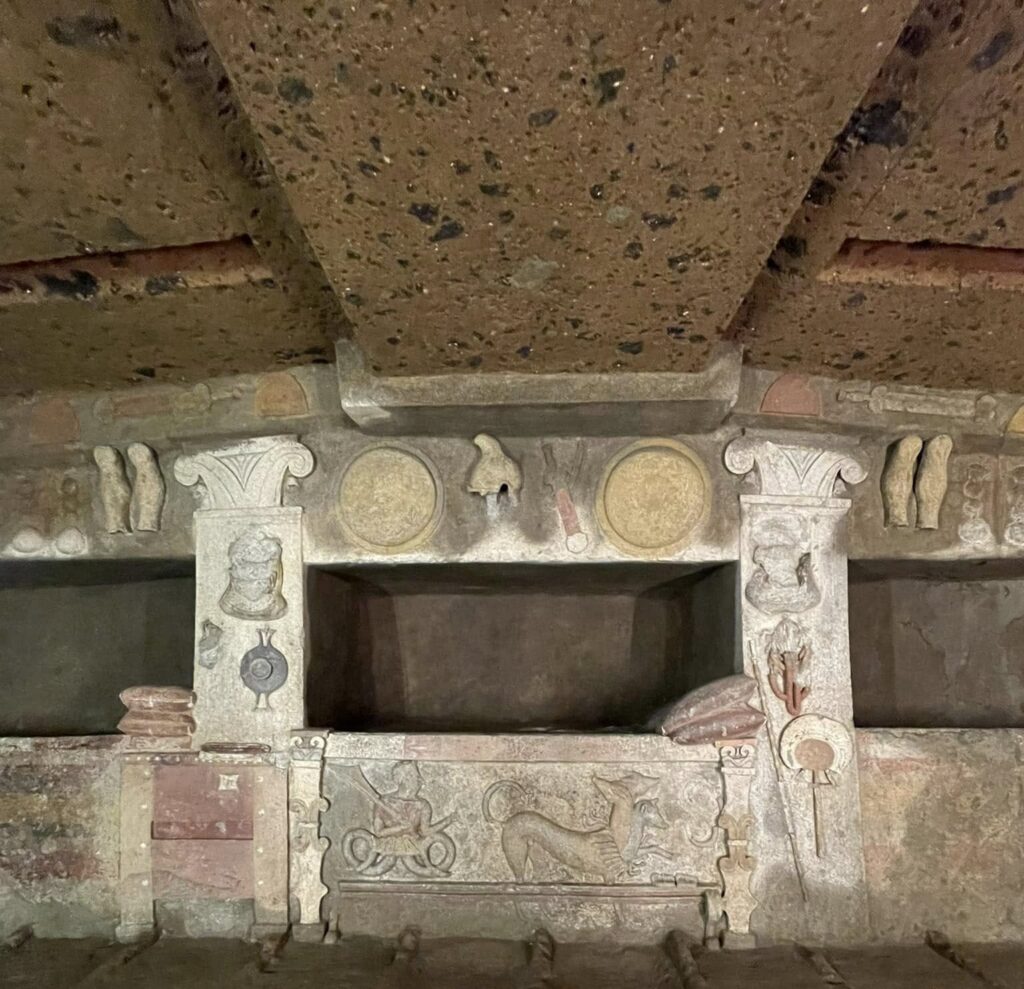
The Tomb of the Reliefs – Facebook @necropolidellabanditaccia
At the bottom of the tomb, demonic creatures, such as Scylla and Cerberus at the entrance to Hades, are represented. The Etruscans, in fact, began to conceive the afterlife as a dark place, when the Romans invaded their lands. In addition, the crisis due to the Roman invasion into the Etruscan towns introduced, in the 4th century, the practice of moving the decomposed bodies to an ossuary, so that the tombs could be reused.
The Banditaccia Necropolis is a veritable open-air time machine, where to experience centuries of history …. like an ancient Etruscan!