

The Garden of Ninfa, in Cisterna di Latina, is waiting for you with its extraordinary secular plants and trees from all over the world, bright flowers, and fleshy fruits. The scents of rose and lavender linger on the streams and then swoop down onto small waterfalls, tickled by the rustling of leaves.
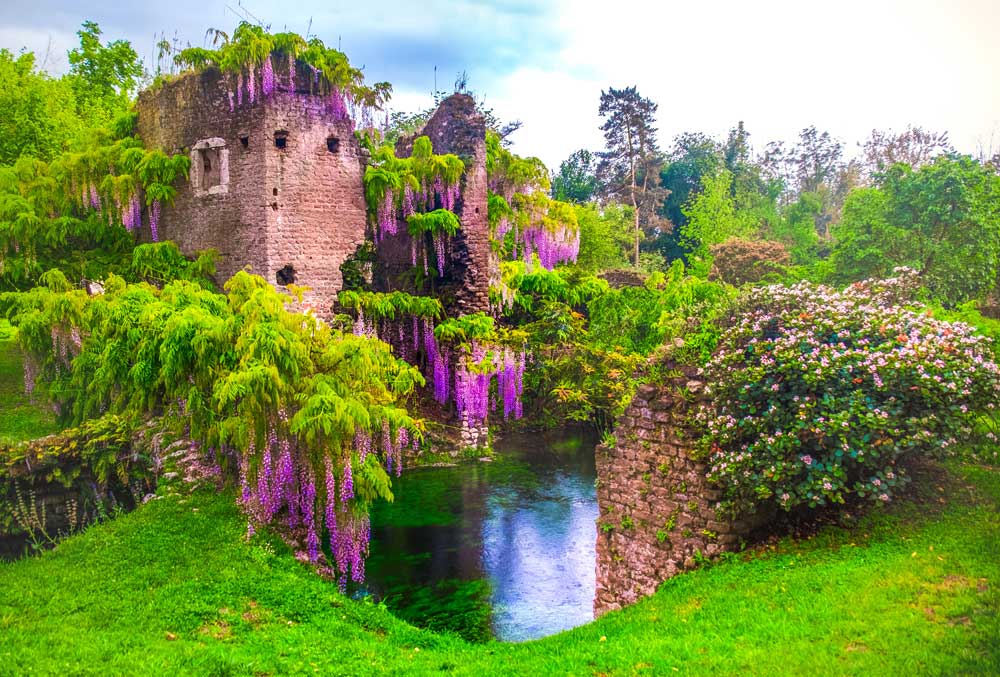
Like in a fairy tale, let us sink into a soft pillow and open an old, dusty book about three noblewomen in a garden!
Once upon a time…
…there was a place called Ninfa, donated, in the mid-eighth century, by the Emperor of Constantinople to Pope Zaccaria. Subsequently, it passed under the Counts of Tusculo and the Frangipane Family, to be finally destroyed by the Emperor Federico Barbarossa. After belonging to the Counts of Ceccano and the Annibaldi Family, it became a fiefdom of the Caetani. In 1382, the town was once again destroyed and abandoned.
Only at the end of the nineteenth century, Ninfa was repopulated, being Ada Constance Bootle Wilbraham and her husband Onorato Caetani, with their sons Gelasio and Roffredo, the first to return. A pioneer of mountaineering and lover of culture and travel, Ada created here an English garden in tune with her origins. But she was not new to her passion for nature.
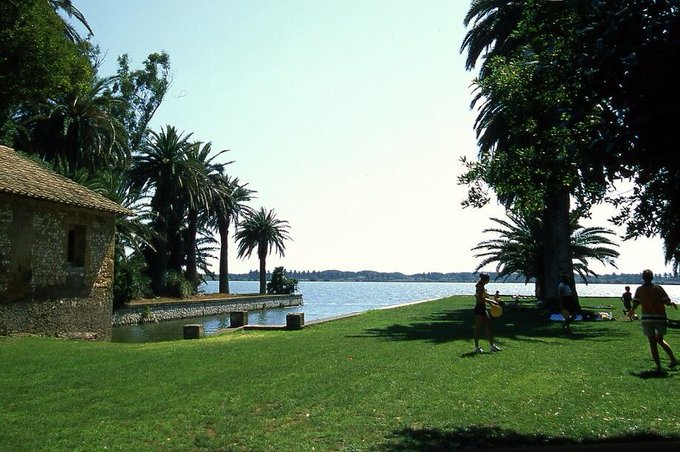
In 1867, in fact, after marrying Onorato, Duke of Sermoneta, she constructed an exotic botanical garden in the Caetani residence on Lake Fogliano, where she was living. Today, the avenue leading to Villa Folignano, in the “Parco Nazionale del Circeo”, bears the name of Ada Caetani in her memory.
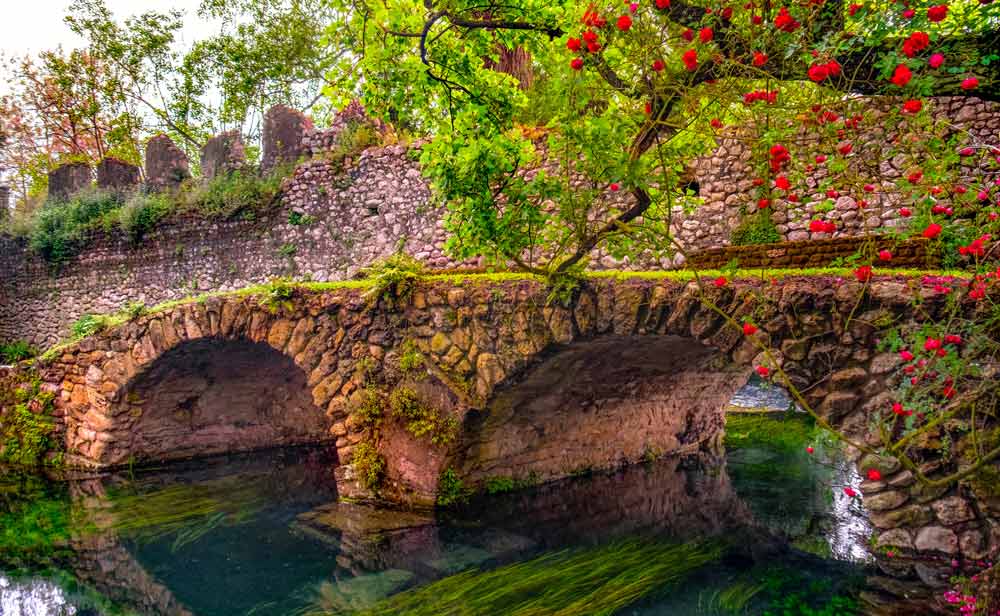
Only in 1921, did Ninfa fully recover thanks to Gelasio and, later, Roffredo and his wife Marguerite Chapin, of American origins. A journalist and art collector, she enriched the garden by planting new shrubs and roses, and, inspired by her passion for literature, opened it to artists and writers.
Almost one hundred years later, in 2018, this peaceful oasis entered the “System of Literary Parks”, having inspired great writers such as Virginia Woolf, Giuseppe Ungaretti, Alberto Moravia and Pier Paolo Pasolini. In the Literary Park named after Marguerite Chapin, visitors will be able to enjoy cultural walks, accompanied by professional play-actors quoting the verses of these famous artists.
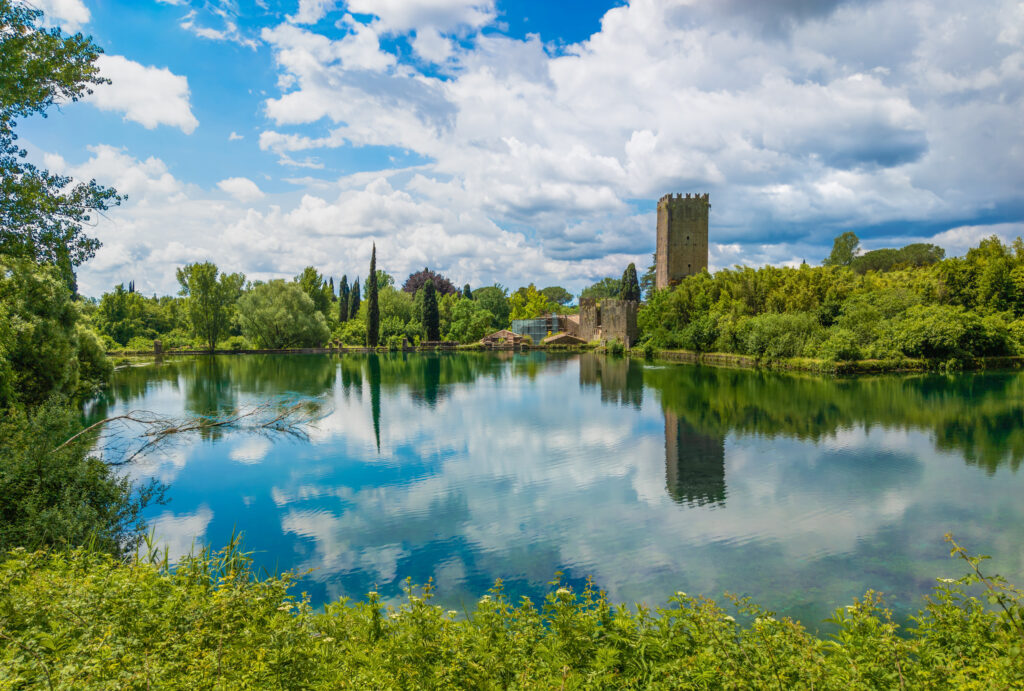
The Garden of Ninfa
Later, the Garden passed into the caring hands of Marguerite’s daughter, Lelia Caetani, the third woman who contributed to its current magnificence. A sensitive painter, without following any fashion trend, she succeeded in matching the colours of magnolias, prunus, climbing roses, and many other flowers and plants, while respecting their nature.
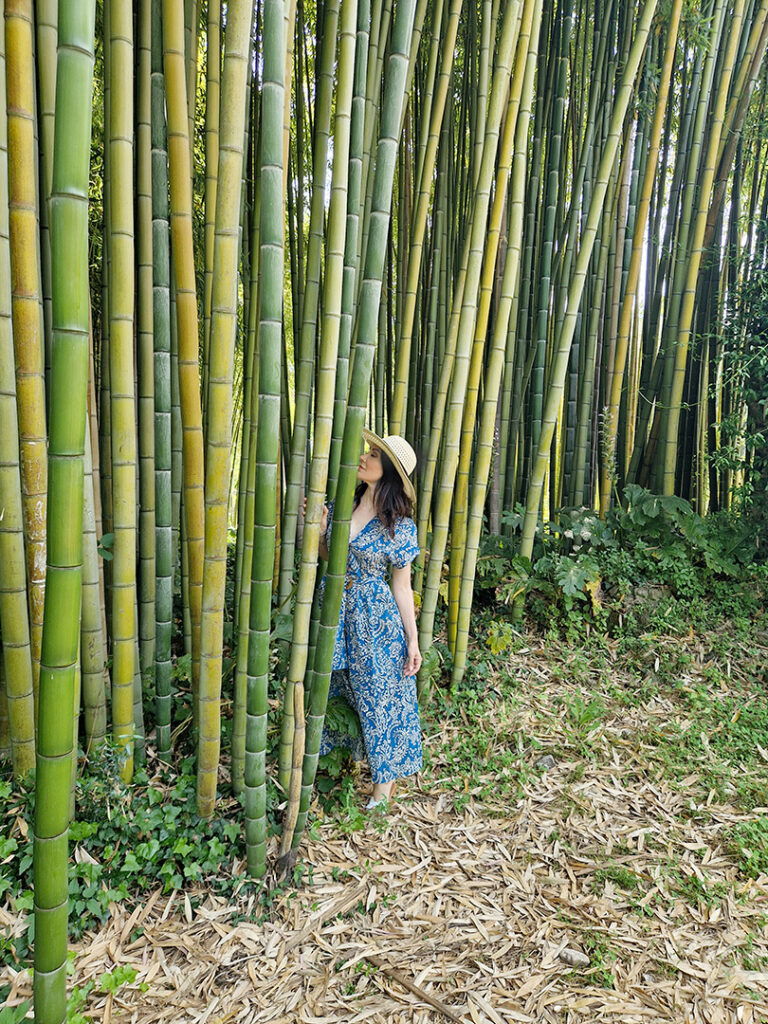
Bamboos in the Ninfa Garden
Lelia and her husband, Huben Howard, opened the Garden at first to a few admirers, and then to a wider public. In 1972, they established the “Fondazione Caetani”, which still manages the Castle of Sermoneta, and the Garden and Ruins of Ninfa. A fragrant blanket of a thousand colours was created, between Cisterna di Latina and Sermoneta, including the remains of a medieval village (a square tower, a castle, defensive walls, a town hall, churches, and houses), which rose from a preexisting swamp. Today, the magic Garden of Ninfa hosts a river, a lake, a few streams, and a varied fauna.
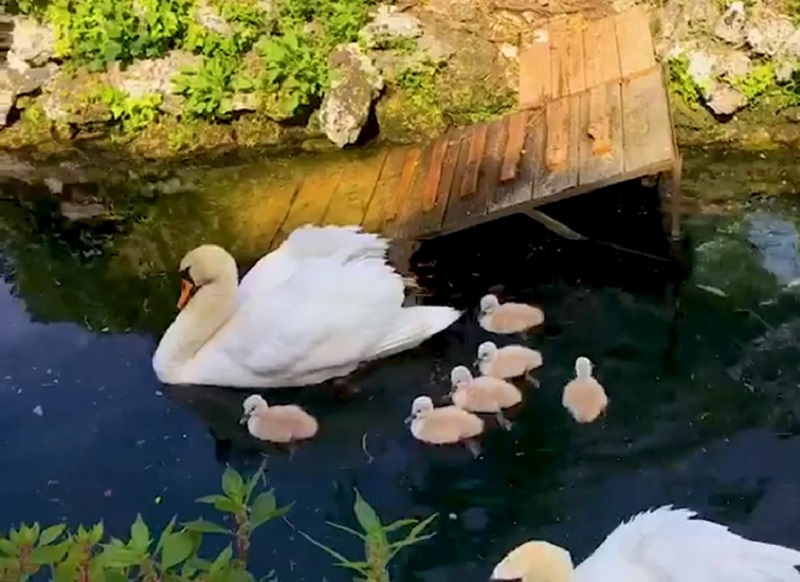
Six swans on the ponds of Ninfa Garden
In 1976, a WWF oasis was established inside the Garden, in order to preserve its biodiversity and environmental balance. A Regional Natural Monument since 2000, this enchanted eight-hectare paradise hosts about 1,300 flowers and plants from all over the world: aquatic irises, nineteen varieties of deciduous magnolias, birches, Japanese maples, and ornamental cherry trees.
The Garden of Ninfa is visitable until November 1, 2025, upon reservation according to the annual calendar, and accessible to visitors with mobility difficulties. Extraordinary events are organized here, included visits to the Caetani Castle of Sermoneta and the prisons.
Close your eyes and enjoy the sweet, romantic song of nature!