

Whether you are a tourist or a local, you will probably answer “Of course!”, but we will show you a couple of little-known places near the Spanish Steps, a great UNESCO World Heritage site in the Eternal City.
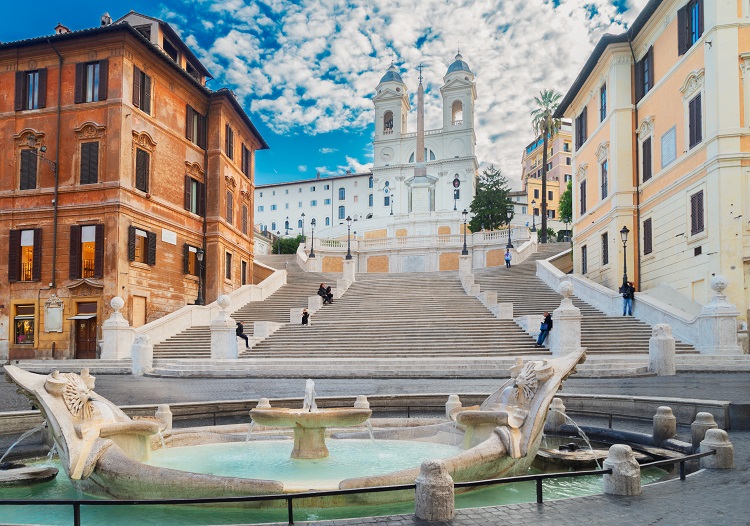
The Spanish Steps owe their name to the Spanish Embassy at the Holy See in Palazzo Monaldeschi. The 136-step staircase was commissioned for the Jubilee of 1725 by Pope Benedict XIII, to connect an area with a strong Spanish presence to the Church of the Santissima Trinità dei Monti, frequented by the French.
Facebook @InvidioLuigiPalumbo
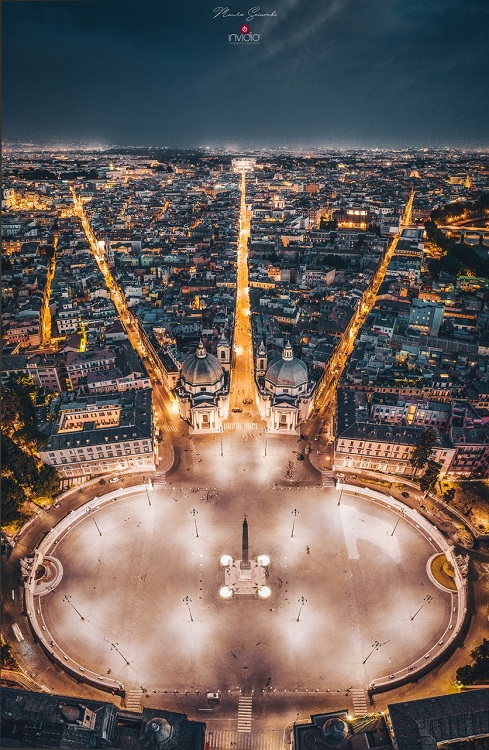
The extraordinary terrace overlooks the Baroque Barcaccia Fountain, by Pietro and Gian Lorenzo Bernini, and via del Babuino, which, along with via del Corso and via di Ripetta, forms the famous Trident connecting piazza del Popolo to the district of Campo Marzio.
Facebook @vincenzo.perrotta.5
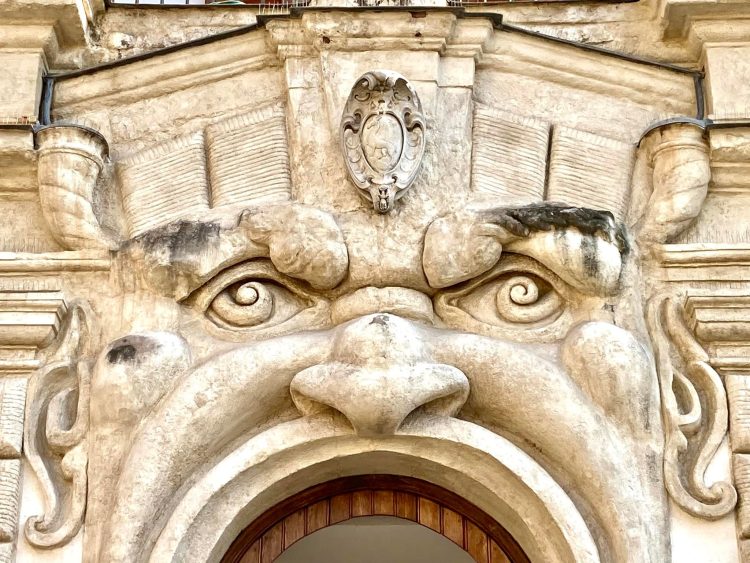
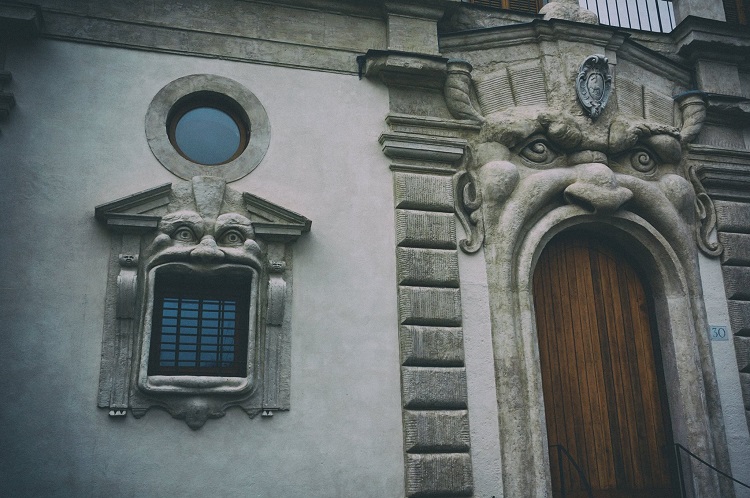
By the Church of Trinità dei Monti, in via Gregoriana 30, stands Palazzetto Zuccari, known as the Monsters House, inspired by the surreal Sacred Wood of Bomarzo. This example of Mannerist architecture features doors and windows shaped like monsters with enormous jaws, wide-open eyes, furrowed brows, and a large, wrinkled nose. Their perturbing looks impressed the visitors of that time, and, 300 years later, even Gabriele D’Annunzio included the building in his novel “Il Piacere”
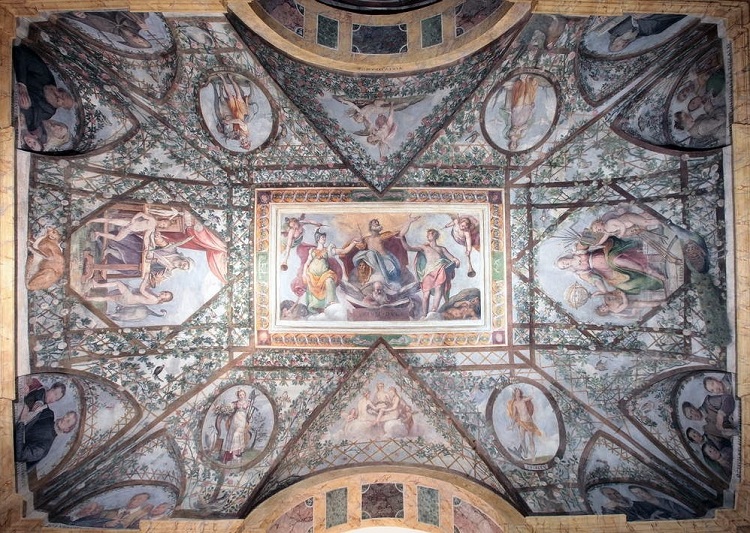
“Ercole al bivio tra il vizio e la virtù” www.ceromaeroma.blogspot.com
The Palazzetto was the residence of Federico Zuccari, the painter and art critic who, fascinated by the Monters Park in Bomarzo, conceived, in 1592, this extravagant building. Once entered, the intimidated visitors were enraptured from the enchanting garden, now lost, and the magnificent frescoes, painted by Zuccari himself, such as “Ercole al bivio tra il vizio e la virtù”.
Facebook @whenyouwonder
In this singular complex, Zuccari created a cultural salon on the theme of art, his great passion. Over the next three centuries, the Palazzetto was modified by several architects: in the mid-1700s, it was turned into an ecclesiastical school, and, in 1900, the German collector Henriette Hertz built in the garden a three-story house hosting the Biblioteca Hertziana.
Today, just as Zuccari wished, the library mainly contains art history books, and the addition of modern art spaces enhance the place shocking effect. The Palazzetto Zuccari can be visited free of charge only upon reservation.
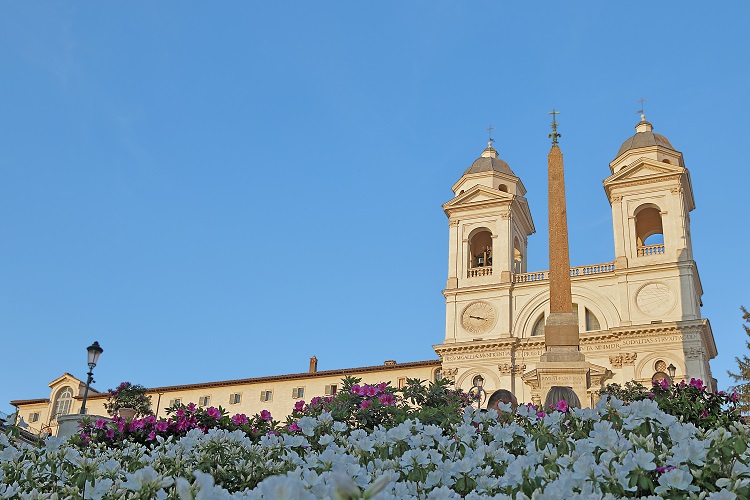
Santissima Trinità dei Monti, known as the Roman Church of the French Kings, was built in Gothic style between 1502 and 1519 and is one of the five French-speaking churches in Rome, along with San Luigi dei Francesi, San Nicola dei Lorenesi, Sant’Ivo dei Bretoni, and Santi Claudio e Andrea dei Borgognoni. Its single nave was later flanked by a building topped with two symmetrical bell towers, designed by Giacomo della Porta and Carlo Maderno. The works continued throughout the sixteenth century until the consecration of the church in 1595.
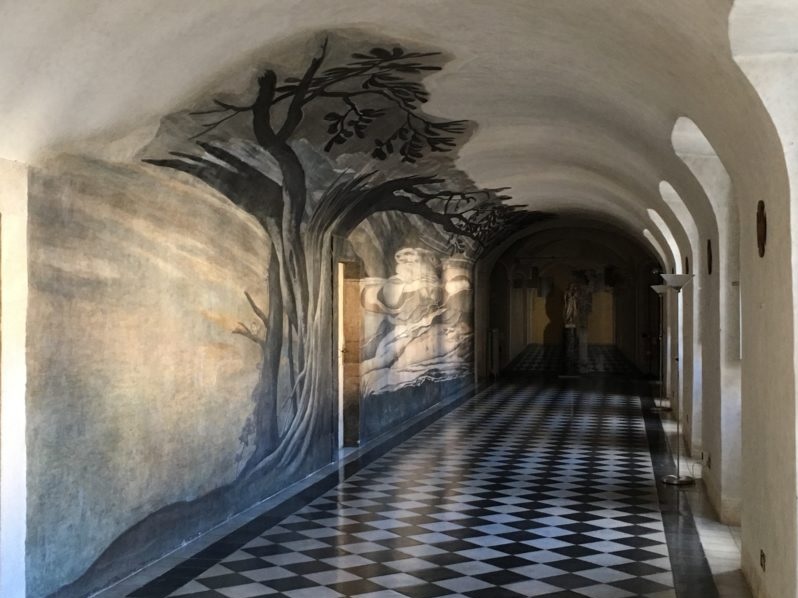
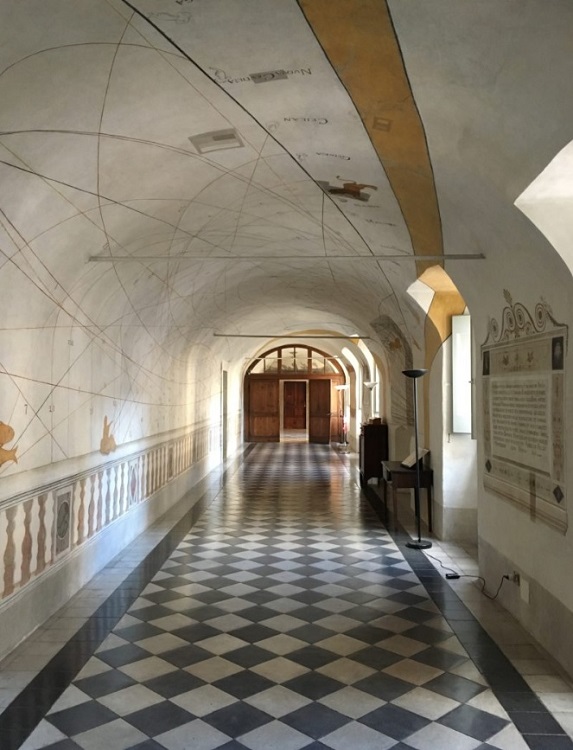
At the top of the famous Spanish Steps, we can admire frescoed treasures, the astrolabe and the anamorphoses. Next to the Church of the Santissima Trinità dei Monti, lies the Convento della Comunità del Sacro Cuore e della Fraternità Monastica di Gerusalemme, built between 1530 and 1570 by will of King Charles VIII of France for the French monks of the Order of Minims. The convent was founded by St. Francis of Paola, the Saint who miraculously crossed the Strait of Messina on his cloak. The cloister is adorned with portraits of the Saint and the King of France, while the refectory, was decorated by the Jesuit Andrea Pozzo in 1694. Along the corridor on the first floor, we will come across two curious frescoes in Early Renaissance technique by the Minim Fathers Emmanuel Maignan and Jean François Nicéron, the anamorphoses.
www.trinitadeimonti.net
Playing with perspective, they created optical effects that allow the subject of the works to be clearly seen only from a specific point. The best-preserved fresco, from 1642, depicts St Francis of Paola, while praying under an olive tree.
www.trinitadeimonti.net
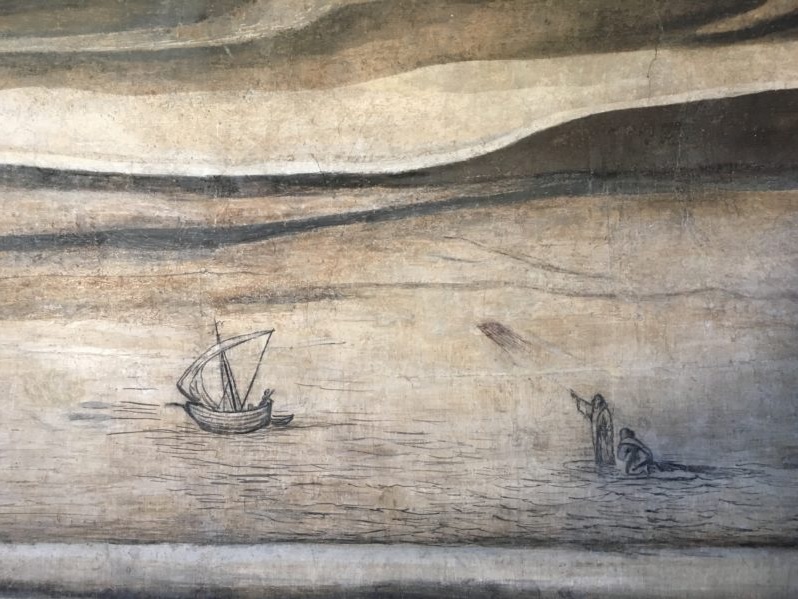
From a frontal perspective, we can spot a coastal landscape with a sailboat carrying St. Francis of Paola with a fellow friar, miraculously crossing the Strait of Messina.
www.trinitadeimonti.net
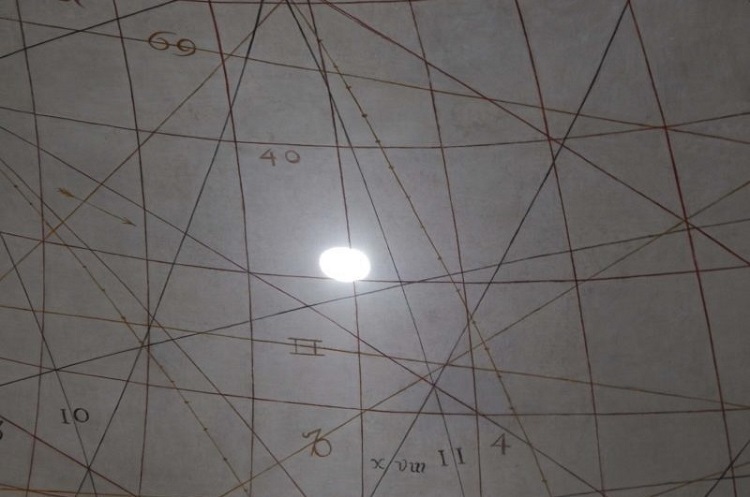
Between the two anamorphoses, we will marvel at the catoptric astrolabe, a sundial with a reflective quadrant created around 1640. A mirror and a cup of water placed on the window reflect the light on the walls of the entire corridor, touching the points where the different hours, zodiac signs, and sun coordinates are indicated.
www.trinitadeimonti.net
In addition, Father Maignan marked all the places in the world where noon occurs at the same time.
The Chapel of the Mater Admirabilis www.trinitadeimonti.net
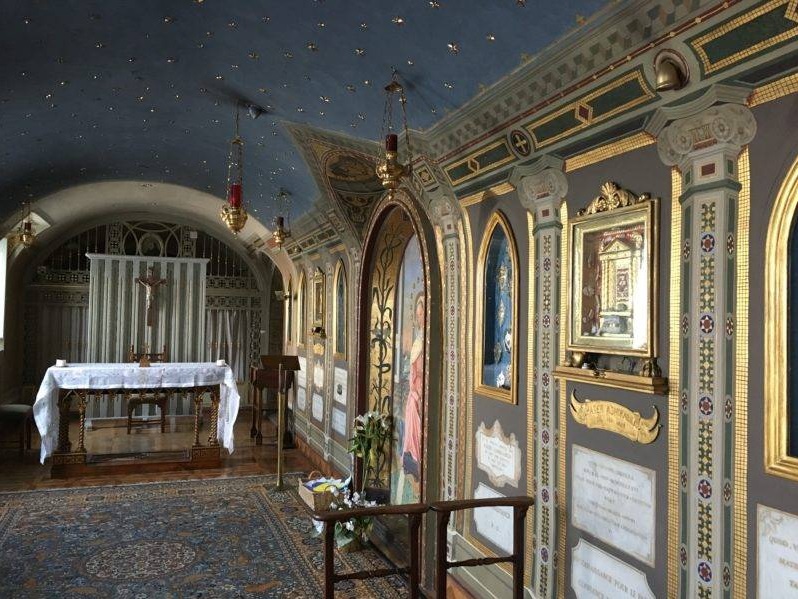
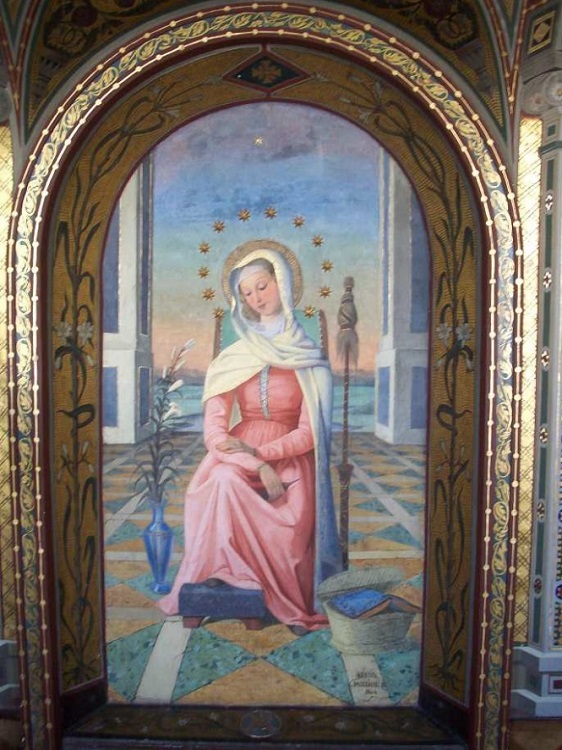
Among the seventeen Mannerist chapels in Rome, Mater Admirabilis, with its celestial atmosphere and impressive fresco, stands out.
www.trinitadeimonti.net
The latter was painted in 1844 by the young novice Pauline Perdreau in the cloister corridor of the convent, already inhabited by the Dame del Sacro Cuore, a congregation of teachers. The Madonna’s portrait was said to grant numerous graces, so much that the corridor was turned into a gorgeous chapel.
The same image was later frescoed in all the Sacred Heart Schools around the world. The Convent, the Cloister, and the Church of Trinità dei Monti are visitable on guided tours upon reservation.