

A revolutionary, lover of literature, “entrepreneur,” inventor … who is he? If you haven’t guessed yet, here are two other clues: small portable books and italic type. He is Aldo Manuzio, a native of Bassiano!
It is precisely in the Pontine province that the Museum of Writing dedicated to him has been created with the aim of highlighting the importance of Manuzio, in the context of Bassiano, and the dissemination and conservation of literary works with particular attention to history and to the evolution of writing instruments.
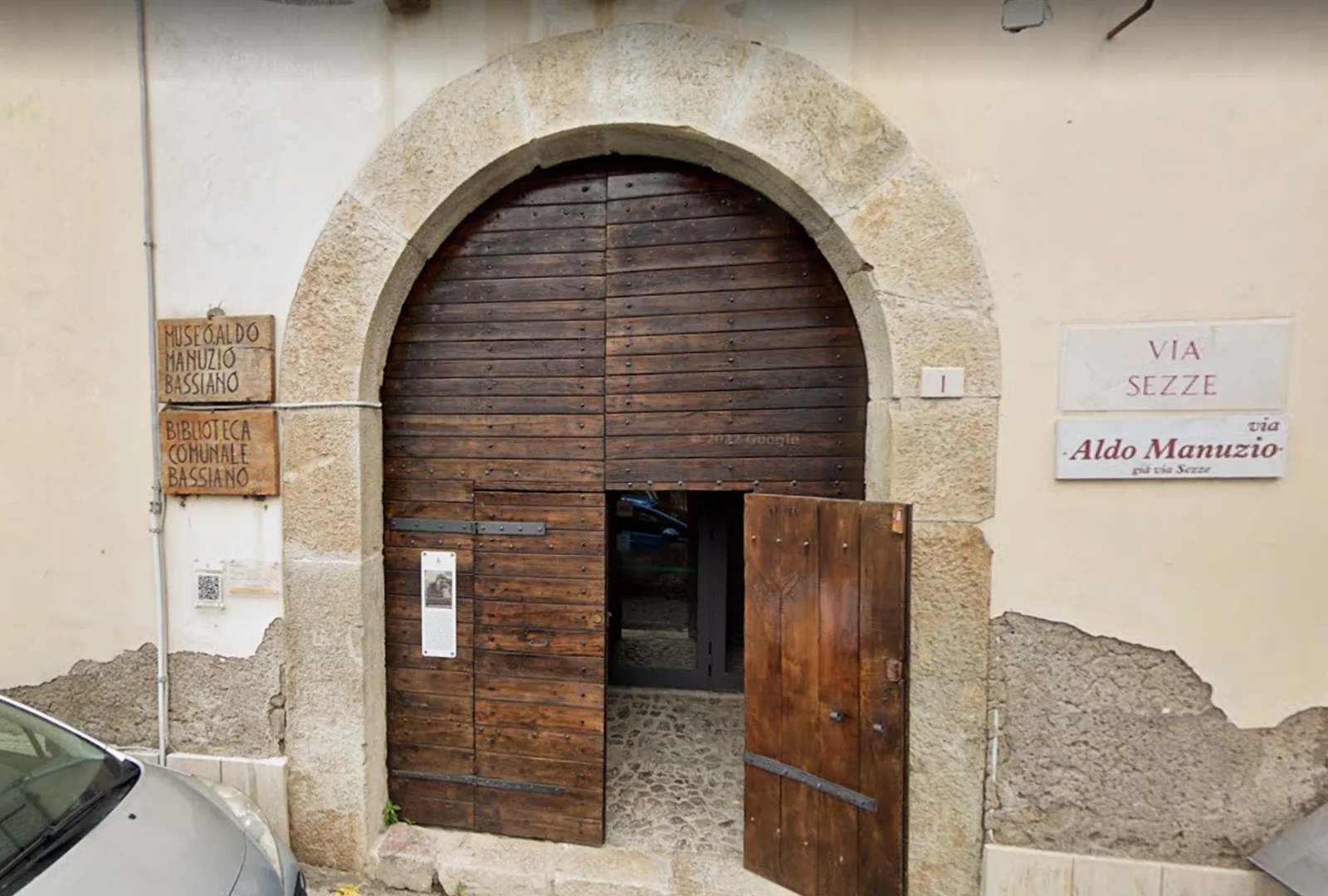
Museo delle Scritture Aldo Manuzio foto www.comune.bassiano.lt.it
We thus enter the cellars of the 16th-century Palazzo Caetani, seat of the Town Hall housing the museum. Some rooms, in times past, were used as a prison.
Graffiti, words and drawings traced by the prisoners are still visible on the walls.
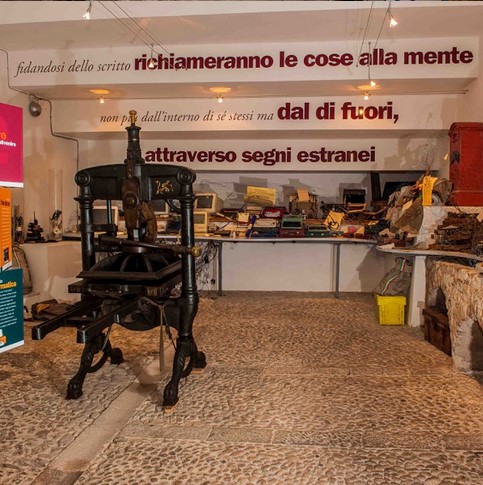
Museo delle Scritture Aldo Manuzio foto www.museoaldomanuzio.it
One room is dedicated to a multimedia laboratory; in another, an elementary school classroom of the Fascist period, where with ink, inkwell, a book and blackboard one learned to read and write, has been recreated.
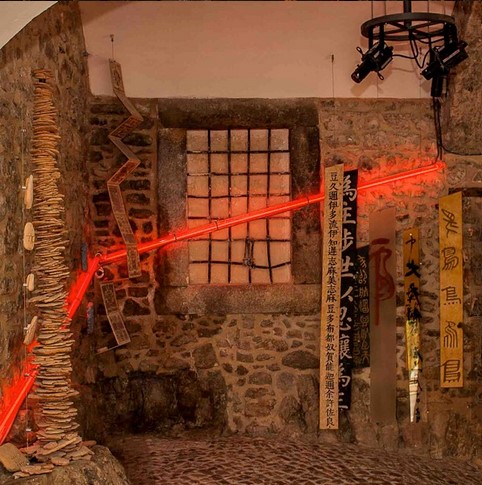
Museo delle Scritture Aldo Manuzio foto www.museoaldomanuzio.it
The museum offers a journey through the history of communication tools going from Sumerian clay tablets, to printing presses and then even to ex votos, typewriters, computers, tablets, Internet and mobile phones.
Among the curiosities, we find a mid-20th century Japanese instrument with hundreds of characters.
The most precious pieces are the “cinquecentine,” the works produced by Manuzio. Some bear the Bassianese printer’s symbol – an anchor and a dolphin – and the Latin motto “Festina lente” (make haste slowly).
The story of Manuzio is remembered in history books, because he launched his pocket-sized volumes in the early 1500s; they were more manageable and inexpensive, with numbered pages and indexes among other novelties.
The production of octavo editions, even in thousands of copies, spread rapidly throughout Europe.
The success was such that even then his works were “forged” and Manutius had to defend himself from counterfeiters.
The new cursive character – called “aldino” – referred to the letters of Greek manuscripts.
The Academy he founded in Venice was also called “Aldina.”
A worldwide tribute was paid to him centuries later when in 1985 the first PC software was called “Aldus PageMaker” by the American company of the same name.
With his invention of small, portable books, he exported culture all over the world, making it accessible to a large reading public thanks to reduced costs.
He was a revolutionary, a true industrialist of his time.
In 2016, the Ministry of Economy honoured him with a commemorative stamp.