

Autumn is the ideal season to explore the upside-down sites, the caves and the ancient subterranean passages of Lazio, natural monuments of rare beauty.
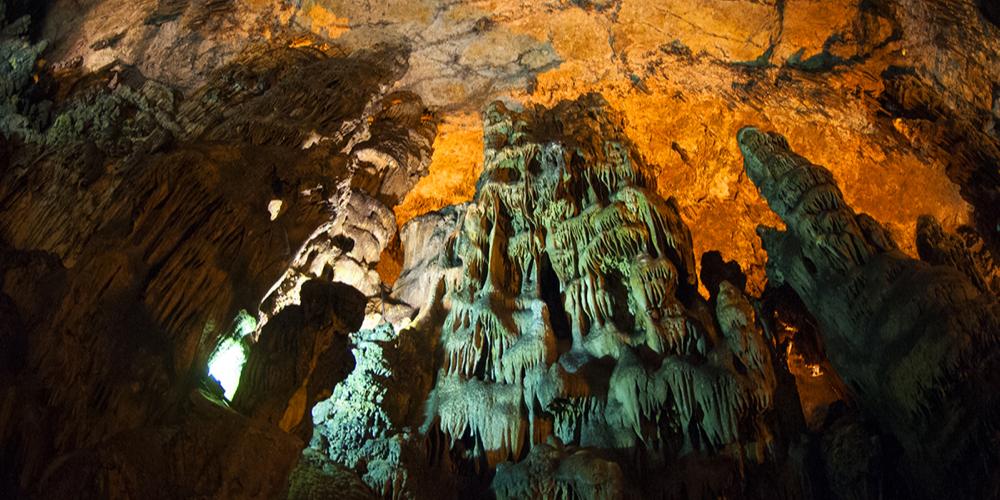
The Pastena Caves
The Pastena Caves, located in Ciociaria, within the Parco Naturale Regionale Monti Ausoni e Lago di Fondi, are totally accessible to visitors, thanks to the efforts of the Baron Carlo Franchetti and other explorers. In 1926, they brought to light numerous archaeological artifacts from the caves, already inhabited in prehistoric times.
The Pastena Caves lie just a few kilometres from the village of the same name, whose historic centre is enclosed by a 650-metre-long defensive wall, featuring 15 round and square towers. In addition, the village hosts the parents’ house of the beloved actor Nino Manfredi.
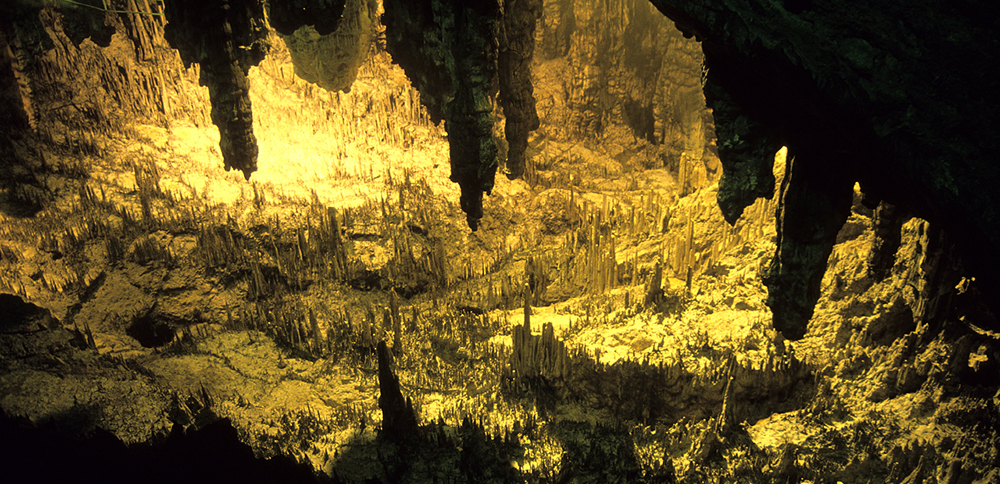
Collepardo
The Collepardo Caves, also lying in Ciociaria, at a short distance from the village of the same name, house majestic vaulted ceilings adorned with a variety of stalactites, included some human-shaped ones, so much that the site has earned the nickname of “Grotte dei Bambocci”.
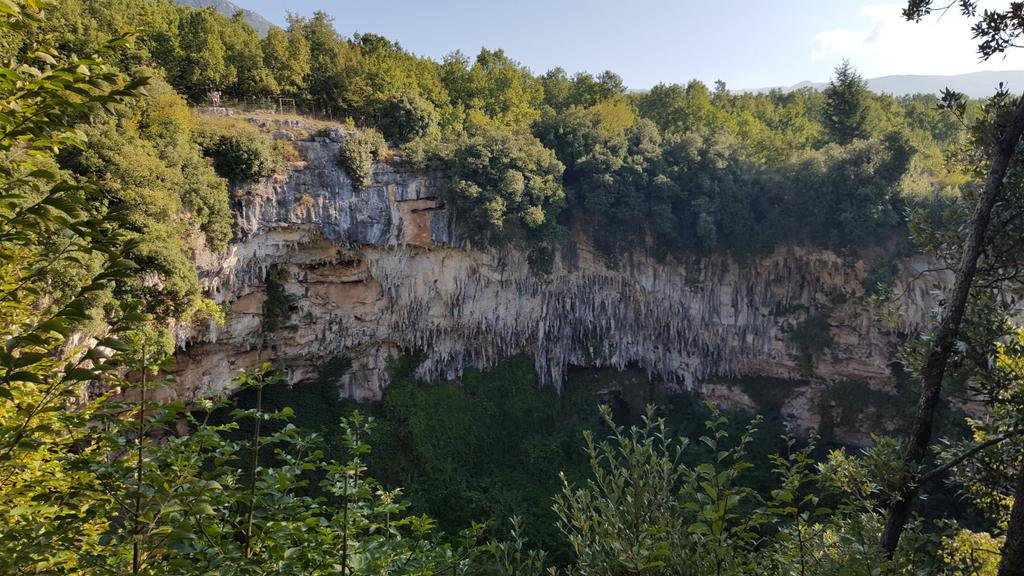
Pozzo d’Antullo @soulrunningMAG
Pozzo d’Antullo, a karst sinkhole formed by a collapsed roof of a cave, lies one kilometre from the historic centre of Collepardo. The many stalactites hanging from its walls take unique curved shapes. As if by magic, at the bottom of the chasm, lies a lush green carpet with imposing trees reaching 20 metres in height.
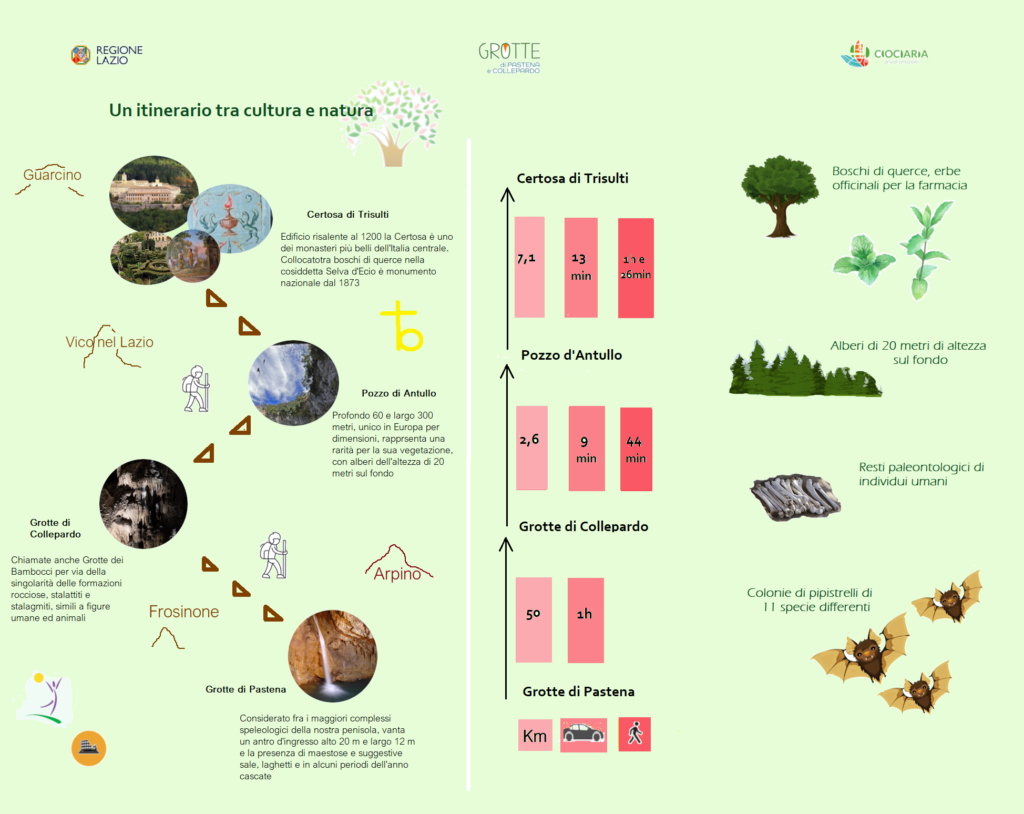
Here is a brief natural and cultural itinerary along with some useful information for visiting these subterranean wonders in the Lazio region.
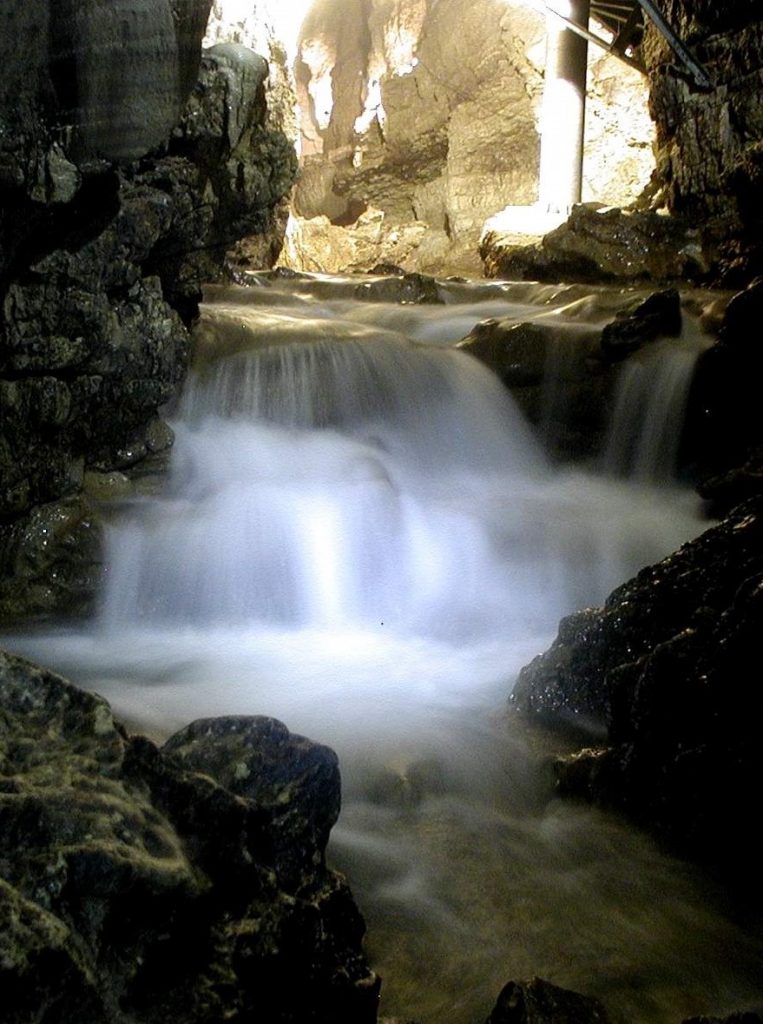
Falvaterra Caves and the Rio Obaco
The Falvaterra Caves and the Rio Obaco are located within the Ausoni Mountains. Before merging into the Sacco River, Rio Obaco flows through an uncontaminated park spanning 130 hectares. The Falvaterra Caves, a series of extraordinary tunnels and cavities, have been carved into the limestone rock of Monte Lamia by subterranean waters. Down here, in the bowels of the earth, also run impressive waterfalls.
The Falvaterra Caves stretch for two kilometres, offering routes of varying difficulty, included some accessible to visitors with disabilities. In the semi-darkness, we will encounter waterfalls and rapids, dripping snow-white stalactites, gorges, and lakes inhabited by subterranean creatures, such as the transparent Niphargus crustacean. A water-trekking worth to be experienced especially in Autumn! At certain times of the year, it is even possible to reach the Pastena Caves via a route of approximately 2.5 kilometres!
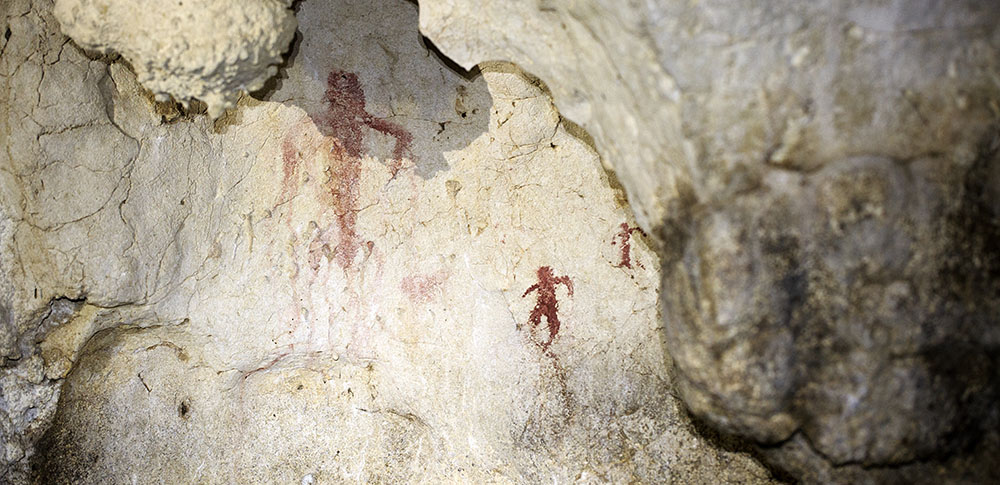
Grotte dell’Arco
The Grotte dell’Arco, located about three km from the historic centre of Bellegra, in the province of Rome, host various species of cave fauna and feature stalactites, stalagmites, sinkholes, and chambers. They stretch for over one km, with a vertical drop of 14 metres. But the highlight of the Grotte dell’Arco is the presence of prehistoric paintings dating back to the Neolithic Period, which portray anthropomorphic figures, to be admired near the entrance.
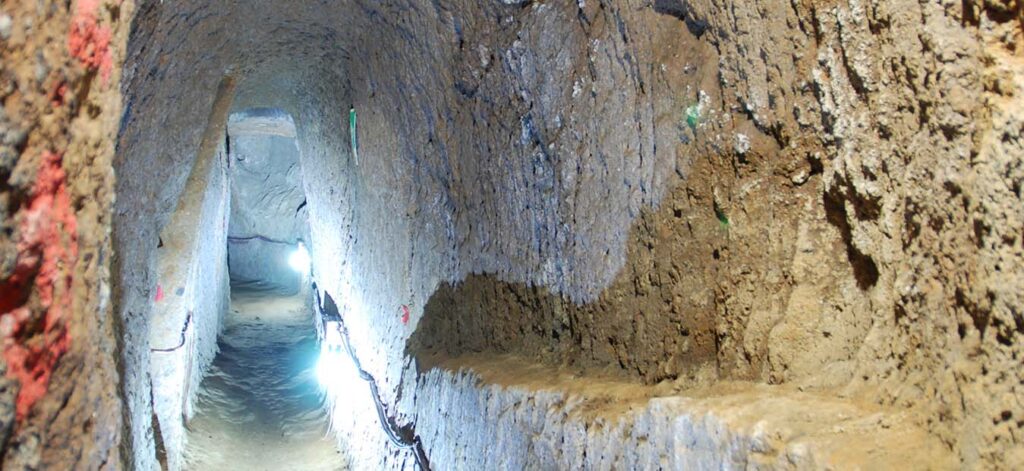
Orte Sotterranea – www.inagrofalisco.it
Orte Sotterranea, located in the Tuscia Viterbese, consists of a fascinating underground network of approximately two km developed over nearly 2,500 years. It houses a complex water supply system of tunnels, cisterns, and wells, a wastewater drainage, as well as storage rooms, cellars, stables, dovecotes, living quarters, craft workshops for the processing of wool and hemp, washhouses, fountains, summer dining areas (triclinia), fishponds, and pleasure gardens. Visitors can choose between a short or a full-length tour.
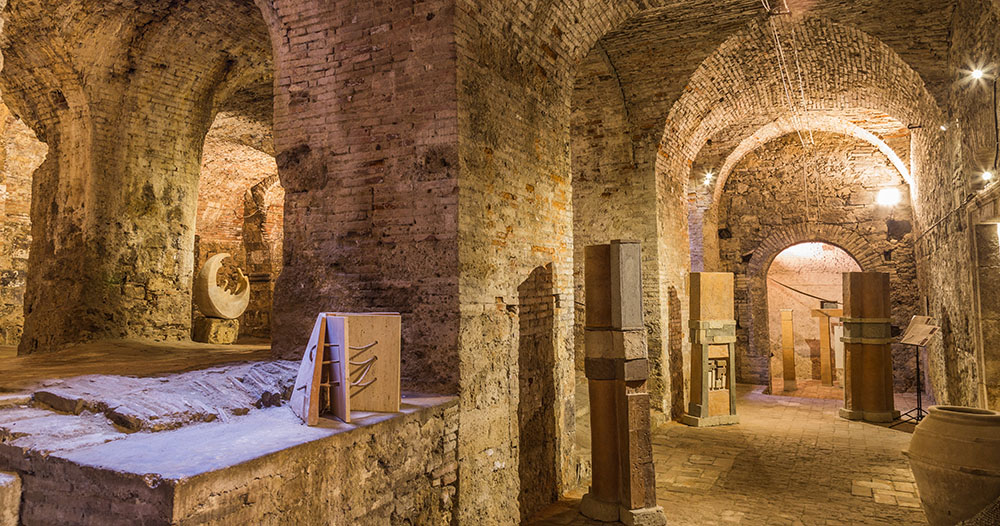
Rieti Sotterranea
Beneath the modern Via Roma in Rieti, run the remains of an ancient Roman aqueduct, built in the third century BC, which facilitated the access to the town from Via Salaria, the historic salt route.
Whether we are above ground or below, we will be able to discover a region of endless wonders!