

If Italy is the”land of saints, poets and navigators”, Lazio is the homeland of brigands, who were feared, but also acclaimed by the population and despised by nobles and policemen. Controversial personalities, sometimes indecipherable, who, escaping the law and evading its rules, redeemed their misdeeds in the name of a “social justice”, sometimes only apparent.
To follow their footsteps, even if fictitious, places, actions, life, the “Sentiero dei Briganti” in the Alta Tuscia Laziale was established in 2002, a journey to discover nature, traditions and places outside the traditional tourist routes. Every brigand was tied to this land and its villages, so the CAI section of Viterbo remapped the paths crossed by the brigands, in an overlapping of myth, history, fantasy and good food, which fortunately never fails.
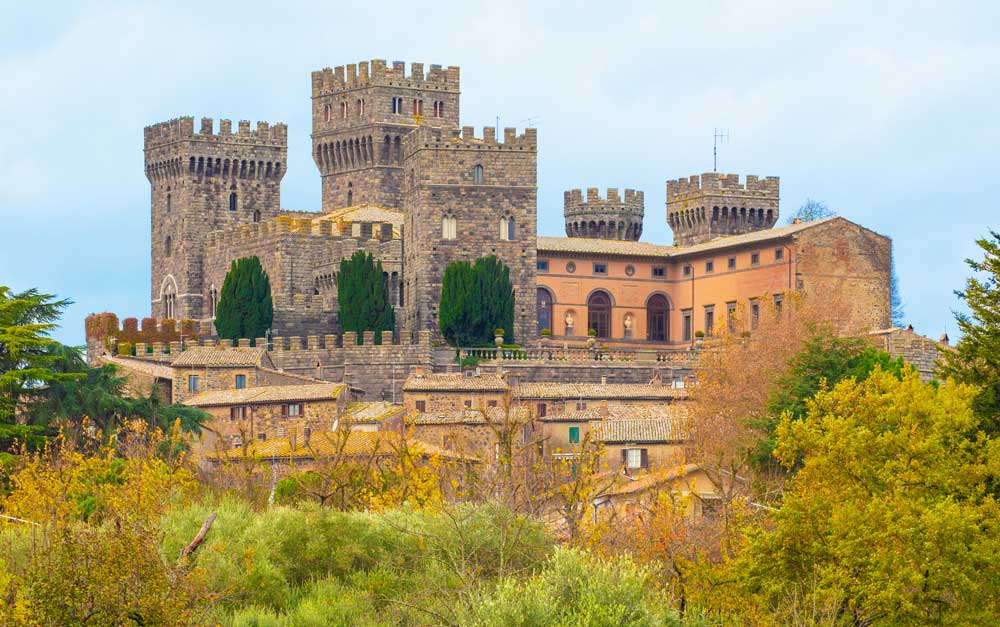
The first bandit was Luciano Fioravanti. Born in Acquapendente and nephew of art, he soon abandoned the family and took to the woods. The itinerary of his crimes includes his hometown, with the adjoining hamlets of Torre Alfina and Trevinano, the village of Proceno and the hamlet of Centeno, including the Monte Rufeno Nature Reserve. In this protected area we can admire the forest and vegetation and the Casa delle tradizioni contadine, a historic documentation centre about the environments and atmosphere of these sites before the second half of the twentieth century.
Last among the outlaws of the Tuscia area, Fortunato Ansuini, who did not enjoy a good reputation even among his own kind, because of the ferocity and brutality of his actions. Of Umbrian origin, he took refuge in Maremma after a daring escape from prison in Rome, harassing the locals in search of weapons, ammunition and money. After years of robberies and expoliations, nothing more was heard of him, lost in that blanket of woods that had always protected him during his years of hiding. Onano, Grotte di Castro, Gradoli and San Lorenzo are the inhabited villages crossed by this section of the path, suitably indicated by reference signs.
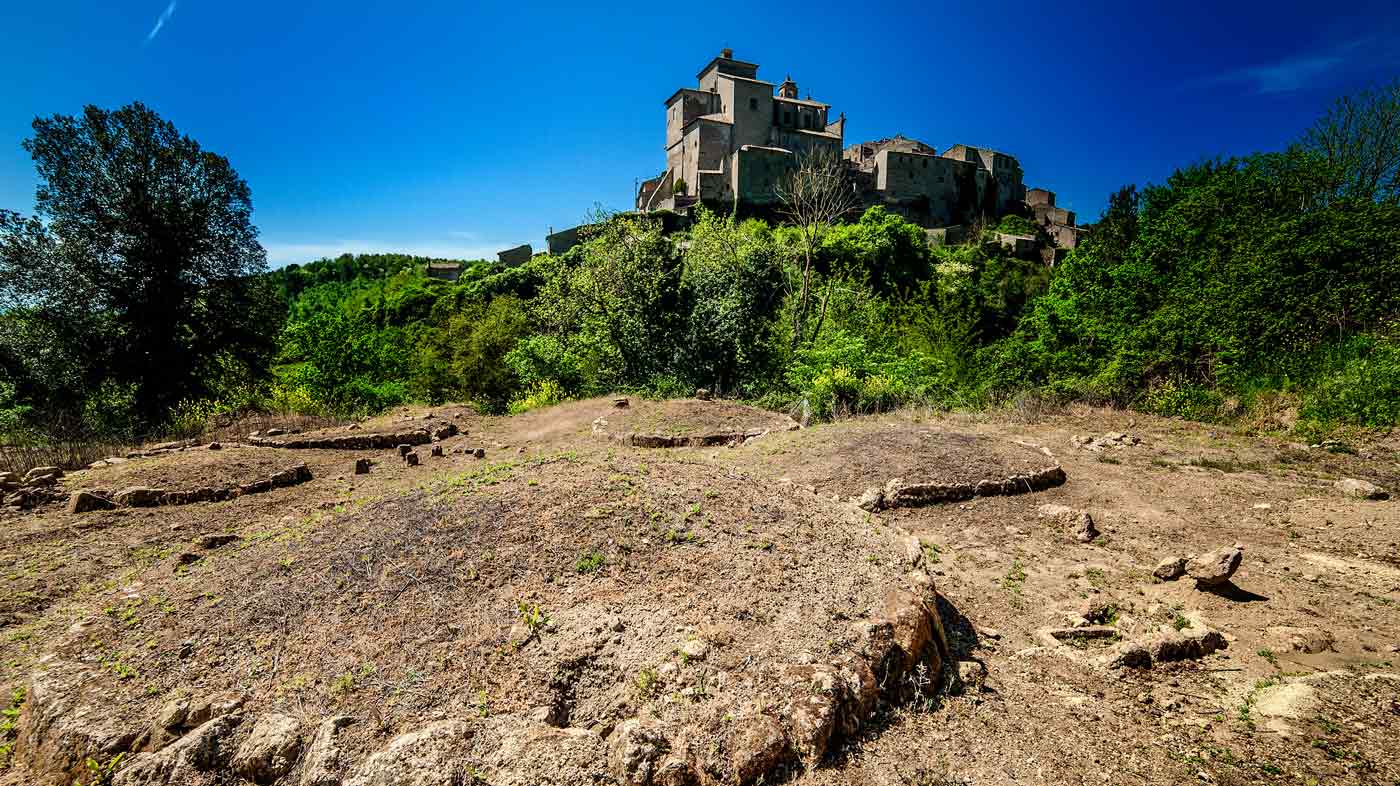
Grotte di Castro – Tombe etrusche
A fellow criminal of Fortunato Ansuini was Damiano Menichetti, a native of Tuscania, from where he soon left in search of fortune and then embraced a life of villainy and atrocities. After bulling the people in the the Viterbo area, he was arrested in the scrub of San Magno near Gradoli and perished in the penal prison of Civitavecchia. This is a path full of breathtaking naturalistic views, between the villages of Latera and Valentano. Here we find Lake Mezzano, a small silent lake, with a both wild and domestic fauna.
Of all the bandits, perhaps the best known is Domenico Tiburzi di Cellere. Coming from a very poor family, like most of his fellows, he stood out for his honesty and code of honor which required stealing from the rich to give to the poor , to oppose gratuitous violence, to be faithful to friends, to respect the nobles and lastly to oppose the killing of the carabinieri, considered victims of the system. The mystery still hovers over his death and burial today, there exists one only photo that portrays him standing, even if already dead, dressed to the nines. In the near future, his itineraries including Farnese, Ischia di Castro, Cellere and Canino, will be updaten and make usable.
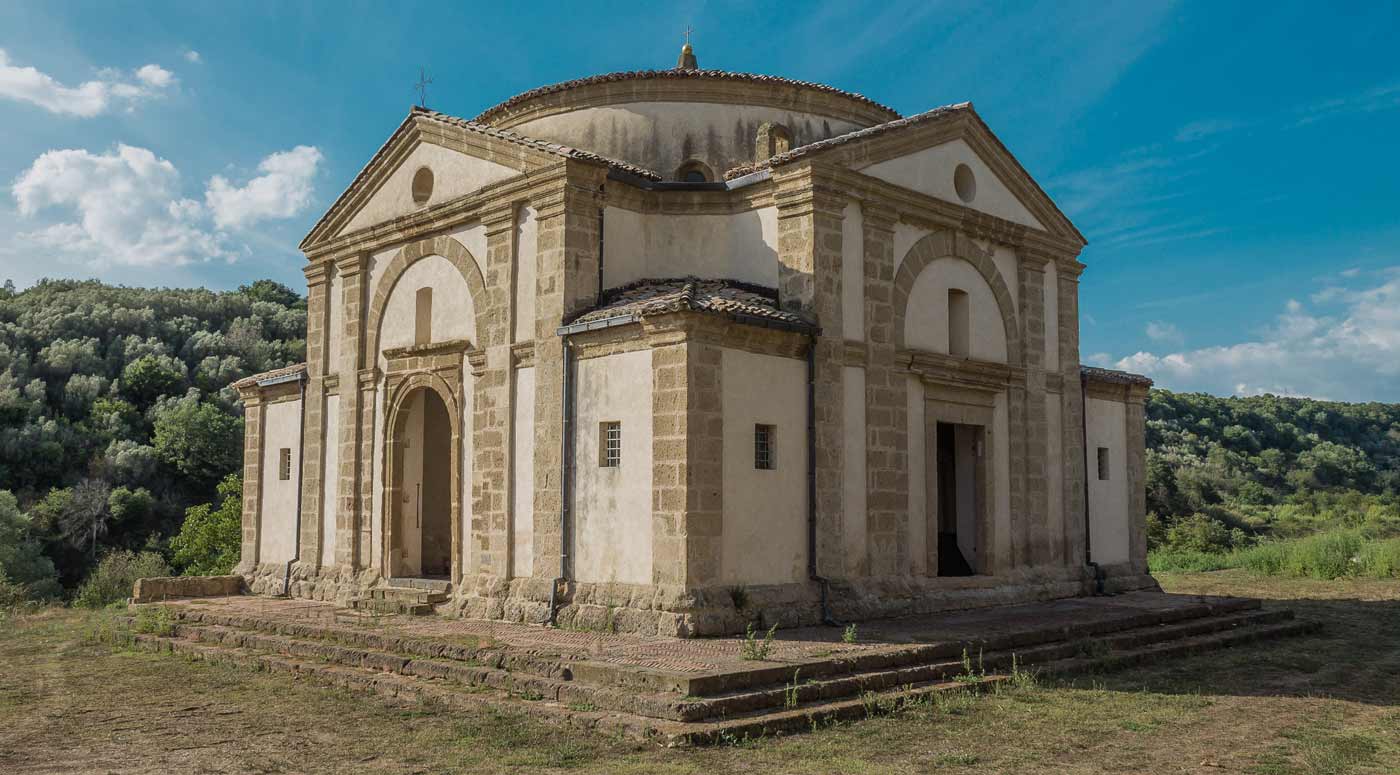
Sant’Egidio di Cellere
To conclude, we presume that some typical products of these lands, such as red garlic, spelt, lentils, potatoes, beans, whitefish, chestnuts, chickpeas as well as a series of white and red wines, were very appreciated by the protagonists of these events, just as we now appreciate their nutritional and organoleptic qualities.
An experience that is certainly worth enjoying to discover this hidden part of our history and our ancient experience.
Have a great adventure!
INFORMATION
Website: http://sentierobriganti.altatuscia.vt.it/