

The Monastery of San Vincenzo Martire in Bassano Romano, located near Viterbo in the Tuscia region, houses an extraordinary artistic treasure.

The façade of the Monastery of San Vincenzo Martire in Bassano Romano
The small nave is dominated by one of the most fascinating sculptural masterpieces by Michelangelo Buonarroti, the most sought sculptor, painter, architect, and poet of the Renaissance, creator of immortal works such as the “Pietà”, the “David”, the “Moses”, and the frescoes of the Sistine Chapel. He was a genius of such a remarkable talent, that the most powerful figures, included popes, commissioned him numerous pieces.
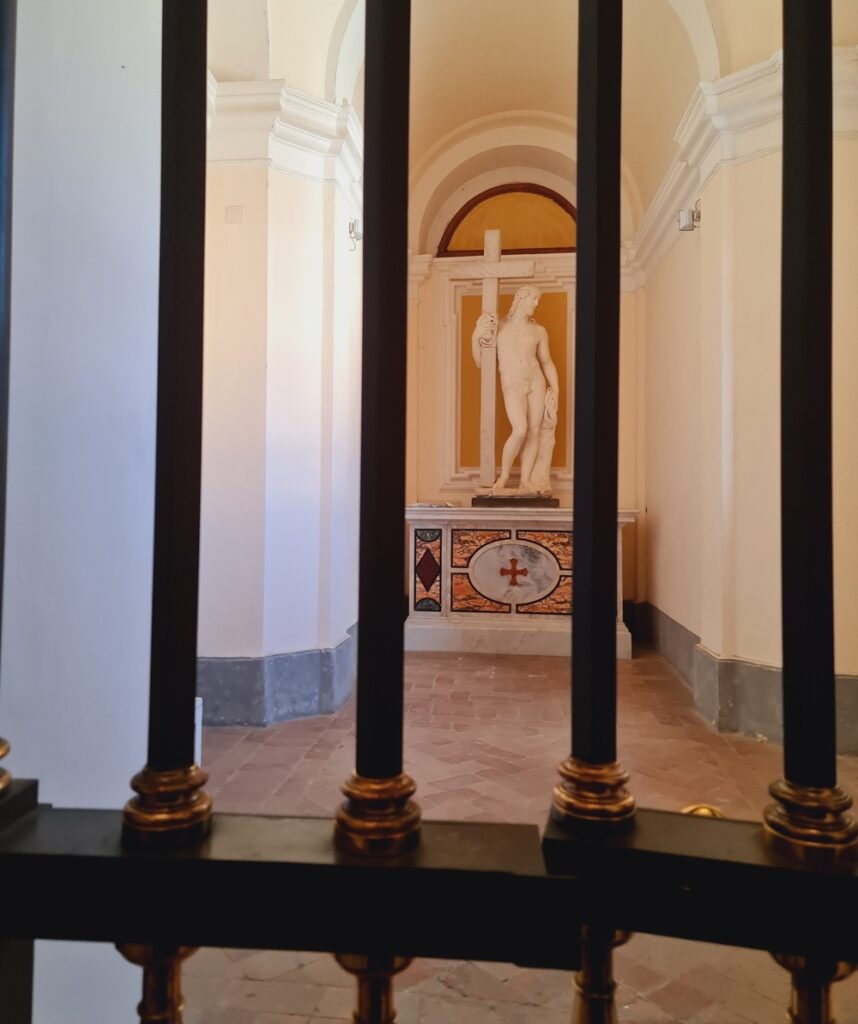
The statue of “Christ Carrying the Cross”
The statue, entitled “Christ Carrying the Cross”, was considered for centuries a mere Baroque copy by an anonymous sculptor, but, in reality, it was created by Michelangelo himself, and then rejected due to the artist’s perfectionism. Michelangelo was known, in fact, not only for his genius, but also for his impetuous temperament. He was extremely accurate and devoted a great deal of time to the study and refinement of his creations, so much that, it is said, he would personally travel to Carrara to verify the purity of the marble blocks he selected for his sculptures.
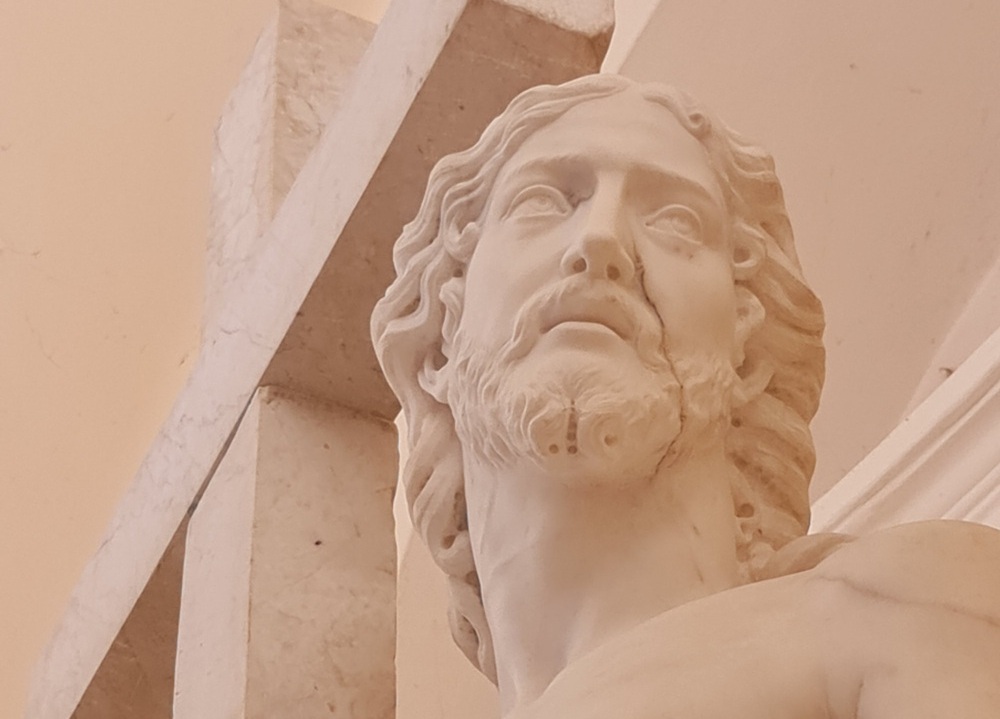
The Black Vein on the Cheek of the “Christ Carrying the Cross”
In 1514, while finishing the “Risen Christ” for the Basilica of Santa Maria sopra Minerva, Michelangelo noticed a dark line resembling a black vein on the cheek of the statue, an intolerable flaw. He therefore abandoned the work immediately and gave it away in exchange for a young horse.
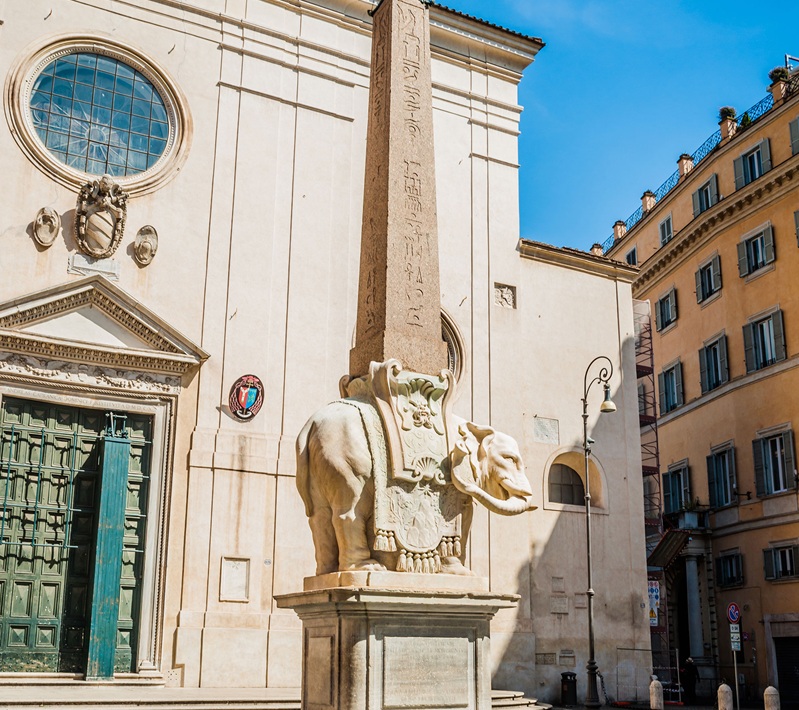
Exterior of the Basilica of Santa Maria sopra Minerva, Rome – Photo: santamariadellaminerva.it
The artist created a second version of the “Christ Carrying the Cross”, which today can be found inside the Basilica of Santa Maria sopra Minerva in Rome. In 1607, the previous sculpture was purchased by the Marquis Vincenzo Giustiniani from Bassano Romano, a wealthy art patron and collector. Even though he didn’t know the work’s author, the Marquis appreciated its beauty and exceptional craftsmanship, so much that he commissioned its restoration, it is said, to Bernini. The sculpture is now preserved in the Mausoleum of the Giustiniani Family, the Monastery of San Vincenzo in Bassano Romano. It remained there for centuries, covered in dust, until 2001, during a restoration project carried out by the Soprintendenza ai Beni Culturali. The famous dark vein on the statue, reported by historical accounts, proved the statue was a work by Michelangelo Buonarroti. The natural flaw in the marble, is today interpreted as a tear, lending tenderness, humanity, and dignity to the Risen Christ.
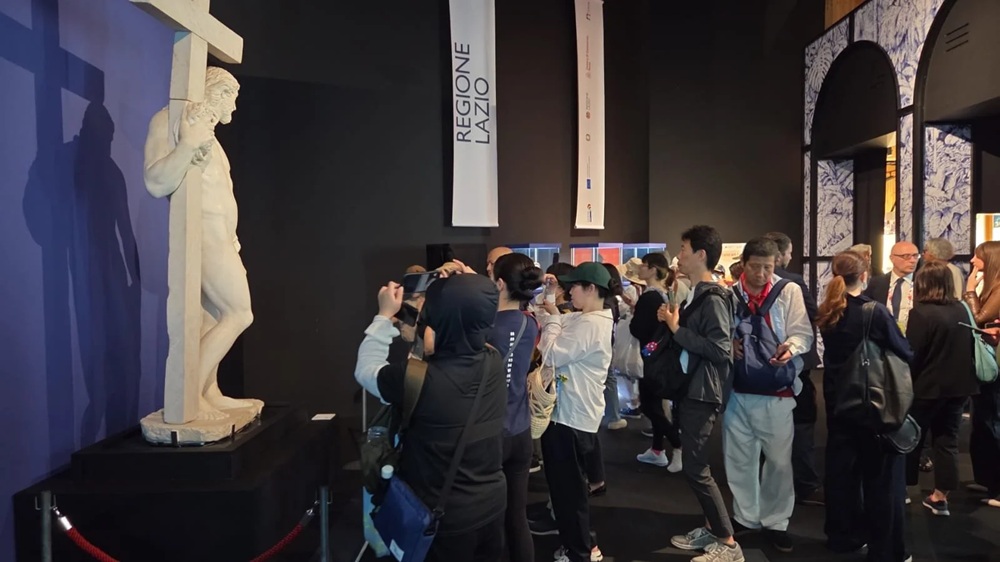
Michelangelo’s “Christ Carrying the Cross” at the Italian Pavilion at Expo 2025 in Osaka – Photo: @monastica.info.it
Although the statue of “Christ Carrying the Cross” is permanently housed in Bassano Romano, it is frequently loaned out to major international exhibitions, such as the Expo Osaka 2025 in Japan.