

Cerveteri, in the heart of the Roman Tuscia, is one of the most important archaeological towns in Lazio.
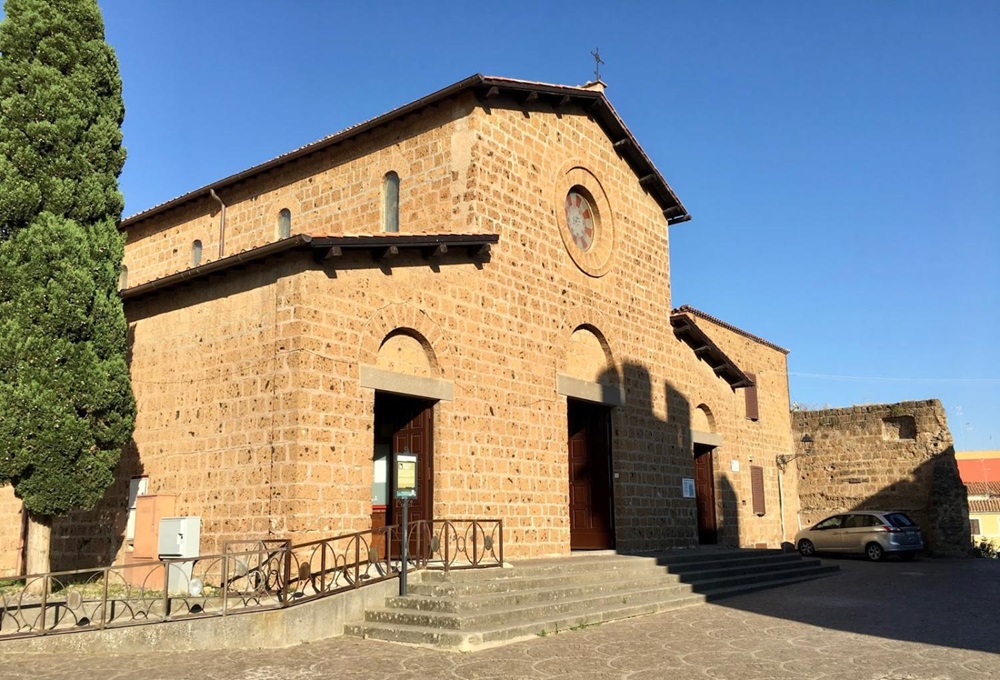
The facade of the Church of Santa Maria Maggiore in Cerveteri – photo @comune.cerveteri.rn.it
The historic centre hosts several places of cult, such as the Church of Santa Maria Maggiore, the oldest one in town, built over the remains of an Etruscan temple.
According to legend, on May 8, 842, the Saint Michele Arcangelo stopped the bells from ringing, so that the Saracens, due to the silence and the thick fog, couldn’t find their way to the village and were forced to come back to their ships. Since that day, Saint Michael has been the patron saint of Cerveteri, and the church is dedicated to him.
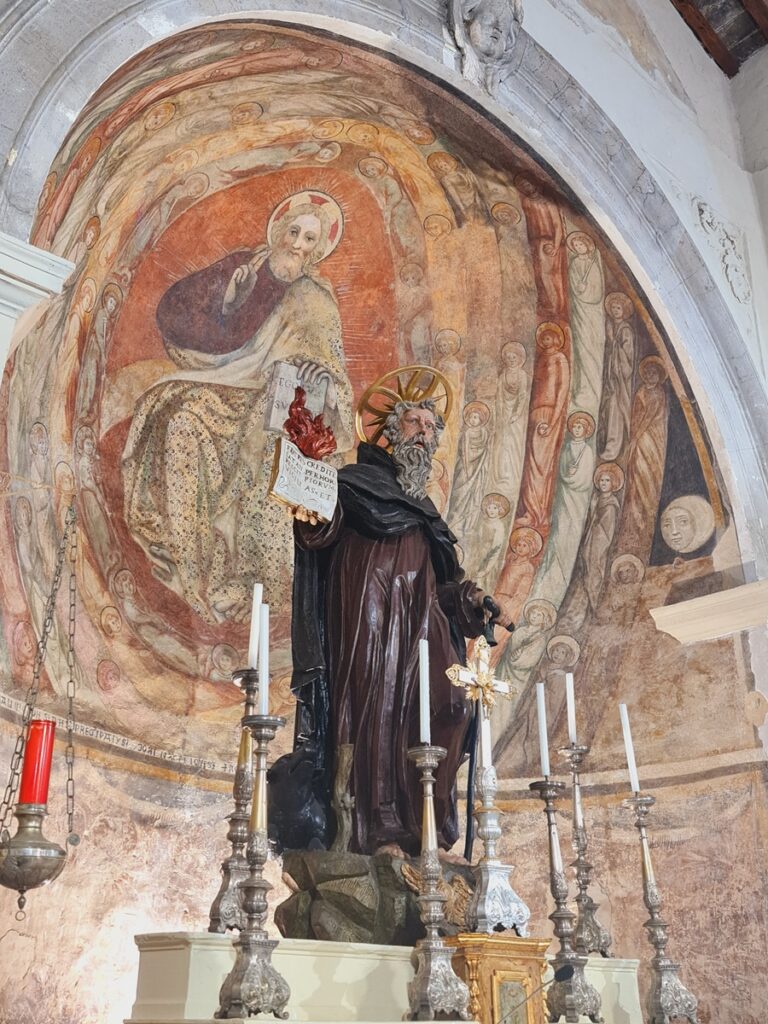
Church of Saint Anthony the Abbot
The small Church of Saint Anthony the Abbot is one of the oldest, along with the Church of Santa Maria Maggiore. It houses a large wooden statue of Saint Anthony the Abbot, attributed to the Bernini school, on the high altar.
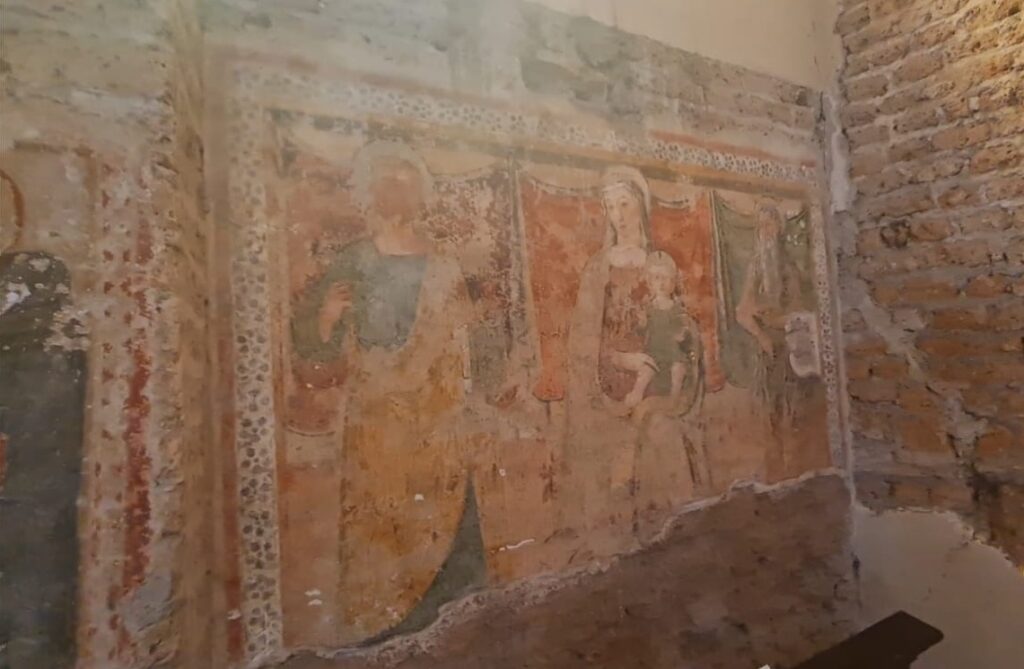
Chiesa di Sant’Antonio Abate, frescoes of Madonna Enthroned between the Two Saints
During the restoration of the Church of Saint Anthony the Abbot, frescoes attributed to Lorenzo da Viterbo were brought to light. The fresco depicting the Madonna Enthroned between the Two Saints is believed to be his final work and is the jewel of this church.
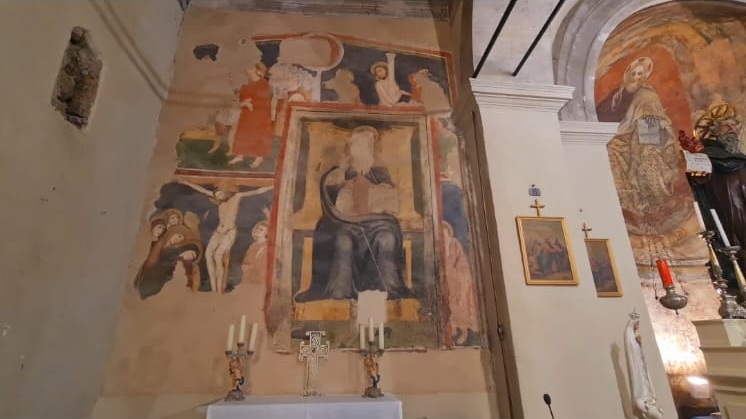
Chiesa di Sant’Antonio Abate, frescoes by Umbrian School
Frescoes from the 14th-century Umbrian school depicting scenes related to Good Friday—from the Flagellation to the Crucifixion—have also been rediscovered.
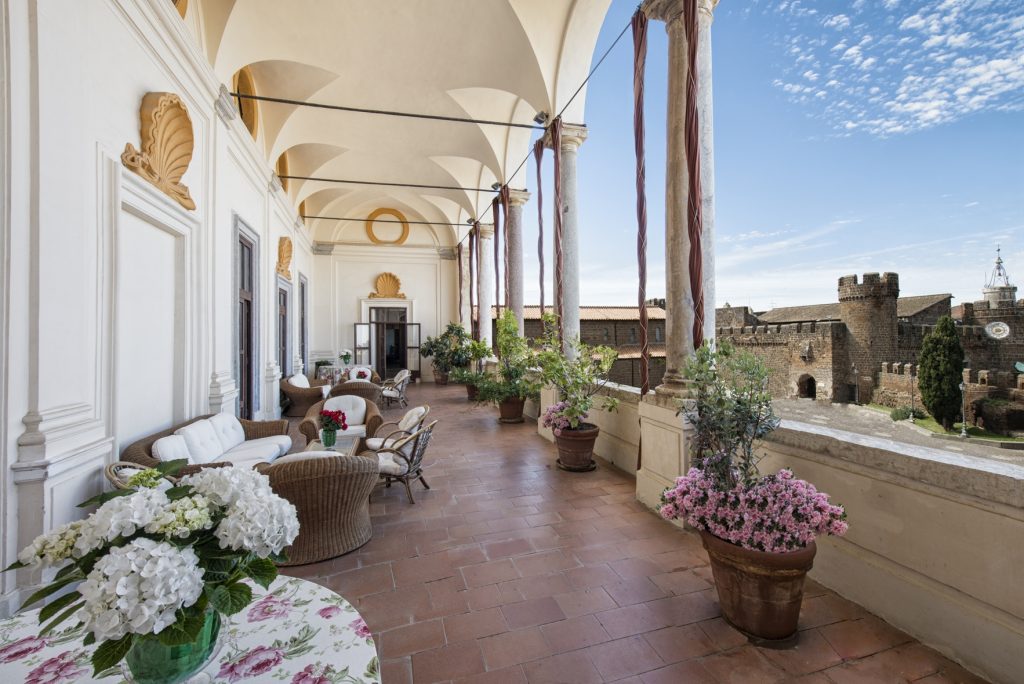
Palazzo Ruspoli, terrazza affacciata sul Museo Etrusco – retedimorestorichelazio.it
Overlooking Piazza Santa Maria, stands one of the most beautiful Historic Homes in Italy, Palazzo Ruspoli.
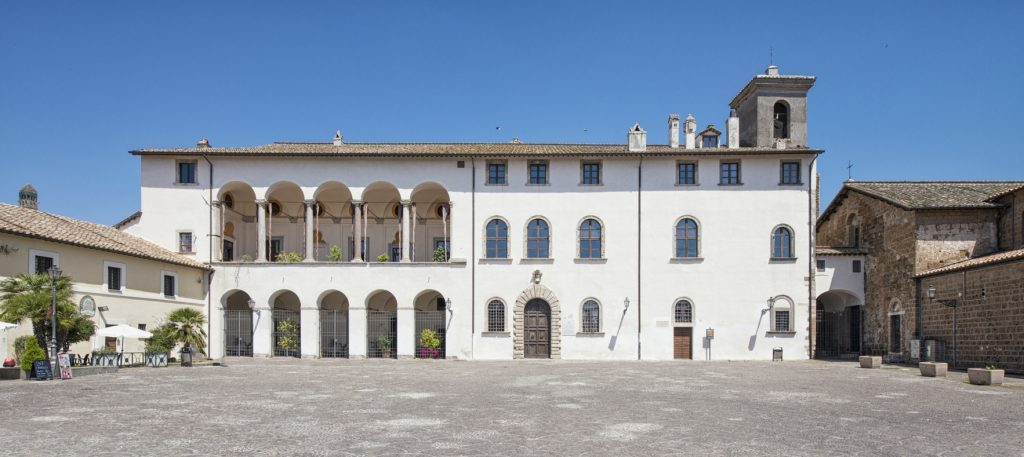
Palazzo Ruspoli in Cerveteri – photo @retedimorestorichelazio.it
It hosted many illustrious figures, such as Pope Innocenzo III, the English writer Lawrence, the musician Händel, and many historians and archaeologists from the nearby necropolis.
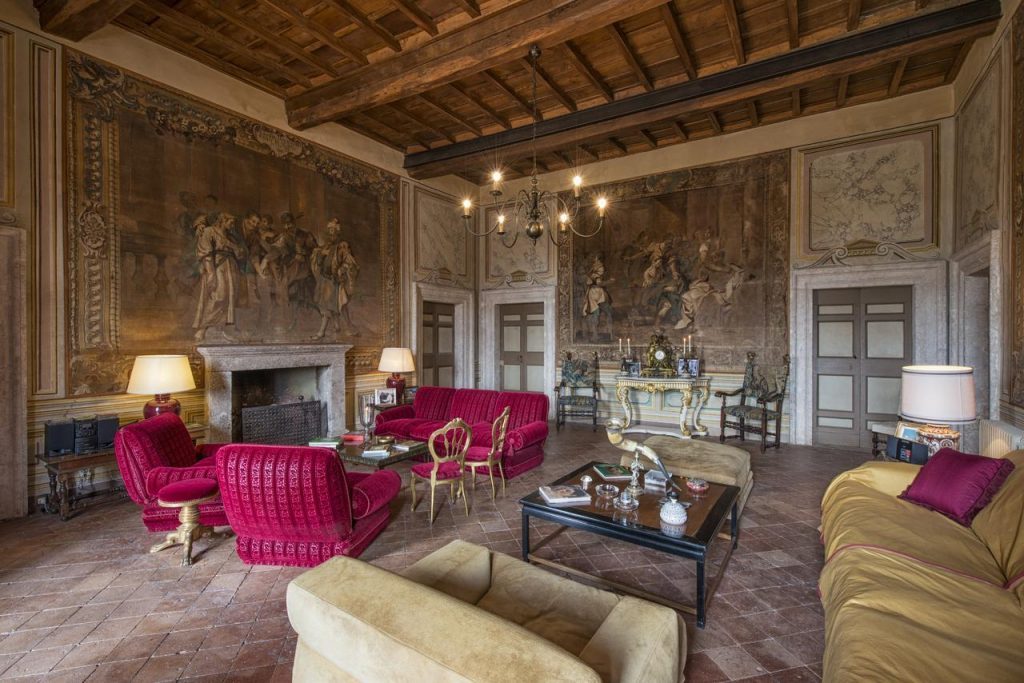
Palazzo Ruspoli, Salone delle Feste – retedimorestorichelazio.it
The rooms feature frescoes by Rossi and bas-reliefs by Benvenuto Cellini. The Salone delle Feste displays its grandeur across more than 200 square meters.
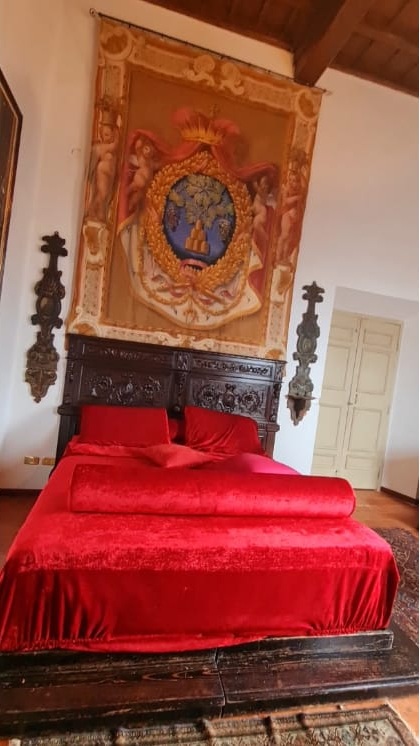
lo stemma della famiglia Ruspoli
The Prince’s Hall is located in the Ruspoli family’s private residence. The paintings on the walls were created using the “grass juice” technique, in which colors are extracted from plants and mixed with egg yolk. The painting featuring the Ruspoli family crest with two bunches of grapes symbolizes the family’s monopoly on wine production in Lazio.
Palazzo Ruspoli is currently home to Princesses Maria Pia and Giacinta Ruspoli and is open to visitors via a museum tour from Friday through Sunday, and by reservation during the week. The castle is also open for evening tours and cultural events.
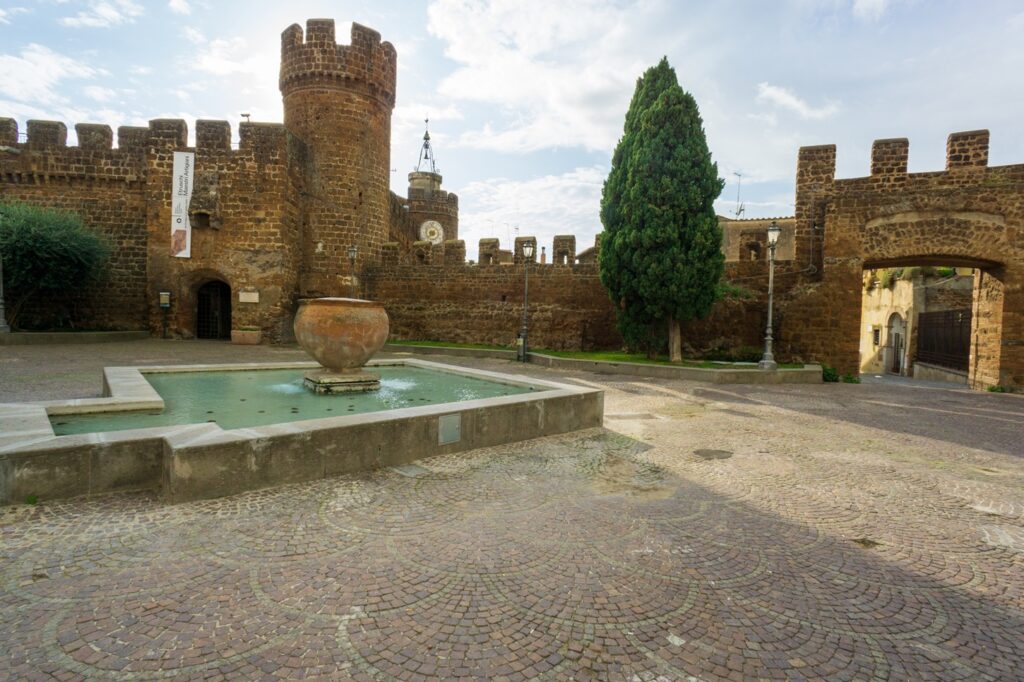
fortificazioni medievali in Piazza Santa Maria a Cerveteri
Castello Ruspoli, on the same square, is the seat of the Museo Archeologico Nazionale Cerite, where we can admire most of the finds from the excavations, authentic masterpieces, such as decorated vases, jugs, and interesting artefacts.
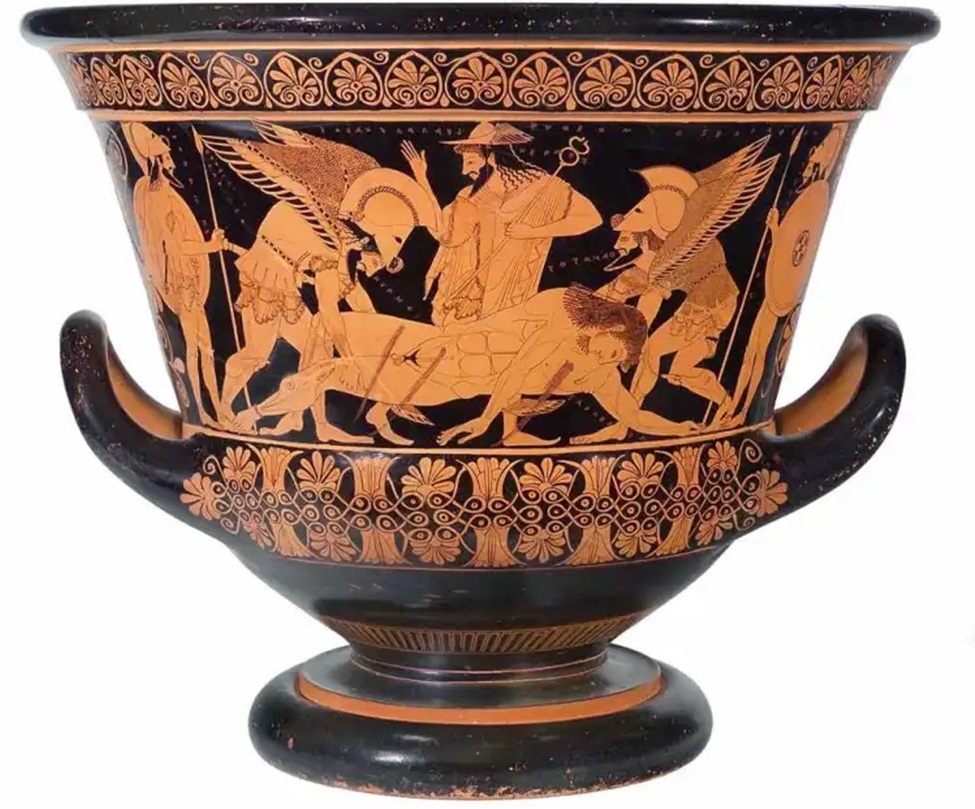
The Euphronios Krater, a masterpiece of Attic ceramics from the fifth century BC.
Among these are the prestigious ceramics from the 5th century B.C.: the Euphronios krater and kylix, the typical decorated Greek wine cup.
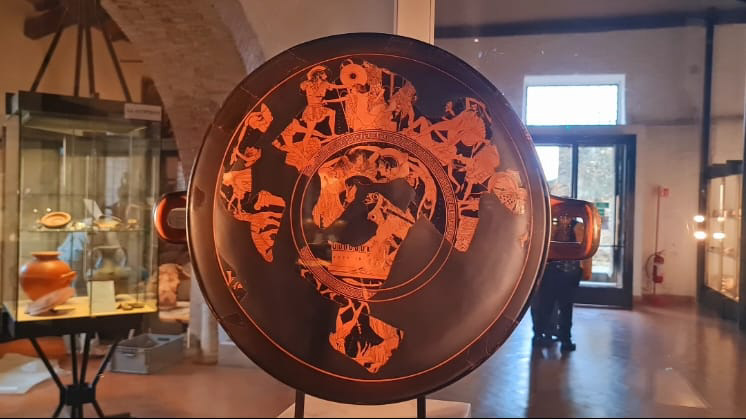
Kylix di Eufronio
Illegally stolen and taken abroad, these artifacts were returned to the Italian government and placed in the Cerveteri Museum in 2015.
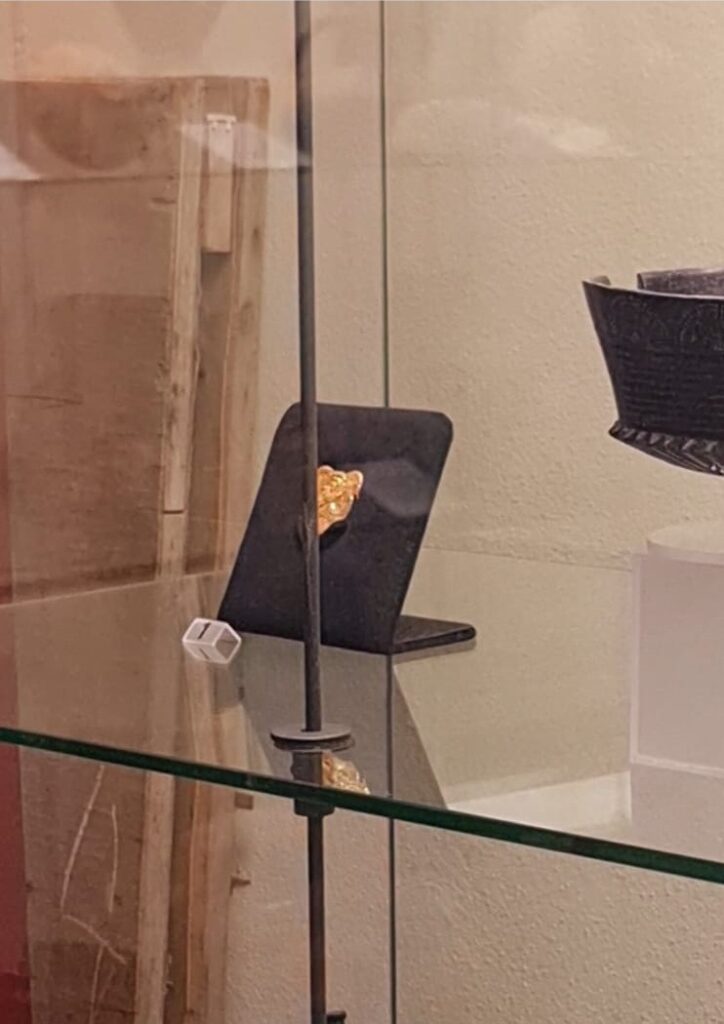
Case Grifoni, gold fibula
Palazzo Ruspoli also houses the Case Grifoni complex in the square, a museum complex that forms an integral part of the Cerite National Archaeological Museum. On display here are artifacts from the collection looted by tomb raiders in the last century. The small gold fibula from the 7th century B.C. is a gold plate crafted using granulation, an ancient Near Eastern technique involving the chemical bonding of microscopic beads.
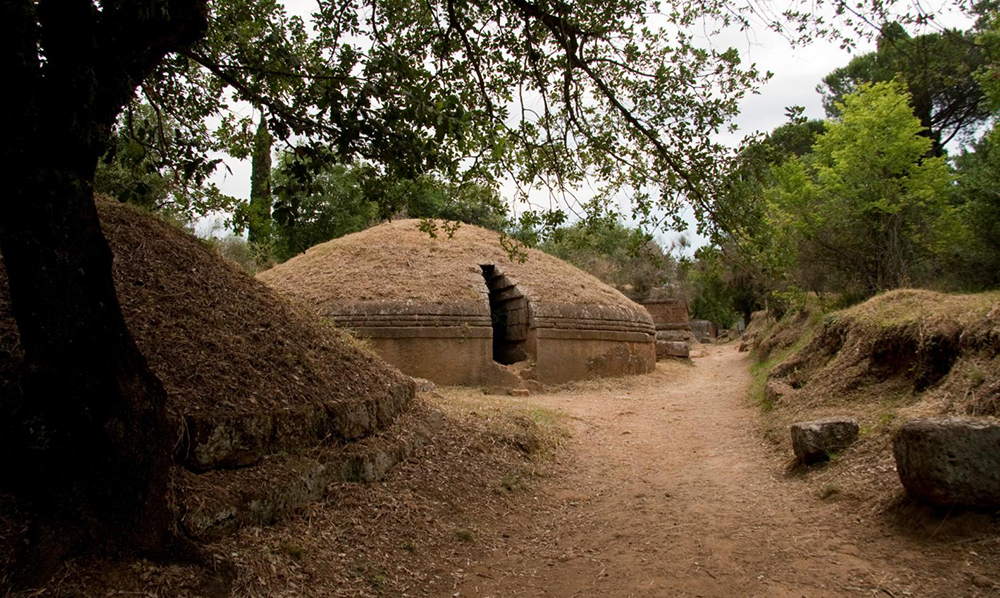
The burial mounds in the Banditaccia Necropolis
The ancient Etruscan Banditaccia Necropolis, the largest in the Mediterranean area, preserves thousands of burials from the Villanovan period (nineth century BC) to the Etruscan era (third century BC), dug into the tuff.
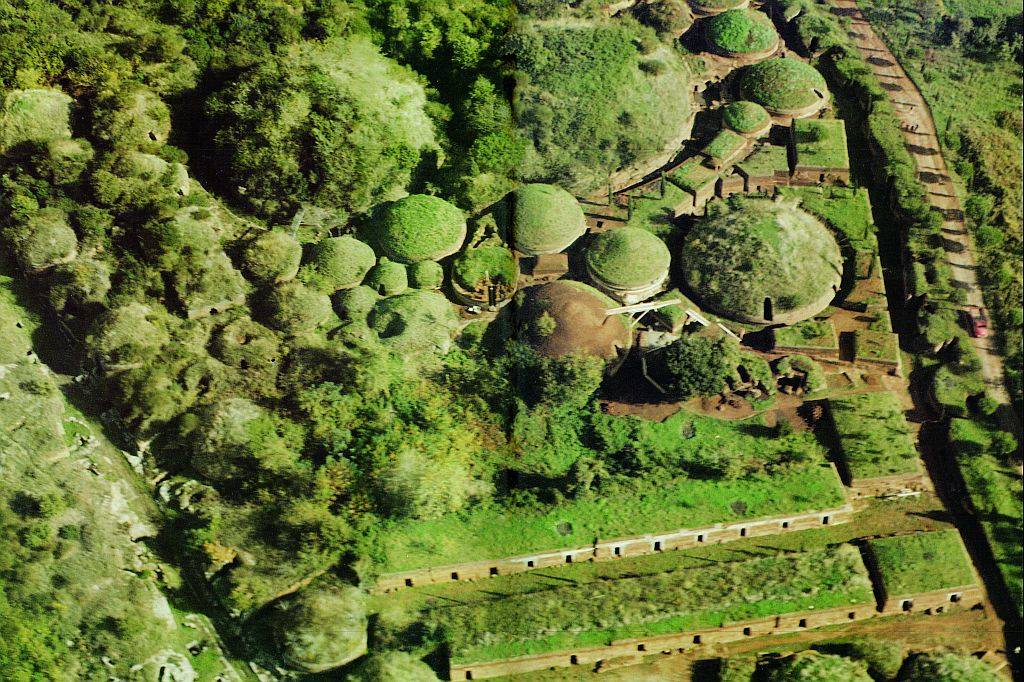
Known in ancient times by the Romans as Caere, Cerveteri was a true Mediterranean metropolis. The Banditaccia Necropolis is the only place in ancient Etruria where you can see the necropolis exactly as an ancient Etruscan would have seen it.
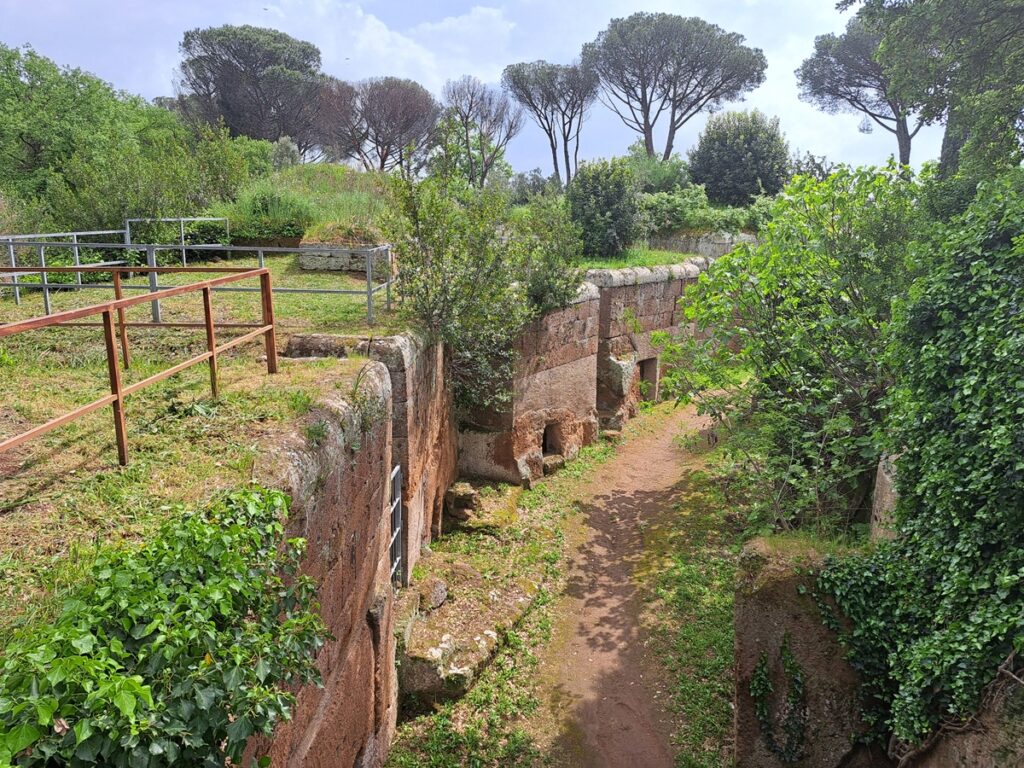
tombe a dado nella Necropoli della Banditaccia
It is precisely its perfectly preserved funerary architecture that has made the Banditaccia Necropolis in Cerveteri a UNESCO World Heritage Site, along with the Monterozzi Necropolis in Tarquinia.
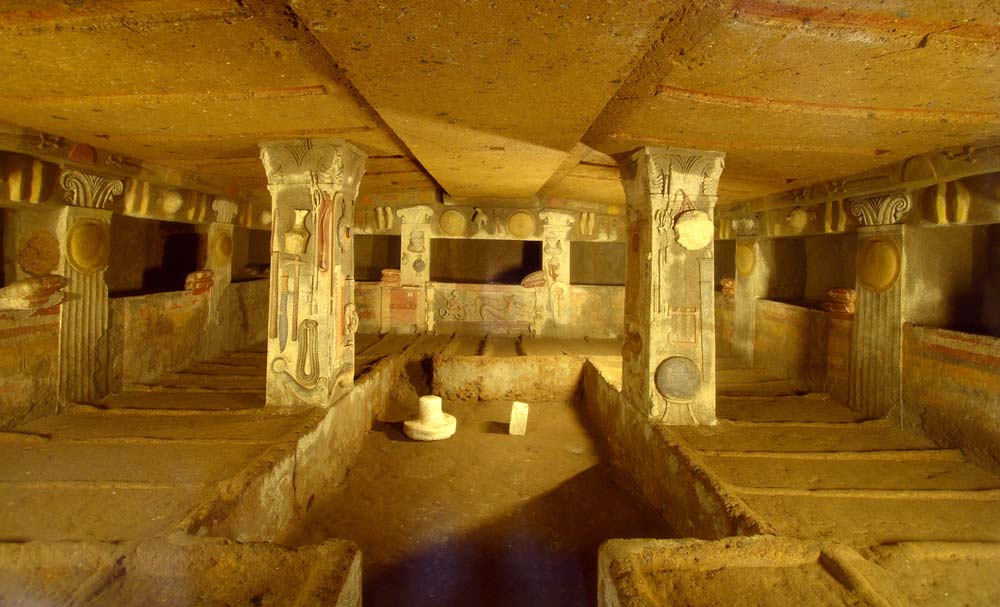
Tomba dei Rilievi
Among the most significant burials, we can highlight the tombs respectively called the Capanna, the Cornice, the Rilievi, dei Capitelli, and the beautiful cube tombs on via dei Monti Ceriti and in the Tolfa area, as well as the big burial mounds of the Colonnello and Mengarelli.
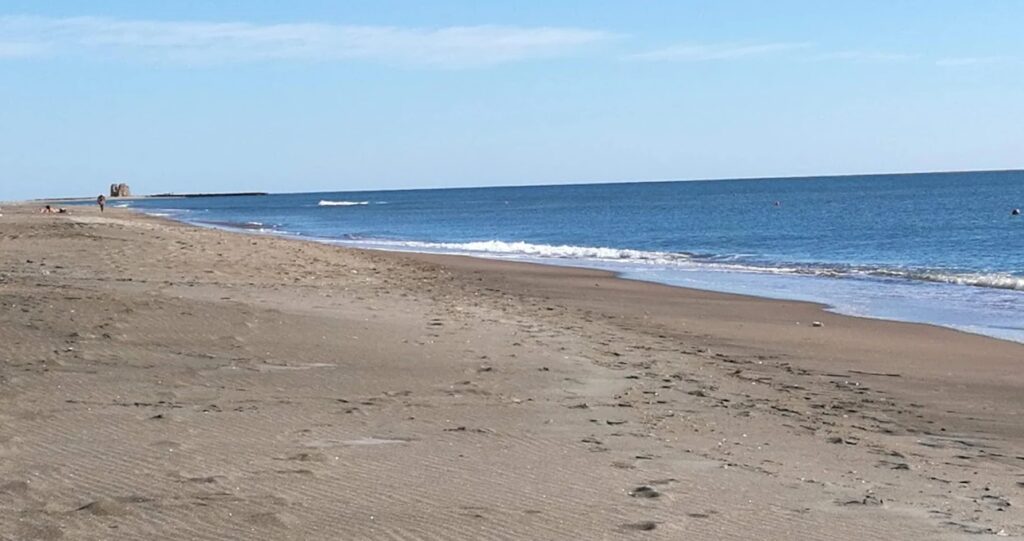
The surrounding area stretches from the Ceriti Hills to the Tyrrhenian coast, with its iron-black sandy beaches, which offer tourists a well-deserved relaxation after their journey into history.
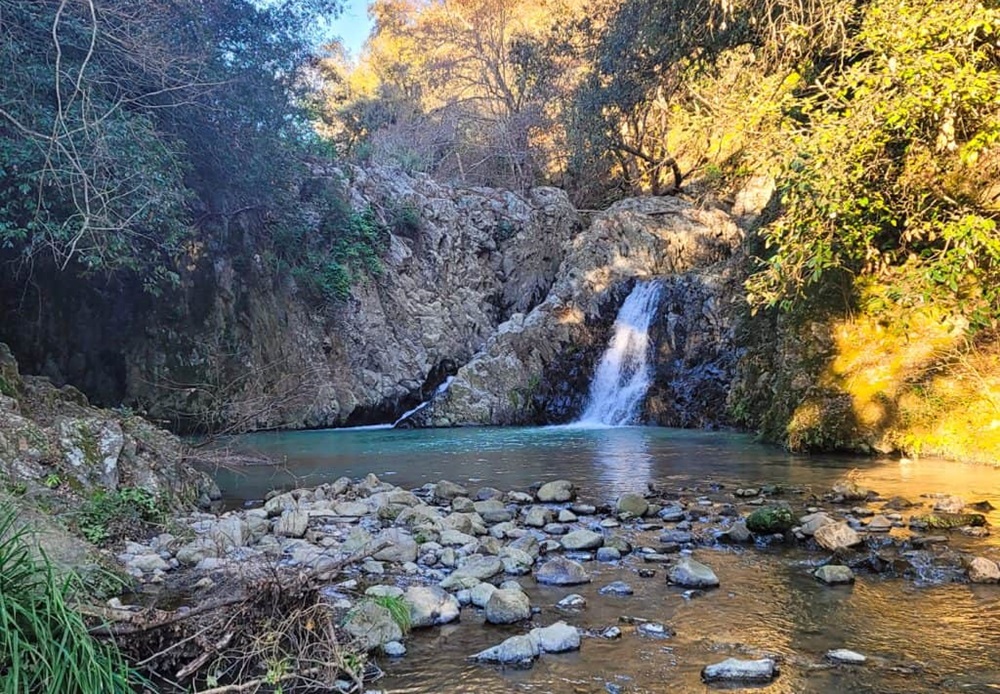
The waterfalls of Cerveteri
Not to be missed in the area of Cerveteri, are the five waterfalls Vaccinello, Arenile, Braccio di Mare, Ospedaletto, and Mola.
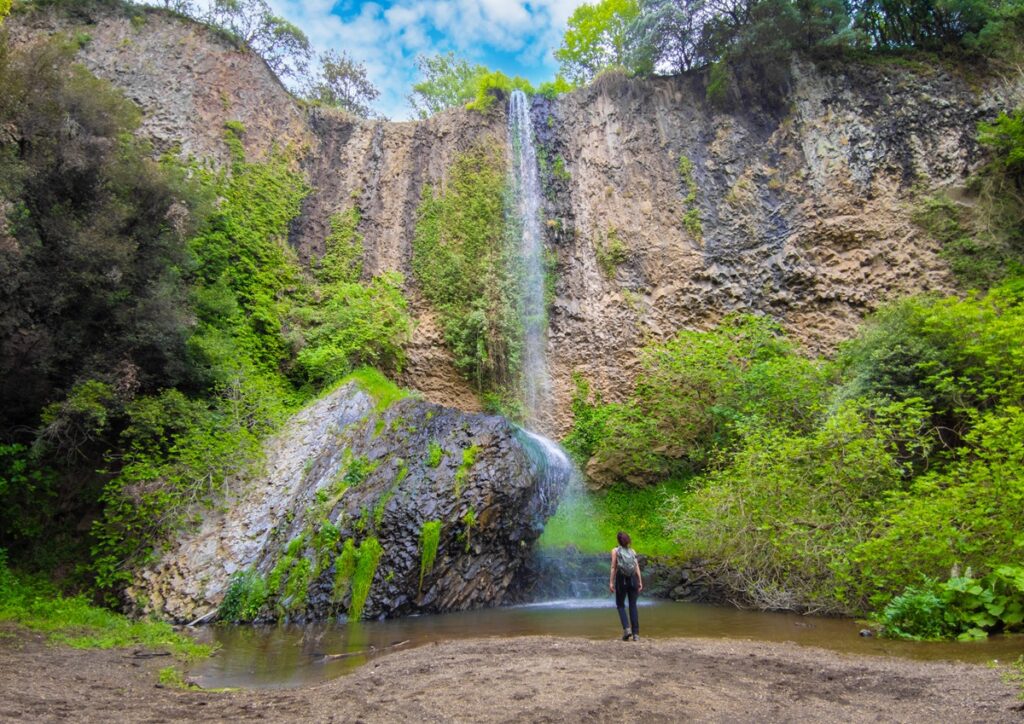
Cascata del Moro o del Vaccinello
The waterfalls are reachable via easy paths starting from the “Nuovo Cimitero di Cerveteri” and identifiable on a map. Here, a map helps you find your favorite trail, which is also suitable for children.
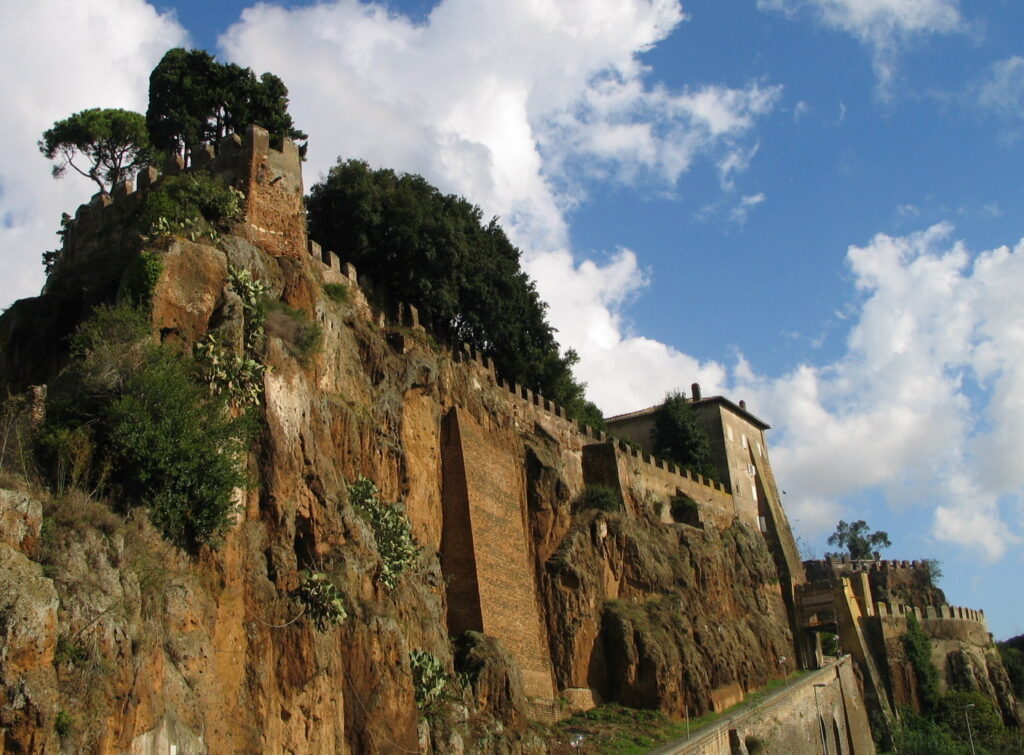
Palazzo Torlonia nella frazione di Ceri – retedimorestorichelazio.it
In the hamlet of Ceri stands Palazzo Torlonia, also known as the Castle of Ceri, one of Lazio’s Historic Residences. The castle is currently inhabited by its owners and is open to visitors by appointment and during cultural and private events.
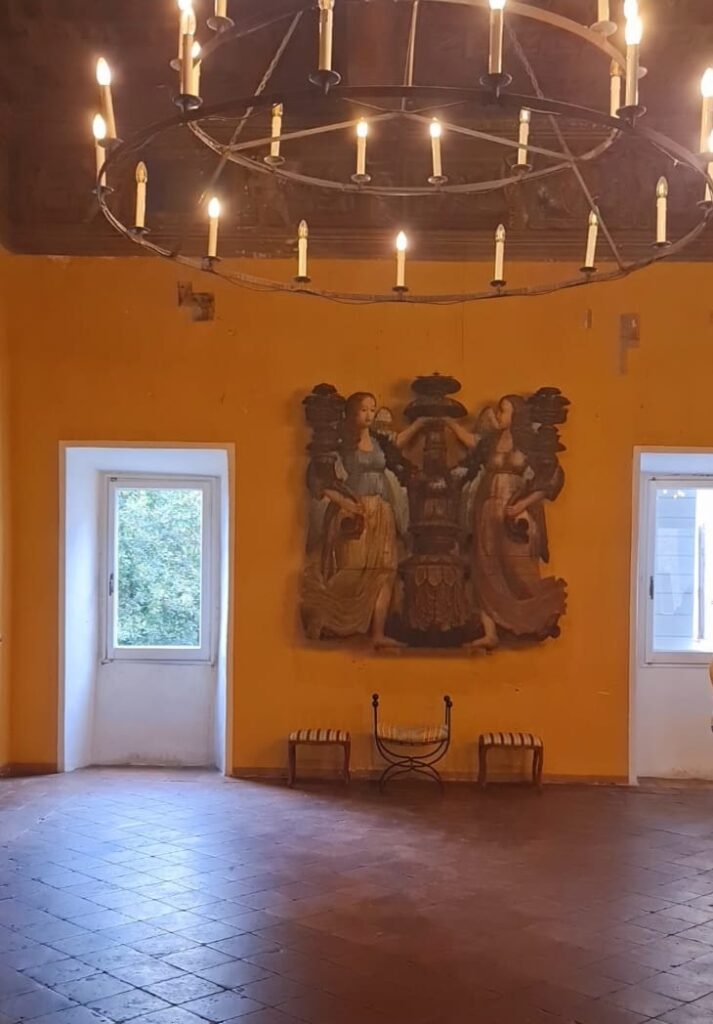
il Piano Nobile nel Palazzo Torlonia a Ceri
Porzia degli Anguillara and Livio Odescalchi lived in Ceri Castle; Odescalchi became the owner of this fiefdom and was granted the title of duke. The main floor is decorated with frescoes and still features its original floors.
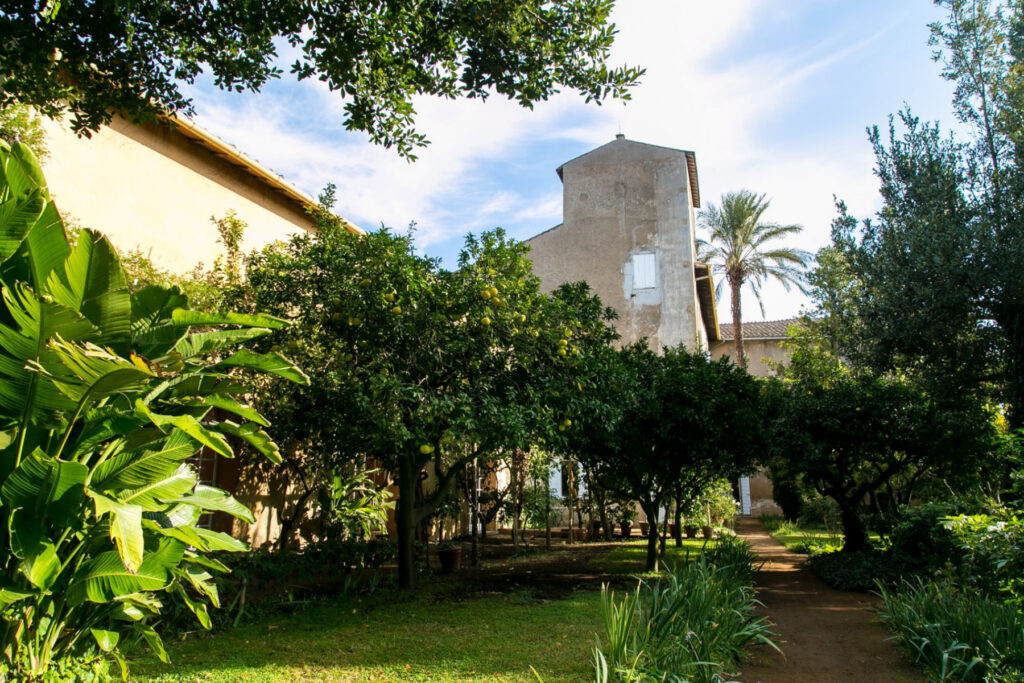
il giardino pensile di Palazzo Torlonia nella frazione di Ceri – retedimorestorichelazio.it
Ceri Castle overlooks Piazzetta dell’Immacolata and the picturesque road leading into the village. The castle is adorned with a large Italian-style hanging garden, a wedding gift from Alessandro Torlonia to Maria Teresa Colonna. The citrus grove is one of the garden’s most interesting features.
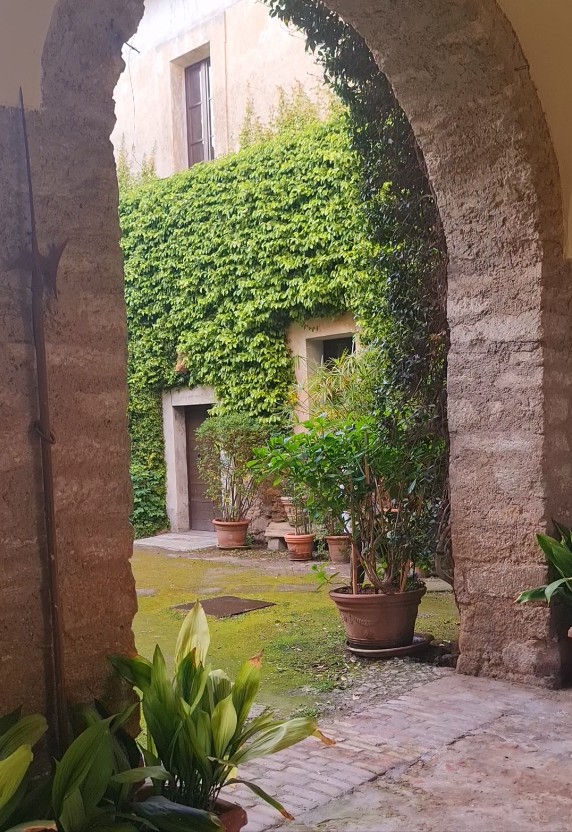
Palazzo Patrizi nel Borgo del Sasso
Palazzo Patrizi in the village of Sasso was built in the early 1500s around a 13th-century watchtower. The first Castello del Sasso was built in what is known as the Laziali Dolomites and was destroyed in 1500. Around 1505–1515, the Patrizi family built a fully fortified village adjacent to the tower, complete with a palace, a granary, a church, and houses for the peasants.
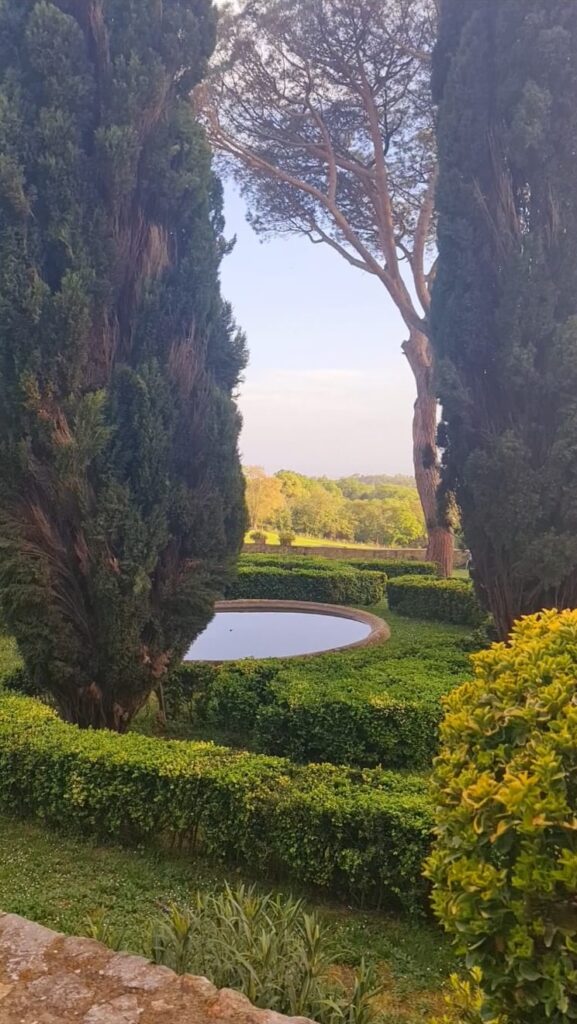
il giardino all’italiana affacciato sul mar Tirreno al Palazzo Patrizi
The Italian-style garden offers a breathtaking view of the Tyrrhenian Sea, nestled among cypresses, pines, and holm oaks on terraces created in the late 1920s. The castle is still inhabited today and is primarily open for cultural and private events.
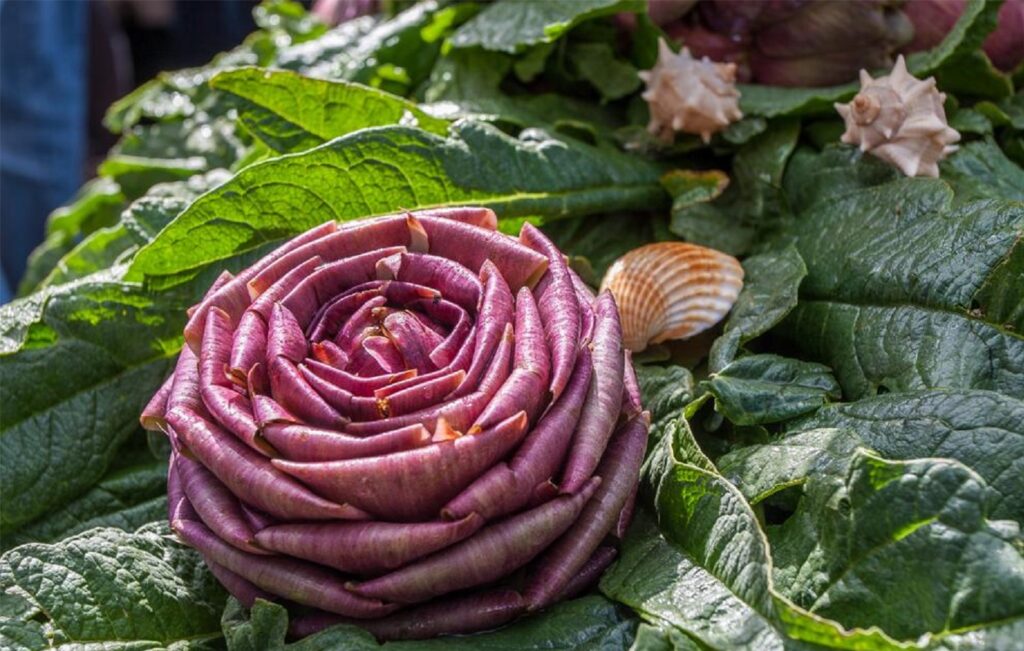
Carciofo Romanesco IGP
In Cerveteri, wine is served in the typical taverns Fraschette, to accompany simple, traditional dishes, such as the local artichokes that owe their special flavour to the ferrous soil.