

Fifty years after his death on November 13, 1974, we will remember the immortal father of Italian Neorealism, Vittorio De Sica, and visit his most famous movie locations in Lazio.
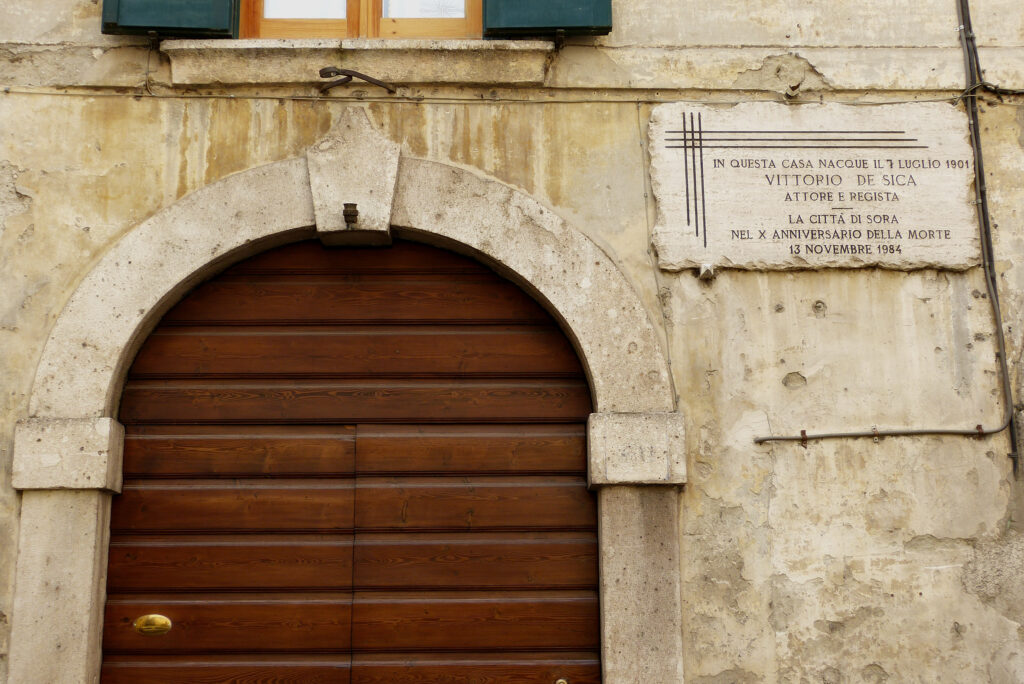
Plaque on Vittorio De Sica’s native house in Sora – www.comune.sora.fr.it
The house where he was born on July 7, 1901, can be found in the historic centre of Sora in Ciociaria, a village among the Valleys of Liri, Comino and Roveto crossed by the Liri River.
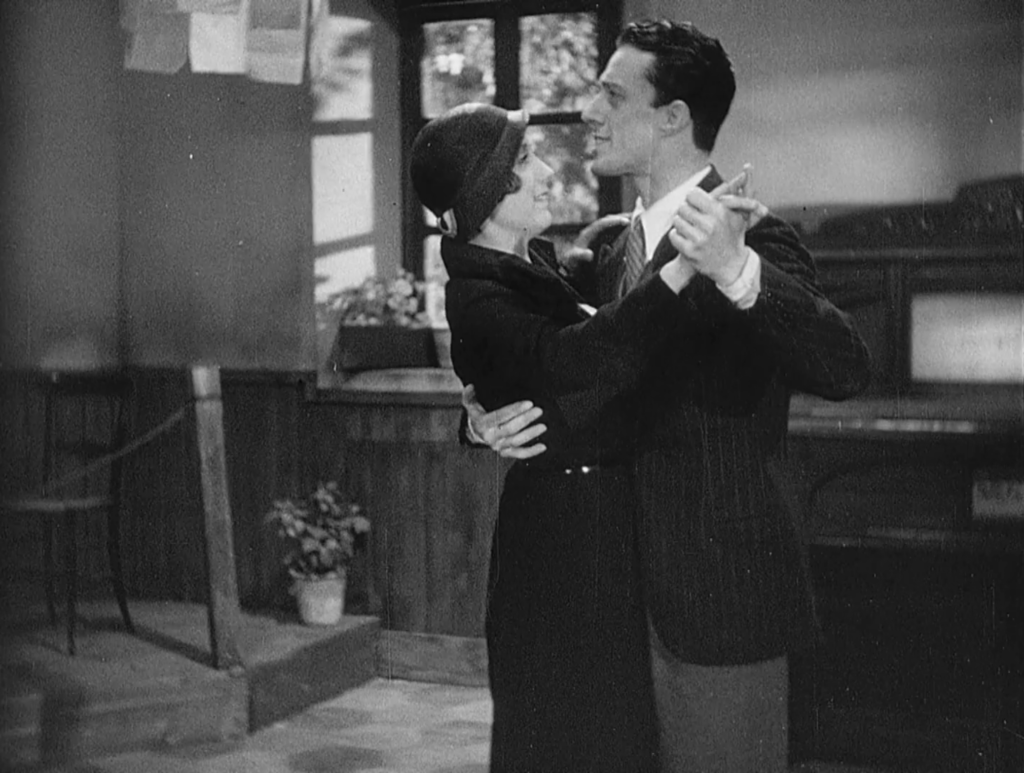
“Parlami d’amore Mariù” in “Gli uomini, che mascalzoni…”
Parlami d’amore, Mariù Tutta la mia vita sei tu Gli occhi tuoi belli brillano Come due stelle scintillano
“Parlami d’amore Mariù”, from the movie “Gli uomini, che mascalzoni…” by Mario Camerini, was the first soundtrack presented at the first Venice Film Festival in 1932. With this song, composed by Cesare Andrea Bixio, the great actor and cinema-theatre director also showed his vocal skills and achieved worldwide fame.
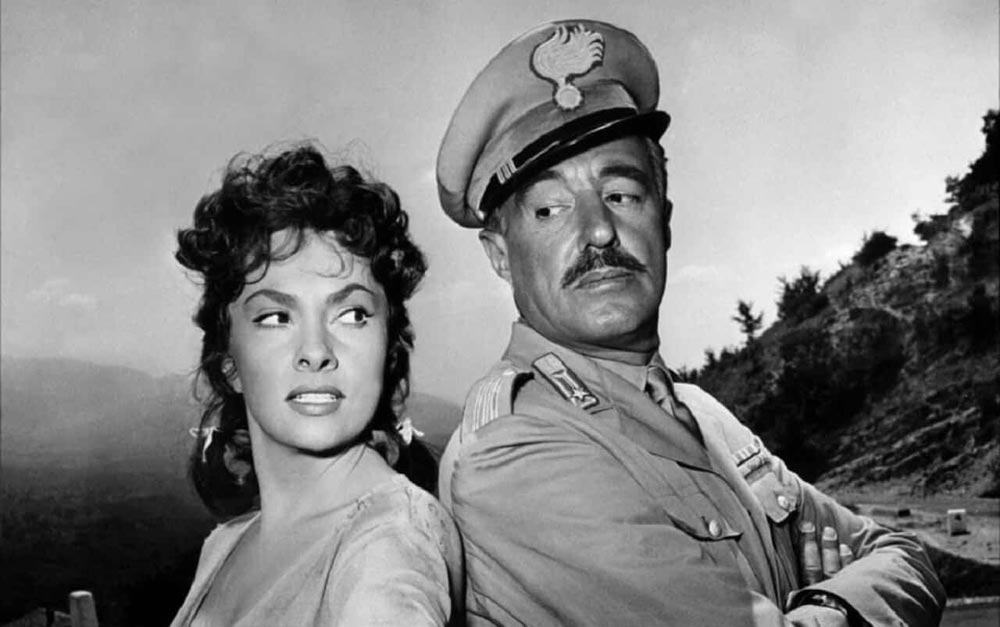
Gina Lollobrigida and Vittorio De Sica in “Pane, amore e fantasia”
Among his countless movie scenes, the winking mambo with Sophia Loren “Pane, amore e …”, shot by Dino Risi in the Sorrento Peninsula, remains unforgettable. From the same cycle, “Pane, amore e fantasia”, filmed in Castel San Pietro Romano, sees the extraordinary Vittorio De Sica and Gina Lollobrigida (in the role of La Bersagliera) as protagonists. Castel San Pietro Romano was also the film set of “I due Marescialli” by Sergio Corbucci with De Sica and Totò.
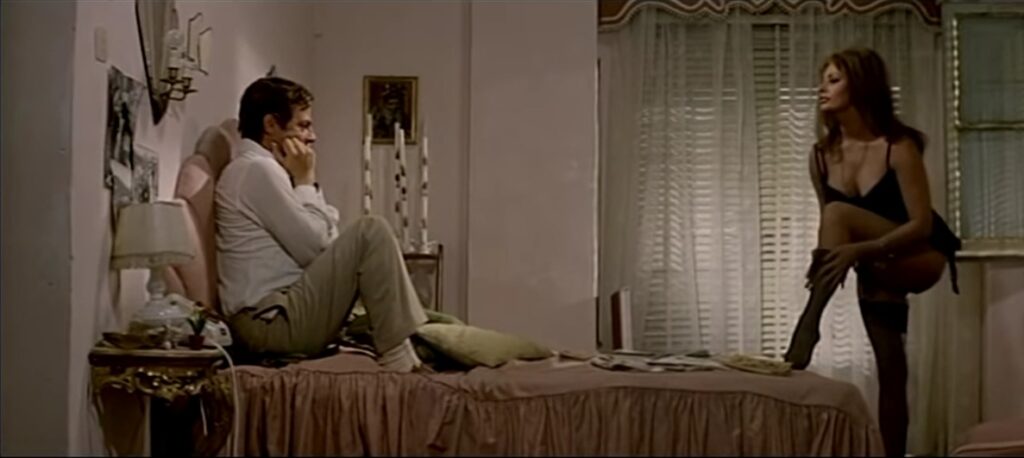
Sophia’s striptease for Marcello in “Ieri, oggi e domani”
Memorable masterpieces by De Sica are “Ieri, oggi e domani” (1963) with the indelible scene of Sophia’s striptease for Marcello, and “Il Giardino dei Finzi Contini”, filmed in Rome at Villa Ada and Villa Strohl-Fern, and winner of the “Oscar for Best Foreign Film” in 1972.
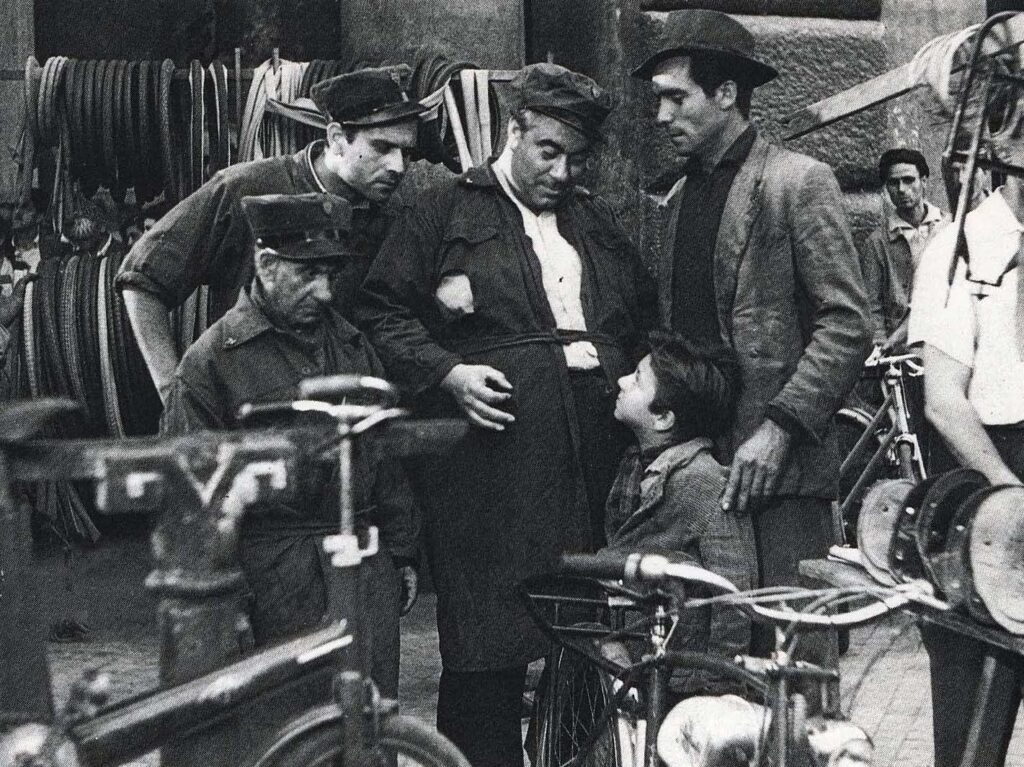
“Ladri di biciclette” in Piazza Vittorio Veneto in Rome
The beauty of Rome in black and white makes “Ladri di biciclette” the universal symbol of Italian Neorealism. Listed among the “100 Italian Films to be saved”, it was ranked 4th among “The 100 best Films not in English in the World” by the Empire magazine.
Also noteworthy is “La Ciociara” (Two Women) from 1960, based on a novel by Alberto Moravia and whose screenplay was written by Vittorio De Sica and Cesare Zavattini. The impressive soundtrack by Armando Trovajoli accompanies brilliant stars the caliber of Sophia Loren (Cesira), Eleonora Brown (her daughter Rosetta), Jean-Paul Belmondo, Carlo Ninchi, Andrea Checchi and Pupella Maggio as an extra.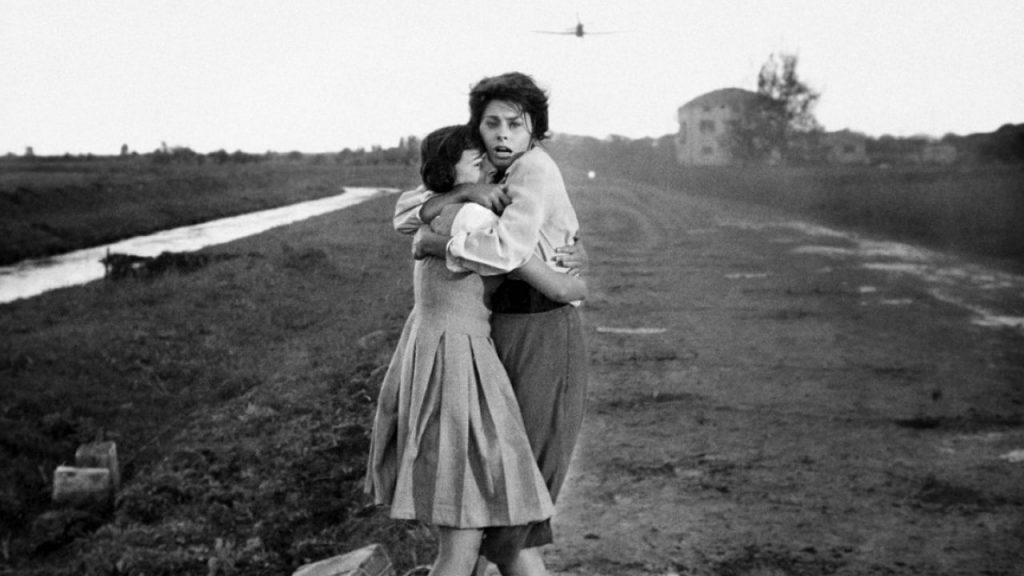
Many scenes of this film were shot in Lower Lazio and Ciociaria, also chosen for several post-war movies. While fleeing Rome, the two protagonists take refuge in the Church of Santa Maria delle Grazie in Vallecorsa and in the deconsecrated Church of San Francesco d’Assisi in Fondi. Other locations are Sperlonga, Sermoneta, Itri, Saracinesco, and Rome.
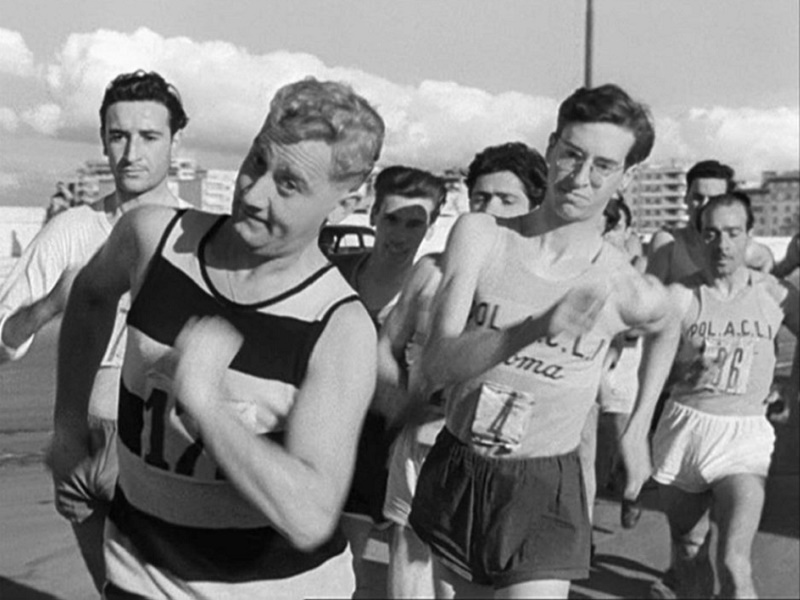
Alberto Sordi in “Mamma mia, che impressione!”
“Signorina Margherita!”
is the catchphrase with which a petulant, clumsy Alberto Sordi attempts to approach his desired woman in “Mamma mia, che impressione!” from 1951, shot in the Roman neighbourhoods, with Vittorio and Alberto Sordi as co-producers
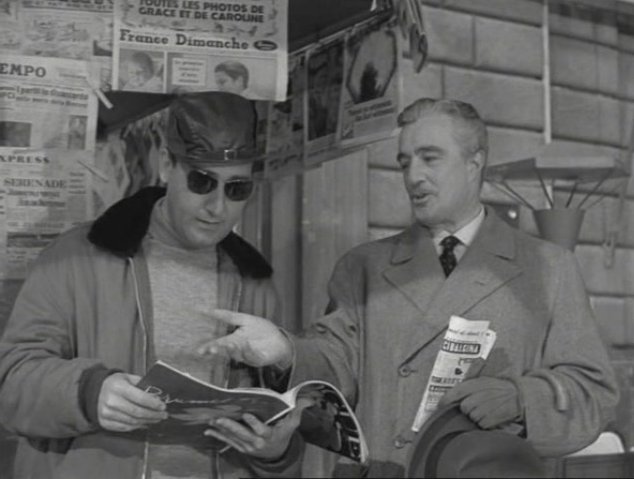
Alberto Sordi and Vittorio De Sica in “Il Conte Max”
Brash with the weak and servile with the strong, Sordi once again plays the role of the average Italian man in “Il Conte Max” from 1957. Filmed in some of the most beautiful corners of Rome, the film talks about the humble newsagent of via Vittorio Veneto and his clumsy effort to climb the social ladder by learning how to become a nobleman from the impoverished Count Max Orsini Varaldo, played by Vittorio de Sica.