

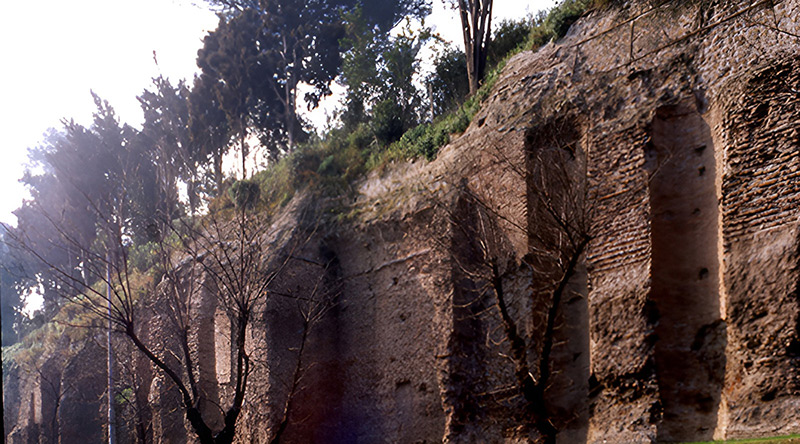
Roma-Tempio-di-Claudio-al-Celio-foto-www.sovraintendenzaroma.it
You will discover the quarries and small lakes under the Temple of Divo Claudio al Celio along an entirely accessible route under the giant podium, where Agrippina had the Temple of Divo Claudio, her husband, built. It is said that Claudio died in 54 from poisoning by mushrooms cooked by his wife Agrippina, who dedicated to the late emperor a Temple, placed on a 180 x 200 metres podium on the Caelian Hill.
Tiberius Claudius Drusus was the son of the great General Drusus, brother of the Emperor Tiberius, and the brother of the Roman General Germanicus, a favourite by Augustus and darling of the Roman people. His fame is due to the important public works he carried out, such as the completion of the Aqua Claudia and the Anio Novus, and the construction of the new port at Portus, north of Ostia. After the fire of 64, the ancient temple was demolished by Nero, who changed the urban plan of the area to build his Domus Aurea. The place of worship was then restored by Vespasian (69 – 79), and his son Domitian (81 – 96) extended the arches of the Aqua Claudia up to the Palatine.
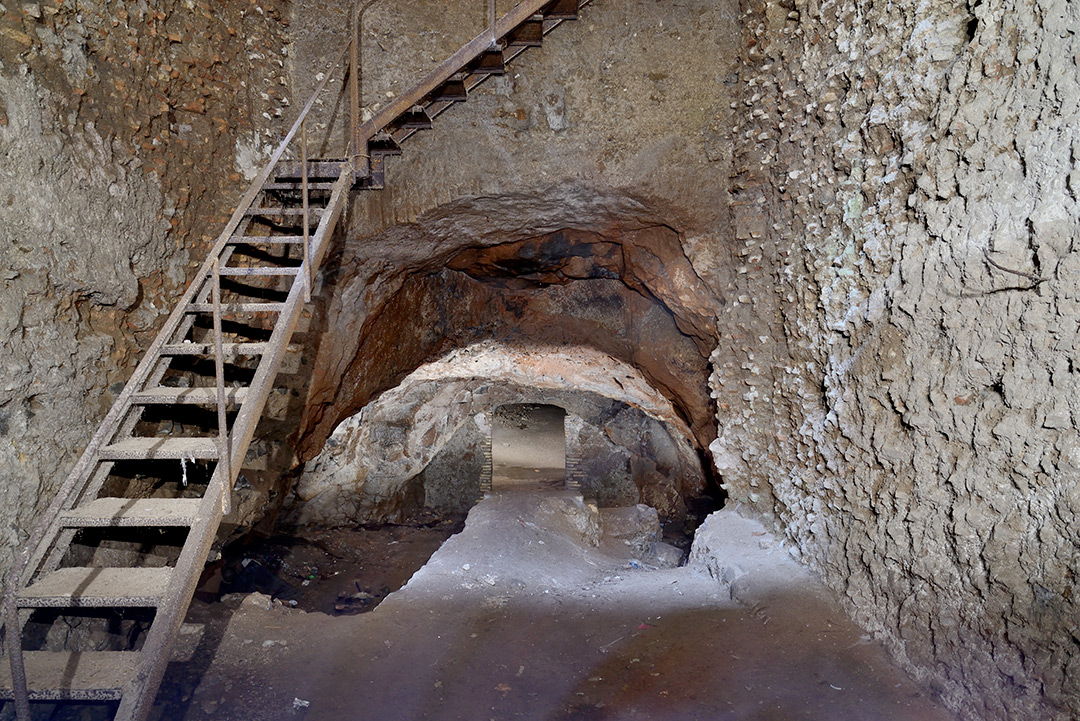
Roma – Cave di Claudio – foto Marco Gradozzi @ Roma Sotterranea rev
The route to the Caves of Claudio al Celio is accessible from the western side of the podium. We will experience a journey back in time down a staircase, which leads to the level of the ancient Roman road.
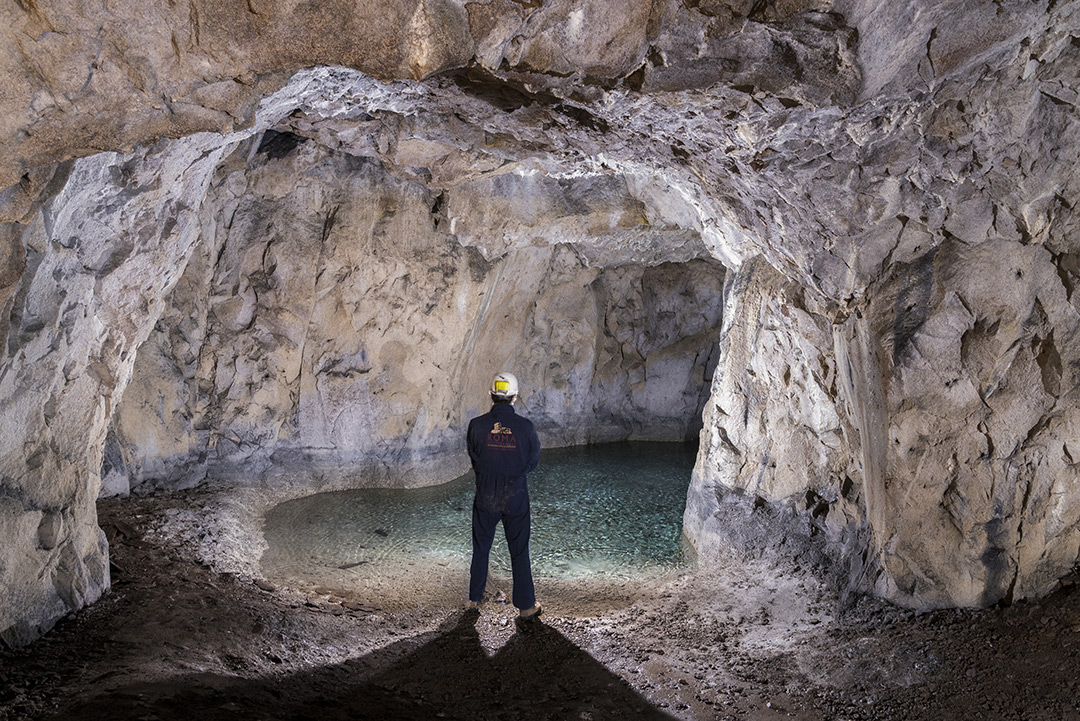
Cave di Claudio – foto di Marco Gradozzi @ www.romasotterranea.it
The basement of the Claudium winds through galleries dug into the tuff, used as a quarry at the time of Republican Rome. Buildings were constructed with this precious material, such as the 12th century convent of the Passionist Fathers, just above the quarry. However, the treasure of the Claudium basement consists of sixteen wells and two very suggestive small lakes, whose origins are not yet known and whose level varies significantly during the year.
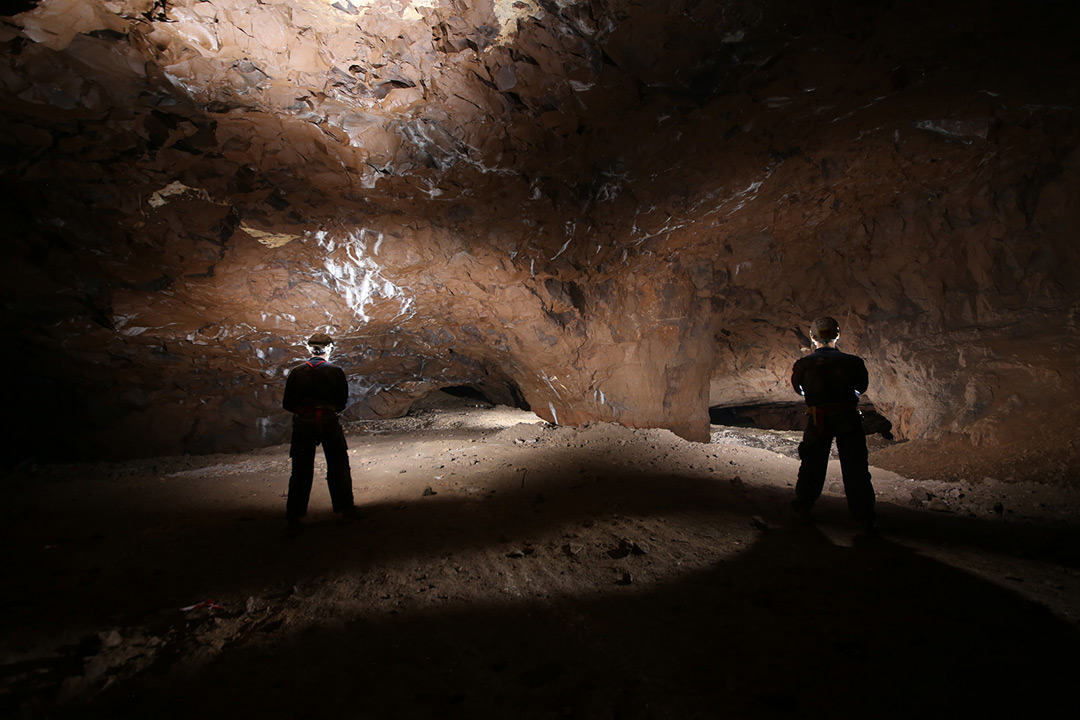
Cave di Monteverde -foto di Ivano Stranieri @ www.romasotterranea.it
We continue towards the cave and the lake under the Roman neighbourhood of Monteverde, where we find two more treasures of underground Rome, a huge quarry for the extraction of tuff and a body of clear water. This enormous underground area measures 7,000 square metres and is ten metres high.
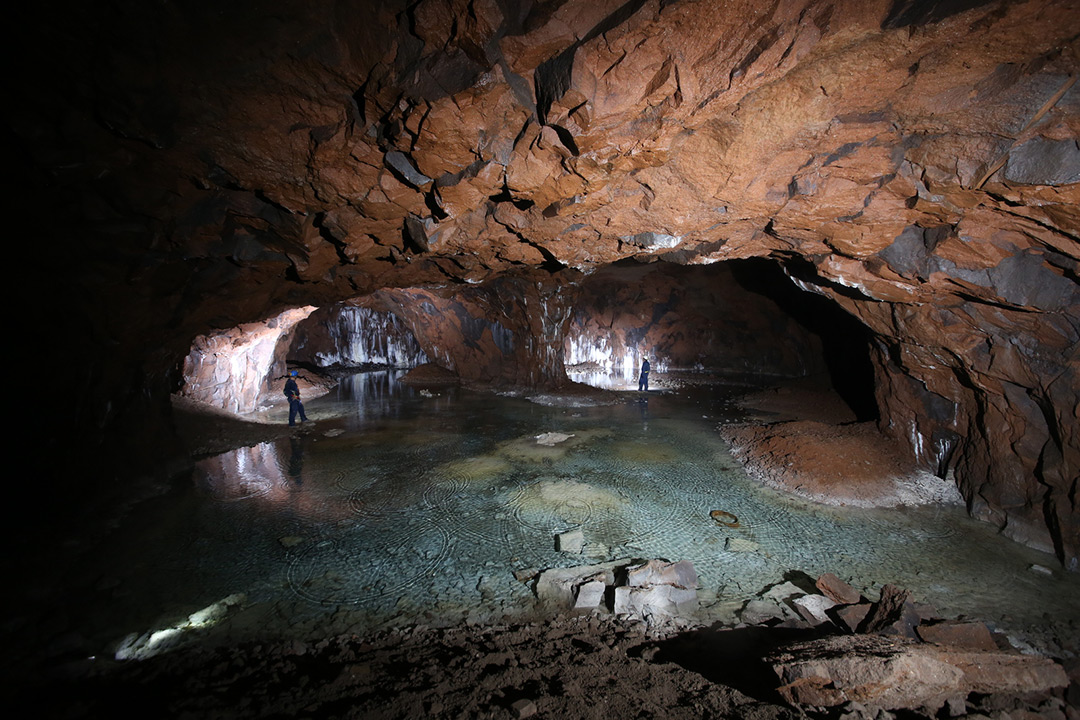
Cave di Monteverde -foto di Ivano Stranieri @ www.romasotterranea.it
Part of the quarry is occupied by an underground lake fed by a natural source. It is said that, during the Second World War, at the sound of the sirens, the inhabitants of the area took shelter from the bombings here. Currently only experts can access and visit the Monteverde quarry.
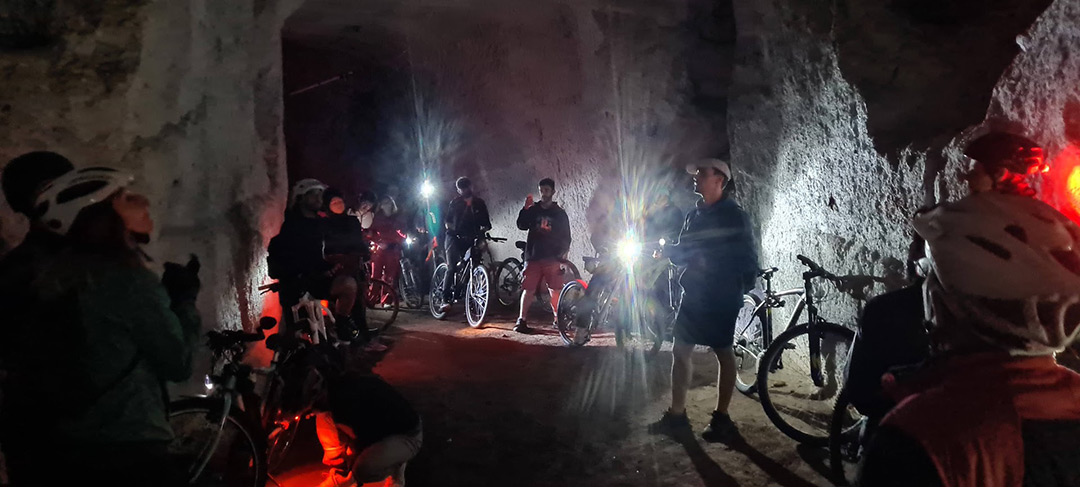
Labirinto di Roma, gallerie – foto www.sotterraneidiroma.it
Now it is time to enter the Labyrinth of Rome, the largest underground area with five km of tunnels, of which 1.5 can be visited on foot or by bicycle, within the wonderful Appia Antica Park. Through the tunnels illuminated by torchlight, we will be projected into a distant time that goes from the first century AD. to the early 1900s.
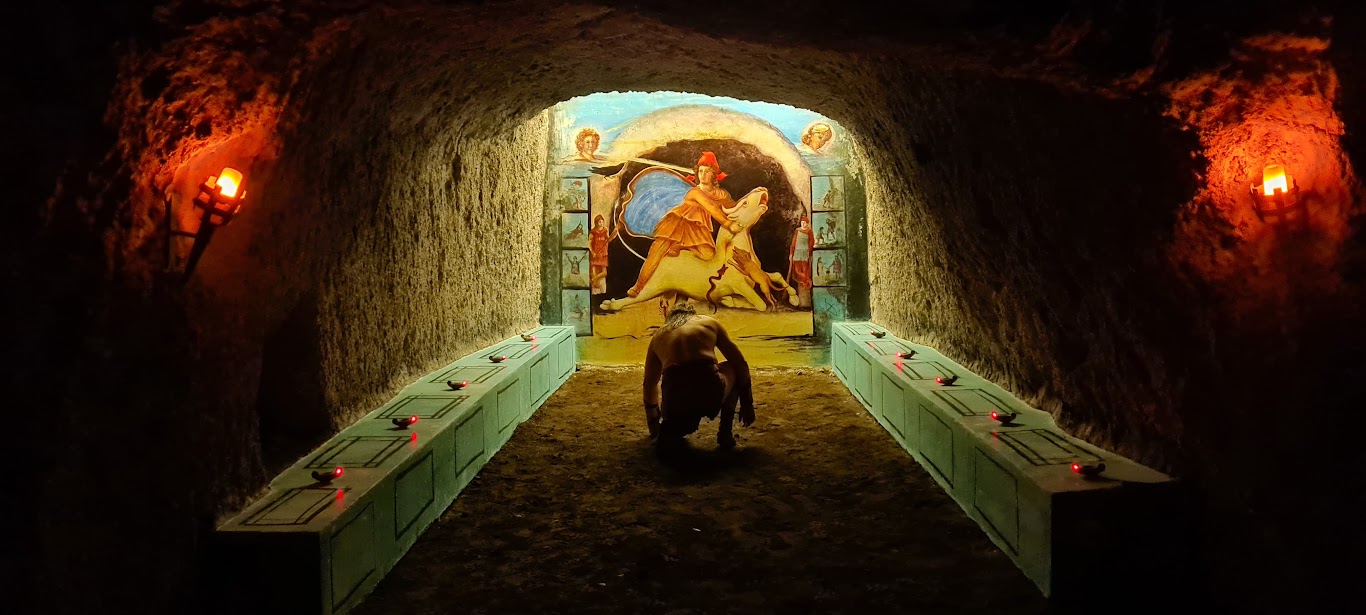
mitreo nel Labirinto di Roma – foto www.sotterraneidiroma.it
It will be an unexpected, extraordinary journey through over 2,000 years of history. This maze of intersecting underground tunnels was often used as a shortcut to reach mithraea, catacombs, columbaria and secret passages.
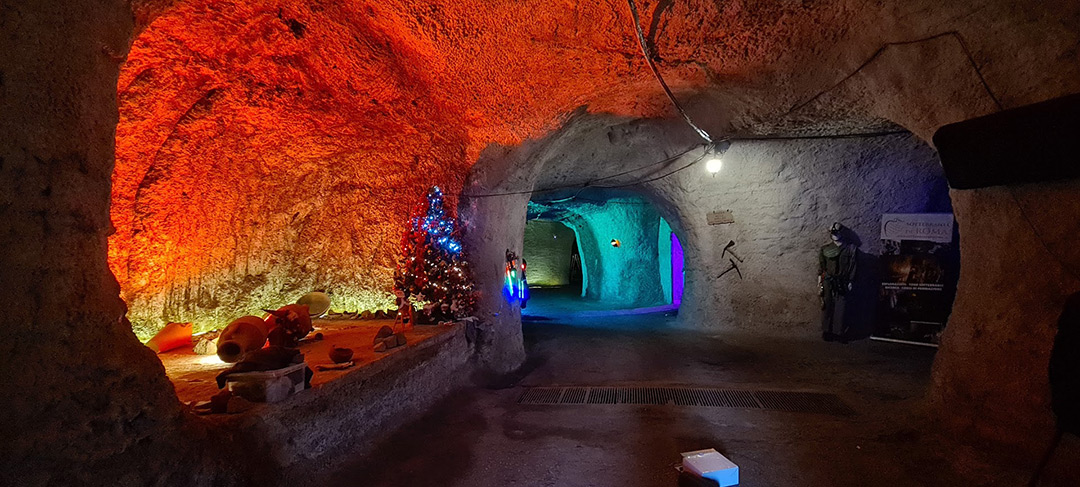
Labirinto di Roma, gallerie – foto www.sotterraneidiroma.it
The quarry was created in the first century AD., when slaves, fossores and specialized workers continuously provided building materials for new housing projects, such as domos and villas, but also aqueducts and sewage. With the advent of Christianity, the basements began to be used as catacombs. They were then abandoned in the Middle Ages and became ancient mushroom farms in the last century.
Rome never ceases to amaze us!