
There is no proper Summer without grattachecca, a glass full of crushed ice and fresh fruit drowned in syrup.
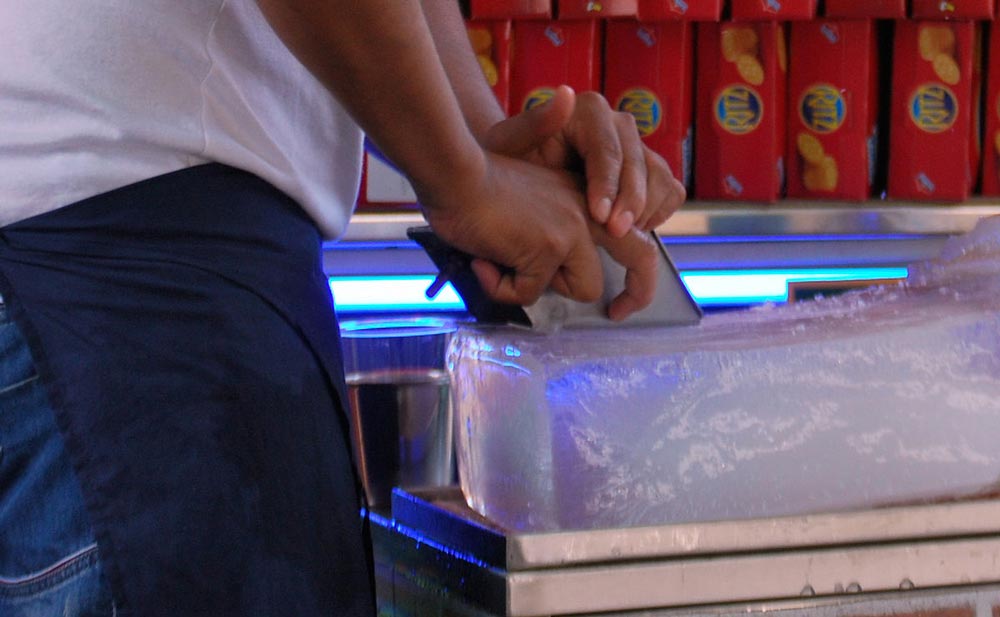
Unlike the granita, it mainly consists of ice, scraped from a block with an appropriate iron tool.

This delicacy, thought to have origins in Abruzzo, appeared at first in the Roman kiosks in Trastevere in the last century. At the time, it was considered the cheapest version of the classic promenade ice cream, intended for bourgeois consumers.

Some say that the term grattachecca derives from a certain Francesca, nicknamed Checca, who, in ancient times, sold ice shards scratched (grattati) from the block.

The ancestor of the grattacheccaro was actually the neviero. He transported blocks of ice from the mountains on the back of a donkey and then on a cart, covered them with a thick layer of insulating straw, and delivered them to the citizens, who could preserve food and prepare ice creams and sorbets.
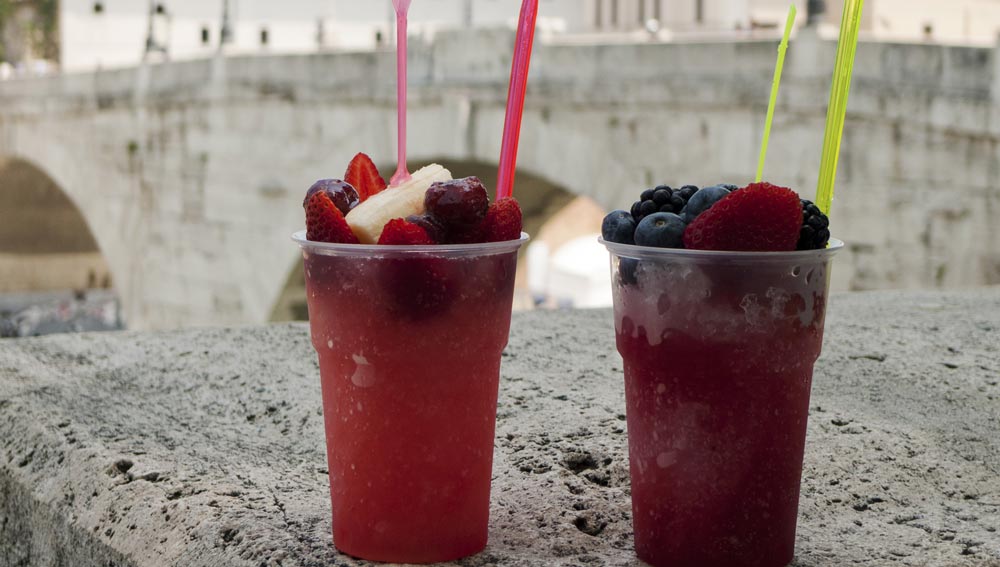
There are many kiosks selling this dessert, almost in every district; some are open all year round, others only in summer. The oldest one has been standing in Città del Vaticano since 1933.

The kiosk in via Magna Grecia shows the writing in dialect “La mejo grattachecca de Roma”. Here, the most requested flavour is certainly sour cherry, with coconut flakes and black cherry syrup on top. The lemon flavoured variant is prepared with fresh lemon squash.

For the authentic inhabitants of the Roman District Testaccio, Lemoncocco, with lemon and coconut juice, is the best. Tasty chopped lime peels can be added.

In Trastevere, the gratichecca, as it is called, has been produced for four generations. It is said that even Leonardo Di Caprio stopped by here undercover! Among the illustrious people who have tasted the Roman grattachecca stands out Michelle Obama, who appreciated it on the Tiber Island.
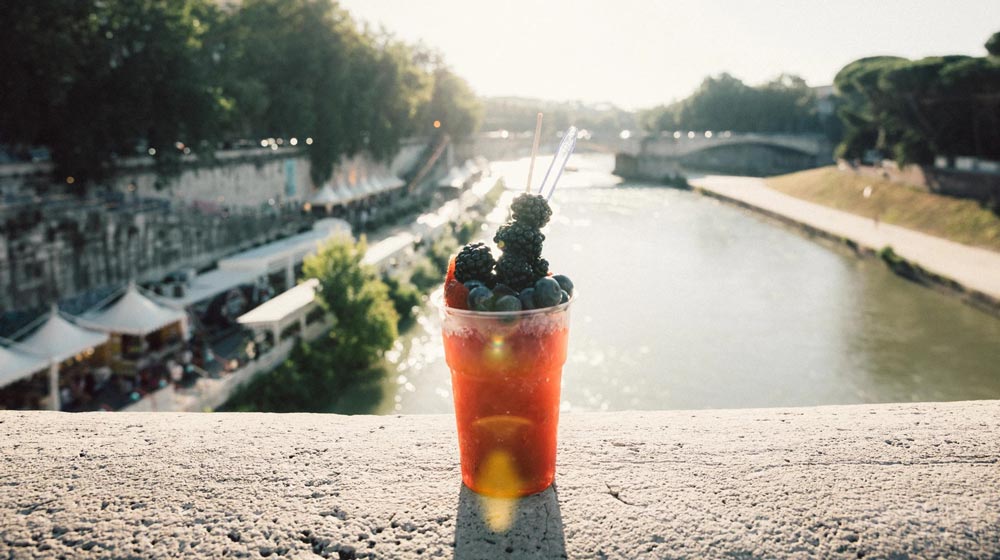
Grattachecca

We advise you to avoid syrup if you are watching your weight, and to eat your grattachecca quickly, or it will turn into hot fruit juice.

Happy Roman Holiday!


Social share

SCOPRI ANCHE

Child-Friendly Beaches, Ten Green Flags in Lazio

For 2026, Lazio has confirmed 10 child-friendly beaches. The Green Flag criteria are: shallow water, sand, dedicated play areas, assistance, and services.

Lazio Confirms 10 Blue Flags

The recognition goes to Latina, Sabaudia, Terracina, Fondi, Sperlonga, Gaeta, Formia, Minturno, Trevignano Romano, and Anzio. San Felice Circeo loses the flag.

Orie, Terme di Amatrice, walking among the deer

A walk in a natural oasis in Configno, a hamlet of Amatrice, accompanied by deer and fallow deer, the verses of the Canticle of the Creatures, and the poetry of De Andrè.

The Three Women who created the Garden of Ninfa

And as with every self-respecting fairy tale, we open the great book on the story of three noblewomen who made the history of the Garden of Ninfa!

12 Walks among 7 flowers in bloom in Lazio

It’s time to experience nature in bloom. Walk among 7 flowers in bloom in Lazio from Spring to Summer in 12 places with a thousand fragrant nuances.

Like an Etruscan in the Banditaccia Necropolis

Banditaccia is the only place in ancient Etruria where the necropolis remains exactly as an ancient Etruscan would have seen it. For this reason, it is a UNESCO World Heritage site.

In Summer, Lazio is tinged with red by Strawberries and Cherries

In Summer, delicious, juicy strawberries and cherries enhance the whole Lazio with their intense red colours and scents. Let us enjoy a gastronomic journey through these extraordinary flavours! Cherries, blooming between May and June, have been cultivated in the upper...

The alchemy of the esoteric Reatine valleys

Almost everyone knows the Alchemical Door in Rome, but there is another one in the region Lazio, in Rivodutri. Let's start from this "treasure" to tell you about mysteries, enigmas and little-known curiosities about the Reatine Valleys. So we were talking about the...

Travelling in the bizarre Lazio

We travel to bizarre Lazio to discover unexpectedly strange, macabre or heavenly places, always shrouded in an aura of mystery and surprise.

A Journey in the garden of Ninfa, Welcome to Paradise!

Centuries-old trees, colorful flowers, ancient ruins, water features. The Garden of Ninfa is a living work of art, discovering it is an experience that ignites the senses