

Have you ever tasted the Virtues of Formia? Seven of them are the ingredients of a traditional dish, and many others can be discovered in the shadow of the Blue Flag 2025.
The Virtù
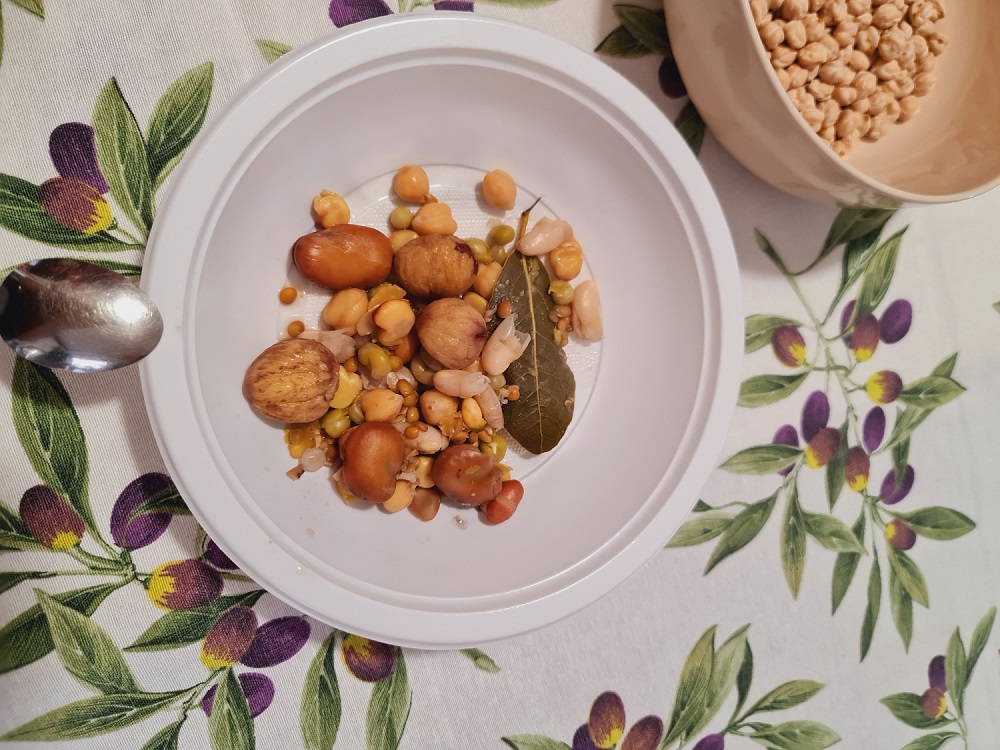
The virtù is an ancient recipe handed down through generations, the ladies of the Comitato della festa delle virtù prepare during the May Day Festival.
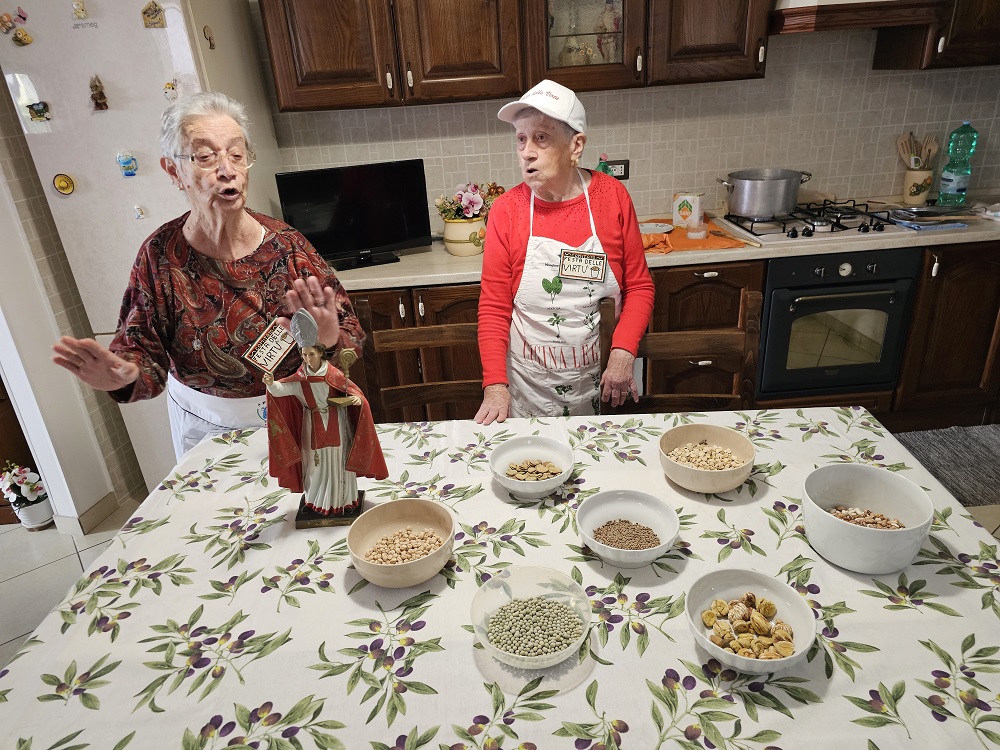
The ladies of the Comitato della festa delle virtù
The soup consists of chestnuts and six kinds of pulses (broad beans, chickpeas, peas, lentils, grass peas, and mixed beans), which symbolize the Madonna’s virtues of fidelity, simplicity, purity, generosity, goodness, seriousness, and sanctity. Here are the instructions for the preparation. First soak the grass peas and broad beans in water, followed by all other ingredients. The lentils must not be soaked, but added last during cooking, along with the salt and the bay leaves. Finally, simmer without stirring, otherwise the soup will stick to the pot.
The Roman Porticciolo
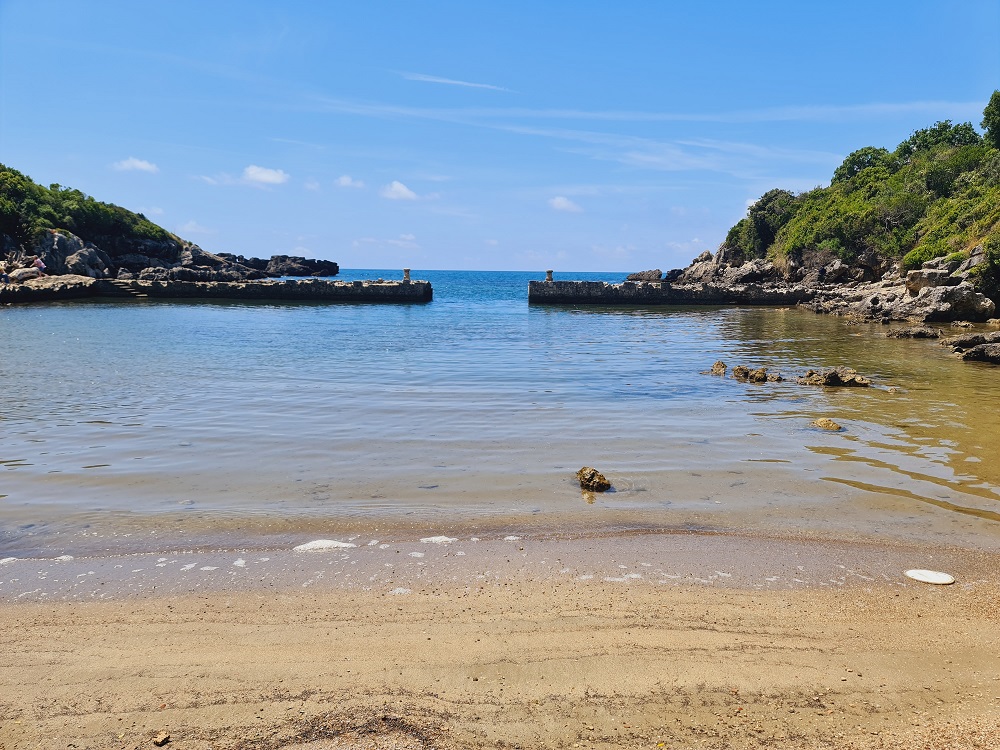
And now let us discover the beauties of Formia, by starting with the Roman Porticciolo, built in the 1930s by Marquis Afan de Rivera, probably on what was once a small harbour. The Porticciolo lies on the ruins of ancient pools, certainly Roman fish farms for valuable saltwater and freshwater species..
The Beach of Gianola
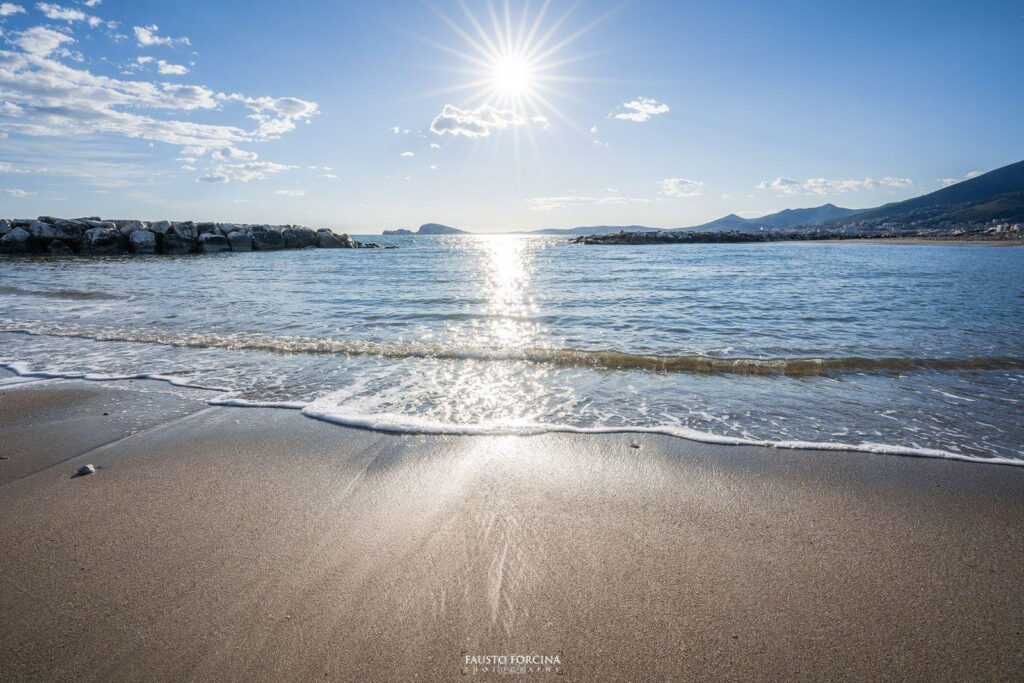
Worth a visit is also the Villa di Mamurra, which, from the Roman Porticciolo, extends along a coastal stretch of about 600 metres in the Parco di Gianola, within the Parco della Riviera di Ulisse, up to the beach of Gianola. Here, the Blue Flag waves over the small bays, and windsurfers whizz over the turquoise sea.
Lucius Mamurra was a Roman knight and prefect of engineers under Julius Caesar in the first century BC, a strategic figure who participated in the military campaigns of Spain and Gaul. The villa is spread over three terraces, the lower one hosts the residence and the middle one the Cisterna Maggiore and the Cisterna delle 36 Colonne. At the top of the promontory stands the Octagonal Building.
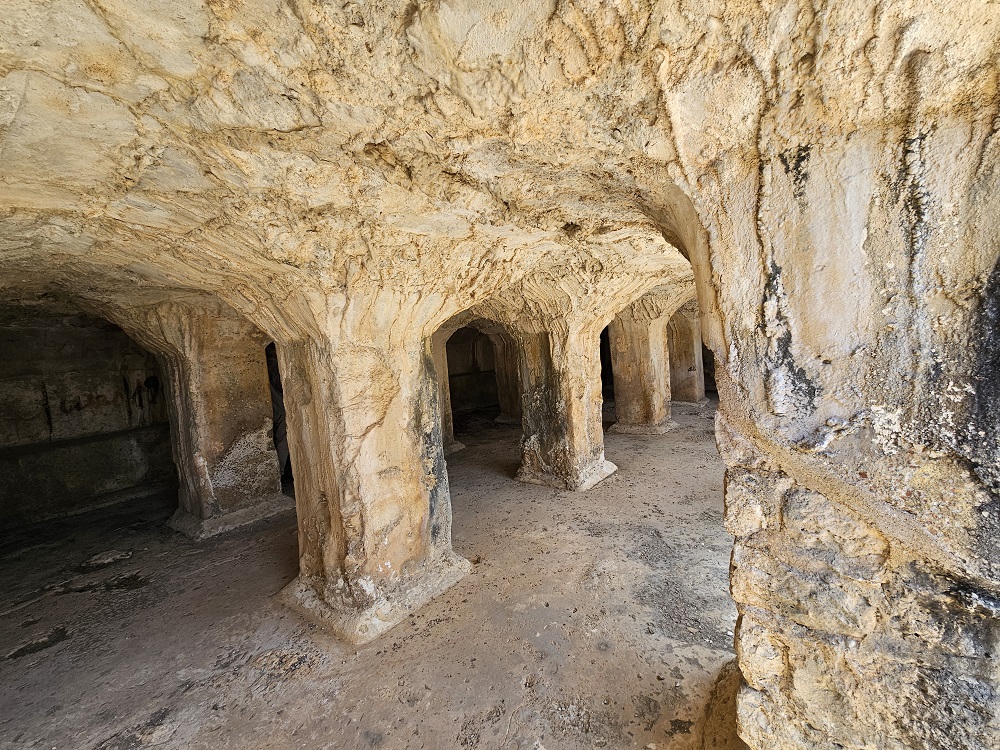
The Cisterna Maggiore
The barren soil in this area required cisterns since the first century BC, the Cisterna Maggiore, which could contain approximately 900 cubic metres of water drawn from the springs in the Aurunci Mountains, and the Cisterna delle 36 Colonne. The latter is improperly called, as, closely observed, it does not feature thirty-seven columns, but thirty-two pillars.
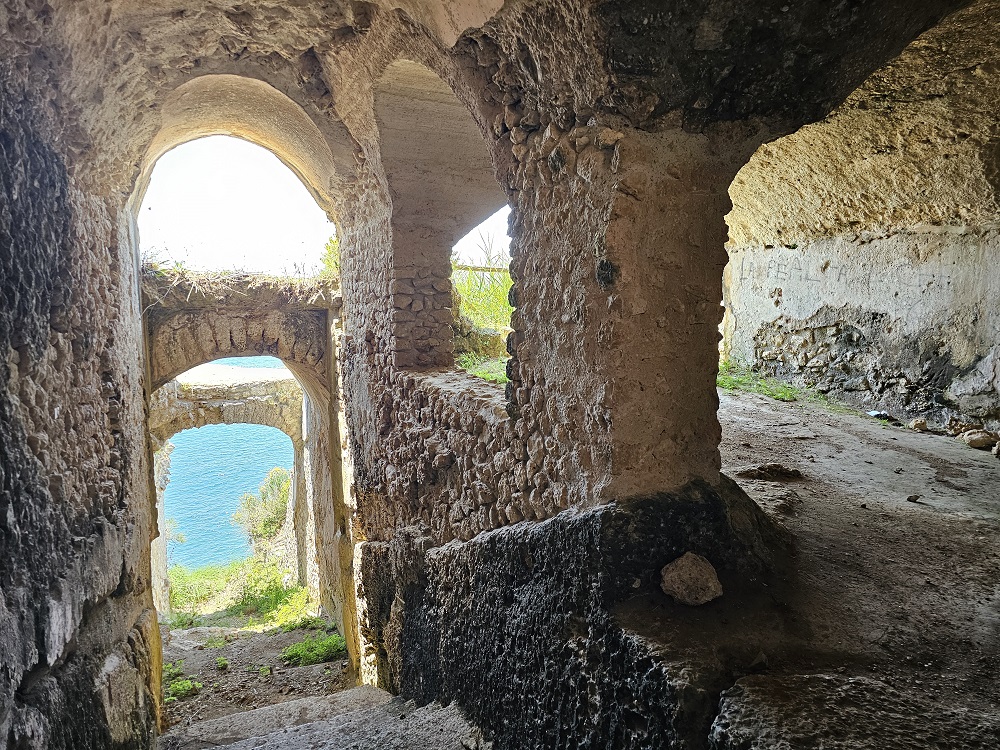
The Grotta della Janara
From history to legend, let us explore the Grotta della Janara, which was a frescoed corridor connecting the intermediate terrace to the eighteen metres lower one, today a splendid window to the sea. When the Villa of Mamurra was abandoned, overgrown vegetation turned it into a cave. Here stood a statue of Diana, the Goddess of the hunt and arid lands. Her name derives from Jana, hence “Janara”, as a renowned witch is called in local dialect. Fishermen used to say they saw the silhouette of a witch in the cave, and even heard her screams, which were probably the shadow of the statue and the howling of the wind. Who knows?
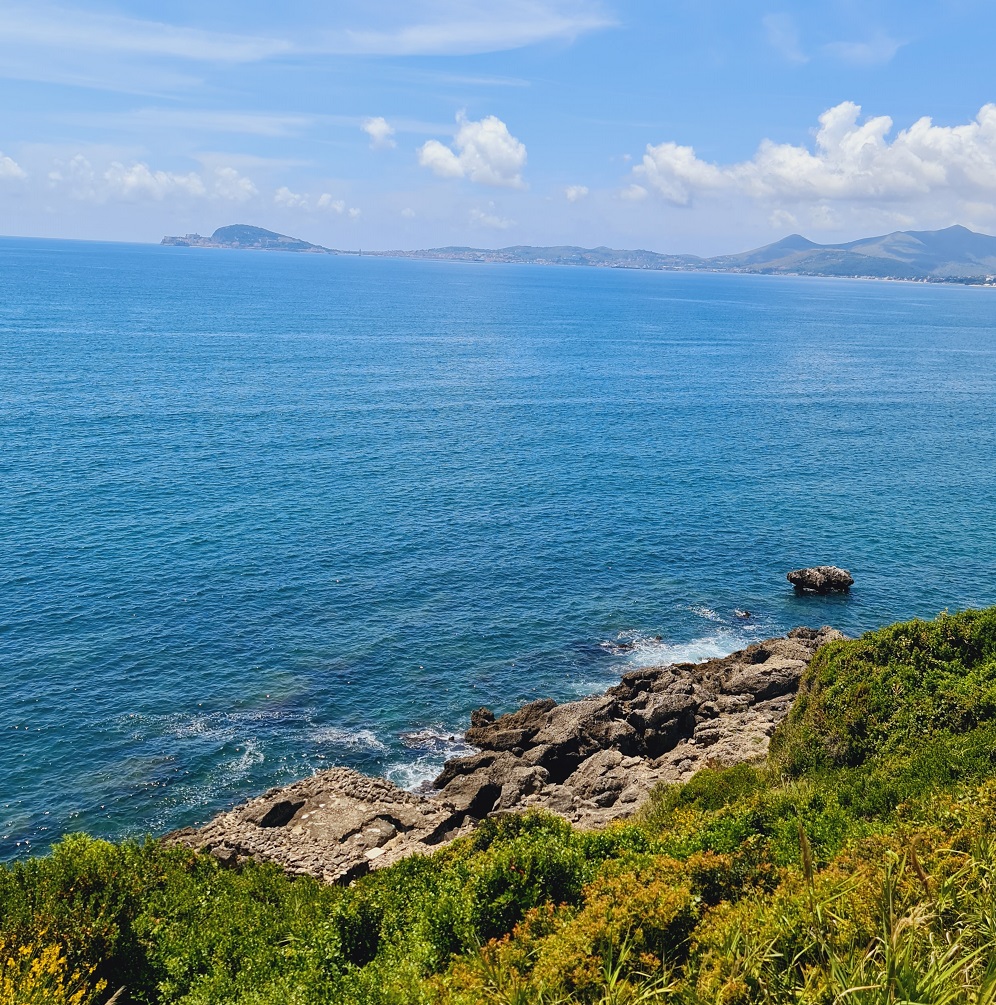
The heated zero-edge pool
This underground corridor led to a heated zero-edge pool overlooking a 360° panoramic view. Thus, Mamurra could even take a bath in hot water even in winter, surrounded by the Gulf of Gaeta cold sea.
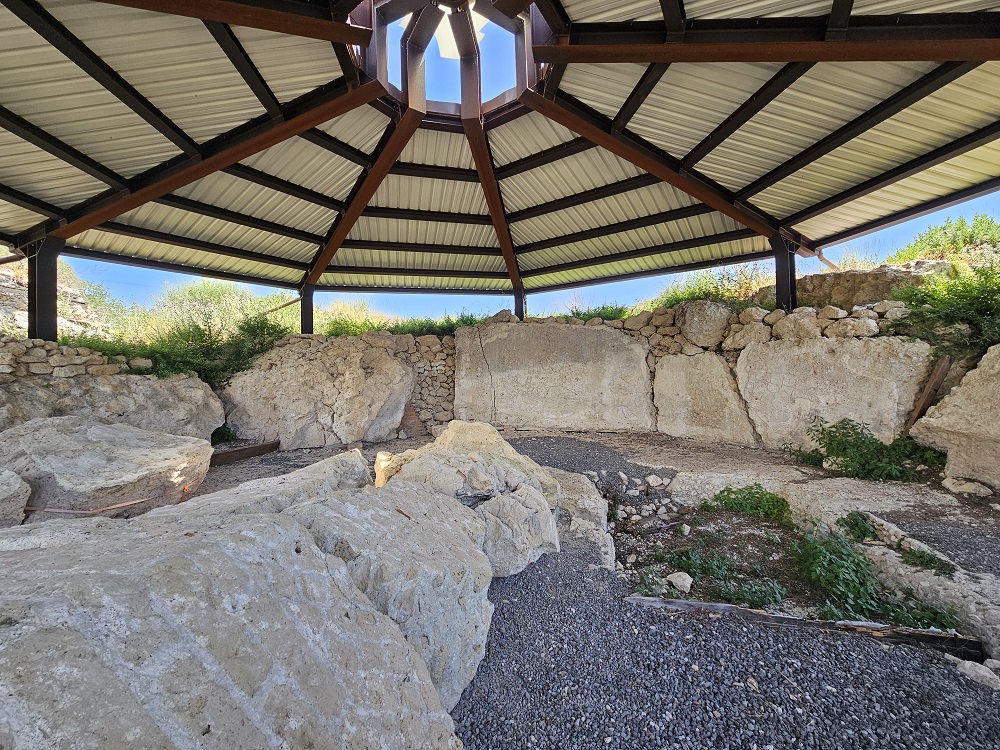
The Edificio Ottagonale
On the upper terrace, stands the Edificio Ottagonale, built to collect water from a spring on the hill. The building is also called the Temple of Janus, in honour of the goddess Diana “Janula”, hence the name of the district, Gianola. This architectonic jewel once featured, on the ceiling, a mosaic depicting a starry sky. According to Aristotele, the earth had been formed by three elements (stars, water, and rock) through upward and rotational motions.
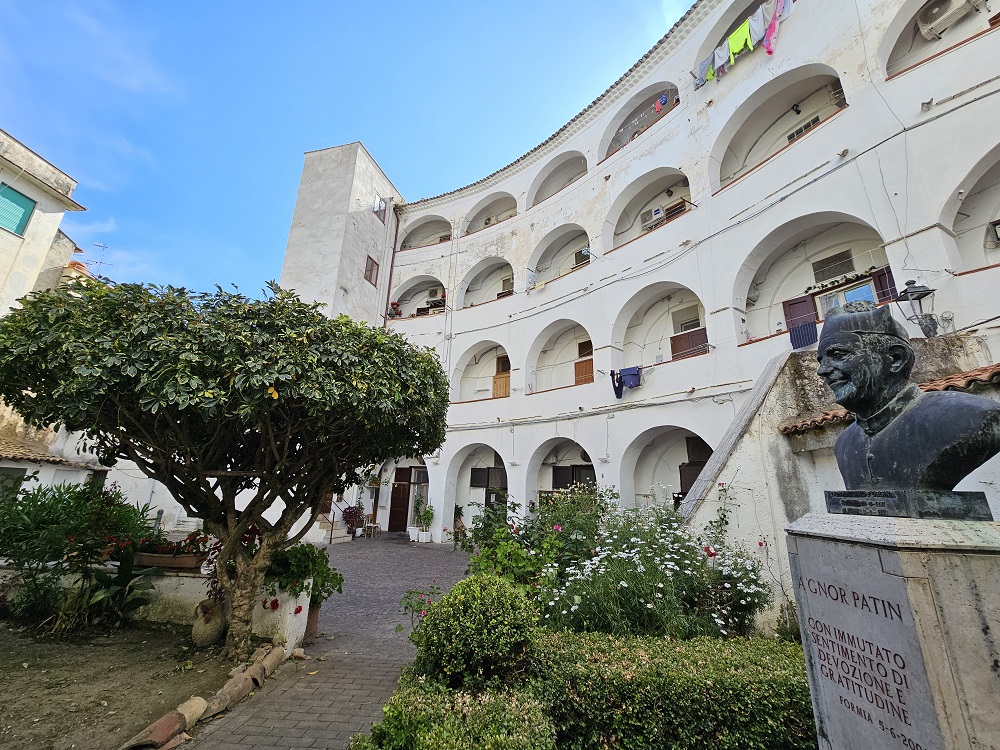
The Former Roman Theatre
Another attraction in Formia is the Roman Theatre, in the neighbourhood of Castellone, where gladiator games were once held. Entering through a gate called “Gliu’ Cancieglie”, we can find the remains of the Roman Theatre, now incorporated into seventeenth-century buildings arranged along the ancient circular auditorium.
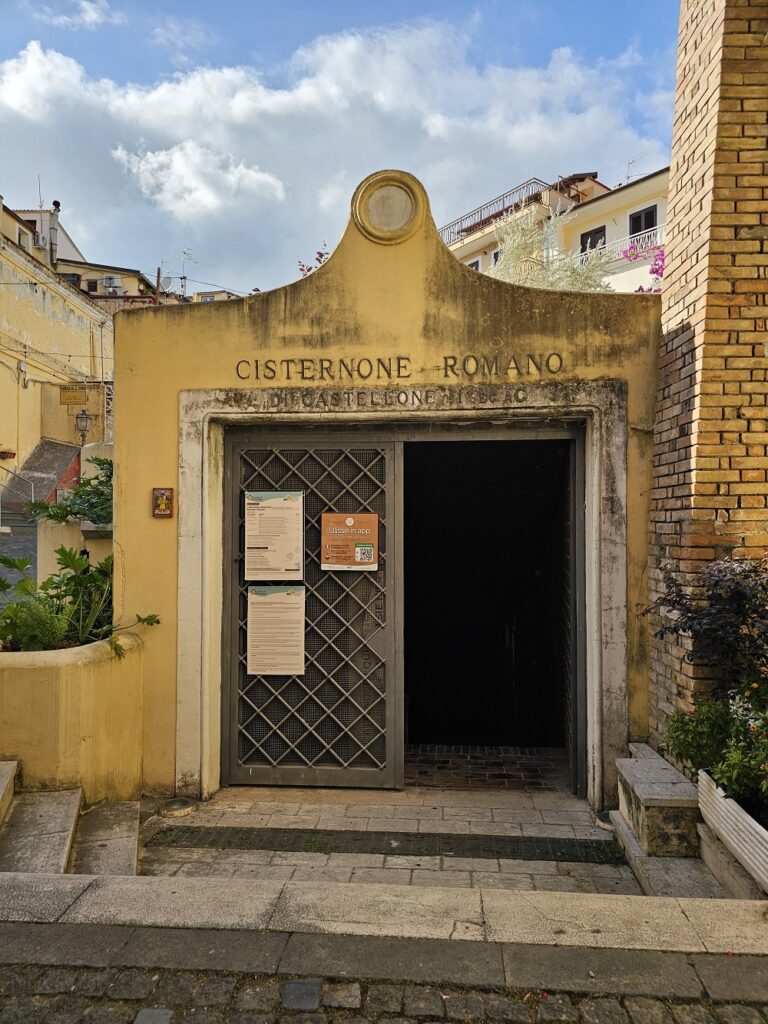
the Cisternone
The Cisternone from the first century BC, which could even contain up to 7,000 cubic metres of water, is the oldest monumental cistern in the world and the third in terms of capacity after the Yerbatan Saray in Istanbul (an 80,000 cubic metres Basilica Cistern) and the Piscina Mirabilis in Bacoli.
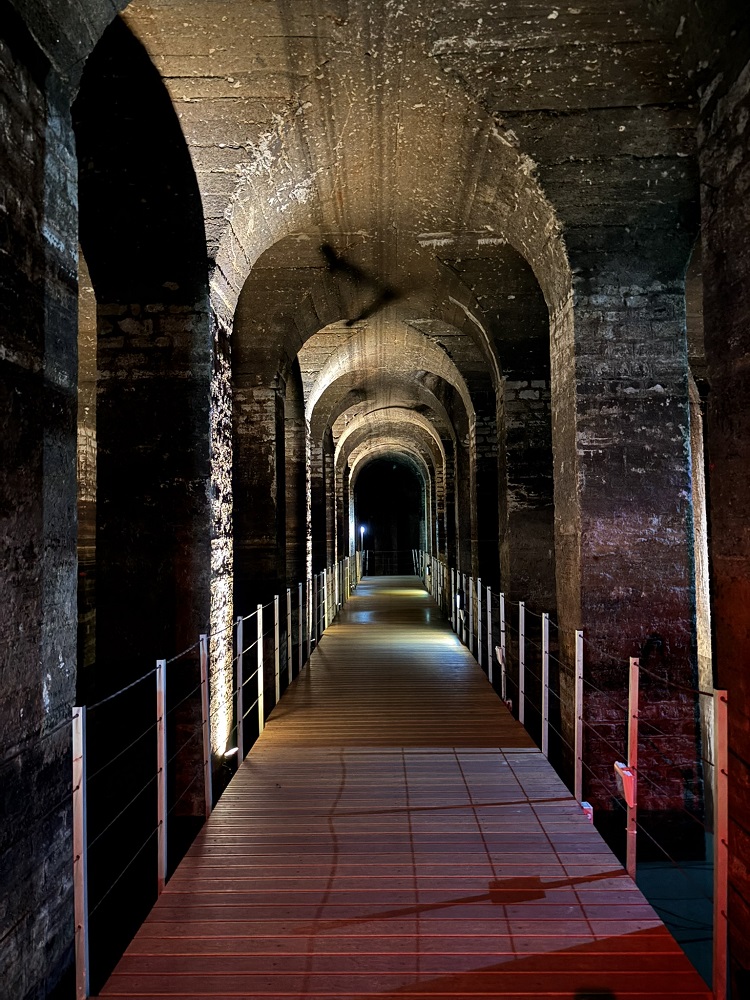
The Roman Cistern
In the first century BC, such an advanced hydraulic engineering served the summer residences of influential figures, such as Cicero, a contemporary and fellow citizen of Mamurra. But its main purpose was to supply water to the Roman naval fleet docked in the Gulf of Gaeta until the end of the first century BC. These waters, flowing from the sources on Mount Santa Maria della Noce, were channelled by digging into the hill.
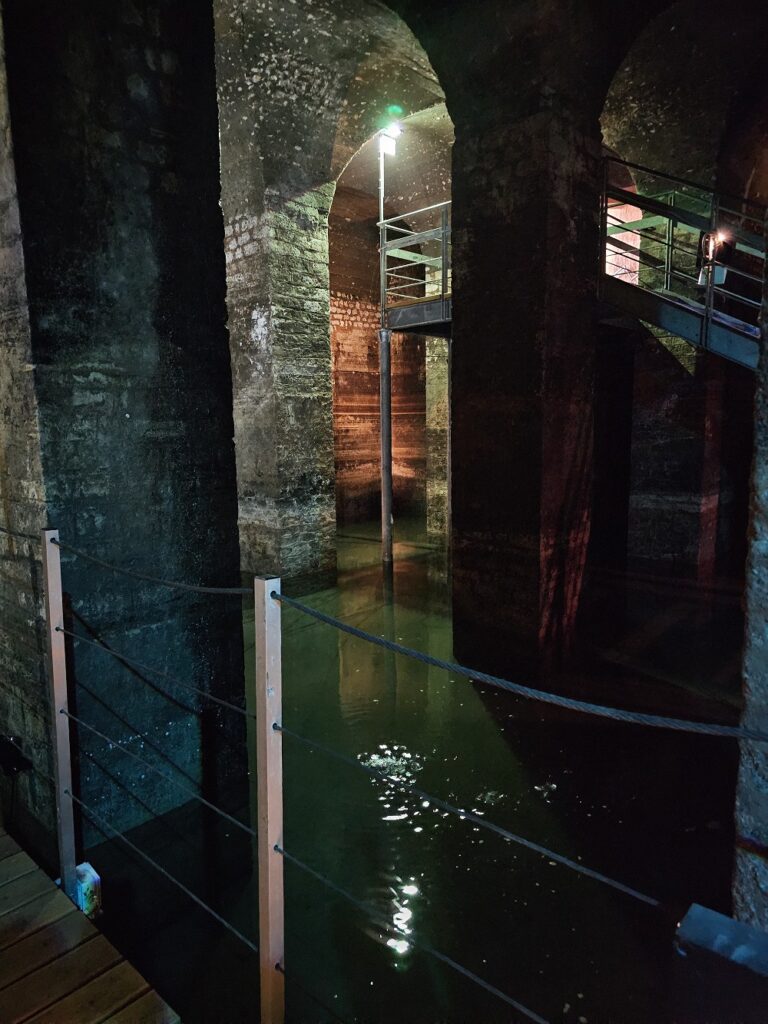
The Cistern
The Romans disinfected the cistern by throwing eels into the water. These latter feed on microorganisms and bacteria and, slithering along the bottom, stir up the silt, preventing it from sticking to the pavement.
The population of Formia moved from the coast to the hills in the eighth century, in order to defend themselves from the Saracens. They built houses above the cistern, which supplied their water wells. After centuries of neglect, the archaeologist Pasquale Mattei identified, in 1860, one of the wells from the Roman era, but only in 1980 did a group of local researchers resume the investigations about the cistern, which, maintaining its original structure, reopened to the public in 2003.
The Church of Sant’Erasmo
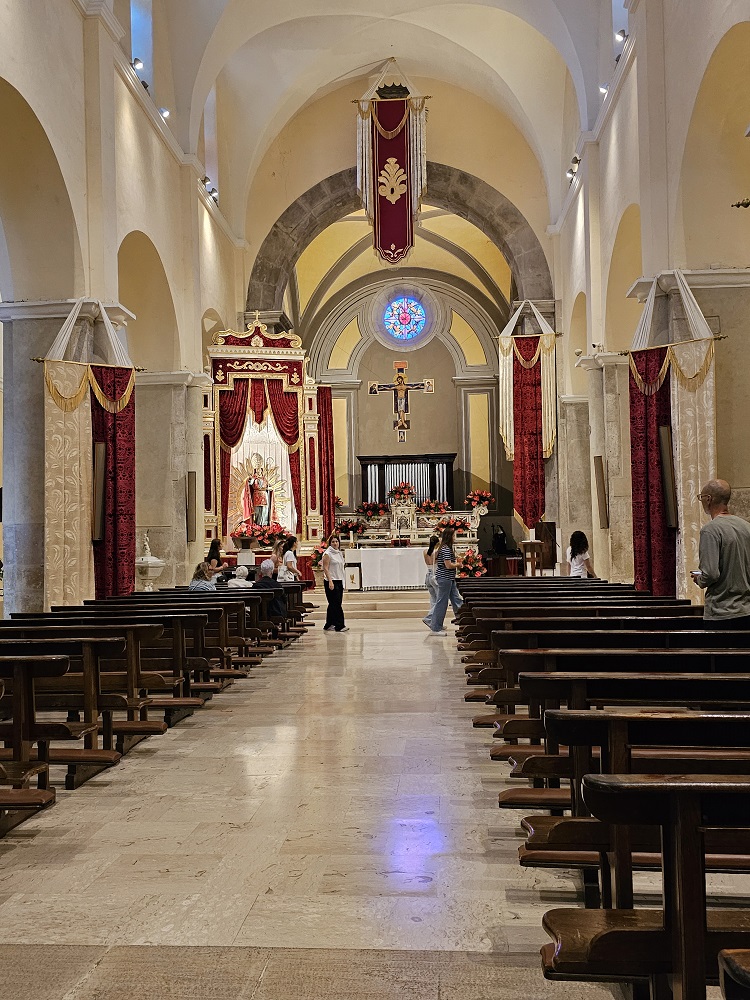
A few steps away, stands the Church of Sant’Erasmo, the oldest one in Formia, whose crypt hosts the remains of the patron saint, Bishop Erasmus. This area once housed a Roman necropolis of Christian and pagan tombs from the early Christian and Roman periods (now preserved in the crypt), as well as an early Christian Basilica built between the fifth and the sixth centuries. Until 1500, the basilica was inhabited by a Benedictine community, and then, until the early nineteenth century, by an Olivetan Congregation, which gave the church its current Renaissance appearance.
The modest burial of Saint Erasmus, also the patron saint of sailors, was renovated in 1400 to highlight the tomb, where miracles were said to have occurred, and then, in the nineth century, the body of the Saint was transferred to Gaeta, a maritime military power. Every year the people of Formia commemorate this event. On June 1 at midnight, devotees offer the patron saint a red carnation and sing the ancient hymn in the Church of Sant’Erasmo, and, on June 2, they celebrate a solemn procession which retraces the transfer of Saint Erasmus’ remains from Formia to Gaeta.
The Beach of Vindicio
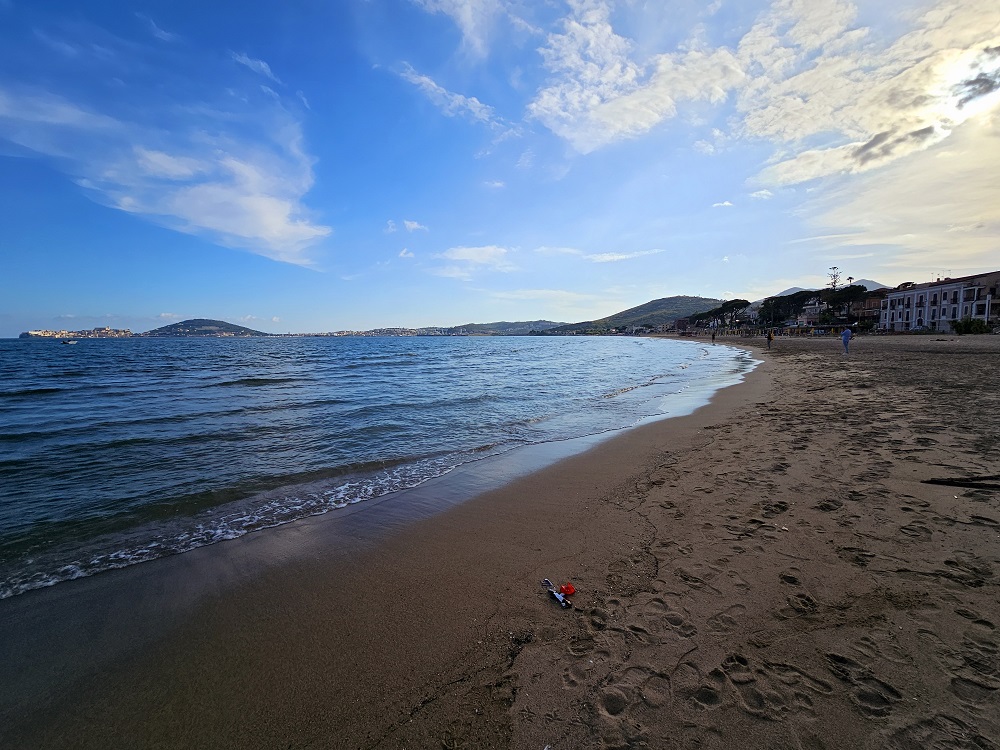
Finally, let us enjoy a walk along the beach of Vindicio where the Blue Flag waves, and admire the blue sea, a paradise for windsurfers.
An important event in Formia is the Festival Vitruviano, dedicated to Marcus Vitruvius Pollio, the Formian genius who, during the Imperial Age, wrote the treatise “De Architectura”, the theoretical foundation of Western architecture.
So, did you already know these many virtues of Formia?