

On March 19, Father’s Day, a special surprise is waiting for you: not only beignets but also an entire Menu of San Giuseppe. Let us roll up our sleeves and immediately start with your Dad the journey to discover the ancient culinary traditions, and others, in Lazio.
First course: San Giuseppe Pasta and Chickpeas
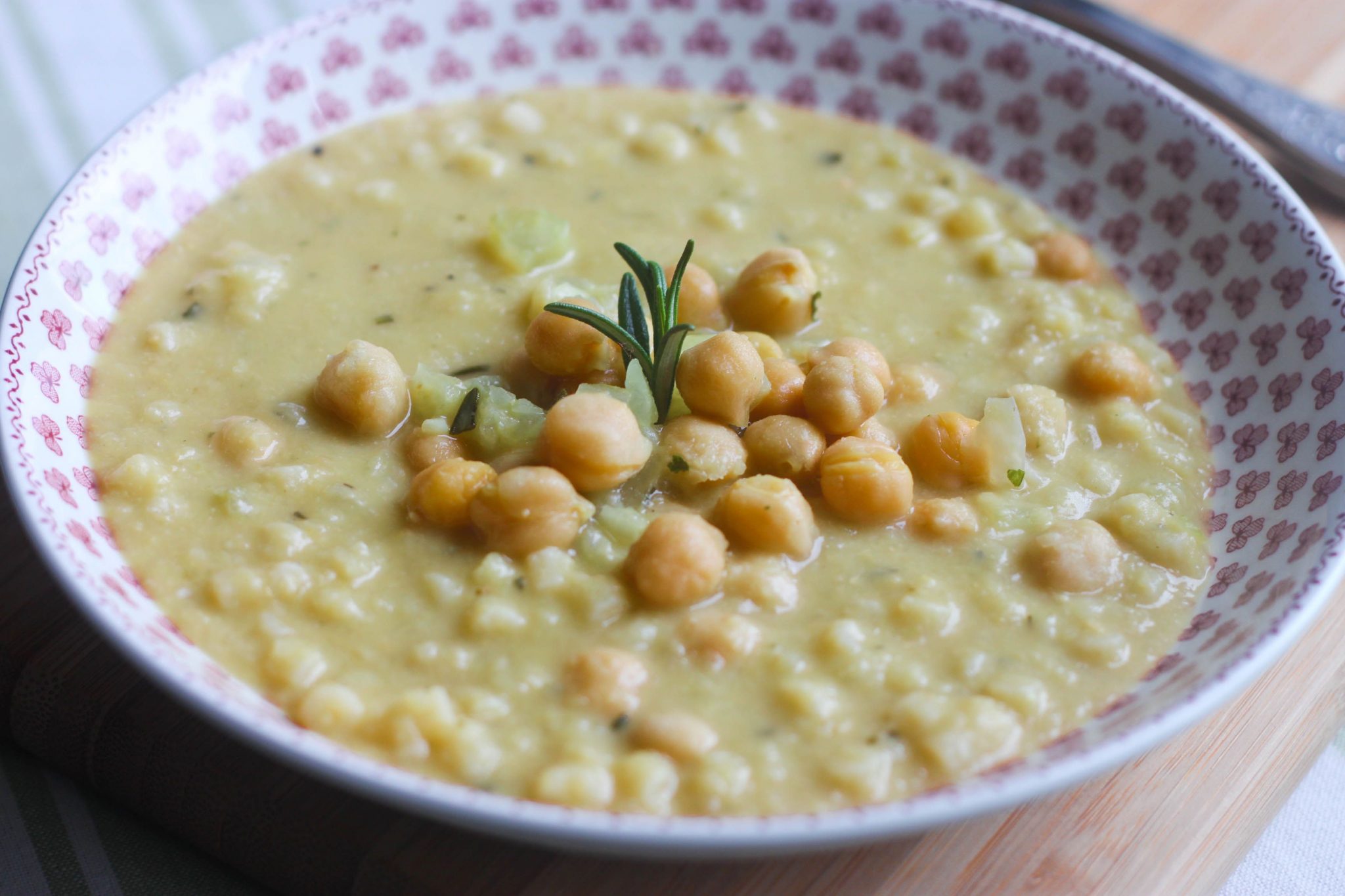
Pasta and chickpeas is a typical Roman dish of the rural tradition, a kind of soup, which warms us up during the winter season. Among the popular traditions of Lazio, we can experience the Fires of San Giuseppe, where pagan and Christian rituals have merged over the centuries. The celebrations of the spring equinox welcomes the new, generous season with the agro-pastoral communities collecting pruned olive tree branches and the wood artisans’ waste materials. Then San Giuseppe, protector of carpenters, is religiously celebrated. In Itri, on the Ulysses Riviera, the màmmuòcc’, dressed in old rags symbolizing winter, is burnt.
Second course: Vegetarian Fritters
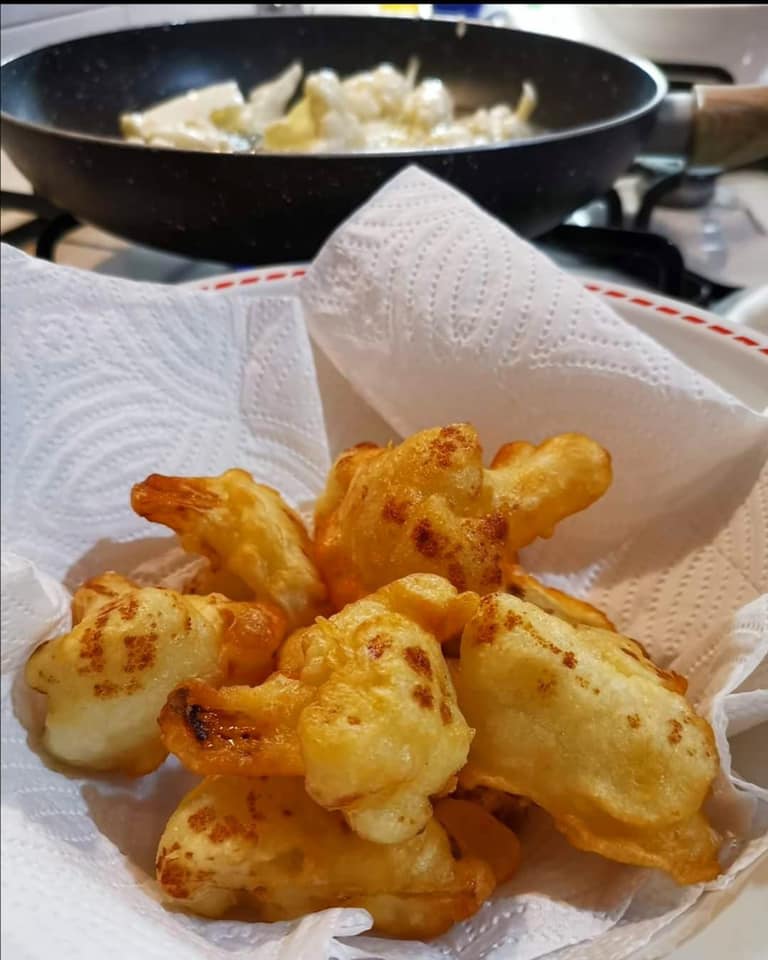
Frittelli di San Giuseppe di Roccantica – Facebook @ProLocoRoccantica
In Roccantica in Sabina, on Father’s Day, you can taste the Frittello, based on crunchy fried seasonal vegetables, an opportunity to gorge ourselves on fried cauliflower and other street food, with the justification of honouring San Giuseppe Frittellaro! In fact, it is said that, after the escape into Egypt with Mary and Jesus, Saint Joseph started selling fritters to support his family in this foreign land.
Desserts: Maritozzi with cream
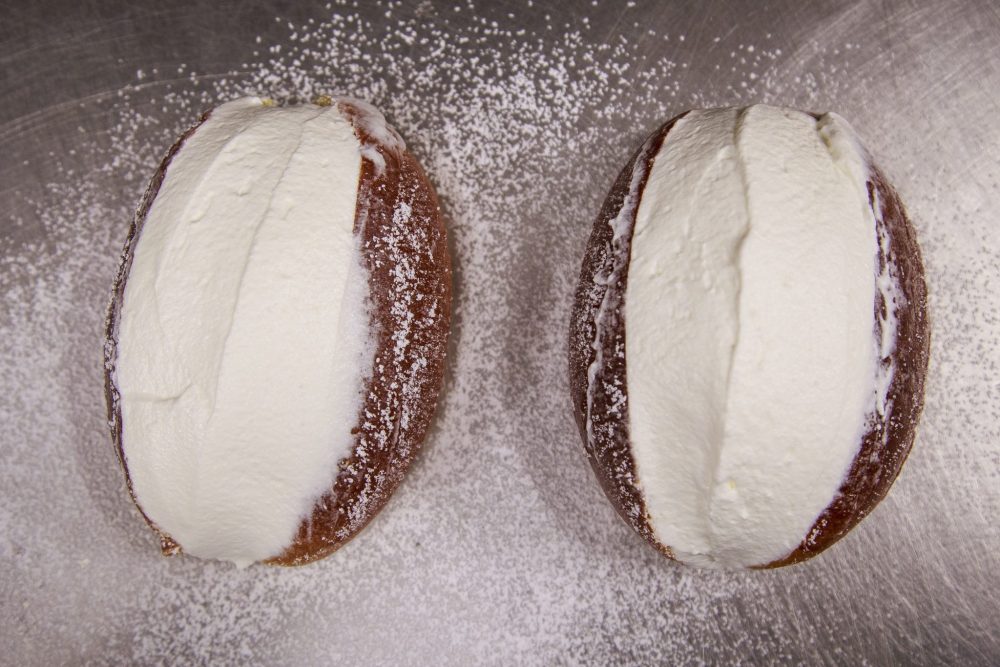
i Maritozzi con la panna
Maritozzo is a typical Roman baked dessert made with flour, eggs, butter and honey and filled with whipped cream or raisins, a more sober version permitted during Lent, as in the Roman verses by Gioacchino Belli:
“I maritozzoli sono certi pani di forma romboidale, composti di farina, olio, zucchero, e talvolta canditure, o anaci, o uve passe. Di questi si fa a Roma gran consumo in Quaresima”
The origins of Maritozzi date back to the Ancient Romans, who used to hide their wedding rings within the dough, to propose to their fiancées on the first Friday of March. The cake is therefore called Maritozzo, in honour of the future husband (marito). In popular tradition, Saint Joseph is also the Patron Saint of unmarried girls, who, at least in March, could have a chance.
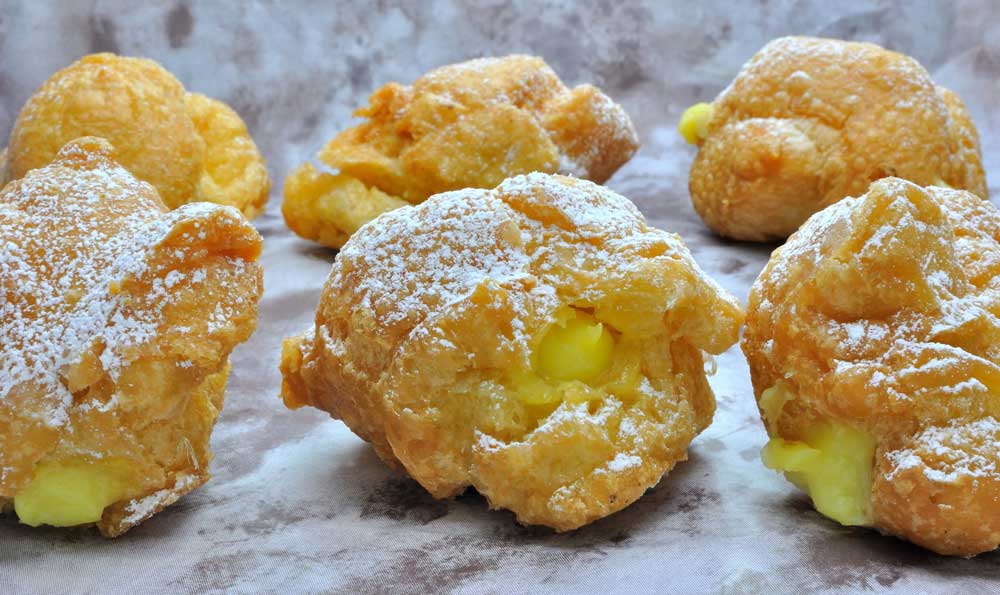
Bignè di San Giuseppe
The Bignè di San Giuseppe are the typical, centenary beignets prepared on Father’s Day. Fried in honour of San Giuseppe Frittellaro, these Roman custard puffs are called zeppole in Southern Lazio. In Itri, we can taste the zeppola itrana, prepared in enormous quantities during the Fires of San Giuseppe.
Custard puffs or zeppole can be both fried and baked, as in their original Neapolitan preparation. According to the classical Roman tradition however, they must be strictly fried, rounded and very large, with lots of icing sugar and a heart full of custard. Be careful not to dirty your clothes!
Now we are ready for the recipe…
Fried San Giuseppe custards puffs
Ingredients (for approximately 20 beignets):
for the dough:
- 250 g of 00 flour
- 250 g of water
- 50 g of butter
- 5 medium eggs
- 5 g of salt
- 1 litre of sunflower seed frying oil
- vanilla icing sugar
for the custard:
- 460 g of fresh whole milk
- 6 medium egg yolks
- 150 g of sugar
- 30 g of 00 flour
- 20 g of potato starch
- 1 tablespoon or one sachet of vanilla extract
Preparation
Dough: place a saucepan with water on the stove; add the salt and the butter cut into pieces. Stir to melt the butter and wait for the mixture to boil. Then add all the flour and keep mixing. Remove the pan from the heat and continue stirring for a few seconds until you obtain a thick, rubbery mixture, which you can easily remove from the saucepan surface. Put the batter back on the heat and stir for a few more seconds. Pour the mixture onto a worktable and use a spatula to make it lukewarm. Roll out the dough several times and continue warming it with your hands. At this point, pour one egg at a time into the batter, beat them lightly with a fork and mix with a spatula. Pour each egg only when the previous one is completely absorbed and the mixture is firm again and, in the end, you will obtain a soft and firm final dough.
On a baking tray lined with parchment paper, use a piping bag with a smooth nozzle (1 cm) to make small balls of dough (diameter 6 – 7 cm), separating them at least 3 – 4 cm. Flatten the tip of each puff with the back of a slightly damp spoon. Heat the oven to 200° and cook the mounds of dough for 12 minutes. When they form a crust, the beignets are ready to be fried in a saucepan with plenty of boiling oil (165 – 170°). Dip one puff at a time until it comes up to the surface, golden and doubled in volume. Turn them to cook both sides and they will be ready in about 2 minutes. Change the oil at most every 10 beignets. Leave the St. Joseph’s Custard Puffs to dry and let them cool on absorbent paper for 1 hour.
Custard: whip the egg yolks with sugar and vanilla for about 2 minutes until the mixture is light and fluffy. Add sifted flour and starch, mix and whip until you obtain a smooth, homogeneous mixture. Boil the milk in a saucepan, remove it from the heat and quickly pour in the egg yolk, sugar, and flour blend. Put it back on the medium heat stove for a few seconds, until the egg mixture will float to the surface of the milk. After about 1 minute, milk bubbles will appear, piercing the yolk surface and the egg will detach from the sides of the pan, making way for the milk. Stir quickly with the whisk and remove from the heat until the custard thickens. Immediately put it in a bowl, cover it with cling film and put it in the fridge for 15 minutes. It will be ready to fill the custard puffs once they completely cooled.
Pierce the bottom of each puff with a knife and fill it with lots of custard using the piping bag with the small nozzle (2 cm). Sprinkle with icing sugar and feast on St. Joseph’s Beignets, father and child.
Best wishes to every dad!